




Hardening the Arteries of Modern Traffic: The Imperative for Advanced Surge Protection in Intelligent Transportation Systems

By Industry News Desk
Special Technology Report & Infrastructure Analysis
Main Facts: The Vulnerability of Modern Transportation Networks
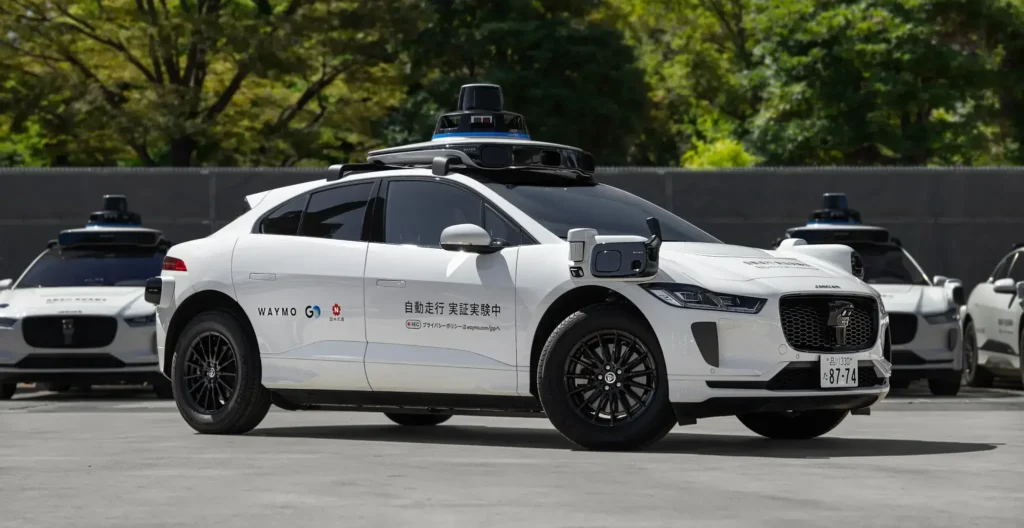
As municipal governments and state departments of transportation race to deploy smarter, more responsive roadways, the physical vulnerabilities underpinning these high-tech networks are coming under intense scrutiny. Intelligent Transportation Systems (ITS)—the intricate web of connected high-definition traffic cameras, radar-based vehicle detection arrays, LiDAR sensors, and pan-tilt-zoom (PTZ) units—form the backbone of modern traffic management. These systems do more than simply monitor congestion; they actively coordinate emergency medical services (EMS) routing, dynamically manage intersection timing, capture wrong-way drivers, and safeguard vulnerable road users.
Yet, this critical infrastructure operates in some of the most unforgiving, highly exposed environments imaginable. Mounted atop overhead gantries, traffic signals, and utility poles, ITS edge devices are prime targets for atmospheric electrical activity. When lightning strikes or high-voltage events occur, the massive energy discharges can travel directly through connected cabling, effortlessly jumping into sensitive microelectronics.
Compounding this physical risk is a major technological shift: the widespread adoption of Power-over-Ethernet (PoE++). While legacy PoE standards (IEEE 802.3af and 802.3at) delivered between 15.4 and 30 watts of power, the modern IEEE 802.3bt standard (PoE++) ramps delivery up to a staggering 60 to 90 watts. This substantial increase in electrical capacity is mandatory to run energy-intensive features like motorized PTZ tracking, onboard computing, heating elements, and high-resolution LiDAR. However, it also means that power and data are increasingly compressed into shared copper cabling. Without state-of-the-art, certified surge protection, a single lightning strike or utility-switching transient can vaporize thousands of dollars in mission-critical hardware, plunging entire intersections into darkness and forcing hazardous, emergency field repairs during active storms.
Chronology: The Evolution of ITS Vulnerability and Defense
To understand how modern transportation networks reached this delicate crossroads, it is necessary to examine the technological progression of roadside architecture over the past three decades:

- The Analog Era (Late 20th Century): Traffic management relied on discrete, hardwired loops and analog closed-circuit television (CCTV) cameras. While susceptible to lightning, systems were modular, lower in voltage sensitivity, and less integrated, meaning a surge usually localized the failure to a single standalone component.
- The Transition to Digital & Early PoE (Early 2000s – 2010s): Municipalities began deploying Internet Protocol (IP) cameras and digital sensor platforms. The introduction of IEEE 802.3af/at (PoE and PoE+) allowed data and low-voltage power to share a single Ethernet cable, cutting installation costs but introducing common-mode vulnerabilities across the network interface.
- The Rise of the Lightning Capital (2010s): Recognizing an escalating rate of catastrophic weather-induced hardware failures—particularly in high-strike regions like Florida—transportation authorities began demanding standardized, empirical testing benchmarks rather than relying on manufacturer claims.
- The PoE++ Revolution (Present Day): The deployment of power-hungry sensors, high-definition streaming feeds, and edge-computing processors necessitates IEEE 802.3bt (PoE++). With 60 to 90 watts coursing through outdoor cabling, the physics of transient overvoltages have changed completely, driving a complete overhaul of how engineers specify industrial surge protection.
Supporting Data: The Physics of Transients and Florida’s Benchmark
The mechanics of how lightning destroys a network are often misunderstood. A direct strike is not required to disable an ITS node. Through a phenomenon known as inductive coupling, a lightning strike occurring dozens or even hundreds of yards away generates a massive, rapidly expanding electromagnetic field. This field induces violent, high-voltage current spikes into nearby copper cabling.
While an ITS data link is engineered to operate at a nominal 48 volts, an unmitigated inductive transient can easily inject thousands of volts of potential energy into the circuit within mere milliseconds. Beyond atmospheric lightning, fast electrical transients generated by utility grid switching or heavy industrial equipment cycling on the local power grid produce similarly catastrophic voltage spikes.
To combat these forces, engineers look to rigorous testing benchmarks. The gold standard for these requirements has emerged from the Florida Department of Transportation (FDOT). Operating in the lightning capital of the United States—where regions experience an average of 3,000 cloud-to-ground lightning strikes per day—FDOT was forced to pioneer some of the most aggressive environmental and electrical testing protocols in the world.
For a surge protection device to earn a coveted spot on the FDOT Approved Product List (APL), it must survive a gauntlet of independent laboratory and field evaluations. Products are subjected to:
- Repetitive high-energy surge testing to ensure clamping components do not degrade over time.
- Extreme temperature and humidity cycling to simulate harsh roadside cabinet environments.
- Severe vibration testing to replicate conditions on high-wind highway bridges and tall poles.
Because of this exhaustive vetting process, the FDOT APL has quietly transformed from a regional requirement into an unofficial national and international benchmark for high-reliability transportation infrastructure.

Official Responses and Industry Solutions
As infrastructure budgets face tighter scrutiny and the expectations for zero-downtime traffic management grow, manufacturers are racing to deliver compliant, highly engineered solutions.
Industry leaders like Transtector, an Infinite Electronics company, have heavily invested in developing advanced protection architectures that marry high bandwidth with robust power-handling capabilities. Dan Rebeck, Product Line Manager at Transtector, emphasizes that modern protection must go far beyond legacy designs.
"As more power and functionality move through the same Ethernet cabling, effective surge protection becomes increasingly important," Rebeck notes. "Without it, even the newest, most capable ITS equipment remains vulnerable to the same failure modes as older, lower-capability systems."
To address these demands, Transtector has secured placements on the FDOT APL for advanced PoE ITS surge protection units, including the ALPU-F140 and DPR-F140, alongside their Build America Buy America (BABA) compliant variants (ALPU-F140-BA and DPR-F140-BA).
These specialized systems incorporate several advanced engineering features:

- Hybrid Coordinated Protection: Utilizing a combination of Silicon Avalanche Suppressor Diode (SASD) technology for fast, low-clamping response and high-capacity Gas Discharge Tubes (GDT) to safely shunt massive surge currents away from sensitive electronics.
- Non-Degrading Design: Ensuring that the protector can endure multiple minor strikes and transient events without losing its protective threshold.
- Isolated Shield and Ground Topologies: Providing dedicated GDTs and isolated shield/ground conductors that allow field installers to choose whether to bond shields at the powered device (PD) or keep them isolated. This flexibility optimizes continuous Electromagnetic Interference (EMI) shielding while protecting against transient overvoltages.
- Gigabit and PoE++ Compatibility: Supporting full gigabit Ethernet data rates alongside the highest power classes defined under IEEE 802.3bt (60–90W).
Implications: The Future-Proofing of Smart Cities
The broader implications of these engineering developments extend far beyond the niche world of circuit protection. As smart city initiatives expand globally, the reliability of edge computing and sensor networks dictates public safety and economic efficiency.
When a major urban intersection goes dark due to a power surge, the cascading effects are immediate: traffic lights revert to flash mode or fail entirely, public transit schedules are disrupted, and emergency response times increase. Furthermore, the operational cost of dispatching maintenance crews to climb poles and replace burned-out hardware during or immediately after severe weather events places an unnecessary financial and safety burden on municipalities.
For civil engineers, municipal procurement officers, and system integrators, the path forward is clear. Specifying infrastructure that meets or exceeds rigorous benchmarks like the FDOT APL is no longer just an optional safeguard—it is a foundational requirement for risk mitigation. By integrating advanced, PoE++ compatible surge protection with hybrid SASD/GDT technology, project planners can ensure that tomorrow’s intelligent roadways remain resilient, safe, and truly continuous, no matter what nature throws their way.