


Beyond the Assembly Line: How Embotech and BMW Achieved 1 Million Autonomous Vehicle Movements

In the high-stakes environment of automotive manufacturing, the transition from the assembly line to the shipping bay has historically been a labor-intensive, human-centric bottleneck. Every vehicle produced must be moved—parked, staged, or loaded onto trucks—requiring a constant rotation of human drivers to navigate the facility. Today, that paradigm is undergoing a fundamental shift.
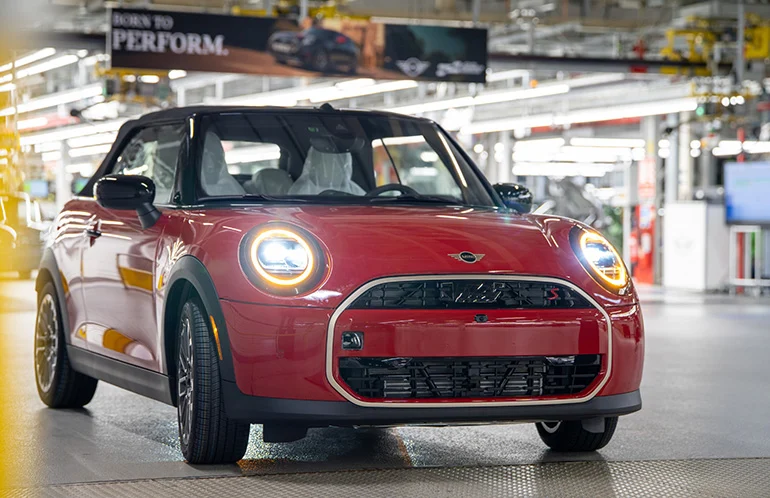
Embotech, a Zurich-based leader in safety-certified autonomous driving systems, and the BMW Group have officially announced a monumental achievement: the successful execution of 1 million automated vehicle movements across four major production sites in Germany and the United Kingdom. This milestone represents more than just a logistical feat; it signals the maturation of “Automated Driving In-Plant” (ADIP) technology from experimental pilot programs into a cornerstone of modern, high-efficiency automotive manufacturing.
The Mechanics of Infrastructure-Led Autonomy
Unlike consumer-facing autonomous driving technology, which relies heavily on vehicle-integrated sensors and onboard AI to navigate public roads, Embotech’s approach to industrial logistics is distinct. The technology is "infrastructure-led," meaning the intelligence resides in the environment rather than solely within the vehicle.
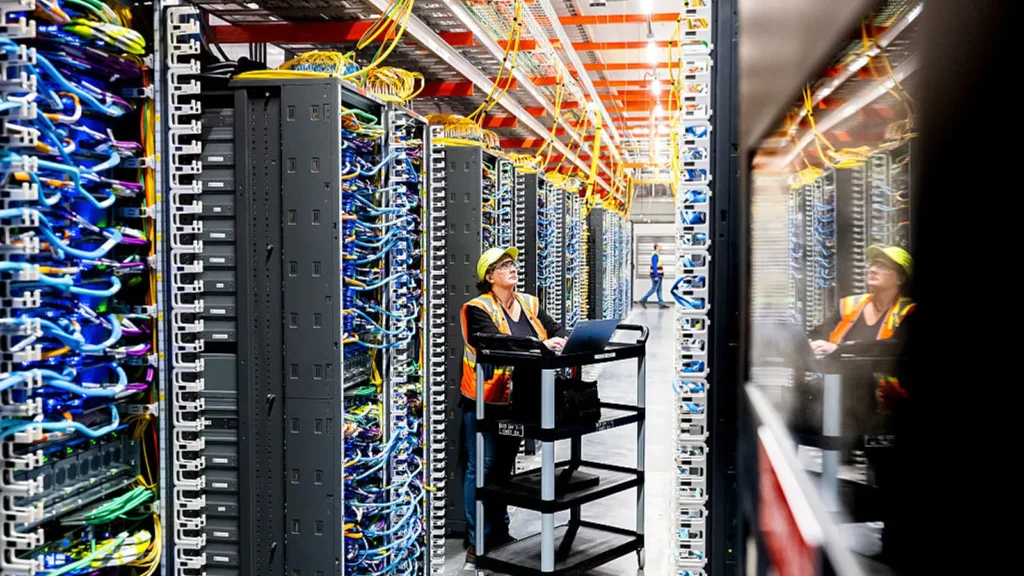
By utilizing Hesai LiDAR sensors mounted throughout the production environment, Embotech creates a digital map of the factory floor, marshalling yards, and logistics zones. This "perception-in-the-infrastructure" model allows standard vehicles to be navigated autonomously without the need for expensive, proprietary hardware modifications.
"Vehicles don’t need self-driving capabilities or extra sensors," explains Eva Beck, Chief Commercial Officer at Embotech. "In the factory, we have a standardized software interface, offboard computers, and servers that optimize driving trajectories 10 times per second."
This deterministic architecture, independently certified by TÜV SÜD, ensures that even in complex industrial settings, the safety boundary is strictly enforced. The system orchestrates vehicle movements with precision, seamlessly integrating with existing drive-by-wire capabilities and allowing autonomous vehicles to navigate safely alongside human workers and manually operated machinery.
A Chronology of Collaboration and Scaling
The journey to the 1-million-move milestone was a methodical, multi-year progression of testing, validation, and expansion.
- 2013: Embotech is founded as a spin-out from ETH Zurich, focusing on high-end autonomous driving systems for industrial applications.
- 2022: BMW Group and Embotech launch their initial pilot program. This early phase focused on proving that autonomous systems could reliably operate within the strict safety and space constraints of a live BMW facility.
- 2023–2024: Following the successful pilot, the partners move into the deployment phase. The system is systematically integrated into BMW’s production network, beginning with the Dingolfing, Leipzig, and Regensburg plants in Germany, followed by the MINI Plant in Oxford, U.K.
- Late 2024–2026: The rate of adoption accelerates exponentially. The partners hit the first 500,000 movements in 15 months. The subsequent 500,000 movements were completed in just seven months, showcasing the power of compounding operational experience.
- October 2026: The 1 millionth vehicle movement is recorded, cementing the partnership as a global benchmark for in-plant automation.
Supporting Data and Operational Resilience
The success of the Embotech-BMW partnership is underscored by rigorous performance metrics. Achieving a scale of 3,500 vehicle movements per day requires more than just functional software; it requires extreme reliability.
Currently, the system maintains an uptime availability of over 99.5%. In the world of automotive manufacturing, where a single line stoppage can cost tens of thousands of dollars per minute, this level of reliability is non-negotiable.
The software’s ability to "learn" from every movement is a critical success factor. By utilizing AI for perception, prediction, and planning, the system continuously refines its trajectories. As the Munich-based Embotech team works in close collaboration with BMW, the operational data gathered at each site is funneled back into software updates, creating a virtuous cycle of improvement that shortens the time required for future site deployments.
Official Perspectives: The Vision of the BMW iFACTORY
The strategic importance of this technology cannot be overstated. For BMW, the goal is the realization of the "BMW iFACTORY"—a vision of production that prioritizes efficiency, digitalization, and intelligent connectivity.
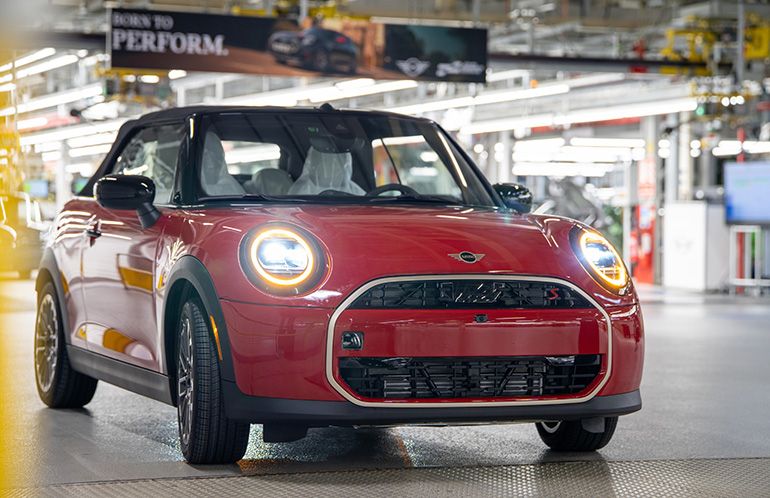
"One million vehicles moved using automated driving technology and the deployment of this technology at four sites to date demonstrates the innovative strength and scaling capabilities of our production network," said Raymond Wittmann, the member of BMW AG’s board responsible for production. "We recognized the potential of Automated Driving In-Plant early, tested it in a pilot phase, and systematically developed it to series maturity."
Andreas Kyrtatos, CEO of Embotech, emphasized that the true value of the technology lies in its reliability. "Automated vehicle movements only create value when intelligence, safety, and reliability come together," Kyrtatos stated. "This milestone shows what is possible when proven technology is integrated into live production and operated reliably around the clock."
Broader Implications for Global Manufacturing
The success of this partnership has significant implications for the broader automotive and logistics industries.
1. Breaking the Labor Bottleneck
As manufacturers struggle with fluctuating labor availability and the rising costs of manual logistics, the ability to automate mundane tasks—such as moving cars from the final assembly line to storage or transport—allows human staff to focus on higher-value roles. This creates a more resilient workforce, less susceptible to the volatility of shift staffing.
2. Enhancing Sustainability and Flow
Beyond mere labor savings, autonomous movement contributes to smoother vehicle flow. By optimizing trajectories and reducing the stop-start nature of human-driven vehicle movement, manufacturers can reduce the energy consumption of the fleet and minimize the risk of accidents, scratches, or damage, which are unfortunately common in high-density manual parking environments.
3. The Path to Global Rollout
The "OEM-agnostic" nature of Embotech’s technology means that it is not limited to BMW. As the company continues to scale, the industry can expect to see similar deployments across other automotive brands and even non-automotive sectors like ports and logistics hubs.
The next frontier for the partnership is already in sight. Eva Beck has confirmed that the companies are preparing to roll out the Automated Driving In-Plant system at BMW’s Spartanburg factory in South Carolina. This move into the North American market will test the system’s adaptability to different regulatory and operational landscapes, further cementing the status of ADIP as a global standard.
Conclusion: A New Baseline for Industrial Autonomy
The 1 millionth vehicle movement marks the end of the "pilot" era for autonomous in-plant logistics. What began as a bold experiment at a single facility has transformed into a proven, reliable, and scalable industrial framework.
As Embotech continues its strategic partnerships—most notably its recent collaboration with HTEC to scale deployments—the lesson from the BMW project is clear: the future of manufacturing is not just about the robot arms on the assembly line, but the invisible, intelligent layer of software that manages the flow of products from the moment they are finished until they are ready to be delivered to the customer.
With over 99.5% availability and a rapidly accelerating deployment schedule, Embotech and BMW have set a new bar for what industrial automation can achieve. For the rest of the automotive world, the question is no longer whether they should adopt automated vehicle movement, but how quickly they can catch up.