


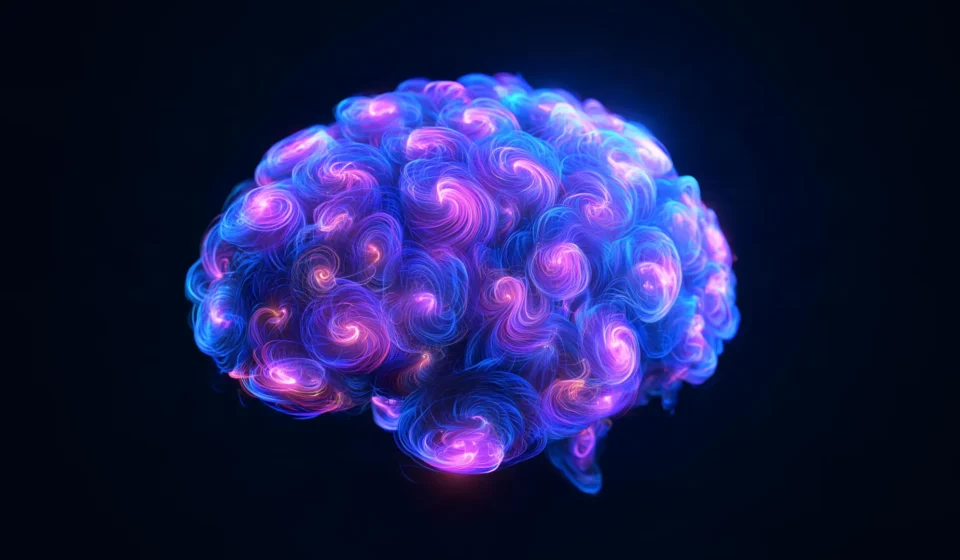
The Magnetic Revolution: How Skyrmions Are Paving the Way for Neuromorphic Computing

In the quiet, sub-zero chambers of the world’s most advanced physics laboratories, a revolution is brewing at the scale of mere nanometers. For decades, the trajectory of computing has been defined by the steady shrinking of silicon transistors, a race dictated by Moore’s Law. Yet, as we approach the physical limits of traditional electronics, researchers are looking toward an unconventional, exotic state of matter to carry the torch forward: the skyrmion.
These microscopic magnetic vortices, which behave like particles, have long been a subject of theoretical fascination. Now, a groundbreaking study published in the journal Nature Nanotechnology has brought these structures into the realm of practical, real-time control. By observing the "melting" of skyrmion lattices, scientists have unlocked a new understanding of how to manipulate information at the atomic level, potentially enabling a new generation of "brain-like" computers that operate with a fraction of the energy required by today’s data centers.
The Core Concept: What Are Skyrmions?
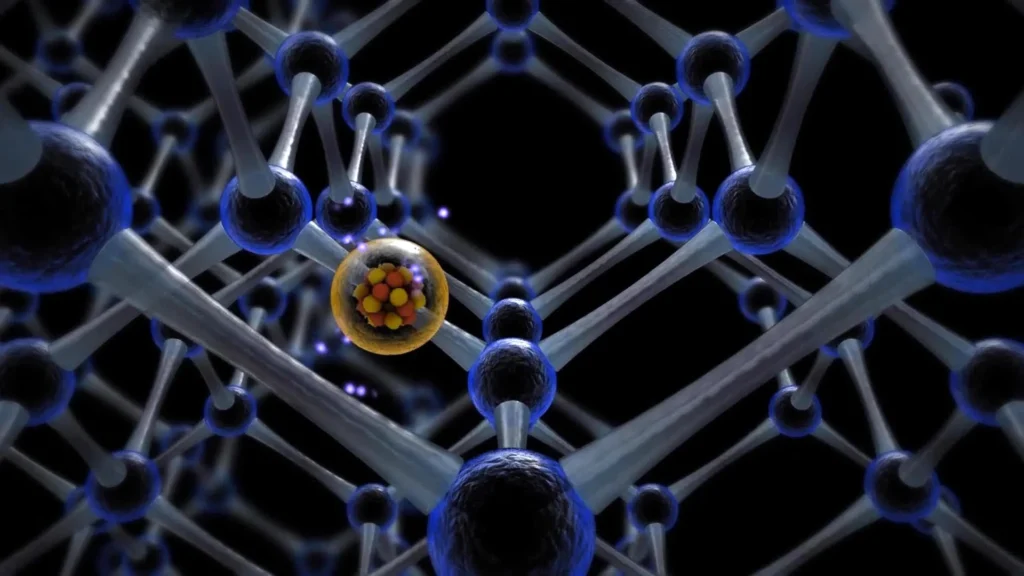
To understand the magnitude of this discovery, one must first grasp the nature of the skyrmion. Named after the British physicist Tony Skyrme, who originally proposed them as models for subatomic particles, magnetic skyrmions are topological solitons—essentially, localized, swirling magnetic textures within a thin film material.
Unlike the binary bits in a standard hard drive, which rely on the direction of magnetic domains to represent "0" or "1," skyrmions are robust, particle-like entities that exist independently. They are exceptionally small, remarkably stable, and can be moved across a material with extremely low electrical currents. Because they can be manipulated with such efficiency, they represent a radical departure from the power-hungry architectures that currently dominate the global digital infrastructure.
Chronology of a Breakthrough
The road to this recent milestone has been marked by years of incremental progress in spintronics—a field of physics that leverages the intrinsic spin of electrons rather than just their charge.
The Foundation (2009–2015)
The experimental discovery of skyrmions in magnetic materials in 2009 shifted the conversation from abstract mathematics to experimental physics. Researchers quickly identified that these vortices could be created, moved, and annihilated. However, observing them in their natural habitat required sophisticated electron microscopy, and controlling them individually remained an elusive "holy grail."
The Collaborative Effort (2018–2023)
The recent breakthrough was spearheaded by the Institute of Physics at Johannes Gutenberg University in Mainz, Germany, with critical intellectual contributions from Professor Asle Sudbø, head of the Centre for Quantum Spintronics (QuSpin) at the Norwegian University of Science and Technology (NTNU). The team aimed to move beyond static observation, seeking to understand the dynamics of skyrmion lattices—the organized, crystalline structures that these vortices form under specific environmental conditions.
The Real-Time Milestone (2024)
In their latest experiment, the team achieved an unprecedented feat: they successfully filmed the "melting" of a skyrmion lattice in real time. By applying precise stimuli, they were able to watch the orderly, crystal-like rows of skyrmions dissolve while simultaneously manipulating individual vortices on the fly. This capability to "shape-shift" and move individual components of a magnetic lattice represents the first time scientists have exercised such granular control over these structures as they undergo a phase transition.
Supporting Data: Why Efficiency Matters
The global demand for data processing is surging, driven by artificial intelligence, cloud computing, and the "Internet of Things." Current computing hardware, based on the von Neumann architecture, faces a "memory wall"—the energy cost of moving data between the processor and the storage unit is becoming unsustainable.
- Energy Consumption: Traditional transistors generate significant heat due to resistive losses. Skyrmion-based devices, by contrast, utilize "spin-torque" effects that require significantly less current, potentially reducing energy consumption by several orders of magnitude.
- Storage Density: Because skyrmions are nanoscale structures, they allow for storage densities far exceeding those of current magnetic hard drives. A single skyrmion could represent a bit of data in a space a thousand times smaller than a conventional magnetic domain.
- Neuromorphic Potential: Perhaps the most compelling data point lies in the skyrmion’s ability to emulate synapses. In a biological brain, information is processed and stored in the same place—the synapse. Skyrmions, which can change their size and shape in response to stimuli, mimic the plasticity of biological neurons, offering a physical substrate for true "brain-like" or neuromorphic computing.
Official Perspectives: The View from QuSpin
Professor Asle Sudbø, who has been instrumental in the theoretical framework underpinning these experiments, emphasizes that the significance of this research lies in its bridge between fundamental physics and applied technology.
"Skyrmions are small, magnetic vortices that can store information in a completely new way," Sudbø stated. "Instead of the current technology, where we constantly need more space and energy to process data, skyrmions could make it possible to build much smaller and more energy-efficient data storage systems."
When asked about the "melting" experiment, Sudbø highlighted the importance of real-time observation: "For the first time, researchers have managed to film how a magnetic skyrmion lattice melts in real time, while simultaneously being able to manipulate each individual skyrmion directly as they film it. For example, both their shape and size can be changed ‘on the fly’."
For Sudbø and his colleagues, this isn’t just about making better hard drives. It is about rethinking the fundamental architecture of the computer. "These nanoscale vortices could help develop computers that resemble biological brains," he added, noting that the ability to transition from transistor-based logic to magnetic, lattice-based logic could revolutionize the industry.
Implications for the Future of Computing
The transition from lab-bench theory to consumer electronics is rarely linear, but the implications of this research are profound. If skyrmions can be reliably utilized, the roadmap for the next decade of computing looks drastically different.
1. The Death of the Memory Wall
By integrating memory and logic within a single, skyrmion-based fabric, the need to shuttle data back and forth across a motherboard—the primary cause of latency and heat—is effectively bypassed. This could lead to "instant-on" computers that process information in a way that feels more intuitive and fluid, mirroring the parallel processing power of the human brain.
2. Quantum Spintronics
The study of skyrmions is inextricably linked to topological quantum effects. These are properties of materials that are robust against noise and interference, a core requirement for stable quantum computing. By learning how to control skyrmion lattices, researchers are inadvertently developing the tools needed to build more reliable qubits, the building blocks of the quantum computers of the future.
3. Sustainability in the AI Era
As AI models grow in complexity, the carbon footprint of training these models has become a focal point of public concern. A shift toward skyrmion-based hardware could decouple the growth of AI capabilities from the exponential growth of energy consumption. If a computer can perform a complex logical task with a fraction of the energy, the barrier to deploying AI at the "edge"—directly on smartphones or localized sensors—disappears.
Challenges and the Path Ahead
Despite the optimism, the transition to skyrmion-based technology is not without its hurdles. To make this a commercial reality, scientists must address several engineering challenges:
- Thermal Stability: While skyrmions are stable, they must remain consistent across a wide range of temperatures. Ensuring that these magnetic vortices do not "evaporate" when a computer heats up is a primary focus for material scientists.
- Material Compatibility: Integrating magnetic thin films with existing CMOS silicon manufacturing processes is a non-trivial engineering task. The industry will need to develop hybrid materials that can bridge the gap between traditional semiconductors and magnetic spintronic layers.
- Scalability: While manipulating one skyrmion is a triumph, building a chip with billions of them, each addressable and stable, is the next great engineering challenge.
Conclusion: A Paradigm Shift
The ability to film a skyrmion lattice melting and to manipulate its constituents in real time is a landmark moment in material science. It transforms skyrmions from a theoretical curiosity into a tangible, controllable tool.
"This could revolutionize the way we think about computers," says Professor Sudbø. He is right. By moving away from the rigid, electron-flow-dependent systems of the 20th century and toward the fluid, magnetic-vortex-based architectures of the 21st, we are not just making computers faster—we are making them more intelligent, more efficient, and fundamentally more like the biological systems that inspired them.
As the research progresses from the journals to the cleanrooms of semiconductor manufacturers, one thing remains clear: the future of computing will not be found in ever-larger data centers, but in the tiny, swirling magnetic landscapes of the skyrmion. We are witnessing the beginning of a new epoch in technology, where the very physics of the infinitesimal holds the key to solving the massive challenges of our digital age.