



Bridging the Gap: How the ORNL-Mazak Partnership is Redefining Industrial Metal Production

The manufacturing sector has long operated under a rigid dichotomy: the precision of subtractive machining versus the design freedom of additive manufacturing (AM). For decades, these two processes lived in separate corners of the factory floor, requiring complex logistics, multiple setups, and significant lead-time buffers. However, a landmark partnership between the Oak Ridge National Laboratory (ORNL) and Mazak is set to shatter this divide.
By integrating Wire Arc Additive Manufacturing (WAAM) with high-precision 5-axis vertical machining into a unified, automated, and convergent platform, the two entities are creating a new blueprint for production-relevant workflows. This system, which will make its public debut at IMTS 2026, aims to reconcile the historically conflicting requirements of high-mix, low-volume flexibility and low-mix, high-volume efficiency.
Main Facts: A Convergent Manufacturing Ecosystem
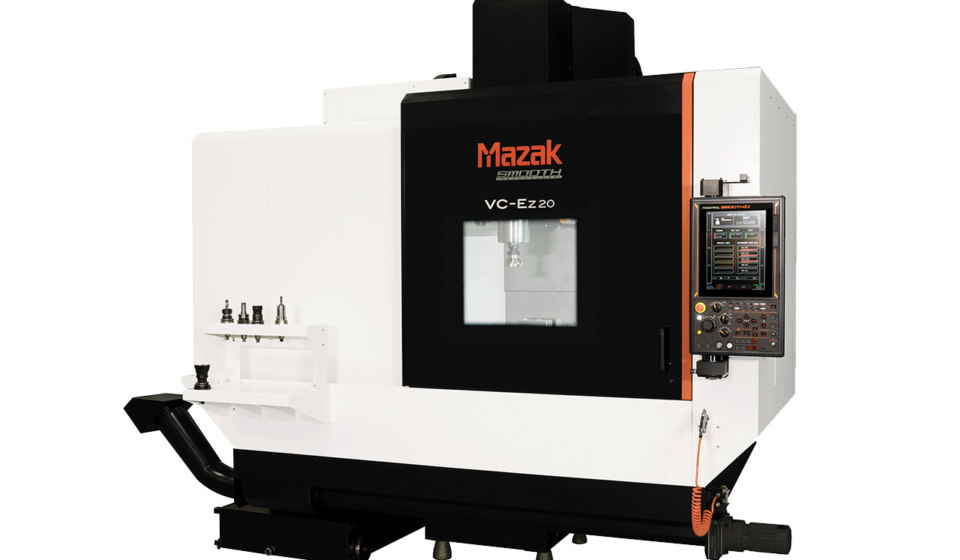
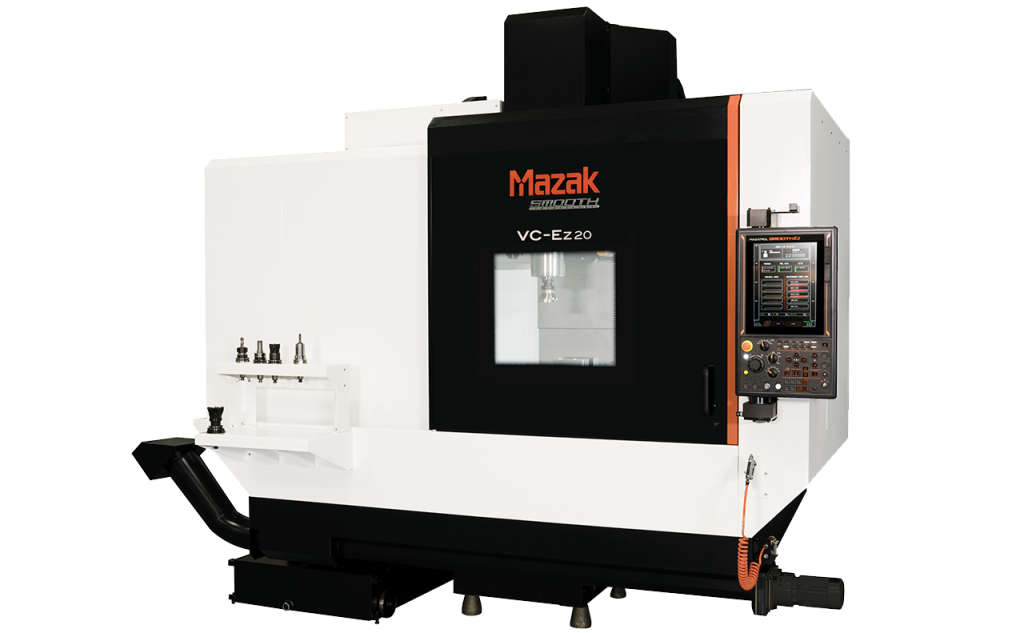
The core of the ORNL-Mazak collaboration is the development of a modular, automated line centered around two of Mazak’s VC-Ez 20X Vertical Machining Centers. Unlike traditional hybrid machines that attempt to force additive and subtractive functions into a single, often compromised, work envelope, this platform utilizes an automated palletized transfer system.
This system facilitates a seamless, "convergent" workflow:
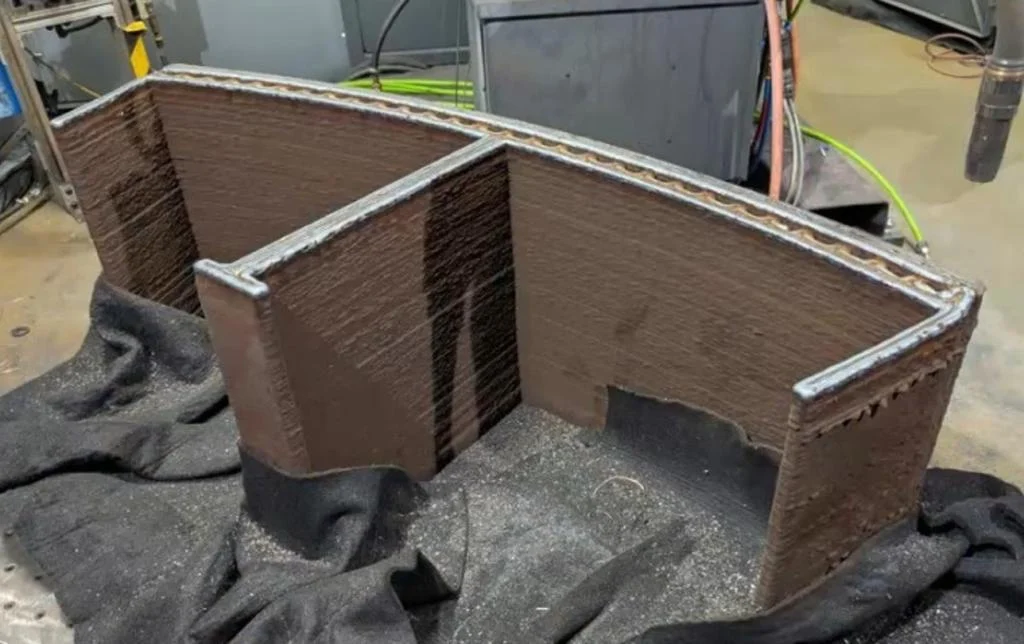
- Additive Phase: Components are grown via a Fronius International WAAM unit, which utilizes an electric arc to deposit standard welding wire layer-by-layer. This process is favored for its high deposition rates and material efficiency compared to powder-bed fusion.
- Subtractive Phase: Once the near-net-shape part is deposited, the automated pallet system shuttles the workpiece to the VC-Ez 20X machining center.
- Precision Finishing: The 5-axis trunnion table performs final finish machining, bringing the part to its exact dimensional tolerances.
By maintaining the component on a common pallet throughout the entire journey, the system preserves fixturing accuracy, effectively eliminating the registration errors that often plague hybrid manufacturing setups.
Chronology: The Evolution of the Partnership
The relationship between ORNL and Mazak is rooted in years of collaborative research aimed at the industrialization of additive processes.

- Early Foundations: The partnership began with joint efforts to optimize hybrid additive-subtractive platforms for large-scale aerospace and energy applications. Early research focused on identifying the thermal stresses associated with WAAM and developing software-driven compensations within the Mazak control environment.
- The Integration Phase (2024-2025): The two organizations moved beyond theoretical models to focus on "production-relevant" hardware. The goal was to prove that additive manufacturing could survive the rigors of a 24/7 shop floor environment.
- Refinement and Automation: During the latter half of 2025, the team implemented the automated palletized transfer system, moving the process from manual intervention to a continuous, automated flow.
- The Road to IMTS 2026: With the system now in its final stages of qualification, the focus has shifted to demonstrating the platform’s reliability in "The Association for Manufacturing Technology (AMT) Emerging Technology Center" at IMTS 2026. This exhibition will serve as the primary indicator of the technology’s readiness for commercial adoption.
Supporting Data: Specifications and Efficiency
The performance metrics of the VC-Ez 20X platform are designed to meet the demands of high-precision industries. The machine boasts a 5-axis rotary/tilt trunnion table, utilizing roller gear cam technology for either 3+2 positioning or continuous, full-contour 5-axis motion.
Technical Specifications:
- Axis Travel: X: 31.49 in (800 mm), Y: 20.07 in (510 mm), Z: 20.07 in (510 mm).
- Rapid Traverse Speed: 1,260 ipm (32,000 mm/m).
- Workpiece Capacity: Up to 27.55 inches in diameter, 23 inches in height, and a weight capacity of 880 pounds (400 kg).
- Compact Footprint: Measuring just 104.21 by 146.32 inches, the system occupies 26.5% less floor space than comparable legacy machines.
- Control Interface: Mazak’s proprietary MAZATROL SmoothEz5, allowing for seamless toggling between EIA/G-code and conversational programming.
The use of WAAM technology as the primary additive engine is a strategic choice for industrial scaling. By utilizing standard welding wire, manufacturers can achieve significantly lower material costs and higher deposition speeds compared to laser-powder bed fusion, making this system viable for large structural parts, heavy-duty tooling, and near-net-shape casting replacements.
Official Responses and Strategic Outlook
Dan Janka, President of Mazak, emphasized that this project is not merely an experiment, but a culmination of a long-term strategic alignment. "We will showcase this innovative platform during IMTS 2026 in the AMT’s Emerging Technology Center," Janka stated. "This system represents Mazak’s longstanding relationship with the Oak Ridge National Laboratory in terms of machining research and the advancement of hybrid additive manufacturing technology."
The project serves as a cornerstone of ORNL’s mission to modernize the U.S. manufacturing base by de-risking advanced technologies. By providing a platform that fits into existing shop floor paradigms, ORNL is helping to remove the barriers that have historically kept additive manufacturing in the R&D lab.
Implications: The Shift Toward Continuous Workflow
The implications of this convergence extend far beyond the immediate partnership. The manufacturing industry is witnessing a "Great Consolidation," where the distinction between machine types is blurring.
Solving the Supply Chain Crisis
The efficiency gains are substantial. In recent industry benchmarks, similar WAAM-based workflows have reduced lead times from 24 weeks (for traditional castings) to just 7 weeks. By bringing the additive and subtractive processes under one digital and physical umbrella, manufacturers can minimize the "dead time" where parts sit in queues or in transit between suppliers.
A Competitive Landscape
The Mazak-ORNL project enters a market that is rapidly heating up. Companies like Lincoln Electric have already successfully deployed fleets of WAAM systems for defense and naval applications, proving that the technology is ready for mission-critical parts. Simultaneously, heavy-hitters like DMG Mori are iterating on their LASERTEC 65 DED hybrid systems, which also prioritize the "all-in-one" approach to metal production.
The Future of Manufacturing Infrastructure
The integration of these systems signals that additive manufacturing is graduating from a prototyping tool to a core component of production infrastructure. The key to this transition is the "production-grade" nature of the Mazak-ORNL platform. By focusing on palletized, automated, and familiar interface controls (like the SmoothEz5), the system reduces the learning curve for machinists and operators.
Closing the Loop
As we look toward 2026 and beyond, the success of this convergent platform will likely catalyze a shift in how engineers design parts. With the ability to grow complex geometries additively and finish them with high-precision 5-axis machining in a single, automated line, the constraints of traditional subtractive manufacturing are becoming optional.
The industry is moving toward a future where the distinction between "additive" and "subtractive" is obsolete, replaced by a singular, intelligent process of "manufacturing." For Mazak and ORNL, the path forward is clear: integrate, automate, and accelerate. The upcoming demonstration at IMTS 2026 will not just be a showcase of a new machine, but a preview of the next generation of the industrial factory floor.
For those interested in the future of these technologies, the 3D Printing Industry’s upcoming AMA series and 2026 executive surveys will continue to track the industrialization of additive manufacturing across the aerospace, automotive, and defense sectors.