



The Humanoid Correction: Unitree Robotics and the Volatility of the Robot Revolution

The high-flying world of robotics took a sobering turn this week as Unitree Robotics, the Hangzhou-based pioneer of legged locomotion, saw its market valuation undergo a significant downward adjustment. Since its explosive debut on the Shanghai Stock Exchange’s STAR Market on August 19, 2026, the company’s stock has shed roughly 40% of its value from its closing price on day one, and a staggering 53% from its intraday peak.
This correction has effectively wiped out $20 billion in market capitalization from its initial public offering (IPO) close and $35 billion from its all-time high, prompting investors and industry analysts alike to question whether the “humanoid gold rush” was built on sustainable fundamentals or speculative fervor.
Main Facts: The Market Correction
As of the close of trading on Wednesday, Unitree (Ticker: 688836) settled at 513.93 yuan ($72.10 U.S.). While this figure remains more than triple its initial offering price of 150.80 yuan, the dramatic retreat from its 1,100-yuan peak suggests a cooling period for investors who were initially swept up in the excitement surrounding the commercialization of humanoid robotics.
The company raised approximately 6.1 billion yuan ($900 million) during its IPO, initially pricing the firm at a valuation of 61 billion yuan ($9 billion). However, the market’s enthusiasm pushed that valuation to a dizzying 445 billion yuan ($66 billion) within hours of its first day of trading, marking a 460% surge. The current decline represents a recalibration of those extreme expectations, moving from a valuation-to-revenue ratio of over 250x toward a more "grounded" (though still premium) 125x.
Chronology: From IPO Euphoria to Regulatory Scrutiny
The trajectory of Unitree’s stock since its August launch tells a story of rapid ascent followed by a cautious re-evaluation:
- Pre-IPO: Unitree aimed for a modest valuation of 42 billion yuan ($6.2 billion), reflecting a measured expectation of its growth trajectory.
- August 19, 2026: The IPO launches. Shares skyrocket 460% on the first day, peaking at 1,100 yuan and setting a market cap of $66 billion.
- Late August – Early September 2026: Market volatility sets in. Investors begin analyzing the sustainability of the company’s revenue streams, leading to a steady decline in share price.
- September 2026: Reports emerge that the China Securities Regulatory Commission (CSRC) is increasing oversight on humanoid robotics firms seeking to list, effectively tightening the criteria for future market entrants.
Supporting Data: Revenue vs. Speculation
A central point of contention in the current valuation debate is the nature of Unitree’s revenue. Unlike many Western counterparts in the humanoid space, which operate as pre-revenue startups burning through venture capital, Unitree has established a formidable commercial footprint.
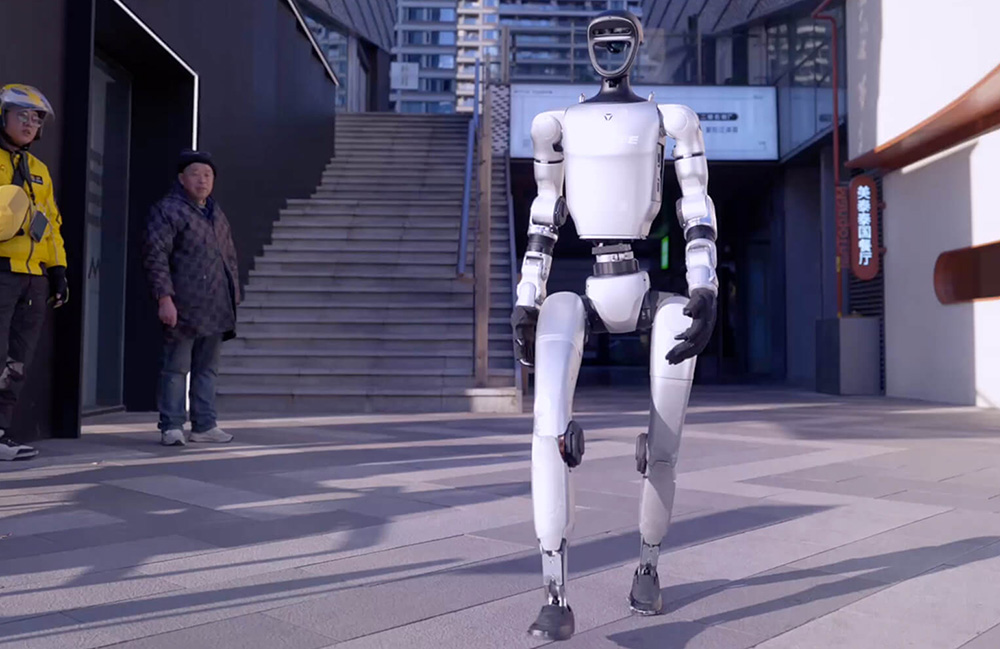
In 2025, the company reported revenue of 1.70 billion yuan ($252 million), a massive jump from 392.77 million yuan in 2024. Of that total, 868 million yuan—more than 50%—was derived directly from humanoid robot sales, with over 5,500 units shipped. Projections for the first half of 2026 suggest continued momentum, with expected year-over-year growth of 36% to 45%.
However, financial analysts have pointed to a critical nuance: the source of this revenue. According to data cited by The Wall Street Journal, less than 10% of the 2025 revenue originated from industrial applications. Instead, a significant portion of the growth is linked to a network of over 90 humanoid training centers across China, many of which are subsidized by local governments and research institutions. These centers acquire units to generate training data via teleoperation, raising questions about whether this demand is driven by genuine industrial adoption or government-funded R&D infrastructure.
Comparative Analysis: The Western Landscape
To understand the premium placed on Unitree, one must look at the U.S. sector. Agility Robotics, which is currently pursuing a SPAC merger, reported $1.78 million in net sales for 2025. Coupled with an operating loss of $140.2 million and a massive R&D burn rate, the contrast between the American "development-first" model and the Chinese "revenue-first" model is stark.
While Agility has secured over $300 million in multi-year contracted orders for its Digit v5, its valuation of $2.5 billion—roughly 1,400 times its 2025 net sales—highlights that the entire global robotics sector is currently trading on future, rather than current, potential. Unitree, by virtue of its profitability and higher revenue, is viewed as a more mature entity, yet its massive valuation remains tied to the assumption that these robots will transition from training centers to factory floors and households at scale.
Official Responses and Regulatory Implications
The recent volatility has not gone unnoticed by Beijing. Reports from The Information and The Wall Street Journal suggest that the CSRC has begun to exert "informal pressure" on investment banks and robotics firms. The regulatory message is clear: the era of "hype-driven" IPOs is ending.
Regulators are now signaling that any company seeking to list must demonstrate:

- Recurring Revenue: Moving beyond one-off sales to sustainable service models.
- Path to Profitability: A clear trajectory for reducing losses and managing R&D overhead.
- Technological Innovation: Verifiable advancements that solve tangible industrial pain points, rather than merely theoretical humanoid capabilities.
While neither the CSRC nor Unitree has issued a formal statement addressing these specific reports, the market’s reaction suggests that investors are already pricing in a "compliance premium." The regulatory environment is shifting from one of encouragement to one of oversight, aimed at preventing a bubble that could burst and leave retail investors holding the bag.
Implications: The Road Ahead
The "Unitree Correction" serves as a bellwether for the broader robotics industry. The primary implication is that the market is finally distinguishing between "robotics as a science project" and "robotics as a business."
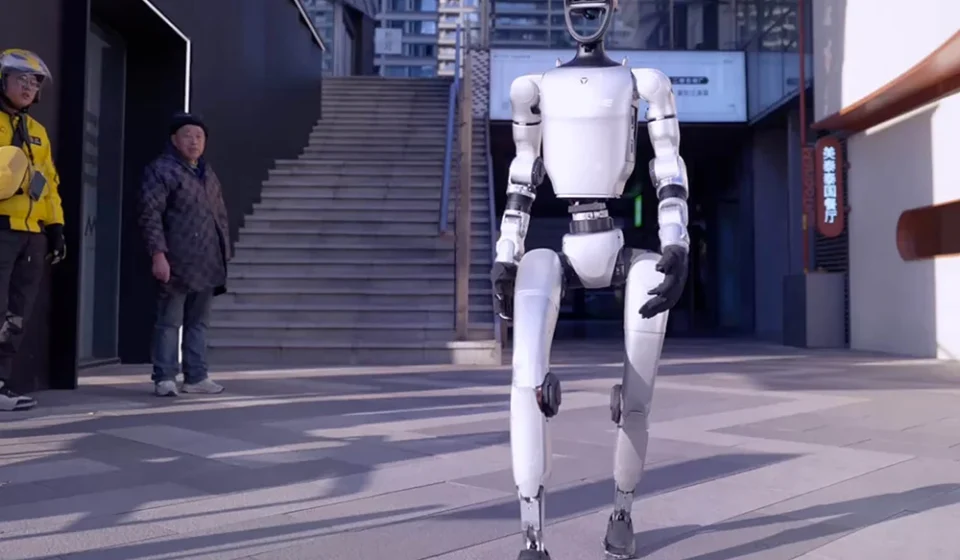
For Unitree, the challenge is now to prove that its 5,500+ humanoid shipments in 2025 were just the beginning. The company must pivot away from the heavy reliance on government-funded training centers and prove that its robots can deliver a return on investment (ROI) for commercial enterprises. If Unitree can demonstrate that its G1 humanoids are effectively replacing labor or increasing throughput in logistics and manufacturing, its current $30 billion valuation may eventually be justified.
However, if the revenue growth plateaus as government-subsidized demand cools, the stock may face further downward pressure. The lesson for the global industry is twofold: first, that revenue is the ultimate shield against market skepticism; and second, that even companies with genuine commercial success are not immune to the gravity of market correction when valuation multiples become detached from reality.
As we look toward the 20th anniversary of industry forums like RoboBusiness, the conversation has shifted from "Can we build a humanoid?" to "Can we build a business around one?" The answer, as Unitree is currently finding out, is that the market expects a much more complex, high-stakes answer to that question than it did just a few months ago. The era of the speculative humanoid IPO is over; the era of industrial accountability has begun.