



Navigating the Tipping Point: Mercedes-Benz Faces a Long Road to Recovery in New Production Forecast to 2030

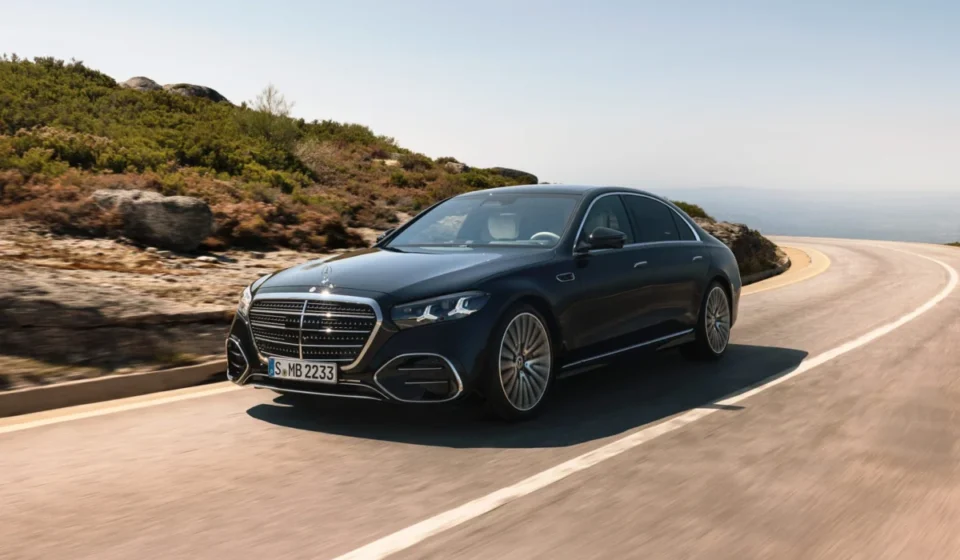
BERLIN — In the high-stakes theater of the global automotive industry, few legacies command the immediate prestige and engineering reverence of Mercedes-Benz. Yet, the storied German marque finds itself navigating one of the most turbulent transitional phases in its century-long history. According to the latest comprehensive production forecast released by Automotive World, the Stuttgart-based manufacturer is bracing for a protracted and uneven recovery following what analysts predict will be a profound operational nadir in 2026.
The forecast, which maps the company’s trajectory out to 2030, paints a vivid picture of a corporate titan forced to recalibrate its grand ambitions. Confronted by mounting geopolitical headwinds, fierce domestic competition in crucial overseas markets, and a shifting consumer appetite that has rejected rigid electric vehicle (EV) mandates, Mercedes-Benz is rewriting its playbook. Flexibility has replaced forced acceleration as the watchword in boardrooms from Sindelfingen to Tuscaloosa.
Main Facts
The core narrative of the Automotive World forecast centers on a sharp contraction in manufacturing volume, followed by a sluggish, multi-year ascent that will struggle to reach historical benchmarks.
The numbers underlying this shift are stark. In 2025, Mercedes-Benz experienced a severe contraction across its global manufacturing footprint. Passenger car output plummeted by 8.5%, sliding down to 1.8 million units. Simultaneously, the commercial van division—traditionally a reliable cash cow and a critical pillar of the brand’s commercial strategy—suffered a double-digit decline, with output dropping 10.6% to 353,710 units.
Rather than doubling down on its previously uncompromising commitment to transition into a pure battery-electric vehicle (BEV) manufacturer by the end of the decade, executive leadership has executed a strategic pivot. Recognizing that market demand for internal combustion engines (ICE) and hybrid technology remains stubbornly robust in key global regions, Mercedes-Benz has spent the past year retrofitting its core manufacturing plants. These facilities have been successfully transitioned to multi-fuel flexibility architectures. This engineering pivot allows assembly lines to seamlessly pivot between pure electric drivetrains, plug-in hybrids, and traditional petrol or diesel engines depending on real-time market signals.
However, operational flexibility alone cannot insulate the brand from macro-environmental pressures. The forecast projects that total production will contract by an additional 11% in 2026, dragging total output down to slightly more than 1.6 million units. This steep drop-off is primarily attributed to a punishing market environment for non-domestic Original Equipment Manufacturers (OEMs) operating within the People’s Republic of China.
While 2026 is projected to serve as the cyclical floor—or nadir—for the company’s manufacturing volumes, the subsequent recovery will be neither swift nor comprehensive. Between 2027 and 2030, a partial rebound is anticipated, heavily spearheaded by output from strategic international hubs, notably Kecskemét in Hungary and Tuscaloosa in Alabama. Even with these international plants firing on all cylinders, the average output for the 2027–2030 window is projected to remain 7.7% below pre-2025 baseline levels.
Chronology: The Road to the 2026 Nadir
To fully grasp the gravity of Mercedes-Benz’s current manufacturing outlook, one must examine the chronological sequence of events, strategic shifts, and market pressures that have shaped the company’s trajectory over the past several years.
2021–2022: The "Lead in Electric" Ambition
Buoyed by post-pandemic market recoveries and massive injections of capital into decarbonization technologies, Mercedes-Benz leadership formalizes its "Ambition 2039" strategy. The roadmap includes the aggressive "Lead in Electric" declaration, suggesting that the company would be ready to go all-electric by 2030 "where market conditions allow." At the time, this phrasing is treated by investors as a mere formality; the prevailing corporate consensus assumes consumer adoption curves will follow a near-vertical trajectory.
2023–2024: The Reality Check and Margin Squeeze
Global inflationary pressures, high interest rates, and the gradual phasing out of consumer EV subsidies in major European economies begin to stall the momentum of battery-electric vehicles. Concurrently, domestic Chinese automakers—bolstered by state support and advanced software ecosystems—launch an aggressive price war, squeezing out foreign luxury brands that had long relied on the Chinese market for high-margin volume. Mercedes-Benz notices a widening gap between its heavy capital expenditures in EV platforms and actual dealership sell-through rates.
2025: The First Wave of Contraction
The cracks in the production model widen into structural fissures. By the close of 2025, annual reporting confirms that passenger car output has dropped 8.5% to 1.8 million units, while van production falls 10.6% to 353,710 units. Recognizing that the rigidity of its all-electric manufacturing plants is actively harming profitability, management abandons strict timelines. Emergency engineering overhauls begin across primary European plants to integrate multi-fuel flexibility, ensuring that ICE and hybrid derivatives can continue rolling off the lines alongside electric models.
2026 (Projected): The Manufacturing Nadir
According to Automotive World’s data, 2026 will represent the deepest operational trough for the company this decade. A forecasted 11% year-on-year drop will pull total volume down to just over 1.6 million units. This contraction is fueled by persistent margin erosion in China, sluggish European economic growth, and the transitional downtime required to complete plant-level retooling.
2027–2030 (Projected): The Slow, Incremental Ascent
Beginning in 2027, the company is expected to arrest its multi-year volume decline. A cautious recovery takes root, driven largely by localized manufacturing in North America and Central Europe. However, because foundational consumer demand in key markets has permanently fractured or shifted toward local competitors, output averages for this four-year period will stagnate nearly 8% below pre-2025 levels, capping the brand’s immediate growth aspirations.
Supporting Data and Regional Dynamics
The analytical framework provided by Automotive World highlights the deep divergence in performance across different global regions, illustrating why a global monolithic strategy is no longer viable for a legacy luxury automaker.
The China Conundrum
For over a decade, China served as the undisputed engine of growth for Mercedes-Benz, absorbing hundreds of thousands of S-Class, E-Class, and GLC models annually. However, the dynamics of the Chinese automotive market have undergone a seismic, permanent transformation. Domestic competitors—such as BYD, NIO, and Xpeng, alongside tech giants like Huawei and Xiaomi—have redefined what luxury and technological integration mean to the modern Chinese consumer.
Foreign legacy OEMs face a brutal double-bind in China: they must discount heavily to maintain market share, which cannibalizes brand equity and profit margins, or they watch their sales volumes evaporate. The Automotive World forecast explicitly factors in recent and imminent product launches specifically tailored for the Chinese market. The model assumes these new offerings will be sufficient to stabilize the bleeding. Yet, analysts insert a critical caveat: this projection rests on the razor-thin assumption that local stabilization efforts will hold. Should consumer resistance to foreign brands deepen further, even these modest recovery projections could prove dangerously optimistic.
The Rise of Transatlantic and Central European Hubs
While German domestic plants undergo painful structural adjustments, international facilities are emerging as the primary stabilizers of the brand’s global footprint.
- Kecskemét, Hungary: Positioned strategically within the European Union, the Kecskemét plant has undergone extensive modernization. Its capacity to handle multi-fuel architectures makes it an agile asset for Mercedes-Benz, capable of routing compact and mid-sized vehicles to both Western European markets and export destinations based on fluctuating regulatory and consumer demands.
- Tuscaloosa, Alabama: As North America continues to demonstrate a unique appetite for luxury SUVs and light trucks—segments where internal combustion and hybrid powertrains retain immense profitability—the Tuscaloosa facility acts as a vital volume anchor. Its output profile insulates the company, to a degree, from the volatility of the European energy transition and the hyper-competitive Asian EV market.
Official Responses and Strategic Pivots
Faced with mounting scrutiny from financial markets and automotive analysts alike, the leadership team at Mercedes-Benz has steadily shifted its public messaging. The language of unbridled optimism and rigid deadlines has been replaced by pragmatic flexibility.
In recent communications, Chief Executive Officer Ola Källenius and members of the Board of Management have emphasized the concept of "industrial resilience." Rather than treating the internal combustion engine as a technology with an immediate, hard expiration date, management has reframed ICE and hybrid powertrains as essential bridges that will remain relevant well into the 2030s.
"Our customers will ultimately dictate the speed and shape of our portfolio transition," a senior Mercedes-Benz corporate spokesperson noted in recent investor briefings. "While our strategic destination remains the decarbonization of our fleet, our operational path must be flexible enough to weather macroeconomic volatility, regulatory shifts, and uneven regional adoption rates."
This pragmatism has manifested in tangible capital allocation decisions. Billions of euros originally earmarked exclusively for the development of dedicated, standalone EV platforms (such as the MMA and MB.EA architectures) have been reallocated. Engineering teams have been tasked with ensuring that vehicle platforms can accommodate multiple energy sources on a single assembly line. This "flexible manufacturing" approach drastically reduces capital expenditure wastage, allowing the company to ramp up or scale back specific powertrain variants with minimal factory downtime.
Furthermore, Mercedes-Benz has intensified its focus on cost containment and operational efficiencies. By rationalizing supply chains, optimizing administrative overhead, and renegotiating supplier contracts, the company is working aggressively to protect its profit margins even as total production volumes contract toward the 2026 floor.
Implications for the Brand, the Industry, and the Market
The findings of the Automotive World production forecast carry profound implications that extend far beyond the corporate ledger of Mercedes-Benz. They serve as a case study for the entire legacy automotive sector as it grapples with the messy realities of the energy transition.
1. The Myth of the Linear Transition
The primary casualty of the current automotive downturn is the linear transition model. For years, corporate planners operated under the assumption that EV adoption would follow an S-curve of rapid, uninterrupted growth once initial infrastructure hurdles were cleared. The stagnation in European EV demand and the fierce protectionism and innovation speed of the Chinese market have shattered that assumption. Mercedes-Benz’s struggles demonstrate that automakers must build operational architectures capable of moving backward, sideways, and forward simultaneously.
2. The Dilution of Luxury Margins
For Mercedes-Benz, volume is not merely a metric of scale; it is the lifeblood of high-margin research and development. Developing autonomous driving software, advanced cabin UX, and next-generation battery chemistries requires staggering capital outlays. If production output remains structurally suppressed—averaging nearly 8% below pre-2025 baselines through the end of the decade—the company will face tighter margins. This could force difficult choices regarding R&D prioritization, potentially narrowing the technological lead that the brand has historically maintained over competitors.
3. Geopolitical Vulnerability and Localization
The forecast underscores a harsh geopolitical reality: the era of exporting centrally manufactured luxury vehicles to the globe with impunity is drawing to a close. To survive in China, foreign OEMs must increasingly build in China, with Chinese partners, using Chinese software ecosystems. For markets like the United States and Europe, localized manufacturing hubs in regions like Alabama and Hungary will dictate survival. The traditional German export powerhouse model is undergoing a forced decentralization.
4. Competitive Realignment
As Mercedes-Benz recalibrates its timeline and preserves its combustion engine portfolio, it alters the competitive battlefield for rivals like BMW and Audi, as well as aggressive EV pure-play disruptors like Tesla. While BMW’s similar "technology-open" strategy has shielded it somewhat from volume shocks, the entire German luxury triad is being forced to share the burden of a slower-than-expected global EV transition.
Conclusion
The road ahead for Mercedes-Benz is unmistakably arduous. As the company steers toward what Automotive World projects as its production nadir in 2026, leadership will be tested on its ability to execute a delicate balancing act: maintaining the aspirational allure of the Three-Pointed Star while aggressively managing a shrunken, highly volatile manufacturing footprint.
The pivot toward multi-fuel plant flexibility is a pragmatic concession to reality, but it is not a silver bullet. Whether the anticipated partial recovery between 2027 and 2030 materializes—and whether regional stabilization efforts in markets like China can hold firm—will determine if Mercedes-Benz can successfully bridge the gap between its illustrious past and an uncertain technological future. For an industry watching closely from the sidelines, the next five years will reveal whether evolutionary pragmatism can rescue a titan from the shadows of its own ambitious timelines.
For further insights on Mercedes-Benz’s performance, manufacturing metrics, and long-term volume projections, read Automotive World’s latest OEM Outlook.