



DHL Express Redefines Global Logistics With the Launch of "Heavy Weight Express" for Oversized Cargo

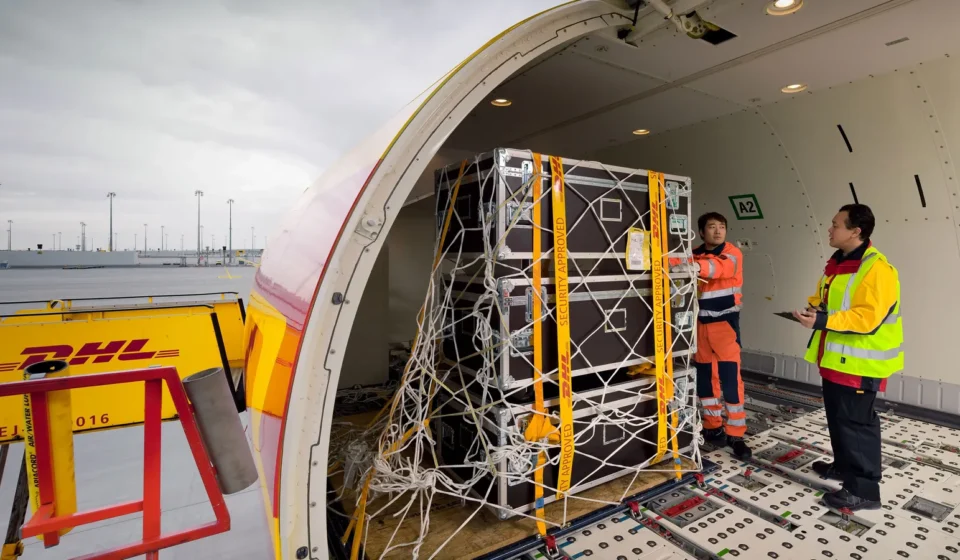
GLOBAL LOGISTICS HEADQUARTERS — In a strategic move designed to shake up the international shipping sector, logistics titan DHL Express has officially rolled out a standardized, scheduled express air freight service tailored specifically for heavyweight and oversized cargo. Announced via a press release on September 9, the new offering—dubbed "Heavy Weight Express"—seeks to bridge the persistent gap between traditional, slow-moving heavy freight and fast, premium small-parcel shipping.
By integrating massive cargo capabilities into its renowned expedited network, DHL Express is promising businesses a reliable, high-speed solution to move industrial-grade equipment, sensitive medical supplies, and critical automotive components across continents with unprecedented precision.
Main Facts
The core of the newly launched Heavy Weight Express service is its ability to handle massive industrial payloads while maintaining the speed and predictability typically reserved for small parcels and documents.
According to company specifications, the service can seamlessly accommodate individual pieces weighing up to 2,200 pounds, with total shipments capable of reaching up to 6,000 pounds. Transit times are remarkably swift for cargo of this magnitude, with most shipments arriving at their destination within one to three business days, depending on the specific origin, route, and characteristics of the cargo.
Crucially, Heavy Weight Express is not limited to a few select regional corridors; it is being deployed globally across DHL Express’s expansive international network, which spans more than 220 countries and territories.
To manage this complex logistical undertaking, DHL utilizes its proprietary end-to-end infrastructure. This includes the company’s dedicated aircraft fleet, international hubs, gateway facilities, automated customs clearance operations, and last-mile delivery networks, supplemented by trusted commercial air and ground partners.
Furthermore, the service introduces transparent pricing through a "one upfront quote" model, designed to eradicate the hidden fees, unexpected surcharges, and variable invoicing that have historically plagued heavy freight shipping. Combined with round-the-clock end-to-end tracking and specialized customer support desks, DHL is positioning Heavy Weight Express as a comprehensive ecosystem for high-stakes enterprise logistics.
Chronology
The rollout of Heavy Weight Express represents the culmination of years of operational refinement and market analysis within the global supply chain sector.
- Pre-2023 (The Market Gap): For decades, global shippers faced a stark dichotomy in international transport. They could utilize standard air freight or ocean cargo for heavy, bulky items—which, while cost-effective for large volumes, were plagued by unpredictable transit times, port congestion, and cumbersome handoffs between multiple third-party handlers. Alternatively, they could use express networks, which were largely restricted by strict weight and dimension limits.
- Late 2023 to Early 2024 (Internal Development): Recognizing a growing demand from industrial, tech, and automotive sectors for faster, highly reliable heavy-transit options, DHL Express engineering and network operations teams began architecting a unified global product. The goal was to standardize handling procedures for oversized cargo across diverse regulatory environments and airport hubs.
- Mid-2024 (Infrastructure Alignment): DHL aligned its global aviation assets, ground fleets, and customs brokerages to support the structural weight demands of the upcoming service. Specialized training programs were rolled out for warehouse and tarmac personnel to handle heavy payloads safely and efficiently.
- September 9, 2024 (Official Global Launch): DHL Express officially unveiled the Heavy Weight Express service via a global press release, simultaneously activating dedicated Heavy Weight Priority Desks around the world to oversee initial operations, monitor live shipments, and provide hands-on customer intervention.
- Post-Launch Phase (Current Operations): The service is now fully operational across DHL’s global network of over 220 countries and territories, catering to high-demand sectors and actively securing enterprise contracts.
Supporting Data
The necessity for a streamlined, high-speed heavy freight service is underscored by the complex operational metrics and industry standards driving modern global supply chains. A deeper look at the data surrounding Heavy Weight Express highlights its structural capacity:
- Weight Thresholds:
- Per Piece: Up to 2,200 pounds (approx. 1,000 kilograms).
- Per Total Shipment: Up to 6,000 pounds (approx. 2,720 kilograms).
- Speed Metrics:
- Standard Transit Time: 1 to 3 business days globally, contingent upon origin-destination pairs and regulatory clearance times.
- Geographic Reach:
- Global Network: Operational access spanning more than 220 countries and territories.
- Infrastructure Utilization:
- Integrated access to DHL’s proprietary aircraft fleet, international sorting hubs, dedicated gateway facilities, and in-house customs brokerage teams.
- Dedicated Oversight:
- Implementation of global "Heavy Weight Priority Desks," ensuring that every heavy shipment is assigned dedicated case ownership for proactive tracking, exception management, and real-time intervention.
Official Responses
Company leadership has emphasized that Heavy Weight Express is designed to fundamentally change how multinational corporations approach risk management in their supply chains.
Laurice Bancroft, Senior Vice President of Network Operations for DHL Express Americas, offered detailed insights into the operational philosophy behind the new service during an interview with industry publication Supply Chain Dive.
"This integrated model gives DHL greater control over the shipment journey and helps provide predictable transit times and capacity, even during periods of disruption or constrained air capacity," Bancroft stated, highlighting the vulnerability of traditional, fragmented freight forwarding networks.
Bancroft further elaborated on the financial and operational predictability the service brings to corporate shippers, noting the elimination of fluctuating market rates through transparent pricing structures.
"Shippers are given ‘one upfront quote,’ eliminating possible fees that may arise throughout the shipping process," Bancroft explained. She added that the combination of upfront pricing and integrated in-house customs brokerage directly addresses the primary pain points of international freight. "In-house customs can help reduce delays, while end-to-end tracking enables full visibility throughout transport. This helps businesses reduce delays, accelerate program launches, lower inventory risk, and minimize costly downtime."
To ensure that service failures are minimized and customer issues are resolved instantaneously, DHL has established specialized command centers known as Heavy Weight Priority Desks. According to Bancroft, these specialized global teams are tasked with proactively tracking shipments, identifying potential logjams or regulatory bottlenecks early, and executing real-time interventions.
"Each heavyweight shipment receives ‘dedicated case ownership’ through these specific teams," Bancroft noted, underscoring the high-touch, white-glove nature of the service.
Implications
The introduction of DHL Express’s Heavy Weight Express carries profound implications for multiple industries, corporate supply chain strategies, and the broader global logistics market.
1. Sector-Specific Impact and Use Cases
While standard air cargo has long served the commodity transport market, Heavy Weight Express is explicitly engineered for high-value, high-consequence industries where delays translate directly into millions of dollars in losses. According to DHL’s official releases, primary beneficiary sectors include:
- Technology & Electronics: Transporting heavy server racks, semiconductor manufacturing components, and sensitive hardware upgrades across international borders without risking damage or prolonged transit delays.
- Automotive Manufacturing: Moving critical assembly line machinery, replacement parts, and prototype vehicles to prevent catastrophic factory downtime.
- Engineering & Machinery: Delivering heavy industrial tools, specialized manufacturing parts, and hydraulic units on strict, immutable timelines.
- Life Sciences & Pharmaceuticals: Transporting large-scale medical diagnostic equipment, temperature-controlled pharmaceutical manufacturing inputs, and clinical trial hardware.
- Oil, Gas & Energy: Delivering urgent drilling parts, turbine components, and heavy extraction machinery to remote or offshore operational sites to avoid costly energy production halts.
2. Mitigation of Production Downtime and Inventory Risk
In modern manufacturing and technology development, the "just-in-time" (JIT) inventory model has long aimed to reduce the overhead costs associated with holding massive stockpiles of spare parts and components. However, JIT models are notoriously fragile; a single delayed shipment of a crucial heavy component can halt an entire assembly line, costing corporations hundreds of thousands of dollars per hour in idle labor and missed production targets.
By guaranteeing delivery within one to three business days for multi-ton shipments, Heavy Weight Express enables companies to maintain leaner inventory buffers. Rather than warehousing expensive, oversized backup parts locally in every market, enterprises can rely on DHL’s rapid global air network to ship replacement parts overnight or within a 72-hour window from central manufacturing hubs. This optimization of working capital represents a significant strategic advantage for CFOs and supply chain directors alike.
3. Disruption Resilience in a Volatile Global Air Cargo Market
The post-pandemic global logistics environment has been characterized by chronic volatility. Fluctuating fuel prices, geopolitical conflicts closing crucial airspace, labor shortages at major international airports, and sudden shifts in consumer demand have repeatedly strained commercial air capacity.
Traditional freight forwarders—who typically rely on booking cargo space on third-party commercial passenger and cargo airlines—frequently struggle during these periods of disruption, passing cascading delays and unexpected rate hikes onto their corporate customers.
Because DHL Express utilizes a tightly controlled, integrated model combining its own dedicated aircraft fleet with proprietary ground infrastructure and strategic transport partners, it retains a high degree of operational agility. The launch of Heavy Weight Express leverages this closed-loop ecosystem, offering enterprise customers a reliable insulation layer against external market shocks.
4. Competitive Pressure on Legacy Freight Forwarders
The debut of this service signals an aggressive push by express delivery giants into territory historically dominated by traditional freight forwarders and ocean shipping brokers. By combining the speed of express air networks with the capacity of heavy freight, DHL is effectively redefining customer expectations.
Traditional forwarders who rely on multi-step handoffs—where a shipment is managed by a trucking company to the airport, a separate airline during flight, a handling agent upon arrival, and a third-party customs broker—may find it difficult to compete with DHL’s unified, single-source accountability model.
Looking Ahead
As multinational corporations continue to re-engineer their supply chains for maximum resilience, agility, and speed, services that bridge the divide between parcel delivery and heavy cargo will undoubtedly become the gold standard of international trade. With Heavy Weight Express, DHL Express has not merely introduced a new product; it has established a formidable benchmark for how the global logistics industry must evolve to meet the complex, high-stakes demands of modern enterprise.