


SoftBank Moves to Reclaim Robotics Legacy: The Acquisition of the Robotics and AI Institute

In a move that signals a significant shift in the global landscape of physical artificial intelligence, Japanese tech conglomerate SoftBank Group Corp. has entered into an agreement to acquire the Cambridge, Massachusetts-based Robotics and AI Institute (RAI) from Hyundai Motor Group. While financial terms of the transaction remain undisclosed, the deal represents a strategic homecoming for the intellectual property and research talent pioneered by industry icon Marc Raibert.
As the robotics sector moves from experimental research to widespread industrial and commercial application, the acquisition is currently under scrutiny by the Committee on Foreign Investment in the United States (CFIUS). This regulatory review underscores the critical nature of the technology held by the RAI, which sits at the intersection of national security, economic competitiveness, and the future of autonomous labor.
A Legacy Reconnected: The History of the Players
To understand the significance of this acquisition, one must look at the intertwined history of SoftBank, Hyundai, and Marc Raibert. Raibert, a former professor at MIT and Carnegie Mellon, is widely considered the father of modern dynamic-legged robotics. Having founded Boston Dynamics in 1992, he spent decades pushing the boundaries of what machines could do, moving from tethered laboratory prototypes to the fluid, agile robots that dominate the public imagination today.
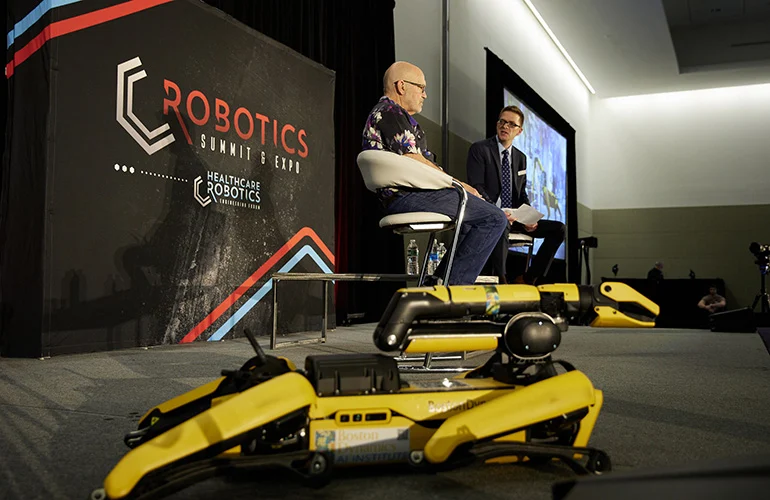
SoftBank’s relationship with this technology began in 2017 when it acquired Boston Dynamics from Google (Alphabet Inc.) for a reported $100 million. During its four-year tenure as owner, SoftBank pushed the company toward commercialization, most notably through the launch of the Spot quadruped.
In 2021, Hyundai Motor Group acquired a controlling stake in Boston Dynamics, valuing the company at $1.1 billion. As part of that transition, the Robotics and AI Institute was established in 2022 with an initial investment exceeding $400 million, designed to serve as a high-level research hub tasked with solving the most complex problems in robot control, perception, and navigation. With the initial funding cycle for the RAI now concluded, the institute has become a target for acquisition as SoftBank looks to consolidate its robotics assets.
Chronology of an Evolving Robotics Landscape
The trajectory of these entities reflects the broader maturation of the robotics industry:
- 1992: Marc Raibert founds Boston Dynamics, establishing the bedrock for dynamic locomotion research.
- 2013: Google acquires Boston Dynamics, aiming to fold its research into its broader moonshot projects.
- 2017: SoftBank acquires Boston Dynamics, shifting the focus from pure research to commercial viability.
- 2020: Raibert steps down as CEO of Boston Dynamics, transitioning into a visionary role.
- 2021: Hyundai Motor Group acquires a controlling stake in Boston Dynamics, with SoftBank retaining a 20% interest.
- 2022: The Robotics and AI Institute (RAI) is launched in Cambridge, Massachusetts, as a spinoff of the Hyundai-Boston Dynamics partnership.
- 2026 (July): Hyundai shareholders move to acquire SoftBank’s remaining 9.65% stake in Boston Dynamics, signaling a total separation of the two entities.
- 2026 (Late): Reports emerge that SoftBank is moving to acquire the RAI, effectively bringing the institute’s research back under the SoftBank umbrella.
The Technological Value Proposition: What is at Stake?
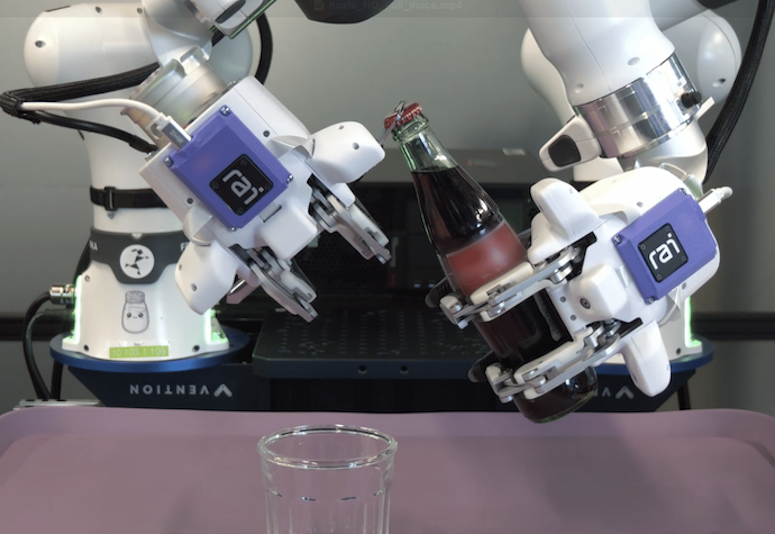
The RAI is not merely a research laboratory; it is a center for "physical AI." While many tech giants focus on Large Language Models (LLMs) and generative text, the RAI has specialized in the translation of AI intelligence into kinetic, real-world action.
Their research portfolio covers:
- Whole-Body Learning: A framework that allows robots to move with human-like fluidity, as demonstrated in the recent acrobatic capabilities of the new Atlas robot.
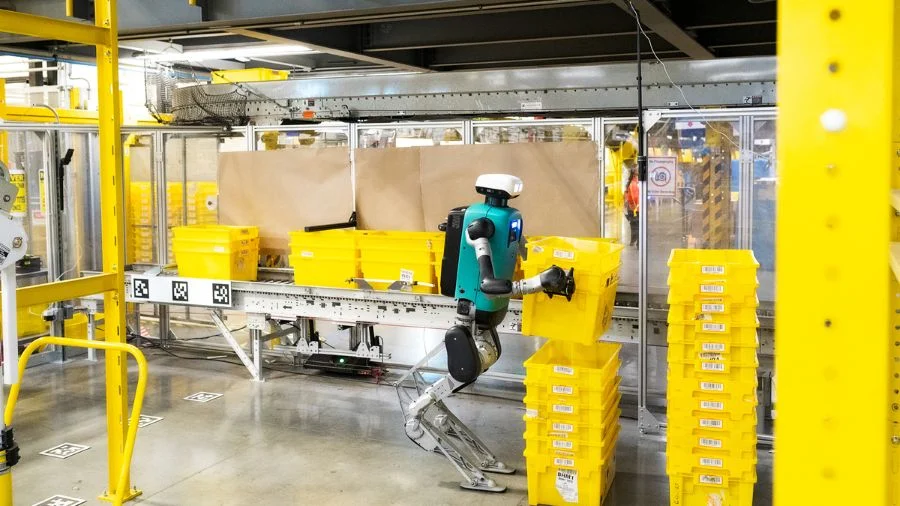
- Manipulation and Navigation: Advanced algorithms that enable robots to operate in unstructured environments, such as construction sites or cluttered warehouses, without the need for pre-programmed paths.
- Perception Systems: Integrating sensor fusion to help machines understand the geometry and physics of their surroundings in real-time.
By potentially bringing these capabilities into its portfolio, SoftBank is positioning itself to be more than just a capital provider. It is building a vertical integration strategy that spans from the software layer (AI and cognition) to the physical hardware (industrial automation and mobile robotics).
The ABB Nexus: A Multi-Billion Dollar Strategy
The acquisition of the RAI is occurring in parallel with another massive undertaking: SoftBank’s $5.3 billion deal to acquire the robotics business of ABB. This move is one of the largest in the history of industrial automation.
ABB brings decades of experience in the manufacturing sector, with a massive global installed base of industrial arms and controllers. However, industrial robots have historically been "dumb"—they perform repetitive tasks in static, caged environments. By pairing the RAI’s expertise in AI and autonomous perception with ABB’s massive industrial footprint, SoftBank is essentially attempting to turn traditional, rigid factory automation into a flexible, cognitive system.
If this synergy is realized, the next generation of industrial robots will not just repeat a task; they will be able to adapt to changing variables on the assembly line, effectively bridging the gap between factory automation and general-purpose robotics.

Regulatory Hurdles: The Role of CFIUS
The involvement of the Committee on Foreign Investment in the United States (CFIUS) adds a layer of complexity to the transaction. As a multi-agency body chaired by the U.S. Treasury, CFIUS is tasked with ensuring that foreign investment does not compromise American technological superiority or national security.
Given that the RAI operates at the cutting edge of robotics—technology with dual-use applications in defense, surveillance, and logistics—the review process will likely be rigorous. While SoftBank is a Japanese conglomerate, the sensitive nature of the software algorithms and control logic developed in Cambridge means that regulators will be looking closely at data security and technology transfer protocols.
At this stage, the status of the review remains private. However, the industry is watching closely, as the outcome could set a precedent for how "physical AI" companies are traded across international borders.
Official Responses and Corporate Silence
To date, both parties have maintained a guarded stance. In response to inquiries from The Robot Report, the RAI issued a brief statement: "We don’t have anything to share on this topic right now. We’d still love to stay in touch and keep you in the loop when we have news to share."
SoftBank, known for its strategic but often opaque investment maneuvers, has not provided a comment. This silence is typical for transactions of this nature, where regulatory approval is the final hurdle. However, the timing of the deal—coinciding with the finalizing of the ABB acquisition—suggests a highly coordinated effort to redefine SoftBank’s position as the world’s leading robotics powerhouse.
Future Implications: The "New Boss"
The prospect of SoftBank acquiring the RAI creates a circular irony in the world of tech leadership. Marc Raibert, who has spent his career moving between large corporate owners, may find his most recent research institute back under the control of his former partner.

For the industry, the implications are profound. If the deal closes, the "Raibert Legacy"—spanning decades of work from the BigDog to the modern, acrobatic Atlas—will be reunited with the vast capital and infrastructure of the SoftBank ecosystem. This shift marks the end of the "experimentation phase" for many of these technologies.
The move suggests that SoftBank is no longer looking for "moonshots" or pure R&D. Instead, they are building a commercial empire. By integrating the AI research from the RAI with the industrial might of ABB, SoftBank is betting that the next decade of growth will not come from internet software, but from the physical world.
Whether this concentration of power in robotics will lead to a breakthrough in human-robot collaboration or face antitrust and regulatory friction remains to be seen. What is clear, however, is that the era of isolated, academic robotics research is fading, replaced by a new, highly competitive, and well-capitalized landscape where the winners will be those who can successfully marry intelligence with motion.
As the industry awaits the conclusion of the CFIUS review, stakeholders and competitors alike are left to wonder: Is this the final piece of the puzzle for SoftBank, or merely the first step in a much larger push to dominate the physical AI era? For now, the robotics world watches in anticipation, waiting for the formalization of a deal that could alter the trajectory of human labor for the next half-century.