



Hirose Unveils GT37 Series: Elevating 1000BASE-T1 Automotive Ethernet Connectivity

As the automotive industry pivots toward the "Software-Defined Vehicle" (SDV) paradigm, the demand for high-speed, reliable, and space-efficient data transmission has reached a fever pitch. Modern vehicles are no longer merely mechanical machines; they are sophisticated edge-computing hubs processing massive streams of data from Advanced Driver Assistance Systems (ADAS), high-definition infotainment displays, and sensor-fusion suites.
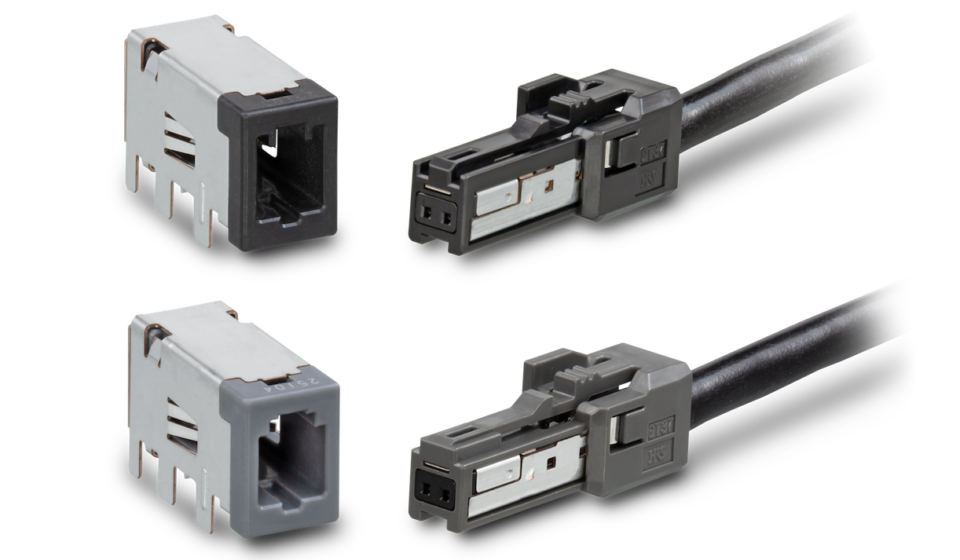
Responding to these stringent requirements, Hirose Electric, a global leader in interconnect technology, has officially launched the GT37 Series wire-to-board connector. Designed specifically for 1000BASE-T1 automotive Ethernet applications, the GT37 represents a significant leap forward in signal integrity and physical miniaturization.
Main Facts: The Engineering Behind the GT37
The GT37 Series is engineered to address the inherent challenges of high-speed data transmission within the electromagnetically "noisy" environment of an automobile. The 1000BASE-T1 standard, which allows for Gigabit Ethernet over a single unshielded or shielded twisted-pair (UTP/STP) cable, is the backbone of modern automotive architecture.
Key Technical Specifications:
- Data Throughput: Optimized for 1000BASE-T1 (Gigabit Ethernet) standards.
- Shielding: Fully shielded architecture to combat Electromagnetic Interference (EMI) and Radio Frequency Interference (RFI).
- Impedance Matching: The connector features specialized impedance matching at the stripped-cable section, a critical design choice to mitigate signal reflection and insertion loss.
- Compact Form Factor: The two-position interface boasts a minimal footprint of 8.6 mm in width and 10.6 mm in height, allowing for high-density PCB layouts.
- Mechanical Reliability: Incorporates a dual-lock mechanism that provides both tactile and audible feedback during engagement, ensuring connectivity integrity under high-vibration conditions.
- Assembly Efficiency: Designed with a sleeve-component configuration that supports hand-crimp assembly, lowering the barrier to entry for rapid prototyping and modular manufacturing.
Chronology: The Evolution Toward Gigabit Automotive Ethernet
The roadmap leading to the release of the GT37 is rooted in the broader industry transition from legacy bus systems (like CAN and LIN) to high-bandwidth Ethernet-based backbones.
The Rise of 1000BASE-T1
- 2010s: The Ethernet Shift: Automotive engineers began realizing that legacy communication protocols were insufficient for the data loads required by nascent autonomous driving features.
- The IEEE 802.3bp Standard: The ratification of the 1000BASE-T1 standard provided a framework for Gigabit Ethernet over a single twisted pair, significantly reducing cable weight and cost—two vital metrics for automotive manufacturers.
- The EMI Challenge: As transmission speeds climbed into the Gigahertz range, the threat of EMI grew exponentially. Standard unshielded connectors began to fail, leading to the development of specialized, shielded interconnects.
- 2026: The Hirose GT37 Milestone: Following years of research into high-frequency interconnect materials and contact geometry, Hirose finalized the GT37 series. This launch represents the culmination of a multi-year effort to balance extreme miniaturization with the rigid shielding requirements of the 1000BASE-T1 standard.
Supporting Data: Why Shielding and Impedance Matter
In the context of 1000BASE-T1, signal integrity is not merely a preference; it is a safety requirement. When data moves at 1 Gbps, even minor impedance discontinuities at the connector interface can cause signal reflections, manifesting as "bit errors."

The Physics of Connectivity
- Return Loss: By maintaining a consistent 100-ohm differential impedance through the connector, the GT37 minimizes return loss, ensuring that the signal reaches its destination without degradation.
- Crosstalk Mitigation: In a vehicle, Ethernet cables are often bundled alongside power cables and other high-frequency data lines. The GT37’s full shielding acts as a Faraday cage, preventing the connector from acting as an antenna that could either radiate interference or be susceptible to it.
- Mechanical Durability: Automotive connectors undergo rigorous testing, including thermal cycling (-40°C to +105°C), vibration profiles simulating engine-mount conditions, and salt-mist corrosion tests. The GT37’s dual-lock system is designed to maintain contact pressure throughout the vehicle’s expected 15-year lifespan.
Official Perspectives: The Hirose Philosophy
Hirose Electric has consistently positioned itself at the intersection of consumer electronics precision and automotive-grade ruggedness. By bringing the GT37 to market, the company aims to simplify the supply chain for Tier 1 and Tier 2 automotive suppliers.
"Our goal with the GT37 was to strip away the complexity of the assembly process without sacrificing the high-performance shielding required by today’s Gigabit automotive networks," said a spokesperson for the Hirose engineering team. "By focusing on a sleeve-component design that supports hand-crimp assembly, we provide manufacturers with the flexibility to assemble high-performance harnesses in a variety of environments, from the assembly line to the R&D lab."
The company emphasizes that the GT37 is not just a connector, but a platform. It supports the trend toward modular vehicle design, where subsystems (such as camera modules or lidar sensors) can be swapped or upgraded without requiring a full redesign of the wiring harness interconnects.
Implications: The Future of Vehicle Architecture
The release of the GT37 Series has far-reaching implications for the automotive and broader robotics industries.
1. Enabling the Software-Defined Vehicle (SDV)
As cars transition to centralized computing, the "backbone" of the vehicle must handle massive data throughput. The GT37 ensures that this backbone remains robust, allowing automakers to deploy over-the-air (OTA) updates and advanced AI-driven features that rely on low-latency, high-speed communication.

2. Robotics and Industrial Automation
While the GT37 is optimized for automotive environments, its technical attributes make it highly attractive for the robotics sector. Robotic grippers, end-effectors, and cobot (collaborative robot) joints require high-speed data transmission in tight, high-vibration spaces. The GT37’s compact footprint and high shielding make it an ideal candidate for these industrial applications, where Ethernet-based communication is becoming the standard for real-time control.
3. Supply Chain and Design Flexibility
The move toward standardized, hand-crimpable connectors like the GT37 reduces the reliance on proprietary, overly complex connector systems. This modularity allows for:
- Reduced Design Cycles: Engineers can integrate the connector into their PCBs with greater confidence, knowing the signal integrity challenges have been handled at the component level.
- Cost-Efficiency: Simplified assembly processes reduce labor costs and the potential for manufacturing defects, which are notoriously expensive to resolve in automotive production.
4. The Path Toward 10GBASE-T1
While the current standard is 1000BASE-T1, the industry is already eyeing 10GBASE-T1 for future-proofing autonomous vehicles. The engineering expertise gained in developing the GT37 series provides Hirose with a foundational blueprint for tackling the even more stringent EMI and signal integrity requirements of future 10-Gigabit automotive standards.
Conclusion
The introduction of the Hirose GT37 Series wire-to-board connector serves as a critical enabler for the next generation of automotive technology. By solving the dual challenges of high-speed signal integrity and physical space constraints, Hirose has provided a vital component for the vehicles of tomorrow. As we move closer to a future defined by autonomous transit, smart infrastructure, and high-performance robotics, the importance of these "invisible" connections cannot be overstated. They are the arteries of the digital nervous system, ensuring that data—the lifeblood of modern technology—flows without interruption or compromise.
For engineers and designers, the GT37 offers a compelling blend of reliability, ease of implementation, and high-speed capability, solidifying its place as a essential tool in the modern electronics toolkit. As Hirose continues to innovate within this space, the GT37 stands as a testament to the company’s commitment to precision engineering and its vision for a more connected, efficient, and safer automotive future.