

Bridging the Gap: Intel to Define the Infrastructure of Physical AI at RoboBusiness 2026

The rapid evolution of Artificial Intelligence is reaching a critical inflection point. For the past several years, the global conversation surrounding AI has been dominated by large language models (LLMs) and digital-first generative platforms. However, the next frontier of technological advancement is shifting decisively from the screen to the shop floor, the warehouse, and the open field. As AI transitions into the physical world, Intel Corporation is positioning itself as the architectural backbone of this transformation.
At the upcoming RoboBusiness 2026 conference—the industry’s premier event for commercial robotics—Intel will unveil its vision for the infrastructure required to scale "Physical AI." By moving beyond the abstract performance of algorithms, Intel aims to provide a blueprint for creating robots that are not just intelligent, but fundamentally responsive, reliable, and safe in complex, real-world environments.
The Paradigm Shift: From Digital Models to Physical Machines
For robotics developers, the transition from prototype to production has long been the industry’s "valley of death." While a model may perform flawlessly in a simulated environment or a controlled lab, deploying that same intelligence into an autonomous mobile robot (AMR) navigating a busy logistics facility presents an entirely different set of constraints.
Intel’s core argument is that the success of the next generation of robotics will not be dictated by the sheer size of a neural network or the complexity of a training dataset. Instead, success will be defined by "deployment intelligence"—the ability to integrate high-level reasoning with deterministic control.
"We are entering an era where AI must move from the data center to the edge," says Nagesh Puppala, general manager of physical AI and robotics at Intel. "The challenge for developers is no longer just about the model. It is about building a system that can sense, reason, and act in real time while maintaining the safety and reliability standards required for commercial operations."
RoboBusiness 2026: A Focal Point for Industry Evolution
The insights Intel plans to share will take center stage on October 20 and 21 in Santa Clara, California. During his keynote session, "From Models to Machines: Building the Open Infrastructure for Physical AI," scheduled for 1:15 p.m. PT on the first day of the conference, Puppala will outline the specific architectural requirements for modern robotics.
The session will serve as a deep dive into the "edge-first" philosophy. Intel is advocating for a shift toward architectures that treat perception, sensor fusion, motion planning, and real-time control as a unified stack. By leveraging the power of Intel Core and Intel Core Ultra processors, the company is aiming to provide a standardized, open-development environment—the Robotics AI Suite—that allows developers to move faster without sacrificing the hardware-level precision necessary for physical tasks.
Chronology of the Physical AI Movement
The rise of Physical AI is not a sudden phenomenon but the result of a decade of hardware and software maturation.
- 2020–2022: The focus was primarily on "smart" automation. Robots relied on pre-programmed logic with limited computer vision. AI was an add-on, often requiring auxiliary processing units that drove up power consumption and cost.
- 2023–2024: The "Generative AI" boom triggered a massive influx of investment. Developers began attempting to port transformer models into robotic systems. While successful in labs, these systems struggled with the high latency and compute limitations of battery-powered hardware.
- 2025: Industry leaders recognized that software was outpacing hardware capabilities. The conversation shifted to "deterministic AI," where the necessity of safe, predictable robot behavior became the primary hurdle for widespread commercial adoption.
- 2026: Intel’s focus on the "Robotics AI Suite" marks the current era, where the industry is moving toward open-source, interoperable frameworks designed to bridge the gap between high-level AI reasoning and low-level motion control.
Supporting Data: Why Infrastructure Matters
The necessity for a robust infrastructure is underscored by the current state of industrial robotics. According to recent industry metrics, the number of robots deployed in warehouses and manufacturing facilities is expected to grow by 15% annually through 2030. However, the "deployment failure rate"—defined as projects that remain in the prototype phase for more than 18 months—remains stubbornly high at approximately 40%.
The primary reasons for these bottlenecks include:
- Heterogeneous Compute Stacks: The difficulty of coordinating data between various sensors (LiDAR, cameras, ultrasonic) and the primary CPU/GPU.
- Safety Latency: The inability of standard cloud-based AI to make millisecond-level decisions required to avoid human workers.
- Scalability: The struggle to update software across a fleet of 500 robots without requiring individual, manual intervention.
Intel’s infrastructure approach aims to address these points by providing a "hardened" software stack optimized for the Intel Core Ultra architecture. By moving the AI inference closer to the physical actuators, Intel claims it can reduce decision latency by up to 30% compared to traditional, less-integrated approaches.
The Human Element: Meet Nagesh Puppala
The strategy behind Intel’s push into robotics is spearheaded by Nagesh Puppala. With over 25 years of experience in the technology sector, Puppala brings a unique blend of mechanical engineering expertise and high-level corporate strategy.
Before his current role, Puppala was instrumental in building Intel’s media business, taking it from a nascent initiative to a scalable, global platform. This background is telling; he views robotics not as a collection of disjointed gadgets, but as a platform business. His vision involves creating an ecosystem where developers, hardware manufacturers, and end-users can interact seamlessly.
"Nagesh represents the new guard of leadership at Intel," says a senior industry analyst. "He understands that you cannot build a robot in a vacuum. You need to align the technical capabilities of a silicon manufacturer with the practical, often messy realities of an assembly line or a hospital floor."
Implications for Future Industries
The implications of Intel’s work extend far beyond traditional factory automation. As the infrastructure for Physical AI stabilizes, several key sectors are poised for disruption:
Manufacturing
The transition to "lights-out" manufacturing is contingent upon AI that can handle non-repetitive tasks. Intel’s focus on deterministic control ensures that robots can adapt to changes on the floor without requiring a total system reboot.

Logistics and Warehousing
Autonomous Mobile Robots (AMRs) are currently limited by their navigation capabilities in dynamic environments. Better edge-computing infrastructure allows these robots to process visual data locally, enabling them to navigate complex, human-populated spaces with higher confidence.
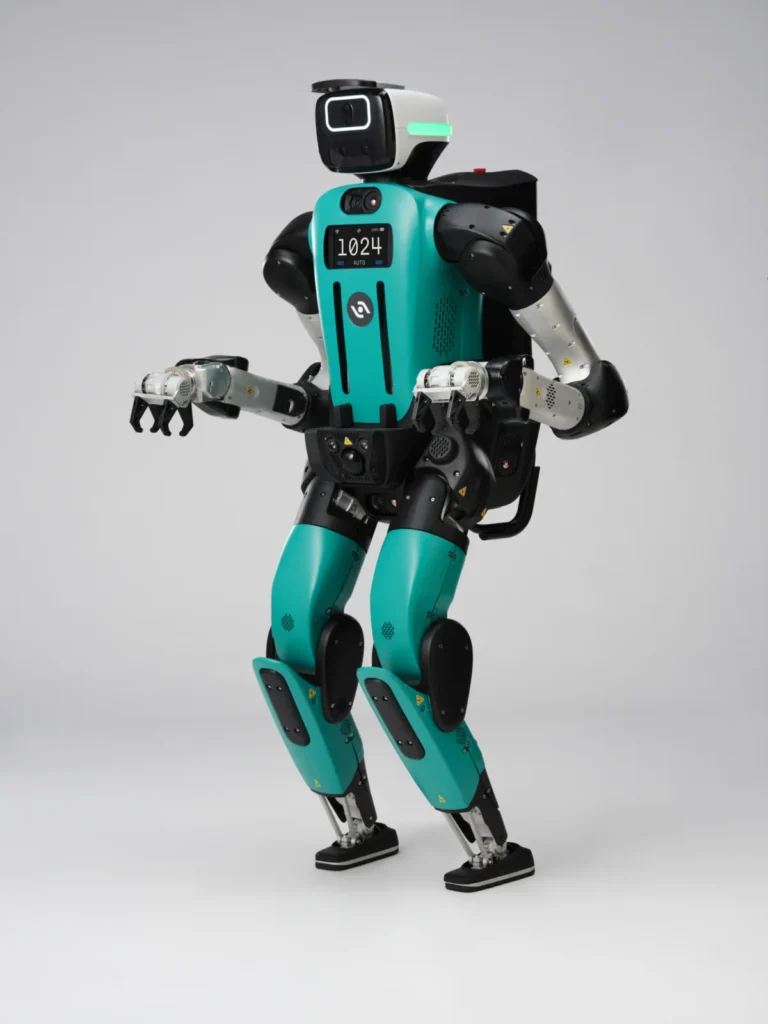
Humanoids
Perhaps the most ambitious frontier, the development of humanoid robots requires massive amounts of processing power to simulate human-like motor skills. Intel’s integration of high-performance cores is aimed specifically at enabling the complex motion planning required for these bipedal systems.
Agriculture and Field Robotics
Unlike a warehouse, the outdoors is unpredictable. From changing lighting conditions to uneven terrain, agricultural robots require extreme resilience. Intel’s emphasis on "edge-first" hardware ensures that these systems remain operational even when connectivity to the cloud is intermittent or non-existent.
Join the Conversation at RoboBusiness 2026
As RoboBusiness celebrates its 20th anniversary, the conference serves as more than just a trade show; it is the annual summit for the architects of the future. The event will host a diverse array of stakeholders, from venture capitalists looking for the next unicorn to lead engineers solving the problems of real-time sensor fusion.
Attendees who register for the conference will have access to:
- Keynote Presentations: Hear from leaders like Puppala on the future of physical intelligence.
- Technical Workshops: Hands-on sessions designed to help developers implement the Robotics AI Suite.
- Networking Receptions: Opportunities to connect with peers in the manufacturing, healthcare, and logistics sectors.
For those looking to gain a competitive edge, the event offers a comprehensive look at the research and industry trends that will define the next two decades of automation. Whether you are an academic researcher or a corporate executive, the insights shared at RoboBusiness 2026 are intended to provide the necessary tools to turn the "Physical AI" concept into a profitable, scalable reality.
Registration for RoboBusiness 2026 is currently open. Interested parties are encouraged to secure their passes early to participate in the full slate of sessions and networking opportunities. For corporate groups and academic institutions, discounted registration programs are available to ensure that the brightest minds in the field have access to this critical conversation.
As Intel prepares to take the stage in Santa Clara, the message is clear: The future of robotics is not just in the software code—it is in the silicon that brings that code to life in the real world. By focusing on the foundational infrastructure of Physical AI, Intel is helping to ensure that the robots of tomorrow are as reliable as they are revolutionary.