


Germany’s Automotive Crisis: IG Metall Protests, Structural Retrenchment, and the Battle for the Future of European Manufacturing

By Stewart Burnett
Main Facts
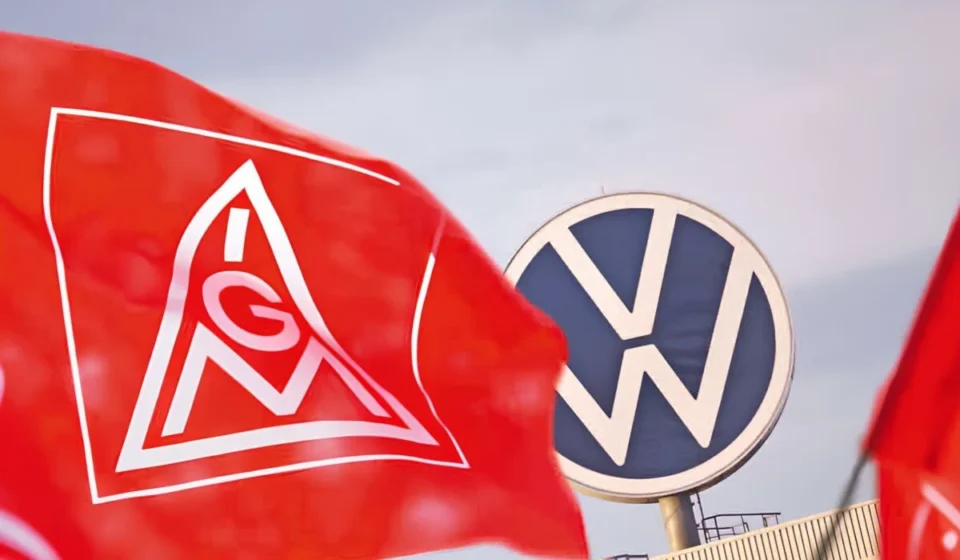
The landscape of German manufacturing is undergoing its most turbulent transformation in decades. On September 21, tens of thousands of industrial workers staged coordinated nationwide protests organized by IG Metall, Germany’s most powerful trade union. The demonstrations directly targeted the brutal, sweeping restructuring campaigns sweeping across the country’s crown-jewel automotive giants—most notably Volkswagen, alongside Mercedes-Benz, BMW, Audi, Porsche, and major tier-one supplier Bosch.
The core demands of the labor movement focus heavily on safeguarding domestic plants and protecting jobs against aggressive cost-cutting measures. However, in a departure from historical precedent, IG Metall’s platform aligns closely with management’s own strategic anxieties regarding international competitiveness. Union leaders are openly urging the German government—under Chancellor Friedrich Merz—to implement urgent policy interventions: lowering exorbitant domestic energy costs and shielding European production from an influx of low-cost Chinese electric and hybrid vehicle imports.
This industrial mobilization serves as a high-stakes prelude to annual wage negotiations. The union is set to formally announce its demands against a macroeconomic backdrop considerably more grim than in prior bargaining rounds. Compounding these operational headaches, Volkswagen suffered the ignominy of being dropped from the Euro Stoxx 50 benchmark index. This exclusion carries severe mechanical consequences; exchange-traded funds (ETFs) tracking the index are forced to liquidate their holdings in the automaker, introducing artificial downward pressure on share prices independent of the company’s underlying fundamentals.
As European markets grapple with Chinese automakers capturing an 11% share of the continent’s automotive sales as of July—increasingly driven by hybrid models—Germany’s automotive sector finds itself caught between tightening profit margins, aggressive foreign competition, and domestic political instability.
Chronology of the Crisis
To understand how Europe’s largest automotive sector arrived at this critical juncture, it is necessary to trace the sequence of events leading up to the September mobilizations and their immediate aftermath:
- June 2024: BMW issues a severe margin warning, setting off early alarm bells across the luxury segment and subsequently prompting plans to shed 8,000 jobs.
- September 21: Tens of thousands of workers participate in nationwide IG Metall protests, rallying outside Volkswagen’s Wolfsburg headquarters and other key automotive hubs to demand job security and trade protections.
- September 22: German political stability shakes as Chancellor Merz’s Christian Democrats suffer heavy losses in two regional elections, including a historic shutout in Mecklenburg-Western Pomerania. The far-right AfD weaponizes Volkswagen’s struggles to accuse the federal government of economic mismanagement. Meanwhile, Vice Chancellor Lars Klingbeil publicly echoes calls for targeted tariffs on imported plug-in hybrids.
- September 23: IG Metall prepares to formally table its annual wage demands amid a deteriorating financial climate across the industrial sector.
- Mid-September (Parallel Developments): Volkswagen Passenger Cars brand chief Thomas Schäfer delivers sobering remarks to staff in Wolfsburg, vowing to accelerate the company’s performance program. Simultaneously, reports emerge regarding potential deep job cuts at Porsche, drawing a swift and public rebuttal from Porsche CEO Michael Leiters.
Supporting Data and Sector-Wide Retrenchment
The structural pressures facing Volkswagen are symptomatic of a broader, systemic retrenchment across the entire European automotive supply chain. According to data from the German automotive industry association VDA, the nation’s car manufacturing sector has shed approximately 100,000 jobs since 2019. Automotive suppliers have been hit even harder, eliminating roughly 74,000 positions—representing nearly a quarter of their total workforce—over the same timeframe.
The erosion of domestic competitiveness is further quantified by market share shifts. Chinese automotive brands have steadily penetrated the European market, reaching an 11% market share by July. Crucially, this expansion is increasingly fueled by hybrid models that slip through existing regulatory loopholes.
Trade policy discrepancies exacerbate these trends. Current European Union tariffs on Chinese car imports apply strictly to battery-electric passenger vehicles (BEVs), leaving hybrids and other internal combustion powertrains untouched beyond the standard 10% baseline duty. Furthermore, European tariff rates remain substantially lower than those enforced in the United States. Even the hardest-hit state-owned Chinese players, such as SAIC, face a maximum European countervailing duty of around 43.6%.
Amid these figures, Volkswagen’s internal restructuring metrics highlight the human cost of the downturn. Thomas Schäfer reported that 16,300 redundancies in Germany have already been finalized, with just under 28,800 out of a targeted 35,000 job reductions agreed upon so far.
Official Responses and Stakeholder Positions
The convergence of labor unions, corporate executives, and political leaders has created a complex web of rhetoric, policy proposals, and damage control.
IG Metall Leadership
Speaking outside Volkswagen’s Wolfsburg headquarters, IG Metall boss Christiane Benner placed the blame squarely on systemic economic pressures rather than labor demands. "Workers didn’t cause this crisis," Benner told reporters, calling on the European Union to dramatically expand its tariff framework to specifically target Chinese hybrid vehicle imports, which currently evade the punitive measures levied against pure BEVs.
Volkswagen Management
Management has shown little appetite for slowing down the pace of austerity. Thomas Schäfer made it clear to Wolfsburg employees that the company would double down on its cost-reduction targets. "We have absolutely no time to lose and will therefore significantly ramp up our performance program once again," Schäfer stated, defending the necessity of the ongoing layoffs to secure the brand’s long-term survival.
Porsche and the Internal Disconnect
The friction between corporate planning and public perception was laid bare when Handelsblatt reported that Volkswagen’s supervisory board viewed an additional 4,100 jobs at Porsche as superfluous, supplementing the 9,000 reductions already agreed upon.
Porsche Chief Executive Michael Leiters issued a direct and swift rebuttal via an internal memo, emphasizing that no such plans existed. "There are no plans to cut an additional 4,000 jobs at Porsche," Leiters maintained, adding that the existing restructuring program had received full approval from Porsche’s supervisory board and that management anticipated no deviations from it.
Whether Leiters’ denial reflects a genuine disagreement over restructuring scopes or a strategic effort to calm workforce sentiment ahead of Porsche’s upcoming Capital Markets Day remains a subject of intense speculation within financial circles.
Political Reactions
The timing of the labor protests coincided with a brutal electoral weekend for Chancellor Friedrich Merz’s Christian Democrats, who suffered stinging defeats in regional elections. The political fallout has amplified pressure on Berlin. Vice Chancellor Lars Klingbeil has joined the chorus demanding targeted tariffs on imported plug-in hybrids, signaling a shift in government posture driven as much by political survival as by industrial necessity.
Meanwhile, diplomatic pressure is mounting internationally. Reports from the Financial Times indicate that the European Commission has formally warned Beijing to rein in its hybrid vehicle exports or face prospective tariff consequences, setting the stage for potential trade retaliations.
Implications and Future Outlook
The current crisis in Germany’s automotive sector carries profound implications that extend far beyond corporate boardrooms and factory floors.
First, the alignment between IG Metall and corporate management marks a watershed moment in German industrial relations. Historically at loggerheads over wages and job security, labor and capital now find themselves united in lobbying the state for relief from high energy costs and protectionist trade barriers against Chinese competitors. This shared front underscores the existential nature of the threat facing Europe’s industrial core.
Second, the structural headwinds facing Volkswagen—amplified by its removal from the Euro Stoxx 50 index—demonstrate how financial market mechanics can exacerbate operational distress. As passive investment funds are forced to shed Volkswagen stock, the company’s cost of capital and market valuation face enduring downward pressures, complicating management’s efforts to fund the costly transition toward software-defined and electric mobility.
Finally, the political dimension cannot be ignored. The rise of the far-right AfD, capitalizing on economic discontent and leveraging job losses at historic institutions like Volkswagen and Mercedes-Benz, places immense pressure on Chancellor Merz’s administration. Berlin must walk a delicate tightrope: balancing the urgent need to protect domestic manufacturing and appease restless unions against the risks of triggering a full-scale trade war with China, one of Europe’s most vital export markets.
As IG Metall prepares to unveil its formal wage demands, and as Brussels weighs its next moves regarding hybrid vehicle tariffs, the German automotive engine is sputtering. How policymakers, executives, and labor leaders navigate the coming months will determine whether Europe’s automotive powerhouse can successfully reinvent itself or face a permanent erosion of its industrial supremacy.