




The landscape of industrial automation is undergoing a profound transformation. As manufacturers grapple with persistent labor shortages, the demand for resilient supply chains, and the imperative of reshoring, the traditional model of "feature-rich, one-size-fits-all" automation is rapidly giving way to a more nuanced, specialized approach.
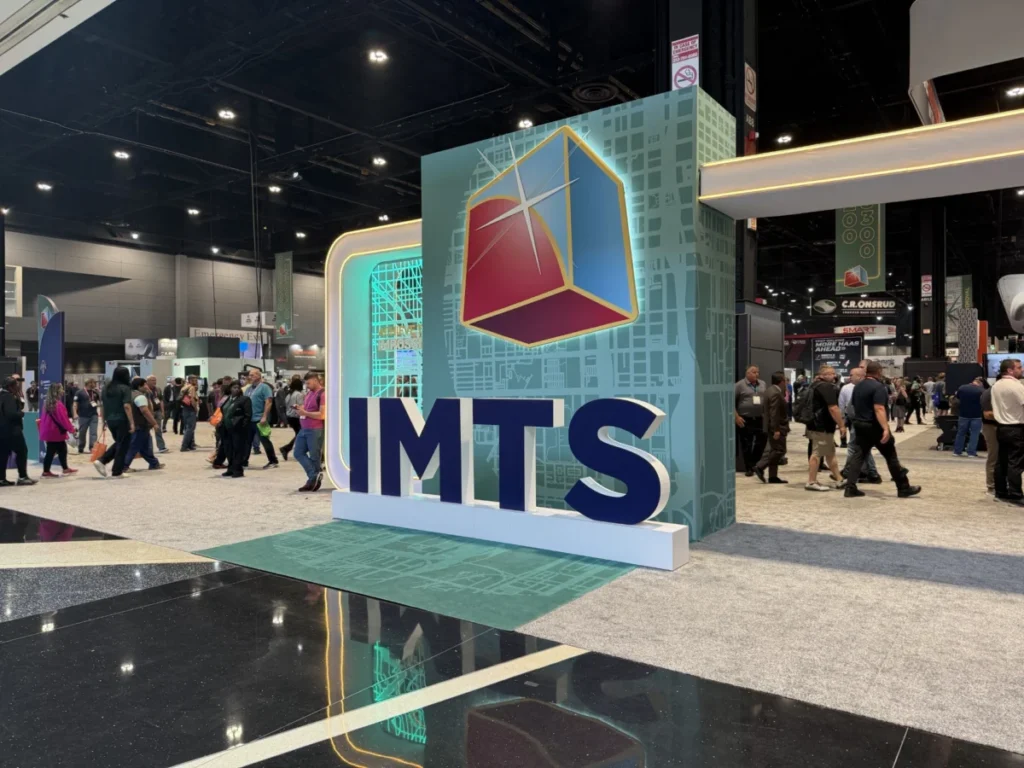
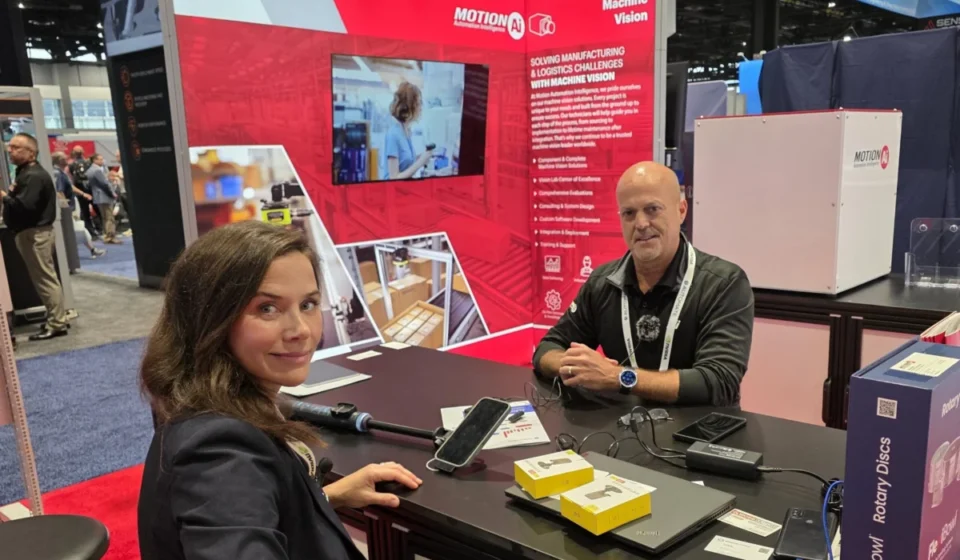
At the recent Automate Show in Chicago, we sat down with Steve Keeney, Director of Product Management at Motion Automation Intelligence (Motion Ai), to unpack these shifts. The conversation explored the rise of "good-enough" engineering, the strategic importance of pre-integrated motion systems, and how the organization is positioning itself as a "demand creator" in an increasingly complex marketplace.
The Shift Toward Economic Automation
The industry is currently witnessing a trend that would have seemed counterintuitive a decade ago: top-tier automation providers, including giants like Siemens, Beckhoff, and Schneider Electric, are aggressively expanding their portfolios to include lower-cost servomotors, drives, and mechanical components.
From General Purpose to Specialty Architectures
Keeney attributes this shift to a move away from over-engineered systems. "For years, manufacturers pushed products with incredibly rich feature sets—often far more than what the average small-to-mid-sized motion application required," Keeney explains. "The industry was obsessed with the idea of one product fitting every application. However, we are seeing the wisdom in John von Neumann’s assertion that specialty computing architectures eventually triumph over general-purpose systems."
By paring back general-purpose products into specialized, lower-cost subsets, manufacturers are providing engineers with exactly what they need—nothing more, nothing less. This "right-sizing" of technology not only reduces capital expenditure but also significantly improves ease of use, as engineers no longer have to navigate complex software and hardware features irrelevant to their specific tasks.
Chronology: Building the Motion Ai Ecosystem
To understand the current state of Motion Ai, one must look at its rapid transformation from regional players to a unified national force.
- Pre-2020: The foundation was built through entities like Applied Machine and Motion Control (AMMC), where Keeney served as an owner for 26 years. These firms operated as regional technical powerhouses, providing deep engineering support.
- 2020: Motion Industries (a subsidiary of Genuine Parts Company) acquired AMMC, marking a pivotal shift in how motion control services would be delivered on a national scale.
- 2022: The official launch of the "Motion Ai" brand consolidated several disparate acquisitions into a singular, cohesive identity, aimed at bridging the gap between component distribution and high-level engineering consultancy.
- 2026 (Present): Motion Ai now operates as a national entity, leveraging the logistics and inventory scale of its parent company while maintaining the technical, hands-on engineering ethos of its original regional components.
Supporting Data: Why Low-Cost Automation is Winning
The "Automate" show floor served as a living laboratory for current trends. The proliferation of robotics and cobots is no longer a luxury; it is a necessity driven by macro-economic pressures.
Addressing the Labor Gap
For small and mid-sized manufacturers, the primary catalyst for adopting low-cost automation is the persistent labor shortage. As companies struggle to fill repetitive roles, they are turning to modular automation. Rather than commissioning massive, monolithic automated lines—which are rigid and expensive—manufacturers are increasingly opting to "bolt together" small, reconfigurable work cells.
This high-mix, low-volume approach allows for greater agility. If a product line changes, the automation can be redeployed or adjusted with minimal downtime. According to Keeney, the market is no longer looking for components; they are looking for "productized solutions." A customer today is less interested in buying a cobot, a base, and a controller separately; they want a single part number that delivers a pre-programmed, ready-to-deploy palletizing station.

Official Response: The "Demand Creator" Philosophy
A critical point of discussion was the distinction between Motion (the parent company) and Motion Ai.
Demand Fulfillment vs. Demand Creation
"Motion Industries is the king of demand fulfillment," Keeney notes. "If you need a bearing, a belt, or a replacement motor to keep your plant running today, Motion is the industry standard."
Motion Ai, by contrast, acts as a "demand creator." Its engineers work with Original Equipment Manufacturers (OEMs) at the design phase, not just the repair phase. By embedding themselves into the R&D process of a machine builder, Motion Ai helps specify the components that will define the performance of the machine. Whether it is an aerospace application, a semiconductor assembly line, or medical device manufacturing, Motion Ai operates as an extension of the client’s internal engineering team.
Mitigating Risk in Innovation
One of the most significant value propositions for Motion Ai is risk mitigation. As Keeney points out, "People are hesitant to buy a $50,000 cobot system online without a guarantee. They need to know that someone has verified the throughput, the programming, and the safety parameters." Motion Ai provides this assurance by maintaining a nearly 1:1 ratio of engineers to salespeople. When a client speaks to a representative, they are speaking to a technical expert who understands the physical constraints of the application.
Implications for the Future of Manufacturing
The Rise of Integrated Actuation
The physical structure of motion systems is changing. We are moving toward "bundled intelligence," where the controller, network, drive, and motor are increasingly housed within the actuator itself. This integration reduces the need for large, complex control cabinets and simplifies the physical footprint of machinery. For the OEM, this means faster assembly and a more compact end product.
The Human Element: Training and Self-Sufficiency
A core tenet of the Motion Ai business model is to teach the customer how to fish. "We don’t want to sell engineering hours for one-off projects," Keeney says. "We want to train our customers so they are self-sufficient." By working side-by-side with OEMs during the initial design and deployment, Motion Ai ensures that the end-user can handle maintenance and troubleshooting internally. This shifts the role of the distributor from a mere vendor to a strategic partner and "second line of defense."
Regionalization and Logistics
While the brand is national, the operational strategy remains regional. By regionalizing inventory, Motion Ai can maintain proximity to the customer while leveraging the national purchasing power of Motion Industries. This does not necessarily translate into lower component prices—as pricing is often set by the original manufacturers—but it provides massive value through "cost of ownership" reductions. Getting the right-sized solution on the first try, delivered with speed and verified through technical expertise, prevents the hidden costs of project delays and over-engineering.
Strategic Outlook
Looking ahead, Keeney emphasizes that the focus will remain on the "Golden Rule"—treating clients with the same technical rigor and honesty one would expect themselves. By resisting the urge to push over-specified equipment and instead steering clients toward the right solution, regardless of whether it resides on their current line card, Motion Ai is betting on long-term relationships over short-term sales.
In a world where automation is the only path forward for competitive manufacturing, the companies that succeed will be those that view automation not as a collection of parts, but as a holistic, intelligent system—one that is designed for the specific, evolving needs of the modern shop floor. As Motion Ai continues to scale, its focus on the intersection of deep technical expertise and broad supply chain reach will likely set the benchmark for the next decade of industrial evolution.