



The Future of Force: Balancing High-Performance Hydraulics with Modern Energy Efficiency

Hydraulic systems remain the backbone of the global industrial landscape. From the massive force required in metal forming and heavy-duty plastics processing to the precision demands of automated production lines, fluid power is unrivaled in its power density, robustness, and reliability. However, as global manufacturing shifts toward decarbonization and sustainability, the traditional "power-at-all-costs" philosophy of hydraulic engineering is undergoing a radical transformation.
Today, engineers are tasked with a dual mandate: preserving the inherent mechanical advantages of fluid power while drastically curbing energy consumption. This shift is not merely an environmental trend; it is an economic necessity driven by rising energy costs, stringent regulatory frameworks, and the competitive demand for "smart" factories.
The Fundamentals of Hydraulic Energy Dynamics
To understand the challenge of efficiency, one must first look at the physics of the hydraulic cycle. Hydraulic systems operate by converting electrical or mechanical energy into fluid pressure, which is subsequently converted back into mechanical work. In this multi-stage transformation, energy loss is almost inevitable through friction, heat generation, and pressure drops.
Historically, industrial hydraulic systems were designed with significant "safety margins." Engineers would oversize pumps and motors to ensure reliability under peak-load conditions. While this guaranteed that machines wouldn’t fail under stress, it meant that systems were often running at full capacity even when demand was low, resulting in massive amounts of wasted energy dissipated as heat.
However, viewing these design margins as "inefficiency" is a simplification. For decades, these margins were the bedrock of industrial safety and longevity. The current industry challenge lies in maintaining that same level of stability while creating systems that are "intelligent" enough to dial back power when it is not needed.
Chronology of Innovation: From Constant Speed to Digital Control
The evolution of energy-efficient hydraulics can be traced through several distinct technological milestones:
- 1970s–1980s (The Era of Fixed Displacement): Systems relied primarily on constant-speed motors and fixed-displacement pumps. Efficiency was managed through simple bypass valves, which were inherently wasteful.
- 1990s–2000s (Introduction of Load-Sensing): The industry saw the adoption of load-sensing and pressure-compensated systems. These allowed the hydraulic output to match the immediate demands of the load, significantly reducing idling losses.
- 2010s (The Rise of Variable Speed Drives): The integration of Variable Speed Drives (VSDs) marked a turning point, allowing electric motors to vary their speed based on the actual duty cycle of the hydraulic actuator.
- 2020s–Present (The Electrohydraulic Revolution): We have entered the era of the "smart" hydraulic system, where electronic sensors, high-speed digital controllers, and machine learning (AI) optimize performance in real-time, effectively blurring the lines between hydraulics and software engineering.
Technological Pillars of Modern Efficiency
The modern hydraulic power unit (HPU) is a sophisticated machine that bears little resemblance to its predecessors. Several key technologies are driving this change:
Variable Speed Drives (VSDs)
VSDs have become the standard for modern energy-efficient hydraulics. By allowing the pump motor to slow down or speed up based on the machine’s specific operational phase (e.g., slowing during a cooling phase or accelerating during a high-force press phase), VSDs eliminate the need to bleed off excess pressure. This direct control over the energy input is one of the most effective ways to lower the carbon footprint of a factory.
Electrohydraulic Architectures
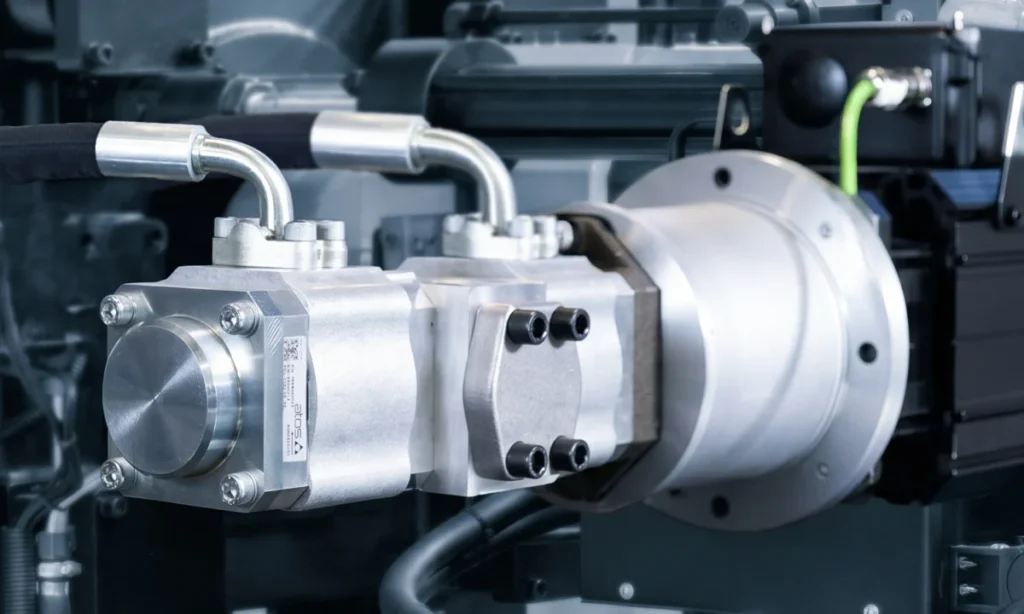
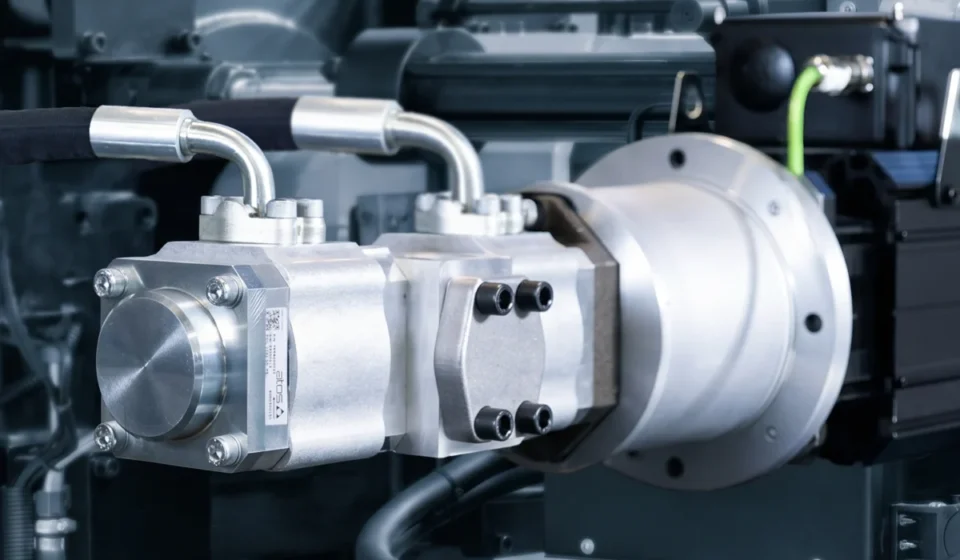
The integration of electronic control into hydraulic valves and pumps—exemplified by advanced servopumps—has revolutionized system responsiveness. Companies like The Atos Group have spearheaded the use of these integrated systems, which utilize closed-loop feedback to ensure that not a single drop of fluid pressure is generated unnecessarily. These systems provide high-frequency diagnostic data, allowing operators to see exactly how much energy is consumed per cycle.
Energy Recovery and Regeneration
In applications involving heavy gravity-fed loads or rapid deceleration, hydraulic systems are now being designed with regenerative circuits. Instead of venting high-pressure fluid back to the reservoir, these systems capture the energy during the lowering or braking phase and store it in accumulators, or use it to assist in subsequent operations. This "energy recycling" can reduce the total energy requirement of a machine by 15% to 30% in high-cycle applications.
Supporting Data: The Impact of Optimization
While every application varies, the data from field implementations consistently shows that modernization pays dividends:
- Reduced Thermal Loading: By matching output to demand, systems run cooler. This extends the life of hydraulic fluid and seals by as much as 20–40%, reducing maintenance costs.
- Electricity Savings: In comparative studies, switching from a constant-speed system to an electrohydraulic, VSD-controlled system can reduce electrical consumption by 30% to 50% in variable-load environments.
- Predictive Maintenance Gains: The shift to digital sensors allows for "condition-based maintenance." Instead of changing oil and filters on a fixed schedule, operators can change them based on the actual health of the fluid, reducing waste and downtime.
The Role of AI and Machine Learning
The most exciting development in the sector is the integration of Artificial Intelligence. Modern hydraulic systems are now generating massive datasets regarding pressure, flow, temperature, and vibration. By applying machine learning algorithms to this data, manufacturers can predict component failure before it happens.
Furthermore, AI-driven optimization allows the hydraulic system to "learn" the most efficient path for a specific cycle. For example, in a plastic injection molding machine, an AI controller can adjust the pressure profile in milliseconds to compensate for minor viscosity changes in the fluid, ensuring that the machine uses the absolute minimum energy required to achieve the desired part quality.
Implications for Industrial Strategy
The shift toward energy-efficient hydraulics has profound implications for industrial facility management:
- Procurement Shifts: Procurement teams are moving away from selecting equipment based solely on initial purchase price. Total Cost of Ownership (TCO) models now factor in energy consumption over a 10-year lifespan, making higher-efficiency systems the more attractive investment.
- Workforce Training: The "hydraulic technician" of the future must be a hybrid professional, comfortable with both high-pressure plumbing and low-voltage digital electronics. The human element of this transition—training and upskilling—is now as critical as the hardware itself.
- Regulatory Compliance: As governments introduce tighter industrial energy standards, companies that fail to upgrade their hydraulic infrastructure risk facing heavy penalties or, at the very least, higher operating costs that make them uncompetitive.
Future Outlook: A Holistic Perspective
The narrative that hydraulics are "outdated" in favor of electric actuators is increasingly being debunked. While electromechanical systems have their place, they cannot match the sheer force, durability, and shock-load resistance of hydraulics in heavy-duty applications.
The path forward for hydraulics is not to disappear, but to evolve into a more intelligent, integrated, and sustainable technology. By combining the raw power of fluid dynamics with the precision of digital control, the industry is creating a new generation of machinery that supports the sustainability goals of the 21st century.
As we look toward the next decade, the focus will remain on system-level integration. It is no longer enough to have an efficient pump; the entire process—from the motor and the fluid to the control logic and the maintenance cycle—must be optimized as a singular, energy-conscious entity. Through this balanced approach—valuing reliability alongside efficiency—hydraulics will remain at the forefront of industrial performance, proving that even the oldest technologies can be reinvented to meet the challenges of a green future.