


Toyota Goes All-In on Humanoid Robots: A Paradigm Shift in Automotive Manufacturing

TOKYO — In a move that signals a monumental shift in industrial automation philosophy, automotive titan Toyota has committed to a massive, high-stakes investment in humanoid robotics. While the broader manufacturing sector has spent decades moving away from anthropomorphic machinery in favor of hyper-optimized, single-purpose robotic arms and "lights-out" dark factories devoid of human presence, Toyota is charting a different course.
The company is backing its new strategy with substantial financial capital and an aggressive deployment timeline. By blending commercially available humanoid platforms with proprietary in-house technologies, Toyota aims to bridge the gap between human dexterity and robotic endurance. The ultimate objective is not to replace humans entirely, but to seamlessly integrate bipedal robots directly onto the automotive assembly line alongside human workers.
Main Facts
The core of Toyota’s new initiative centers on the strategic deployment of humanoid robots within mixed-human and robotic working environments.
- The Strategy: Toyota is combining external procurement—purchasing commercially available humanoid robots from emerging market leaders—with rigorous internal research and development to create custom automation frameworks.
- The Environment: Unlike traditional automotive plants that segregate robots behind safety cages or isolate them in lights-out facilities, Toyota’s vision deploys humanoids directly onto active factory floors.
- The Rationale: Toyota leadership argues that human-centric environments—designed historically for human dimensions, tools, and movement pathways—are fundamentally better navigated by machines that mirror human morphology.
- The Financial Commitment: While exact figures fluctuate as milestones are reached, industry insiders and financial analysts characterize Toyota’s capital allocation as one of the most aggressive and well-funded humanoid integration initiatives in the global manufacturing sector to date.
- The Timeline: Toyota has laid out an accelerated deployment schedule, moving past proof-of-concept laboratory trials into active factory-floor testing and pilot programs within a compressed multi-year window.
Chronology: The Evolution of Toyota’s Robotics Journey
To understand the weight of Toyota’s current all-in bet on humanoids, it is essential to trace the historical evolution of the company’s robotics program, which has quietly developed over decades.
1. The Early Years and Entertainment Robots (Late 1990s–2000s)
Long before humanoid robots were considered viable industrial assets, Toyota’s robotics division was best known for its "Partner Robots." Unveiled in the early 2000s, these machines—often trumpet-playing or violin-playing automatons—were designed primarily to showcase dexterity, balance, and public engagement. While critics initially dismissed them as expensive corporate PR exercises, Toyota’s engineers were quietly solving complex control-system challenges, servo-motor efficiencies, and spatial awareness algorithms that laid the groundwork for today’s sophisticated hardware.
2. The Pivot to Mobility and Healthcare (2010s)
Following the global financial crisis and shifting demographic realities in Japan—characterized by a rapidly aging population and shrinking domestic labor force—Toyota shifted its focus toward healthcare and personal mobility. This era saw the development of the Partner Robot for nursing assistance, balance-assist devices, and exoskeleton technologies. The emphasis changed from entertaining showpieces to functional aids designed to assist humans with physical limitations.
3. The Establishment of TRI (2015)
A watershed moment occurred with the founding of the Toyota Research Institute (TRI) in 2015, backed by an initial $1 billion investment. While TRI became globally famous for its breakthroughs in autonomous driving and artificial intelligence, it also served as the primary incubator for advanced simulation, machine learning, and robotic manipulation. TRI’s work in teaching machines how to understand physical physics and adapt to unstructured environments provided the digital brainpower required for modern humanoid applications.
4. The Modern Humanoid Boom and Commercial Integration (2020s–Present)
As generative AI and advanced actuator designs converged in the early 2020s, the global tech landscape witnessed an explosion of humanoid startups. Recognizing that external hardware maturity had finally caught up with its long-term vision, Toyota made the strategic decision to abandon strict internal exclusivity. Instead, the company adopted a hybrid model: acquiring and testing commercial humanoid platforms while simultaneously leveraging its legendary Toyota Production System (TPS) to engineer the integration software required to make these machines viable on high-volume assembly lines.
Supporting Data: The Economics and Ergonomics of Humanoids
To justify shifting away from traditional industrial automation—which is widely praised for its precision, reliability, and speed—Toyota’s engineering divisions have relied on extensive empirical data regarding factory ergonomics, capital expenditure, and operational flexibility.
The Limits of Special-Purpose Machinery
Traditional automotive plants utilize fixed automation: heavy, bolted-down robotic arms programmed to weld a specific seam, lift a specific chassis component, or apply sealant with millimeter precision. However, these machines suffer from distinct structural limitations:
- Inflexibility: When a vehicle model changes or a redesign occurs, retooling fixed automation lines requires multi-week shutdowns and millions of dollars in mechanical reconfiguration.
- Spatial Footprint: Safety enclosures, specialized tracks, and dedicated feeding systems consume vast amounts of valuable factory floor space.
- Zero Adaptability: If a bolt is out of alignment by a millimeter or a foreign object blocks a path, a traditional robot typically halts the entire line rather than improvising a solution.
The Human-Centric Advantage
Humanoid robots, by contrast, offer distinct operational advantages rooted in ergonomic compatibility:
- Tool Interchangeability: Because humanoids feature articulated hands and arms modeled after human anatomy, they can utilize existing off-the-shelf tools—drills, torque wrenches, mallets, and inspection gauges—without requiring custom-machined end-effectors.
- Infrastructure Preservation: Factories are structurally built for humans—featuring standard stairways, narrow corridors, overhead lighting layouts, and workstation heights. Retrofitting a plant for wheeled or gantry-based robots is astronomically expensive; humanoids can navigate these spaces natively.
- Mixed-Mode Operations: Data from preliminary ergonomic studies indicate that humanoids can take over high-strain, ergonomically punishing tasks (such as overhead bolting, heavy lifting in confined spaces, or repetitive micro-assembly) while leaving cognitive, high-dexterity quality control tasks to human operators.
Official Responses and Industry Perspectives
The announcement of Toyota’s aggressive humanoid strategy has sent ripples through both the automotive and robotics industries, eliciting commentary from executives, researchers, and automation experts.
Inside Toyota: The Philosophy of "JiDoka" and Automation
Toyota executives emphasize that this investment does not contradict the core tenets of the legendary Toyota Production System (TPS), which champions JiDoka (automation with a human touch).
"For decades, our industry chased the illusion of the completely empty factory," stated a senior manufacturing engineering lead within Toyota’s global production division. "We learned that while lights-out manufacturing works for hyper-standardized, high-volume commodity parts, the automotive assembly line is a living, breathing ecosystem of continuous improvement. Humans bring problem-solving capabilities that no rigid machine can replicate. By introducing humanoids, we are not trying to remove the human; we are trying to elevate our human workers out of repetitive physical strain and into roles of orchestration and supervision."
The Robotics Industry Reaction
Mouser Electronics and other key technology suppliers have noted a fundamental shift in buyer behavior. Where industrial components were once strictly categorized into "factory automation" and "consumer electronics," the rise of commercial humanoids has created an entirely new tier of high-performance embedded systems.
Robotics researchers point out that Toyota’s willingness to buy commercial hardware rather than building every actuator and sensor from scratch represents a maturing market. "When a company with Toyota’s manufacturing pedigree validates commercial humanoid platforms by integrating them into active production lines, it transitions the entire sector out of the science-fiction category and squarely into enterprise capital expenditure," noted an independent automation analyst based in Tokyo.
Implications of Toyota’s All-In Strategy
Toyota’s commitment to humanoid robotics carries profound implications that extend far beyond its own manufacturing plants, touching labor markets, supply chains, and the future trajectory of artificial intelligence.
1. Transformation of the Automotive Supply Chain
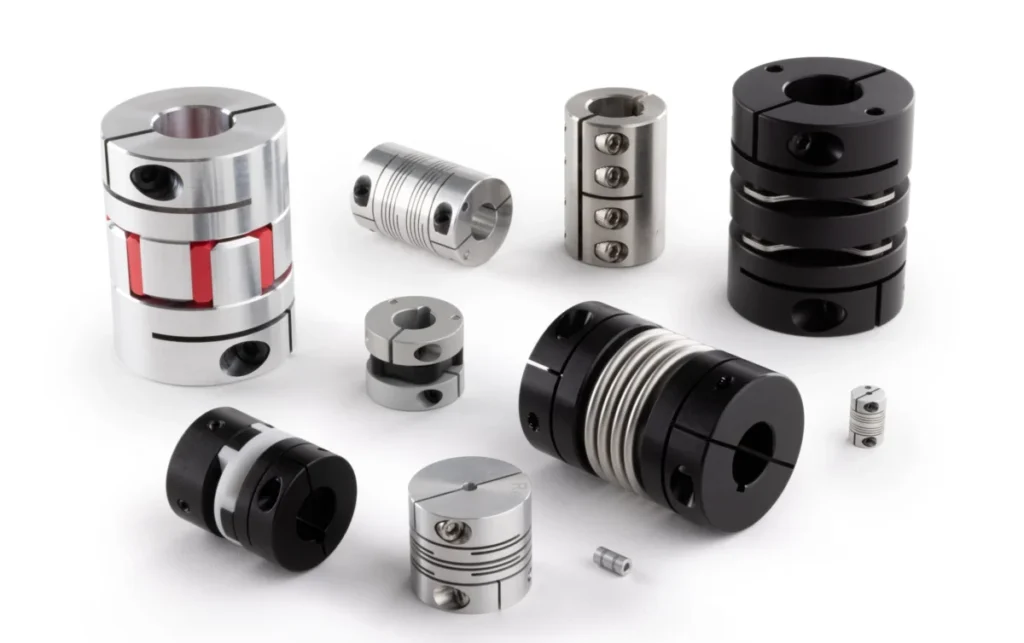
If Toyota successfully integrates humanoids into its assembly lines, Tier 1 and Tier 2 automotive suppliers will face immense pressure to follow suit. Smaller suppliers who cannot afford or integrate flexible robotic labor may struggle to compete on speed and cost. Furthermore, a massive new market will open for components specifically optimized for humanoid applications—ranging from high-torque density brushless motors and lightweight harmonic drives to tactile sensor arrays and edge-computing AI chips.
2. Redefining the Factory Workforce
The specter of robots on the factory floor inevitably raises questions regarding labor displacement. However, Toyota’s stated philosophy frames humanoids as labor multipliers rather than pure substitutes. As birth rates decline and labor shortages intensify across developed economies, industrial sectors face severe recruitment deficits. Humanoids may serve as the vital bridge that keeps manufacturing hubs viable in countries facing severe demographic contractions, transforming human workers from assembly-line laborers into robotic fleet managers, maintenance technicians, and quality supervisors.
3. Accelerated AI and Dexterity Feedback Loops
Perhaps the most significant implication is the data flywheel effect. By deploying humanoids into real-world, high-variability factory environments, Toyota will generate petabytes of operational data regarding physical manipulation, balance recovery, and error handling. This real-world feedback loop will supercharge the development of embodied artificial intelligence, allowing humanoid software to iterate at a speed that pure laboratory simulations could never achieve.
Conclusion
Toyota’s aggressive, all-in pivot toward humanoid robotics marks a watershed moment in the history of industrial manufacturing. By bridging the gap between traditional fixed automation and human-centric workspace design, the company is betting that the future of mobility is built by machines that walk among us. As these bipedal systems transition from theoretical prototypes to active participants on the assembly line, Toyota is once again redefining what it means to build the cars of tomorrow.