






In a breakthrough that bridges the gap between science fiction and rigorous engineering, researchers have successfully developed and tested the world’s first truly three-dimensional thermal invisibility cloak. This sophisticated device does more than simply mask an object from infrared surveillance; it creates a controlled thermal environment that shields sensitive contents from extreme external temperatures while rendering them virtually undetectable to thermal imaging sensors.
The innovation, detailed in the journal Nature Communications, represents a fundamental shift in the field of "transformation thermotics"—the study of how heat can be directed and manipulated through engineered materials. By mastering the ability to steer thermal energy around an object rather than letting it pass through or be absorbed, the research team has unlocked new possibilities for everything from next-generation microchip cooling to advanced stealth technology.
The Evolution of Thermal Manipulation: A Chronological Journey
For years, the pursuit of thermal cloaking was hampered by the physical constraints of two-dimensional geometries. Early experiments in the field were limited by "directional dependency," meaning the cloaks only functioned when heat flow was perfectly aligned with a specific axis. If the direction of the heat source changed, the cloak’s effectiveness would vanish, revealing the hidden object to infrared cameras.
The 2D Limitation
In the early 2010s, researchers began experimenting with flat, two-dimensional cloaking materials. These structures were effective at diverting heat across a surface, but they functioned much like a shallow stream flowing around a rock; they could not handle the complexities of three-dimensional heat diffusion. Furthermore, these designs were largely theoretical or limited to simple, idealized shapes that did not translate well to real-world engineering.
The Breakthrough Period
The transition to a 3D model began when the team at the University of Illinois Urbana-Champaign—led by Professor Shelly Zhang and including postdoctoral researcher Weichen Li and graduate student Yibo Wang, in collaboration with Professor Ole Sigmund of the Technical University of Denmark—decided to reconsider the foundational principles of heat flow. Instead of attempting to "block" heat, which leads to thermal build-up and detection, they focused on "steering" it.
By leveraging advanced computational design and modern manufacturing techniques, the team moved from theoretical simulation to physical prototyping. The culmination of this effort was the creation of a lattice-based structure that, for the first time, provides omnidirectional thermal protection regardless of the heat source’s orientation.
The Engineering Behind the Cloak: Lattice-Based Innovation
The success of the 3D thermal cloak lies in the development of a novel, composite material. The researchers tackled the challenge by asking a foundational question: "What kind of material structure could cover almost all the thermal properties needed for a perfect cloak?"
The Anatomy of the Material
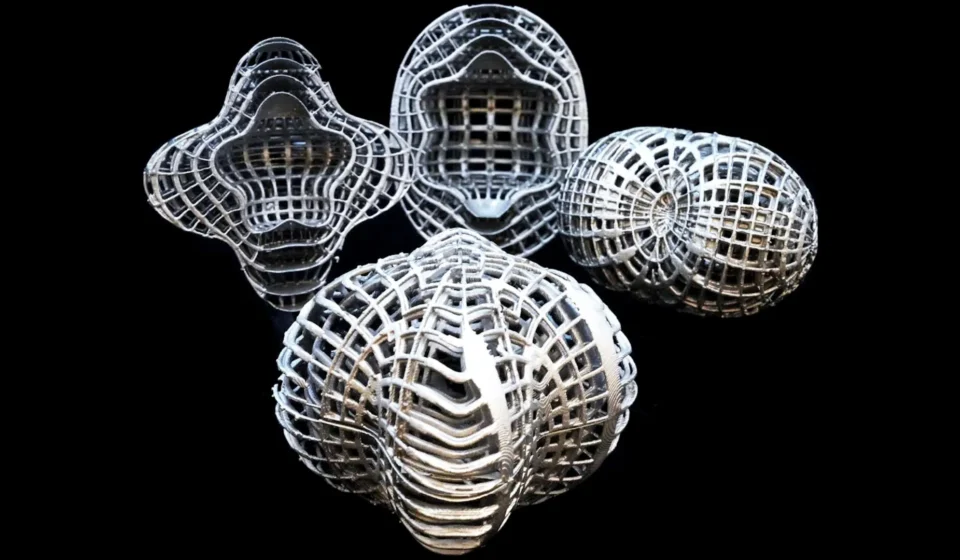
The resulting material is a sophisticated lattice whose architecture can be adjusted independently along three axes. This geometric flexibility allows the researchers to dictate exactly how efficiently heat conducts through various segments of the cloak. By varying the density and composition of the lattice, the team achieved a wide range of thermal conductivities—effectively creating a "thermal pathway" that guides heat energy around the core of the cloak.
From Simulation to 3D Printing
The team did not rely solely on software models. To validate their design, they employed precision 3D metal printing to fabricate an intricate aluminum lattice. This aluminum frame serves as the primary conduit for heat flow. To complete the structure, the researchers utilized mold casting to fill the remaining voids with a low-conductivity, rubber-like polymer. The interplay between the high-conductivity metal and the insulating rubber creates a "thermal landscape" that forces heat to move in a controlled, non-linear fashion, bypassing the interior space entirely.
Empirical Validation: Infrared Camera Testing
To prove that the cloak functioned as intended, the researchers conducted a series of rigorous infrared (IR) imaging tests. The device was placed between hot and cold reservoirs, creating a significant temperature gradient.
Visualizing the Invisible
When viewed through an infrared camera, the results were striking. While a standard object would typically cause a disruption in the thermal field—creating a "shadow" or a "hot spot" that signals its presence—the cloaked object remained invisible. The thermal patterns around the cloak appeared identical to the patterns of a uniform, empty space.
Furthermore, the internal temperature of the protected region remained remarkably stable. This confirmed that the device was not only successfully cloaking the object from external detection but also shielding the internal environment from the temperature extremes present in the surrounding medium.
Handling Geometric Complexity
Perhaps the most impressive demonstration involved the cloaking of non-symmetrical, complex geometries. The team successfully concealed objects shaped like human heads, proving that the technology is not limited to simple spheres or cubes. This adaptability suggests that the cloak can be tailored to fit irregular, delicate, or mission-critical equipment, a capability that earlier experimental models lacked.
Perspectives from the Research Team
The project’s lead investigator, Professor Shelly Zhang, emphasizes that the significance of this work extends far beyond simple "invisibility."
"A real thermal cloak should work no matter where the heat comes from," Zhang stated. "Our device can hide a complex 3D object in an infinite number of directions while keeping the temperature inside stable and protected."
The broader philosophical implication, according to Zhang, is the management of information. "Any field that needs precise control of heat or needs to protect something from being detected thermally could benefit from this work," she explained. "But we also see it more broadly: it’s about hiding and protecting information that is carried by heat."
The collaboration with Professor Ole Sigmund was instrumental in achieving the necessary computational precision, as the design required an optimized distribution of materials that only sophisticated algorithms could calculate. The project received critical financial and institutional support from the National Science Foundation, the Villum Foundation, and the Air Force Office of Scientific Research, reflecting the high stakes and potential utility of the technology.
Implications and Future Horizons
The successful demonstration of a 3D thermal cloak opens a wide array of industrial and military applications.
Revolutionary Thermal Management
In the consumer electronics and high-performance computing sectors, heat is the primary enemy of efficiency. As microchips become smaller and more densely packed, managing thermal output becomes a major hurdle. This new cloaking technology could allow engineers to "funnel" heat away from sensitive transistors, preventing overheating and extending the lifespan of critical components without requiring bulky heat sinks.
Stealth and Defense
From a security and defense standpoint, the implications are immediate. The ability to shield equipment from thermal sensors—which are increasingly common in night-vision and long-range surveillance—could change the way high-value assets are protected in the field. By manipulating the thermal signature of a person or a piece of machinery, the cloak could effectively render them "invisible" to the heat-seeking eyes of modern technology.
The Next Frontier: Active Heat Manipulation
Despite these achievements, the researchers are already looking toward the next phase of development. The current iteration of the cloak is "passive"—it redirects existing heat. The team’s next major goal is to design "active" cloaks capable of managing objects that generate their own heat.
"We’ve shown that a true 3D omnidirectional thermal cloak is possible," Zhang said. "The next step is to make cloaks that don’t just hide and protect, but also actively manipulate heat in useful ways."
This would involve developing materials that can adapt to changing conditions in real-time, concentrating or dispersing thermal energy as the internal or external environment fluctuates. Such a leap would move the technology from a specialized scientific curiosity into a versatile, dynamic tool for thermal engineering.
As the research team continues to refine these structures, the line between the hidden and the visible continues to blur. Whether used to preserve the integrity of a microscopic circuit or to mask a critical defense asset, the 3D thermal cloak stands as a testament to the power of advanced material science to reshape our interaction with the physical world.