



Engineering Efficiency: How Ruland’s Modified Oldham Coupling Revolutionized Dialysis Equipment Cost-Structures

In the high-stakes world of medical device manufacturing, the intersection of rigorous performance requirements and cost-efficiency is often a challenging frontier. A recent case study involving Ruland Manufacturing and a leading dialysis equipment OEM (Original Equipment Manufacturer) highlights how strategic component engineering can yield significant financial benefits without compromising patient safety or system reliability. By replacing an over-engineered, custom-machined component with a modified standard Oldham coupling, the manufacturer successfully reduced production costs by $300 per unit—a move that carries profound implications for the scalability of life-saving medical technology.
The Core Challenge: Balancing Precision with Profitability
Dialysis machines, whether utilized in clinical hospital settings or home-based patient care, represent the pinnacle of fluid management engineering. At the heart of these devices lies a complex pump-and-valve assembly responsible for the precise regulation of dialysate and blood flow. Any failure in the mechanical coupling connecting these components could result in flow inaccuracies, risking patient health and necessitating system shutdowns.
For years, the manufacturer relied on a custom-machined bronze coupling featuring a metallic center element. While this component met the required specifications for zero-backlash operation—essential for the accurate positioning of valves—and anti-slip performance, it was costly. The component was essentially "over-built," featuring custom geometries that were unnecessary for the actual torque and speed requirements of the system. As the OEM moved to develop a new, more accessible generation of dialysis equipment, the mandate was clear: reduce the bill of materials (BOM) without sacrificing the mechanical integrity that had built the company’s reputation.
Chronology of a Design Pivot
The transition from a custom-machined legacy part to a standardized, modified solution followed a deliberate, multi-stage engineering process.
Phase 1: Identifying the Bottleneck
The project began with an audit of the current pump-and-valve assembly. Engineers recognized that while the custom bronze coupling performed well, it was a major cost driver. The original design relied on non-standard D-shaped shafts to provide mechanical resistance to slippage. Because these shafts did not conform to standard industrial dimensions, the manufacturer was forced to commission expensive, low-volume custom machining.
Phase 2: Evaluating Alternatives
The engineering design firm tasked with the audit reviewed several potential coupling architectures. They focused on three primary candidates: bellows couplings, jaw couplings, and Oldham couplings.
- Bellows couplings offered high torsional stiffness but were perhaps overkill for the low-speed, low-torque environment of the pump.
- Jaw couplings were considered but lacked the inherent zero-backlash precision required for the valve assembly.
- Oldham couplings emerged as the ideal candidate. By design, they offer an excellent balance of torque capacity and misalignment compensation, and they naturally exhibit the zero-backlash characteristics required for precise fluid control.
Phase 3: The "Modification" Strategy
The challenge remained the non-standard D-shaped shaft geometry. Rather than redesigning the entire pump-and-valve assembly to accommodate a standard round-bore coupling—a process that would have involved massive R&D expenditure and regulatory re-certification—the team approached Ruland. Ruland proposed modifying a standard, commercially available Oldham coupling by integrating a custom D-bore. This allowed the manufacturer to drop the new component directly into the existing assembly, bypassing the need for a full-scale redesign.

Supporting Data: Engineering Precision and Economic Impact
The choice of the Oldham coupling was not merely a cost-saving measure; it was a technical alignment of component capability with application demands.
Technical Specifications
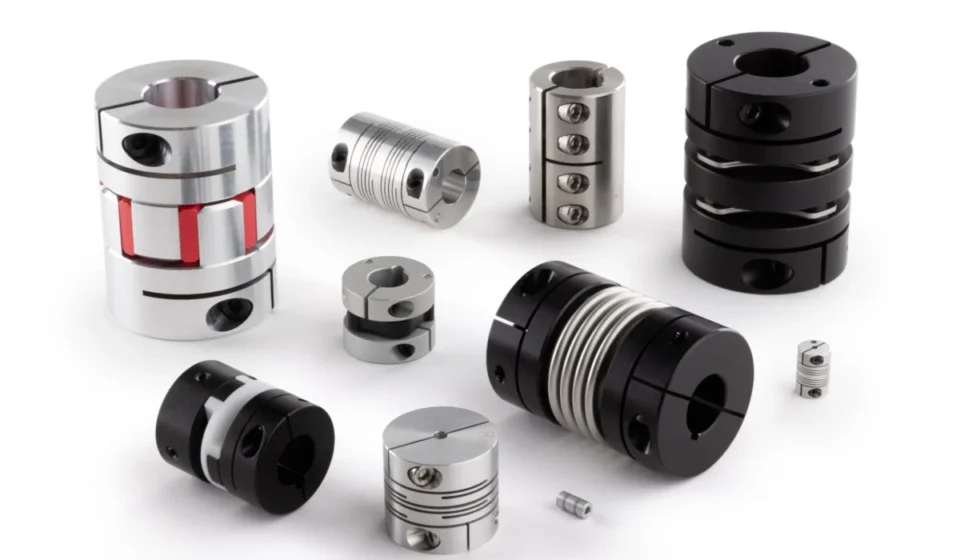
The Oldham coupling operates on a three-piece principle: two hubs and a central disk. The hubs are keyed to the shafts, while the center disk slides perpendicularly to transmit torque. This design allows for the accommodation of significant parallel misalignment while maintaining constant velocity—an essential feature for pump applications where flow consistency is non-negotiable.
By selecting a standard Ruland base, the OEM gained access to high-quality materials and precise manufacturing tolerances that a small machine shop might struggle to replicate consistently. The "D-bore" modification ensured a positive mechanical connection that physically prevented slippage, matching the reliability of the previous custom part while utilizing a more cost-effective manufacturing process.
Economic Impact
The savings were immediate and quantifiable:
- Unit Cost Reduction: $300 per assembly.
- Annual Impact: With volume requirements ranging from hundreds to thousands of units per year, the total annual savings reached into the hundreds of thousands of dollars.
- Operational Efficiency: Because the part was a modification of a standard, "off-the-shelf" item, lead times were reduced, and inventory management became more streamlined compared to managing bespoke custom-machined parts.
Official Perspectives: The Value of Customization
Industry experts point to this case as a hallmark of modern "smart manufacturing." By leveraging standard components and applying "application-specific modifications," OEMs can achieve the benefits of a bespoke design without the "bespoke price tag."
"In the medical device industry, there is often a misconception that ‘custom’ must mean ‘expensive,’" notes an engineering lead familiar with the project. "The Ruland case proves that the most effective engineering solution is often a hybrid approach. You take the reliability of a high-volume, standardized manufacturing process and adapt it to your specific constraints. In this case, the D-bore modification was the bridge between a high-cost legacy component and a high-performance modern solution."
Implications for the Future of Medical Device Manufacturing
The implications of this project extend far beyond the dialysis industry. As global healthcare systems face increasing pressure to lower the cost of patient care while improving the quality of home-based treatment options, the pressure on OEMs to reduce equipment costs is mounting.

1. The Trend Toward Modularity
This success story underscores a growing trend: modularity. By using standardized coupling interfaces, manufacturers can swap components based on current market pricing and material availability without requiring a top-to-bottom redesign of their products.
2. Regulatory and Certification Benefits
One of the most overlooked aspects of this transition was the avoidance of a complete regulatory overhaul. Because the physical interface of the pump-and-valve assembly remained largely unchanged by the adoption of the modified Oldham coupling, the manufacturer faced fewer hurdles in terms of re-certifying the device for safety and performance. This highlights the importance of "drop-in" replacements in the product lifecycle.
3. Sustainability in Manufacturing
Reducing the cost of dialysis equipment has a direct impact on healthcare accessibility. As these machines become less expensive to manufacture, they become more accessible to smaller clinics and, critically, to patients managing their health at home. The $300 savings per unit, when multiplied across thousands of machines, contributes to a more sustainable economic model for long-term chronic disease management.
Conclusion
The collaboration between the dialysis equipment OEM and Ruland serves as a definitive case study in value engineering. By questioning the necessity of a custom-machined legacy part and exploring the performance capabilities of standard, modified couplings, the engineering team successfully harmonized cost-reduction goals with the stringent reliability required in a medical environment.
As technology advances, the ability to iterate on designs—and to intelligently adopt standard components for specialized tasks—will remain a core competency for successful manufacturers. This project illustrates that when technical precision is coupled with thoughtful, application-specific modifications, the results can be transformative: lower costs, improved accessibility, and sustained performance in the critical field of medical equipment manufacturing.
For engineers and procurement managers facing similar challenges, the message is clear: before commissioning a custom-engineered solution, investigate the potential for modifying proven, standard components. The path to significant cost-savings may be hidden in the simplest of design pivots.