





Inside Dell’s AI Supply Chain Strategy: Navigating Constraints, Pivoting Resources, and Raising Guidance by $25 Billion

Published: September 10, 2026
Source: Supply Chain Dive / Procurement Weekly
Author: Antone Gonsalves
Main Facts
In the high-stakes, hyper-accelerated era of artificial intelligence, global tech giants are constantly battling infrastructure bottlenecks. Dell Technologies is no exception. Facing broadening supply constraints for high-performance AI systems, Dell’s leadership has laid bare the reality of managing modern technological procurement.
Speaking to investors and analysts, Dell Chief Operating Officer Jeffrey Clarke characterized the current operating environment with a mix of gritty realism and enthusiasm: "Welcome to the life of a supply chain person at Dell. This is what we do, chasing parts. We love it. Trying to optimize the outcomes for the company."
The core realities shaping Dell’s current market position include:
- Massive Guidance Upgrade: Driven by robust AI hardware demand and agile supply chain maneuvering, Dell raised its fiscal 2027 revenue guidance by a striking $25 billion, bringing its full-year forecast to $192 billion.
- Proactive Resource Allocation: To circumvent supply crunches for AI servers and infrastructure, Dell strategically redirected manufacturing inputs and components away from its traditional personal computer (PC) lines and channeled them into AI production.
- Collaborative Customer Forecasting: Enterprise customers are increasingly forced to place orders well in advance. Sophisticated, large-scale buyers are securing their spot at the front of the line by deeply integrating demand-sharing forecasts with Dell’s collaborative planning tools.
- The "Chasing Parts" Culture: Supply chain teams are operating under unprecedented pressure, constantly optimizing incoming components to shape customer demand and accelerate delivery times.
Chronology
To understand how Dell arrived at its current record-setting financial posture and operational strategy, it is essential to trace the timeline of events leading up to the September 2026 announcement.
Early-to-Mid 2025: The Rise of AI Infrastructure Bottlenecks
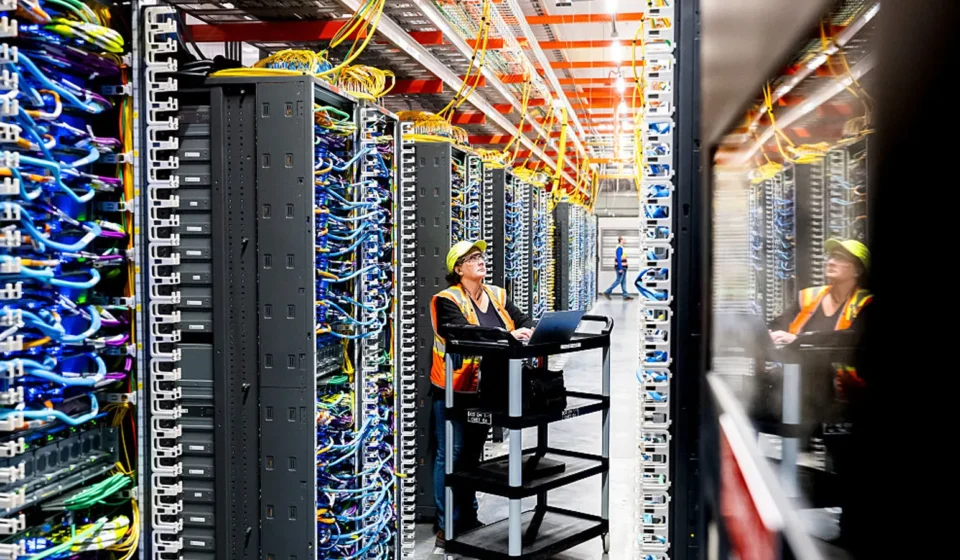
As generative AI models scaled exponentially across industries, data center construction boomed globally—exemplified by massive infrastructure expansions in hubs like New Carlisle, Indiana. Concurrently, specialized hardware components, including advanced GPUs, high-bandwidth memory (HBM), and specialized power distribution units, faced severe global shortages. Dell, a primary provider of enterprise-grade AI infrastructure, began experiencing tight component allocations.
Late 2025 / Q1 2026: Shift in Customer Buying Habits
During previous quarterly cycles, Dell’s executive team began noticing a distinct structural change in customer behavior. Enterprise clients realized that waiting until the last minute meant missing out on critical hardware allocations. Consequently, customers began placing orders significantly further in advance. This marked the birth of a new operational norm: cooperative, long-range demand planning driven by supply scarcity.
Early 2026: The Strategic Pivot from PCs to AI
Recognizing early indicators that the traditional personal computer (PC) market was softening heading into the second half of the year, Dell’s supply chain management made a bold tactical choice. COO Jeffrey Clarke and his team initiated a deliberate reallocation of manufacturing inputs. Components traditionally destined for standard consumer and commercial PCs were redirected toward the assembly of high-margin, high-demand AI infrastructure systems.
September 10, 2026: Financial Re-Evaluation and Guidance Boost
During an earnings and strategic update call, CFO David Kenney and COO Jeffrey Clarke revealed the fruits of this multi-quarter supply chain pivot. Buoyed by the ability to secure, optimize, and ship scarce AI hardware, Dell announced a massive $25 billion increase to its fiscal 2027 revenue guidance, locking in a total projected revenue of $192 billion for the year.
Supporting Data
The sheer scale of Dell’s operational adjustment is underscored by hard financial metrics and emerging behavioral trends within enterprise procurement:
- $192 Billion: The revised fiscal 2027 full-year revenue forecast for Dell Technologies, following the $25 billion upward revision.
- $25 Billion: The exact magnitude of the revenue guidance increase, which management directly credits to supply chain optimization and agile demand shaping.
- Months in Advance: The timeline by which major enterprise customers must now queue up orders to guarantee on-time hardware delivery.
- 100% Focus on Optimization: The percentage of cross-departmental coordination required between Dell’s procurement teams, PC manufacturing units, and AI server assembly lines to keep pace with an overheated technological market.
Official Responses
Executives during the September briefing emphasized that Dell’s success in a constrained environment is not merely a byproduct of market luck, but the direct result of disciplined supply chain engineering and proactive communication with clients.
Jeffrey Clarke, Chief Operating Officer
Addressing the relentless nature of component sourcing, COO Jeffrey Clarke explained how the company’s internal culture has adapted to the current crisis:

"Welcome to the life of a supply chain person at Dell. This is what we do, chasing parts. We love it. Trying to optimize the outcomes for the company."
Commenting on the shift in customer relations under constraint, Clarke noted the emergence of collaborative forecasting:
"That is probably a new phenomenon that’s happened in this demand environment today with the constrained supply. Large, sophisticated customers are moving to the front of the line by sharing demand forecasts through collaborative planning tools."
On the mechanics behind the massive financial upgrade, Clarke added:
"Our ability to increase guidance by the $25 billion is a direct reflection of our ability to optimize what’s coming in, shaping demand, planning it accordingly and getting it out the door."
David Kenney, Chief Financial Officer
CFO David Kenney provided the financial framework that contextualized Clarke’s operational commentary, confirming that the strategic pivot in manufacturing inputs directly paved the way for the upward revision of the full-year $192 billion revenue target.

Implications
Dell’s navigating of the AI supply crunch holds profound lessons and implications for the broader technology, manufacturing, and supply chain sectors.
1. The Death of Just-In-Time Hardware Procurement for AI
For decades, "Just-In-Time" (JIT) manufacturing and inventory management ruled corporate supply chains, minimizing warehousing costs. However, the AI boom has permanently broken JIT for high-end tech infrastructure. As Clarke noted, customers must now plan months ahead and share proprietary demand forecasts. Companies that fail to adopt this collaborative, long-range planning model risk finding themselves at the back of an indefinitely long queue.
2. Intra-Company Cannibalization as a Survival Strategy
Dell’s decision to starve its PC manufacturing lines of certain shared inputs to feed the booming AI server market demonstrates a ruthless, pragmatic approach to portfolio management. As legacy hardware markets fluctuate, agile enterprises must be willing to dynamically reallocate raw materials, silicon, and manufacturing labor toward higher-yield, high-demand sectors.
3. Supply Chain Expertise as a Competitive Moat
In an era defined by geopolitical trade friction, component scarcity, and surging compute demands, supply chain executives are no longer back-office logistics managers—they are front-line revenue drivers. Dell’s ability to "chase parts" effectively enough to unlock an extra $25 billion in guidance proves that supply chain resilience and optimization are core competitive advantages that directly dictate corporate valuation.
4. Enterprise Spending Shifts Toward Resiliency
For enterprise buyers, the takeaway is clear: capital expenditure planning must evolve. Securing AI capabilities requires deep, transparent partnerships with original equipment manufacturers (OEMs). Transparency in forecasting is no longer optional; it is the currency required to secure priority access in a chronically constrained global market.