



General Motors Doubles Down on Diesel: A High-Stakes Bet Against the Hybrid Tide for MY2027 Pickups

DETROIT — In a landscape where automotive giants are scrambling to electrify their portfolios and pivot aggressively toward hybrid-electric vehicles (HEVs), General Motors (GM) is charting a resolutely contrarian course. While cross-town rivals Ford Motor Company and Stellantis embrace gasoline-electric hybrid powertrains to meet tightening emissions standards and soothe consumer range anxieties, GM is doubling down on internal combustion—specifically, the internal combustion of diesel.
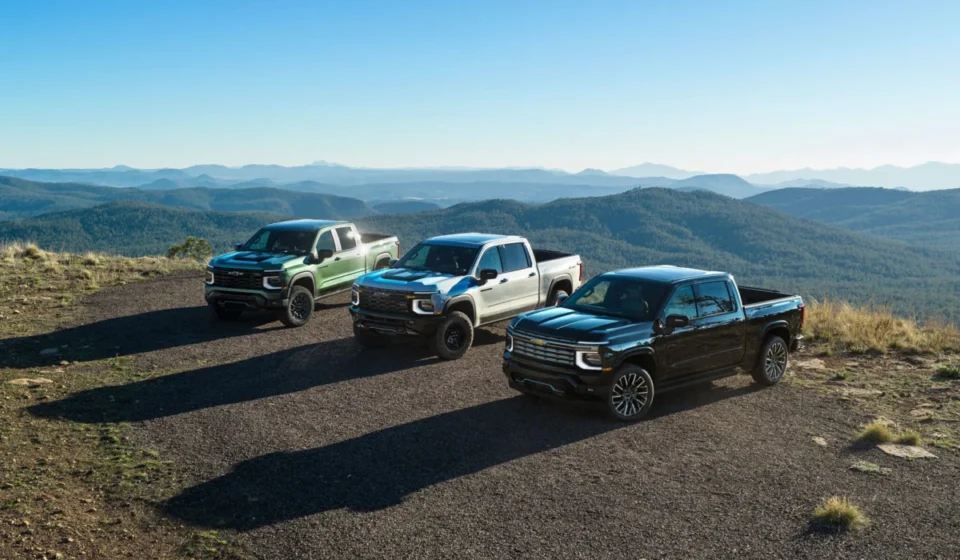
On September 17, General Motors lifted the veil on its next-generation light-duty powertrain strategy. Slated to anchor the Model Year 2027 (MY2027) iterations of its perennial profit engines—the Chevrolet Silverado and the GMC Sierra—this new powertrain family includes two all-new V8 gasoline engines, designated the L76 and L78. However, the most consequential and debated announcement in the automaker’s Detroit briefing was not the high-output V8s, but rather a profound commitment to compression ignition: an extensive, heavy-duty engineering update to the acclaimed Duramax 3.0-liter Turbo-Diesel inline-six.
This strategic retention of diesel comes at a fascinating economic crossroads. With nationwide retail diesel prices hovering stubbornly upwards of $6.00 per gallon in many key logistics corridors—significantly outpacing regular unleaded gasoline—conventional industry wisdom would dictate a retreat from oil burners in light-duty applications. Yet, GM’s leadership is betting that a dedicated segment of truck buyers will continue to pay a premium for high torque, exceptional towing efficiency, and long-haul endurance that current hybrid systems struggle to match under heavy continuous loads.
By refusing to follow the herd into immediate fleet hybridization for its half-ton workhorses, GM is executing a calculated differentiation strategy. It aims to capture market share from loyal truck buyers who view HEVs as overly complex or insufficiently rugged for heavy-duty payload demands, even as the regulatory noose tightens around traditional fossil-fuel architectures.
Main Facts: The MY2027 Powertrain Architecture
The centerpiece of GM’s September 17 product disclosure is a comprehensive overhaul of the mechanical heartbeat that powers its most lucrative product lines: the full-size light-duty truck segment.
1. The Duramax 3.0L Turbo-Diesel Evolution
Despite facing mounting regulatory pressures and elevated fuel pump prices, GM has poured significant capital into evolving its second-generation Duramax 3.0-liter inline-six diesel engine. Key upgrades for the MY2027 iteration include:
- Advanced Combustion Chamber Geometry: Redesigned pistons and bowl shapes to optimize air-fuel mixing, reducing particulate matter generation at the source.
- Higher-Pressure Fuel Injection: An upgraded common-rail fuel system operating at elevated pressures to ensure finer atomization, resulting in smoother combustion, enhanced power delivery, and quieter operation—a traditional weak point of light-duty diesels.
- Thermal Management Overhaul: Enhanced cooling jackets and a variable-speed oil pump designed to reduce parasitic drag while maintaining optimal operating temperatures during sustained towing.
- Next-Gen Emissions Control: Refined selective catalytic reduction (SCR) and diesel particulate filter (DPF) systems designed to meet stringent upcoming federal and state emissions regulations without compromising towing capacity or real-world fuel economy.
2. The New L76 and L78 V8 Gasoline Engines
Complementing the diesel update, GM introduced two fresh V8 powerplants to the light-duty stable. The L76 and L78 engines replace older Small Block architectures, incorporating lightweight aluminum blocks, advanced cylinder-deactivation technology, and direct-injection fuel systems. These engines are engineered to bridge the gap for buyers who want traditional V8 responsiveness and sound, but with vastly improved thermal efficiency compared to outgoing legacy blocks.
3. The Strategic Defiance of Hybrids
While Ford’s F-150 lineup features the popular PowerBoost hybrid system and Ram (Stellantis) introduces eTorque mild-hybrid and upcoming range-extended electric architectures, GM’s MY2027 light-duty announcement conspicuously sidelines high-voltage hybrid systems for the Silverado and Sierra. While GM continues to invest heavily in Ultium-based battery-electric vehicles (BEVs) and offers plug-in technologies elsewhere, its half-duty truck strategy relies on squeezing every drop of efficiency out of optimized internal combustion engines.
Chronology of Events: How GM Arrived at the Diesel Crossroads
To understand the weight of GM’s MY2027 announcement, it is necessary to examine the timeline of strategic decisions that brought the automaker to this divergence point.
- 2019 (The Light-Duty Diesel Breakthrough): General Motors introduces the revolutionary 3.0-liter Duramax Turbo-Diesel to the light-duty segment in the 2020 Chevrolet Silverado and GMC Sierra. The engine is widely praised by automotive journalists and consumers for its butter-smooth inline-six balance and impressive fuel economy, quickly capturing a devoted niche of long-distance towers.
- 2021–2022 (The EV Pivot): As global supply chains wobble and regulatory climates shift under the Biden administration, Detroit automakers announce multi-billion-dollar shifts toward electrification. Ford splits its internal combustion and EV divisions (Ford Blue and Ford Model e), while GM commits to an all-electric future by 2035, introducing its proprietary Ultium battery architecture.
- 2023 (The Hybrid Resurgence): Consumer adoption of pure EVs hits early-adopter friction points—namely range anxiety, high upfront purchase costs, and underdeveloped public charging infrastructure. Competitors like Ford and Toyota see massive spikes in hybrid sales. Industry analysts begin to label hybrids as the essential "bridge technology" of the decade.
- Late 2023 – Early 2024 (Market Realignment): Stellantis heavily promotes its Ram 1500 with updated inline-six Hurricane engines and signals forthcoming range-extended electric vehicles (REV). Ford expands its hybrid truck availability. GM, however, quietly continues development on its internal combustion pipeline, recognizing that a significant segment of truck buyers remains deeply skeptical of complex battery packs in heavy work environments.
- September 17, 2024 (The MY2027 Reveal): GM formally details its next-generation light-duty powertrains for the 2027 model year. By officially pulling back the curtain on the heavily updated Duramax diesel alongside the L76 and L78 V8s, GM publicly signals its refusal to rush into light-duty hybridization, establishing a stark contrast with its primary competitors.
Supporting Data: The Economics of Fuel, Torque, and Market Demographics
The decision to elevate diesel engineering in an era of $6-per-gallon fuel is a calculated gamble rooted in hard operational data and consumer buyer psychology.
Fuel Price Realities vs. Thermal Efficiency
As of mid-2024, retail diesel prices across the United States have consistently tracked higher than regular gasoline, driven by global diesel export demands, refining capacity constraints, and seasonal heating oil pressures. In states like California, retail diesel has frequently breached the $6.00-per-gallon threshold.
| Powertrain Type | Estimated Highway Fuel Economy (Light-Duty Truck) | Payload/Towing Profile | Fuel Cost Factor (per 100 miles at regional averages) |
|---|---|---|---|
| Gasoline V8 (Legacy) | 18–20 MPG | High payload, moderate towing drop-off | Moderate-High |
| Gasoline-Electric Hybrid | 22–24 MPG | Good city efficiency, moderate towing capability | Moderate |
| Duramax 3.0L Turbo-Diesel | 27–30 MPG | Exceptional long-haul efficiency, high low-end torque | Offset by higher pump price, balanced by superior MPG |
While the cost per gallon of diesel is higher, the Duramax engine’s ability to deliver up to 30 miles per gallon on the highway in a full-size pickup mathematically offsets the fuel price differential for drivers who log high annual mileage or tow heavy loads over long distances. A traditional gas V8 suffers severe fuel economy penalties under load, whereas the diesel maintains a much flatter efficiency curve.
Towing Torque Dynamics
The enduring appeal of the Duramax 3.0L lies in its torque band. Developing peak torque at exceptionally low RPMs, the diesel engine allows heavy trailers to be pulled from a dead stop without straining the transmission or requiring the high-rev screaming characteristic of gasoline engines. For commercial operators, agricultural workers, and long-distance recreational haulers, this translates to reduced mechanical wear and less driver fatigue over an 8-hour driving shift.
Official Responses and Industry Perspectives
The automotive sector has reacted to GM’s announcement with a mixture of cautious respect and intense market scrutiny. Industry analysts are divided on whether GM’s anti-hybrid stance is a masterstroke of product differentiation or a dangerous misreading of regulatory trends.
General Motors’ Engineering Rationale
Speaking on condition of anonymity due to corporate media policies, a senior GM powertrain engineer emphasized that the company is not ignoring efficiency; rather, it believes internal combustion can be perfected to meet efficiency goals without introducing the cost and weight penalties of hybrid systems.
"Hybrids introduce mass, complexity, and substantial BOM [Bill of Materials] costs that ultimately get passed down to the retail buyer," the engineer noted. "Our core truck customer does not want a rolling computer science experiment when they are hauling a 9,000-pound livestock trailer through a remote mountain pass. They want reliable, dense energy that can be refueled in three minutes at any truck stop in America. The Duramax update gives them that reliability with thermal efficiencies that rival or beat many hybrid setups on the open highway."
Competitor Strategy: The Hybrid Counter-Offensive
Conversely, executives at Ford and Stellantis have publicly championed their multi-energy approaches. Ford’s commercial truck division has repeatedly highlighted how its hybrid powertrains serve a dual purpose: providing exceptional fuel economy in urban stop-and-go driving while acting as mobile generators (Pro Power Onboard) capable of running job-site tools.
A product strategist from a rival Detroit automaker offered this critique of GM’s strategy:
"GM is playing a brilliant short-term game for the die-hard traditionalist, but they are swimming against the regulatory tide. Corporate Average Fuel Economy (CAFE) standards and EPA tailpipe rules are tightening year-over-year. Relying on advanced diesel and big V8s—no matter how clean they burn—puts an immense compliance burden on the rest of their portfolio."
Implications: What the MY2027 Strategy Means for the Market
General Motors’ aggressive doubling-down on diesel for the MY2027 Silverado and Sierra carries profound implications for the automotive landscape, regulatory compliance, and consumer choice.
1. Clear Market Segmentation
By zigging while competitors zag, GM is effectively vacuuming up the segment of the truck market that harbors deep skepticism toward hybrid and electric powertrains. For rural buyers, long-haul towers, and commercial fleets operating outside major metropolitan areas, the revised Duramax diesel presents a compelling value proposition. GM is positioning the Silverado and Sierra as the "purist’s trucks" in a sea of electrified alternatives.
2. Regulatory and Compliance Pressures
The elephant in the room remains federal and state emissions compliance. While the updated Duramax and new L76/L78 V8s are marvels of modern thermodynamic engineering, they still emit tailpipe carbon dioxide and nitrogen oxides. To offset the emissions profile of these heavy-duty thermal engines and maintain compliance with EPA emissions caps, GM will be forced to accelerate sales of its Ultium-based battery-electric vehicles (such as the Silverado EV, Blazer EV, and Equinox EV). In essence, the profitability of GM’s internal combustion truck business must directly subsidize its rapid EV deployment.
3. The Aftermarket and Resale Value Impact
Historically, light-duty diesel trucks command ferocious resale values in the used market due to their longevity and specialized demand. By committing to a third-generation evolution of the Duramax 3.0L, GM ensures that the secondary market for its half-ton trucks remains robust. Fleet operators who flip trucks every three to five years will view the MY2027 Duramax as a safe, predictable asset immune to rapid technological obsolescence.
4. The Ultimate Test: Consumer Adoption
Ultimately, the success or failure of GM’s strategy rests on the consumer at the dealership lot. If fuel prices remain elevated and regulatory pressure mounts, will buyers continue to pay a premium for diesel, or will the lower operating costs and urban drivability of hybrid systems lure them away?
As the automotive industry barrels toward the 2027 model year, General Motors has laid down its cards. By betting on the enduring power of compression ignition, diesel fuel, and uncompromised internal combustion, GM is wagering that the heart of the American truck market values raw capability and mechanical purity above all else. Only time will tell if this high-stakes bet will secure market dominance or leave the automaker stranded as the world accelerates toward electrification.