





Autonomous Horizons: The Convergence of Fleet Intelligence, Robotics, and Global Ride-Sharing

Global Automotive Intelligence Feed
Special Weekly Review & Strategic Analysis
1. Main Facts
The landscape of automotive intelligence and autonomous mobility is undergoing a tectonic shift, characterized by deep integration between artificial intelligence, industrial robotics, and commercial ride-sharing infrastructure. According to the latest data from the Automotive World Intelligence Feed, four major developments are currently reshaping the global transportation ecosystem:
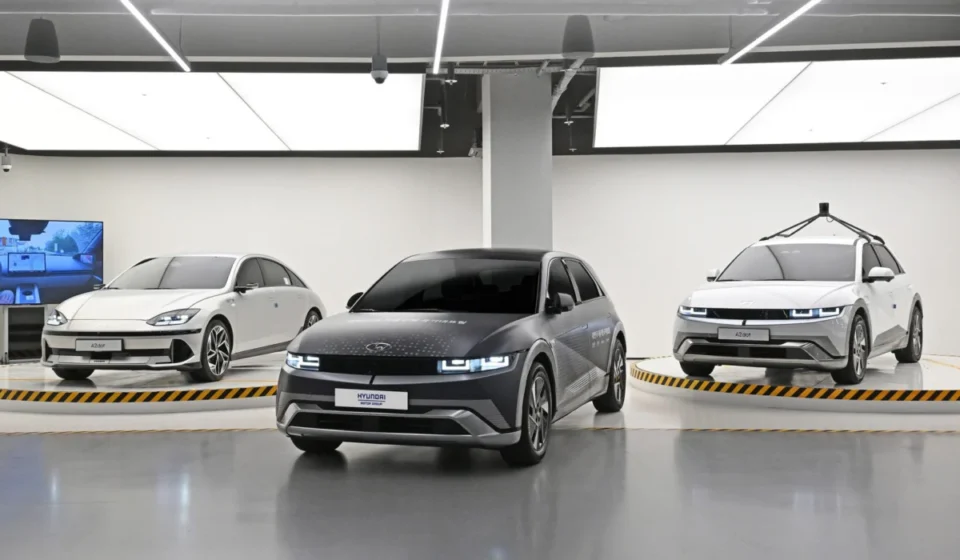
- Hyundai’s Data Flywheel and Level 2+ Ambitions: Hyundai Motor Group has unveiled its proprietary "Data Flywheel," a closed-loop artificial intelligence development architecture. This system bridges real-world fleet data collection with advanced model training and seamless over-the-air vehicle redeployment. Hyundai has targeted this infrastructure to achieve robust Level 2+ autonomous driving capabilities by the year 2028.
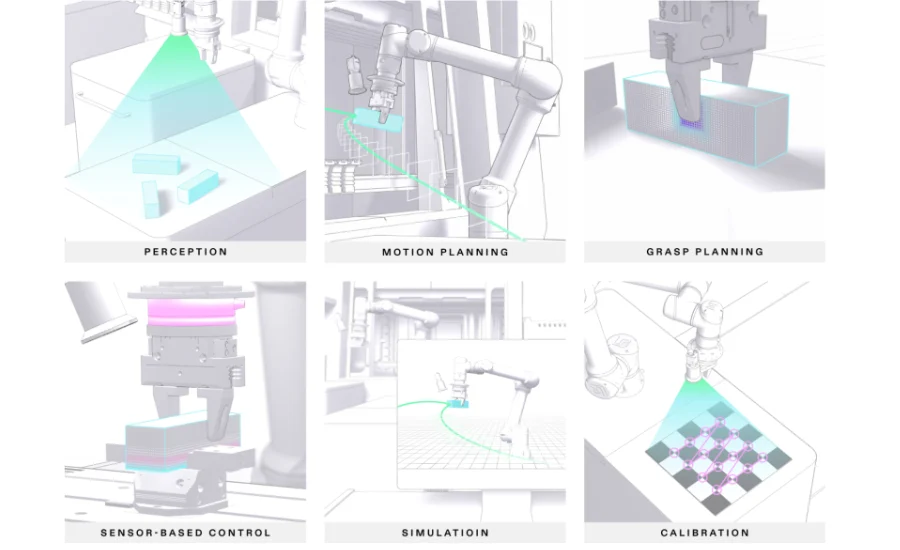
- Toyota’s Industrial Robotics Scale-Up: Toyota Motor Corporation has announced massive capital expenditure plans to deploy 400,000 advanced factory robots beginning in 2028. This ambitious manufacturing overhaul carries an estimated potential annual operating and deployment cost of US$6.4 billion, signaling a new era of AI-driven automotive manufacturing.
- Waymo’s Tokyo Autonomous Taxi Launch: Alphabet’s autonomous driving unit, Waymo, has officially announced plans to launch Japan’s very first commercial driverless taxi service. Slated for Tokyo in 2027, the rollout represents a major milestone for Western autonomous vehicle (AV) operators entering highly regulated, densely populated Asian megacities.
- Lucid-Bolt European Fleet Partnership: Luxury electric vehicle manufacturer Lucid Group has entered into a strategic alliance with European mobility giant Bolt. The agreement outlines the deployment of at least 25,000 autonomous-ready Lucid electric vehicles onto Bolt’s ride-sharing platform across Europe, merging high-end EV engineering with mass-market mobility networks.
2. Chronology
To understand the rapid acceleration of these initiatives, it is necessary to examine the timeline leading up to these strategic disclosures and project the critical milestones stretching toward the end of the decade.
2024–2025: Laying the Groundwork
- Mid-2024: Global automakers begin accelerating software-defined vehicle (SDV) architectures, shifting development focus from isolated electronic control units (ECUs) to centralized compute platforms capable of continuous machine learning updates.
- Late 2024: Regulatory frameworks for autonomous testing begin to loosen in select Asian and European markets, paving the way for foreign partnerships and high-density urban pilot programs. Waymo intensifies simulation and closed-course testing tailored to Asian traffic environments, focusing specifically on complex pedestrian behaviors in metropolitan settings like Tokyo.
- 2025: Supply chain stabilization allows legacy manufacturers like Toyota and Hyundai to reallocate capital toward next-generation automation. Hyundai conceptualizes its continuous learning loop (Data Flywheel), while Lucid explores commercial avenues beyond direct-to-consumer luxury sales to secure volume production stability.
2026: Strategic Alliances and Capital Commitments
- Q1–Q2 2026: Lucid Group and Bolt finalize terms for their European deployment pact, ensuring that future Lucid vehicle architectures natively support high-tier autonomy integration compatible with Bolt’s dispatch algorithms.
- Q3 2026: Official industry newsletters highlight the convergence of factory automation and consumer mobility. Toyota solidifies its US$6.4 billion robotics initiative for 2028, and Hyundai outlines the structural mechanics of its data flywheel.
- Late 2026 (Current Window): Stakeholders across the automotive, tech, and ride-hailing sectors prepare infrastructure for testing phases, software validation, and regulatory filings.
2027–2028: Execution and Commercial Deployment
- 2027: Waymo is scheduled to launch Japan’s inaugural commercial driverless taxi service in Tokyo, testing the viability of its localized perception stack in one of the world’s most intricate urban road networks.
- 2028:
- Hyundai’s Data Flywheel reaches maturity, targeted to power commercialized Level 2+ driver-assistance features across its global fleet.
- Toyota deploys its planned 400,000 factory robots, fundamentally altering its production line economics and manufacturing throughput.
3. Supporting Data
The strategic pivot toward artificial intelligence and autonomous infrastructure is underpinned by massive capital investments, fleet expansions, and aggressive technological benchmarks. The table and data points below outline the quantitative scope of these announcements.
Key Metrics of the 2026 Automotive AI Landscape
| Initiative / Company | Core Focus | Target Timeline | Financial / Scale Metrics |
|---|---|---|---|
| Hyundai Motor Group | Data Flywheel (Closed-loop AI) | Level 2+ by 2028 | Continuous fleet data ingestion to model training pipeline |
| Toyota Motor Corp. | Advanced Factory Robotics | Deployment in 2028 | 400,000 factory robots; potential annual cost of US$6.4 billion |
| Waymo | Commercial Driverless Taxis | Tokyo launch in 2027 | First commercial foreign-led robotaxi service in Japan |
| Lucid Group & Bolt | European Mobility Integration | Rollout phase unannounced | Minimum 25,000 autonomous Lucid EVs on Bolt’s platform |
Economic and Technological Breakdown
- The Cost of Industrial Transformation (Toyota): At a projected US$6.4 billion annual cost, Toyota’s deployment of 400,000 intelligent robots represents one of the largest single-company investments in industrial artificial intelligence to date. This expenditure reflects the high cost of integrating generative AI, computer vision, and physical actuation units into legacy automotive assembly lines to achieve lights-out manufacturing capabilities.
- Fleet-Scale Machine Learning (Hyundai): The effectiveness of a "Data Flywheel" is measured by edge-case ingestion rates. By linking millions of connected consumer vehicles back to central training clusters, Hyundai aims to bridge the gap between basic driver assistance and generalized autonomy. Level 2+ systems require petabytes of diverse driving scenarios to handle construction zones, inclement weather, and erratic human driving patterns safely.
- Mobility-as-a-Service Densification (Lucid & Bolt): Committing 25,000 vehicles to Bolt’s European network shifts Lucid’s business model toward B2B fleet operations. For Bolt, integrating luxury-tier electric vehicles equipped with autonomy suites enhances its premium service tiers while accelerating the electrification of its entire dispatch network.
4. Official Responses and Industry Stakeholder Perspectives
As these sweeping initiatives reshape the competitive landscape, leadership teams across the technology, automotive, and mobility sectors have offered critical insights into their strategic motivations.
Hyundai Motor Group: The Power of Closed-Loop Learning
Senior engineering executives at Hyundai have consistently emphasized that modern autonomous development cannot rely solely on pre-collected testing data.
"To achieve true scalability, the vehicle architecture must learn from every mile driven by our global customer base," noted a representative close to Hyundai’s software development division. "The Data Flywheel transforms our mass-market vehicles into active data-gathering nodes. By closing the loop between real-world edge cases and neural network retraining, we are laying a deterministic path toward reliable Level 2+ autonomy by 2028."
Waymo: Entering the Tokyo Metropolis
Expanding into international markets requires deep collaboration with local municipalities and a willingness to adapt perception stacks to foreign traffic rules and infrastructure nuances. Commenting on the 2027 Tokyo launch, Waymo leadership highlighted the unique challenges and opportunities of the Japanese capital.
"Tokyo presents an extraordinary operational design domain characterized by high pedestrian density, complex rail crossings, and distinct urban navigation customs," a Waymo spokesperson stated. "Our entry into Japan in 2027 is not merely a geographic expansion; it is a rigorous validation of our generalized driving behavior model, proving that Western-developed autonomy stacks can successfully localize in some of the world’s most intricate urban environments."
Lucid Group and Bolt: Democratizing Advanced Mobility
The partnership between Lucid and Bolt has been lauded by market analysts as a masterclass in complementary business alignment. Lucid gains guaranteed volume off-take for its advanced powertrains and vehicle platforms, while Bolt secures access to high-end electric autonomous hardware.
"Our collaboration with Bolt marks a pivotal moment for European urban mobility," noted a Lucid executive during the partnership announcement. "By integrating at least 25,000 autonomous-ready Lucid vehicles into Bolt’s extensive European network, we are proving that high-performance electric luxury and scalable ride-sharing automation can coexist, driving down emissions while elevating the passenger experience."
5. Implications
The simultaneous announcements from Hyundai, Toyota, Waymo, Lucid, and Bolt carry profound implications for the global automotive industry, regulatory bodies, and labor markets over the next decade.
1. The Realignment of Automotive Value Chains
For over a century, automotive profitability was determined by mechanical engineering, internal combustion efficiency, and brand heritage. Today, the initiatives spearheaded by Hyundai and Toyota prove that value has definitively shifted toward software architecture and intelligent manufacturing.
- Software-Defined Margins: Hyundai’s Data Flywheel indicates that future vehicle valuations will depend on how effectively a fleet can update, monetize, and improve its software capabilities post-sale.
- Robotic CapEx: Toyota’s US$6.4 billion annual investment in factory automation signals that legacy automakers must spend heavily to remain competitive against agile, software-first EV startups.
2. Geopolitical and Regulatory Expansion of Autonomous Operations
Waymo’s upcoming 2027 launch in Tokyo shatters the perception that Western autonomous vehicle companies are restricted to domestic markets.
- Cross-Border Tech Integration: Success in Tokyo will serve as a blueprint for other complex Asian and European metropolitan areas.
- Regulatory Harmonization: As foreign AV operators enter Japan, local regulators are under pressure to establish standardized safety frameworks that accommodate fully driverless commercial fleets without stifling technological innovation.
3. Transformation of Urban Public Transit and Ride-Hailing
The Lucid-Bolt alliance underscores a broader industry trend: the blurring of lines between private vehicle ownership and public mobility-as-a-service (MaaS).
- Fleet Electrification and Autonomy: By injecting 25,000 autonomous-ready luxury EVs into Bolt’s ecosystem, the partnership accelerates the phase-out of fossil-fuel vehicles in European city centers.
- Consumer Adoption: As autonomous ride-sharing becomes normalized in major European and Asian cities, consumer resistance to driverless technology is expected to decline rapidly, opening the door for widespread commercial scaling in the 2030s.
4. Workforce Evolution and Industrial Labor
Toyota’s deployment of 400,000 factory robots highlights the ongoing evolution of manufacturing labor. While critics often point to automation as a displacement risk for factory workers, industry analysts argue that the complexity of maintaining, programming, and overseeing AI-driven production lines will require a heavily upskilled workforce. Technical education programs, software engineering specializations, and robotics maintenance training will become central pillars of the future automotive labor market.
Conclusion
The convergence of Hyundai’s closed-loop AI, Toyota’s massive robotics scale-up, Waymo’s international expansion into Tokyo, and Lucid and Bolt’s European fleet partnership demonstrates that the automotive industry has entered its definitive AI era. As the timeline marches toward 2027 and 2028, the success of these initiatives will not only redefine corporate profitability and manufacturing efficiency but will fundamentally alter how humanity interacts with personal transportation and urban mobility.