




Global Study Reveals Urgent Compliance Crisis as Companies Struggle with Outdated Systems and Cultural Resistance

By Global Business & Technology Desk
Published: October 2023
Main Facts
In an era defined by rapid technological innovation and tightening global oversight, organizations across critical industries find themselves navigating an unprecedented regulatory maze. According to the newly released Global Industry Report: Governance, Compliance, and Digital Transformation by SoftExpert—developed in collaboration with CIAL Dun & Bradstreet—regulatory noncompliance is no longer a distant threat; it is an active, recurring operational crisis.
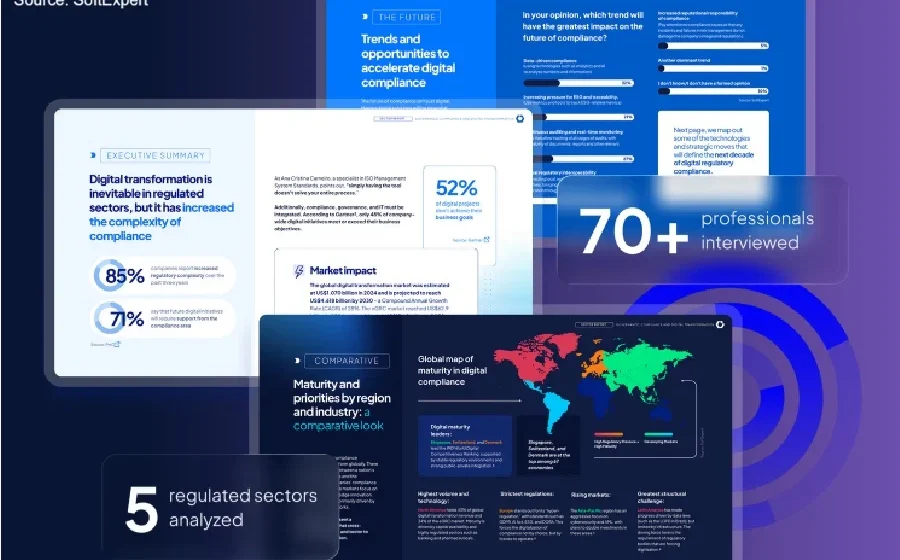
The comprehensive hybrid study, which surveyed C-level executives, directors, and compliance specialists across major economies including Brazil, the United States, Mexico, Canada, and Australia, paints a sobering picture of modern corporate vulnerability. Among its most striking findings, the report reveals that 40% of surveyed executives have already experienced significant, measurable business impacts resulting from compliance failures. Furthermore, nearly a quarter of respondents (23%) admitted that their organizations are forced to manage active compliance crises between one and three times every year.
Compounding these immediate risks is a startling lack of operational visibility. While four in ten leaders acknowledge severe disruptions from noncompliance, another 41% of respondents confessed they do not even know whether their companies have been affected. This profound disconnect highlights a widespread blindness within corporate hierarchies regarding internal risks, regulatory exposure, and the true health of digital compliance frameworks.
Rather than pointing to a lack of financial capital or restricted technology access as the primary obstacle, the study uncovers deeper systemic hurdles. 64% of participants identified a low digital culture as the main barrier to achieving compliance maturity, closely followed by 62% who cited outdated, non-integrated legacy systems. Together, cultural inertia and fragmented software ecosystems are leaving critical industries—such as pharmaceuticals, financial services, automotive manufacturing, and food and beverage—dangerously exposed to regulatory penalties, operational inefficiencies, and reputational damage.
Chronology
To understand how global organizations arrived at this precarious juncture, it is helpful to examine the convergence of regulatory pressures and digital evolution over recent years:
- The Pre-Pandemic Baseline (2018–2019): Corporate compliance was largely viewed through a traditional, siloed lens. Regulatory adherence was treated as a back-office, administrative checkbox managed by legal departments, with minimal integration into core digital transformation strategies.
- The Pandemic Acceleration (2020–2021): The sudden shift to remote work and accelerated digital adoption forced companies to rapidly deploy cloud tools and disparate software applications. While this maintained business continuity, it inadvertently fractured data ecosystems and left blind spots in corporate governance.
- The Regulatory Tightening (2022–2023): Governments and international bodies introduced aggressive new mandates concerning data privacy, cybersecurity, environmental standards (ESG), and supply chain transparency. According to data from PwC, 85% of companies experienced a significant surge in regulatory complexity during this window.
- The Current Reckoning (Present Day): The release of the SoftExpert and CIAL Dun & Bradstreet report crystallizes the modern paradox. Organizations are investing heavily in digital transformation, yet they are stumbling because internal cultures and legacy software cannot keep pace with escalating regulatory demands. Companies are now shifting focus from haphazard tech deployment to integrated risk management, process traceability, and enterprise-wide digital upskilling.
Supporting Data
The empirical data gathered across the SoftExpert study and complementary market research underlines the scale of the governance challenge facing the global corporate landscape:
- 40%: The proportion of executives who report suffering significant business impacts due to regulatory noncompliance.
- 23%: The share of companies that must actively manage compliance-related crises between 1 to 3 times per year.
- 41%: The percentage of organizational respondents who remain completely unaware of whether their companies have suffered noncompliance impacts, pointing to a critical enterprise visibility gap.
- 64%: The number of industry professionals who cite low digital culture as the primary barrier to compliance maturity.
- 62%: The proportion of participants pointing to outdated, non-integrated systems as a foundational vulnerability that fragments corporate data ecosystems.
- 58%: Organizations prioritizing improved risk management and team training for digital transformation over the coming years.
- 55%: Companies focusing on expanding process traceability in their strategic roadmaps.
- 41%: Businesses aiming to implement fully integrated systems to break down data silos.
- 35% & 24%: Strategic focus placed on reducing operational costs (35%) and increasing audit automation (24%).
- 34%: The percentage of firms reporting that the ESG (Environmental, Social, and Governance) agenda is actively driving the digitalization of their compliance workflows.
- 85% (PwC Data): The share of global companies confirming a sharp increase in regulatory complexity over the past three-year cycle.
- 48% (Gartner Data): The percentage of digital transformation initiatives that successfully achieve their intended business goals, with Gartner identifying lack of integrated governance as the primary driver of unmapped risks and costly rework.
Official Responses and Expert Insights
Industry leaders and executive voices contributing to the report emphasize that piecemeal solutions are no longer sufficient to safeguard modern enterprises.
Josiani Silveira, CEO of SoftExpert, pointed directly to the cultural and technological misalignment plaguing critical sectors:
"We see the biggest bottleneck in how companies approach culture in relation to digital transformation. Most organizations in critical industries are still trying to manage complex risks with outdated tools or poorly integrated systems, exposing their businesses to numerous vulnerabilities."
Silveira expanded on the strategic imperative for organizations looking toward the future, urging corporate boards to reframe how compliance functions within the enterprise ecosystem:
"For companies that want to lead the next decade, compliance must stop being viewed merely as a cost center or bureaucratic obligation and become a true performance asset. Governance integrated with the digital environment is the essential infrastructure that enables organizations to scale innovation securely."
The collaborative input from CIAL Dun & Bradstreet further reinforced these insights, noting that commercial resilience in highly regulated international markets depends entirely on real-time data visibility, cross-departmental alignment, and a willingness to dismantle legacy operational silos.
Implications
The findings of the Global Industry Report: Governance, Compliance, and Digital Transformation carry profound implications for the global business community, signaling that the rules of corporate survival have fundamentally changed.
1. The Cost of Operational Blindness
With 41% of companies operating in the dark regarding their compliance health, the potential for catastrophic regulatory penalties, sudden supply chain disruptions, and irreversible brand damage is immense. Organizations can no longer afford fragmented visibility. Moving forward, executive leadership must prioritize real-time dashboards and unified auditing tools to ensure risks are identified before they escalate into full-blown crises.
2. Cultural Resistance as an Enterprise Risk
Technology alone cannot solve regulatory exposure. Because 64% of industry professionals identified cultural resistance as a primary bottleneck, human capital strategies must evolve. Training teams, fostering a proactive compliance mindset, and aligning workforce habits with digital transformation goals are now mission-critical operational requirements.
3. Sustainability and ESG as Digital Catalysts
The emergence of sustainability as an accelerator—with 34% of companies using the ESG agenda to drive compliance digitalization—demonstrates that external stakeholder pressures are reshaping internal operations. Companies that successfully merge ESG monitoring with automated governance workflows will find themselves better positioned to attract capital, secure consumer trust, and navigate evolving international standards.
4. Re-engineering the Tech Stack
The reliance on legacy, non-integrated software (cited by 62% of respondents) creates data silos that sabotage decision-making. Enterprises must migrate toward unified digital platforms that seamlessly integrate document management, workflow automation, risk tracking, and regulatory reporting into a single, cohesive source of truth.
Ultimately, the message of the SoftExpert study is clear: in an increasingly complex and regulated global economy, governance is no longer just a defensive shield. When properly integrated with digital transformation, it becomes the foundational engine of secure, scalable, and sustainable business growth.
For readers interested in examining the full data set and strategic recommendations, the complete report is available for download at the SoftExpert Official Website.