

Google’s Intrinsic Open-Sources Foundational Robotics Software to Accelerate AI-Powered Industrial Automation

MOUNTAIN VIEW, Calif. — In a significant move aimed at democratizing and accelerating the development of industrial robotics, Intrinsic—the industrial software company operating under Google’s parent umbrella—has announced the open-source release of core components from its advanced robotics platform. By making these battle-tested building blocks available under the permissive Apache 2.0 license, Intrinsic seeks to drastically reduce the engineering hurdles, repetitive infrastructure development, and financial investments traditionally required to build and deploy artificial intelligence-enabled automation.
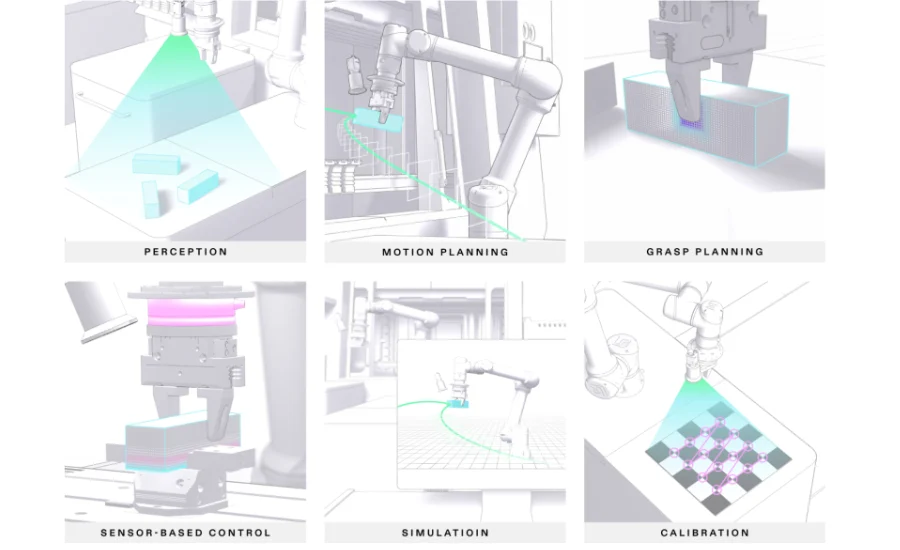
The initiative centers on Intrinsic Core, a comprehensive suite of Robot Operating System (ROS)-compatible software designed to handle complex automation tasks. The release encompasses foundational capabilities that span robot control, automated motion and grasp planning, advanced machine vision, high-fidelity simulation, and seamless hardware integration. Rather than forcing development teams to reinvent foundational infrastructure for every novel manufacturing application, Intrinsic is offering a standardized toolkit derived from real-world industrial deployments.
Main Facts
The open-source rollout of Intrinsic Core marks a pivotal transition for the Google-backed venture, shifting from a closed, proprietary platform model to a more collaborative, ecosystem-driven approach.
- The Core Offering: Intrinsic Core includes ROS-compatible software packages for robot control, motion planning, grasp planning, computer vision, simulation services, and hardware integration.
- Licensing: All released components are made available under the Apache 2.0 license, allowing for broad commercial and research utilization without restrictive copyleft requirements.
- Hardware Agnosticism: The software features modular architectures that allow engineers to swap out physical components—such as robot arms, end-effectors, and sensors—without necessitating total rewrites of underlying hardware drivers.
- Advanced Vision Integration: The platform incorporates cutting-edge pose-estimation technology based on NVIDIA FoundationPose, enabling dynamic 3D localization and manipulation that reduces reliance on rigid, expensive physical fixtures.
- Reference Applications: Alongside the core software, Intrinsic is launching an Open Machine Tending Solution, serving as a customizable blueprint for CNC machine-tending workflows compatible with major industrial robot brands like FANUC and Universal Robots.
Chronology of Development and Release
The path toward this major open-source milestone reflects Intrinsic’s steady evolution within the Alphabet/Google ecosystem, marked by strategic acquisitions, rigorous real-world testing, and a gradual pivot toward platform openness.
1. Incubation and Early Architecture (2021–2023)
Intrinsic emerged from Alphabet’s secretive X lab (formerly Google X) in July 2021, tasked with creating software and AI tools that make industrial robots easier to use, program, and scale. Over the next two years, the company expanded its technological footprint through key acquisitions, notably acquiring software company Vicarious in 2022 and Open Robotics—the creators of the popular Robot Operating System (ROS) and Gazebo simulation software—in early 2023. These acquisitions cemented Intrinsic’s commitment to open standards and positioned the company at the intersection of machine learning and industrial automation.
2. Real-World Trials and the AI for Industry Challenge (Late 2025–Early 2026)
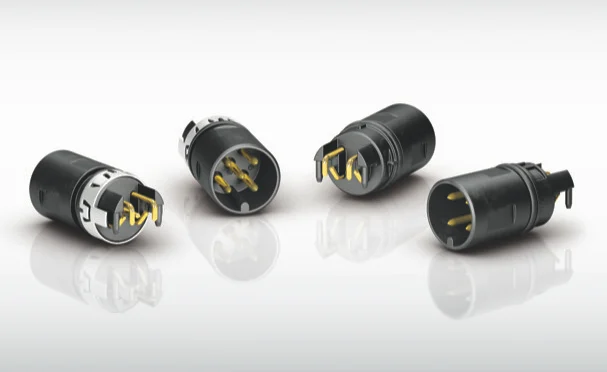
Prior to open-sourcing its software, Intrinsic put its technology through rigorous stress tests. A notable milestone occurred during the company’s AI for Industry Challenge. This rigorous competition tasked external software and robotics developers with automating a notoriously tricky manufacturing task: the insertion of flexible, pliable cables into corresponding ports. Unlike rigid metallic or plastic components, flexible cables bend, twist, and move unpredictably, historically making them exceptionally difficult to automate reliably.
During final testing on physical robotic hardware, participating teams—leveraging early access to several software building blocks now found in Intrinsic Core—achieved a remarkable 100 percent success rate. This proving ground demonstrated that combining modular software frameworks with modern AI could solve high-variability industrial challenges.
3. The Open-Source Debut (Current Milestone)
Building on the success of its developer trials, Intrinsic officially transitioned its foundational framework into the open-source community. By hosting Intrinsic Core on GitHub and releasing the Open Machine Tending Solution, the company has officially opened its ecosystem to global developers, systems integrators, and enterprise manufacturers looking to bridge the gap between fragile software prototypes and robust production lines.
Supporting Data and Technical Architecture
To understand the practical impact of Intrinsic Core, industry engineers must examine the specific modules comprising the open-source release. The platform is intentionally modular, allowing developers to adopt individual packages or deploy the entire ecosystem depending on their automation maturity.
Intrinsic Control: Real-Time Adaptability
At the heart of the hardware abstraction layer is Intrinsic Control. This component provides a hardware-agnostic, real-time control framework capable of dynamically adjusting a robot’s trajectory based on live sensor feedback. Traditional industrial programming often locks users into specific hardware vendors and requires brittle, pre-calculated paths. Intrinsic Control decouples software logic from hardware specs, allowing engineers to interchange robot arms, grippers, and sensor arrays seamlessly without rewriting core hardware drivers.
Motion and Grasp Planning
Automated motion planning within the framework automatically generates collision-free trajectories, sparing developers from writing complex path-planning algorithms from scratch. Coupled with intelligent grasp planning, the software can evaluate the spatial orientation and physical position of incoming parts on the fly, adapting grip points dynamically rather than relying on fixed coordinates.

NVIDIA FoundationPose and 3D Vision
A standout technical inclusion is the integration of pose-estimation technology derived from NVIDIA FoundationPose. This capability empowers robotic arms to locate, track, and manipulate 3D parts dynamically within unstructured environments. In traditional manufacturing setups, precise part placement requires expensive mechanical fixtures, jigs, and structured lighting. By leveraging advanced pose estimation, robots can successfully handle parts that arrive in randomized orientations (such as bins of jumbled components), significantly lowering hardware overhead.
Simulation and Calibration
Software development for robotics is notoriously slow when confined to physical testbenches. Intrinsic Core addresses this bottleneck by integrating simulation services built on Gazebo (the industry-standard robotics simulator developed by Open Robotics). This allows developers to test algorithms safely in virtual environments before deploying them to factory floors. Furthermore, the suite includes automated camera calibration tools and preconfigured, ROS-compatible drivers for a wide range of commercially available industrial robots, grippers, and 3D cameras.
Official Perspectives and Industry Responses
Industry analysts and leadership figures within Intrinsic have emphasized that the decision to open-source core infrastructure is driven by a fundamental bottleneck in modern manufacturing: the widening gap between advanced AI capabilities and traditional robotics engineering.
"By giving developers reusable building blocks instead of forcing them to reinvent basic robot infrastructure for every single application, we are drastically lowering the barrier to entry for intelligent automation," noted engineering leads during the platform rollout.
Historically, industrial automation has suffered from high integration costs and proprietary software silos. A factory wishing to automate a new assembly line often had to hire specialized integrators to write custom code from the ground up for every distinct machine, robot brand, and sensor array. By standardizing these layers around ROS and open protocols, Intrinsic hopes to create a shared technical baseline analogous to how Android standardized mobile app development or how Linux unified server architecture.
Systems integrators have responded positively to the release of the Open Machine Tending Solution. Serving as an out-of-the-box reference application for CNC machine-tending—a ubiquitous task in discrete manufacturing where machine operators load and unload raw metal or plastic parts into computer numerical control machines—the solution gives local integrators a head start. Because the reference application can be easily customized for major industrial hardware brands like FANUC and Universal Robots, smaller automation shops can deliver high-end AI solutions to small- and medium-sized manufacturers (SMEs) who might otherwise be priced out of bespoke robotics engineering.
Implications for the Future of Manufacturing
The open-sourcing of Intrinsic Core carries profound implications for the global manufacturing and assembly sectors.
1. Bridging the Prototype-to-Production Gap
One of the most persistent challenges in industrial robotics is the "pilot purgatory" phenomenon—where hundreds of proof-of-concept robots are successfully demonstrated in research labs or innovation centers, but fail to transition into active production lines due to maintenance complexity, software brittleness, and integration costs. By providing enterprise-grade, factory-proven software under an Apache 2.0 license, Intrinsic bridges this gap, giving deployment teams the confidence that their development foundations are reliable enough for 24/7 industrial environments.
2. Empowering Small and Medium-Sized Enterprises (SMEs)
Large automotive and consumer electronics manufacturers have long possessed the capital to develop proprietary AI and automation pipelines. However, smaller machine shops and contract manufacturers often lack dedicated software engineering teams. The availability of open-source frameworks like Intrinsic Core, paired with accessible reference applications for machine tending, democratizes advanced automation. SMEs can now harness machine vision, adaptive control, and simulation tools that were previously out of financial reach.
3. Strengthening the ROS and Open-Source Ecosystem
By aligning its foundational platform with the Robot Operating System (ROS) and Gazebo simulation frameworks, Google and Intrinsic are reinforcing the broader open-source robotics community. Rather than building a closed garden that locks users into Google’s cloud or proprietary hardware, Intrinsic is positioning itself as an essential orchestrator of open industrial standards. This collaborative approach encourages third-party developers, academic researchers, and hardware manufacturers to contribute drivers, extensions, and machine learning models back into the ecosystem, fueling exponential innovation.
Availability
Intrinsic Core and the Open Machine Tending Solution are currently available to the global developer community through Intrinsic’s official GitHub repository. As manufacturers face ongoing labor shortages, supply chain volatility, and increasing pressure to adopt flexible automation, this open-source infusion arrives at a critical juncture, promising to reshape how the factories of tomorrow are built, programmed, and scaled.