


From Holiday Symbol to High-Tech Bonding: TUM Researchers Harness Mistletoe Berries for Revolutionary Bio-Adhesive

MUNICH — Long celebrated in winter holiday folklore as a festive symbol of romance, affection, and good fortune, the humble mistletoe is about to find a radically different kind of home: inside high-tech manufacturing plants, aerospace engineering labs, and electronics assembly lines.
Researchers at the Technical University of Munich (TUM) have successfully developed a high-performance, fully bio-based adhesive whose primary, game-changing ingredient is harvested directly from mistletoe berries. This innovative bonding agent is capable of securely uniting an astonishing variety of stubborn materials—ranging from traditional wood and heavy-duty metals to fragile glass and notoriously slippery Teflon.
Perhaps most enticing for modern manufacturing and sustainability advocates alike, the TUM adhesive possesses a unique party trick: it can be cleanly separated and repeatedly reactivated multiple times simply by applying heat to a previously bonded joint. This breakthrough capability promises to dramatically simplify product repairs, component replacements, and end-of-life recycling across multiple major industries.
Main Facts
The groundbreaking research, spearheaded by a team at TUM, represents a major leap forward in the green chemistry and advanced manufacturing sectors. Here are the core facts defining this scientific advancement:
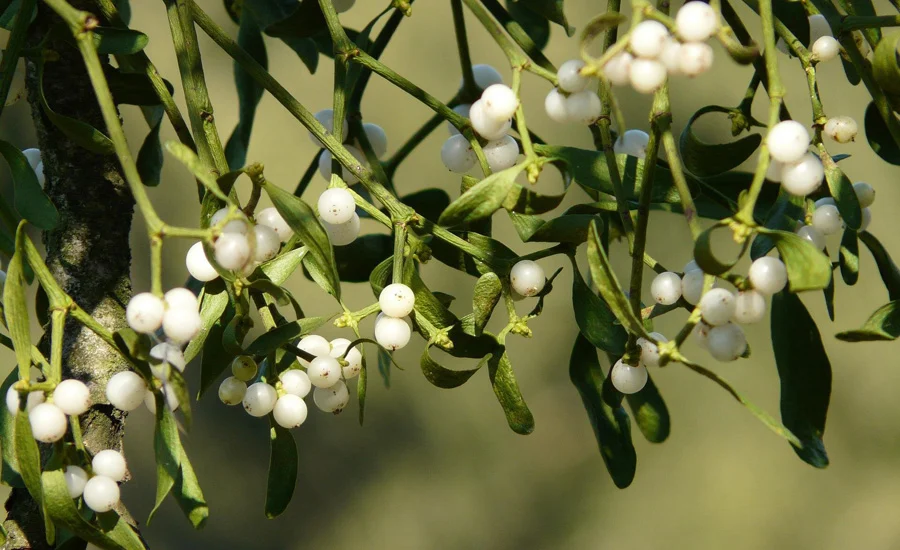
- Natural Origins: The adhesive’s foundational building block is a naturally occurring sugar mixture extracted directly from mistletoe berries, mirroring the biological mechanism seeds use to anchor themselves to host tree branches.
- Simple, Clean Formulation: The mistletoe sugar base is supplemented only by tannic acid and malic acid. The formulation completely bypasses petrochemical components and avoids the complex synthetic pretreatments typical of modern adhesives.
- Universal Versatility: Laboratory tests confirm the adhesive successfully bonds wood (such as birch), stainless steel, aluminum, glass, and even Teflon—a material legendary for its resistance to bonding due to its non-stick properties.
- Industrial-Grade Strength: The bio-based glue achieves shear strengths exceeding 10 megapascals in rigorous testing, placing its mechanical performance firmly within the realm of commercial, technical-grade structural adhesives.
- Extreme Thermal Resilience: The bonds maintain their integrity in extreme cold environments down to -150 degrees Celsius, while a moderate application of heat (around 90 degrees Celsius) allows the joint to be easily detached and thermally reactivated.
Chronology: How Nature Inspired a High-Tech Breakthrough
The path from parasitic woodland plant to industrial-grade structural adhesive is a fascinating journey of biomimicry and methodical scientific inquiry.
Phase 1: Observing Nature’s Glue
Long before the TUM researchers entered the laboratory, nature had already solved a challenging adhesion problem. Mistletoe is a semi-parasitic plant that relies on avian species to spread its seeds. When birds consume or deposit the sticky white berries onto the branches of host trees, the seeds secrete a viscous, highly adhesive mucilage. This natural substance allows the seed to anchor firmly against wind, rain, and gravity, ensuring the newborn plant can successfully colonize and draw nutrients from its new host. Recognizing the exceptional durability and moisture-resistance of this natural mucilage, the TUM research team hypothesized that it could be repurposed for human engineering.
Phase 2: Formulating the Bio-Base
Led by Dr. Oliver Lieleg, professor of biopolymer materials at TUM, the research group began dissecting the chemical composition of the mistletoe berry mucilage. They isolated the primary carbohydrate—a unique natural sugar mixture—and began experimenting with complementary, eco-friendly additives. By combining the sugar matrix with tannic acid and malic acid, they created a stable, highly cohesive formulation without relying on toxic petrochemical crosslinkers or energy-intensive synthetic pretreatments.
Phase 3: Rigorous Testing Across Diverse Substrates
Once the formulation was refined, the team subjected the adhesive to a battery of mechanical tests. They applied the wet formulation to a diverse suite of challenging substrates, including structural birch wood, stainless steel plates, aluminum strips, smooth glass panes, and fluoropolymer Teflon surfaces. To the researchers’ excitement, the adhesive formed robust, load-bearing joints across every single material tested, proving its broad-spectrum capability.
Phase 4: Validating Thermal Extremes and Reversibility
Further experimentation revealed the dual nature of the adhesive’s thermal profile. While traditional glues often become brittle and fail in sub-zero environments, the mistletoe-derived adhesive retained its structural integrity down to a frigid -150°C. Conversely, applying a localized thermal dose of approximately 90°C softened the bond cleanly, allowing joined parts to be separated without sustaining physical damage—and crucially, enabling the exact same adhesive to be reheated and reactivated for future bonds.
Supporting Data and Performance Metrics
In the competitive world of industrial manufacturing, bio-based materials often struggle to find widespread adoption because they fail to match the mechanical resilience of petroleum-derived epoxies and polyurethanes. The TUM mistletoe adhesive, however, punches well above its weight class in quantitative performance metrics.
- Shear Strength: In standard lap-shear tests, the adhesive achieved mechanical strengths exceeding 10 megapascals (MPa) on select metal and wood substrates. For context, this performance metric aligns closely with many commercial structural adhesives utilized in light manufacturing, furniture assembly, and automotive applications.
- Teflon Adhesion: Teflon (polytetrafluoroethylene or PTFE) possesses one of the lowest coefficients of friction of any known solid, making it notoriously difficult to adhere to anything without aggressive chemical etching or plasma treatments. The mistletoe formulation achieved stable, load-bearing joints on untreated Teflon surfaces, showcasing exceptional wetting and interfacial bonding capabilities.
- Cryotropic Range: Operating effectively across a temperature span ranging from -150°C up to 90°C grants the adhesive a thermal operational window of 240 degrees—a remarkable span for a water- and sugar-based organic material.
Official Responses and Expert Insights
The development of this novel adhesive has generated considerable excitement within the academic and industrial materials research communities, highlighting a growing shift toward sustainable, circular-economy engineering.
Dr. Oliver Lieleg, who guided the research project as professor of biopolymer materials at TUM, emphasized the practical hurdles the team overcame during the formulation process. Despite the success, Lieleg is acutely aware of the logistical challenges ahead, particularly regarding raw material supply chains.
"Because the adhesive is derived directly from mistletoe berries, large-scale production is limited for now," Dr. Lieleg explained. Addressing the future roadmap of the technology, he noted, "We are actively exploring ways to produce the key adhesive components independently of the plant itself, utilizing biotechnological methods to make the manufacturing process fully scalable."
Dr. Ufuk Gürer, the primary author of the underlying study, pointed out the historical shortcomings of green chemistry that motivated the TUM team’s unique approach.
"Many bio-based adhesives introduced to the market are either simply not strong enough for structural applications, or they require elaborate, environmentally taxing chemical processing to achieve basic functionality," Dr. Gürer stated. "Our approach bypasses these trade-offs by utilizing a natural raw material endowed with exceptional adhesive properties, yet working with comparatively simple, non-toxic ingredients."
Industrial Implications and Future Applications
The unique properties of the TUM mistletoe adhesive open up transformative possibilities across multiple high-tech industries, with particular promise for electronics manufacturing and aerospace engineering.
1. Consumer Electronics and Design Circularity
Modern consumer electronics—such as smartphones, tablets, and laptops—are notoriously difficult to repair or recycle. Manufacturers frequently rely on permanent structural adhesives to achieve sleek, waterproof enclosures. Unfortunately, these strong bonds mean that replacing a cracked screen or a degraded battery often destroys the surrounding housing, resulting in unnecessary electronic waste.
Because the TUM adhesive can be cleanly debonded and reactivated via a controlled application of heat (~90°C), it presents an ideal solution for circular electronics design. Displays, internal frames, and exterior casings could be assembled securely with industrial-grade strength, yet easily disassembled at repair depots or recycling plants without damaging valuable component parts.
2. Aerospace and Cryogenic Engineering
In space technology and cryogenic fluid management, adhesives face some of the most punishing environments on or off Earth. At extremely low temperatures—such as those encountered in liquid hydrogen or oxygen storage tanks—conventional polymers typically lose their elasticity, become glass-hard, and shatter under thermal stress. Consequently, aerospace engineers are usually forced to back up adhesive joints with heavy, redundant mechanical fasteners like rivets and bolts.
The mistletoe adhesive’s proven stability at -150°C suggests it could find a valuable niche in space exploration and cryogenic construction. By providing reliable, stress-resistant bonding under extreme cold, the material could help reduce weight in spacecraft and satellite assemblies, translating directly to fuel savings and increased payload capacities.
3. The Road to Commercial Scalability
Before mistletoe-derived glue can appear on factory assembly lines worldwide, the research team must successfully transition from harvesting wild or cultivated berries to synthesizing the key active ingredients synthetically or via fermentation. By decoupling the supply chain from seasonal plant yields, TUM hopes to pave the way for commercial partnerships.
As industries face tightening environmental regulations and a cultural imperative to eliminate single-use plastics and non-recyclable assemblies, innovations like the TUM mistletoe adhesive demonstrate that nature’s own evolutionary blueprints may hold the key to a more sustainable industrial future.