

The landscape of industrial automation is undergoing a profound transformation. For decades, the image of a "robotic factory" was synonymous with heavy, stationary arms welded to the floor, encased in safety cages, and relegated to the repetitive, high-speed assembly of automobiles and household appliances. However, a new frontier is emerging. Driven by advancements in sensor fusion, artificial intelligence, and sophisticated navigation systems, mobile robotics is breaking free from the static cell.
Nowhere is this shift more evident than in the textile industry—a sector historically reliant on manual labor—where PAL Robotics is proving that complex motion and human-robot collaboration (cobotics) are the keys to the next generation of manufacturing productivity.
Main Facts: The TIAGo Pro in the Textile Mill
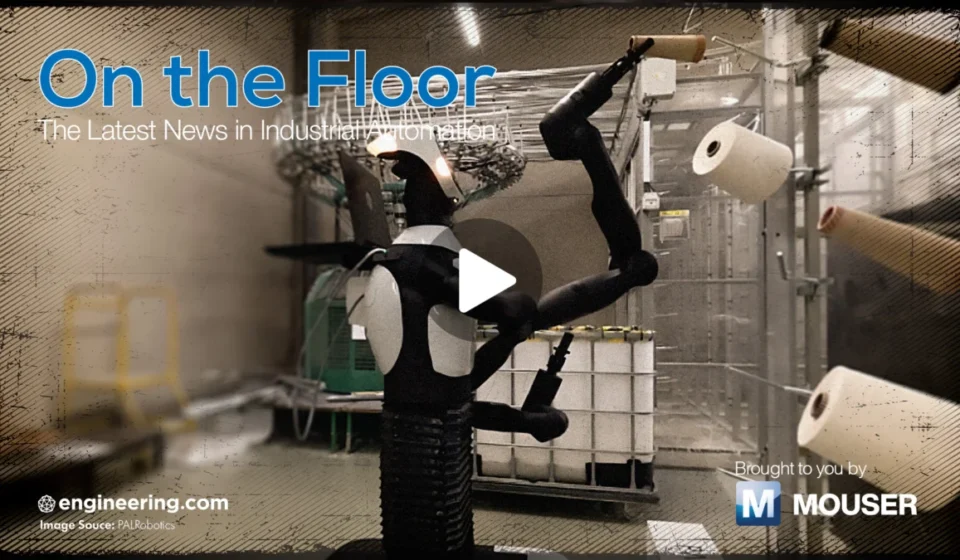
At the heart of this transition is the TIAGo Pro, a mobile manipulator developed by Barcelona-based PAL Robotics. Unlike traditional industrial robots, which lack the ability to traverse a facility, the TIAGo Pro combines a mobile base with a high-degree-of-freedom manipulator arm.
In a groundbreaking pilot program at the Spanish textile manufacturer CETRIKO, this platform is being deployed to tackle one of the industry’s most persistent challenges: the ergonomic and efficiency burden of handling yarn cones. Textile production is characterized by intricate sequences of spooling, loading, and positioning. Previously, these tasks required human operators to engage in thousands of repetitive, heavy-lifting movements per shift.
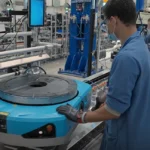
By integrating the TIAGo Pro, CETRIKO has successfully transitioned these high-fatigue, low-value-add tasks to an autonomous system. The robot navigates the factory floor, identifies yarn cones, utilizes its advanced gripper system to manipulate the materials with precision, and positions them accurately on production machinery. Crucially, this is occurring in a shared workspace alongside human operators, marking a significant milestone in the integration of mobile robots into dynamic, non-caged environments.
Chronology of the Automation Shift
The integration of mobile robotics into textiles did not happen overnight. To understand the significance of the CETRIKO pilot, one must view the evolution of automation through a chronological lens:
Phase I: The Era of Fixed Automation (1970s–2000s)
Early industrial robotics focused on "hard" automation. In the textile industry, this meant automated looms and knitting machines. While these machines were efficient at the actual production of fabric, the "material handling" (moving raw materials from storage to the loom) remained a strictly manual affair.
Phase II: The Rise of AGVs (2010s)
The introduction of Automated Guided Vehicles (AGVs) allowed factories to move goods from point A to point B. However, these vehicles were often limited by fixed magnetic tracks or laser-guided paths that could not adapt to real-time changes in the environment. They could move the yarn, but they could not pick it up.
Phase III: The Mobile Manipulator Revolution (2020–Present)
The current era is defined by "Mobile Manipulation." The convergence of Simultaneous Localization and Mapping (SLAM) technologies and lightweight, sensor-rich manipulator arms has enabled robots to perform tasks that require both mobility and dexterity. The deployment of the TIAGo Pro at CETRIKO represents the maturation of this phase, moving the technology from laboratory proofs-of-concept into the gritty, real-world environment of a functioning textile mill.
Supporting Data: Why Mobile Robotics Now?
The push toward mobile robotics in industries like textiles is supported by compelling data from the International Federation of Robotics (IFR) and independent manufacturing research.
- Ergonomic ROI: Manual handling of yarn cones involves repetitive lifting and reaching, which are primary contributors to Work-Related Musculoskeletal Disorders (WMSDs). Data suggests that automating these specific tasks can reduce worker fatigue by up to 40% in intensive material-handling environments.
- The Labor Gap: The textile industry faces a global labor shortage. As the workforce ages and the demand for personalized, small-batch textiles grows, manufacturers are struggling to find workers willing to perform the most tedious physical labor. Mobile robots serve as a force multiplier, allowing a smaller workforce to manage larger output volumes.
- Efficiency Gains: Studies of mobile manipulator implementation in mid-scale production facilities show a 15–25% increase in throughput consistency. Because robots do not require breaks and can operate in low-light conditions, they can maintain a "baseline" of production that human operators can then augment with higher-level oversight.
Official Responses and Industry Perspectives
The deployment of the TIAGo Pro has garnered significant attention from both technology providers and manufacturing stakeholders.
"The goal of the TIAGo Pro isn’t to replace the human element, but to elevate it," says a spokesperson for PAL Robotics. "In the textile industry, you have highly skilled operators who understand the nuance of fabric quality and machine maintenance. By offloading the ‘heavy lifting’ to our mobile manipulators, we are allowing those workers to focus on quality control and process management, rather than wasting their physical energy on moving yarn."
Industry analysts observe that this collaboration is critical. According to a recent industry report, the success of the CETRIKO pilot hinges on the robot’s "human-centric" design. "What makes this particular implementation unique is the safety and navigational awareness," notes an automation consultant familiar with the project. "The TIAGo Pro isn’t just a robot that moves; it’s a robot that understands the presence of a human coworker. It stops, adjusts, and navigates around people, which is a massive leap forward from the industrial robots of the past."
Partners like Mouser Electronics, which supports the hardware infrastructure powering these systems, emphasize the importance of high-performance components. "Whether it’s the sensors for SLAM navigation or the high-torque motors for the manipulator arm, the reliability of the underlying electronics is what makes these robots viable in a 24/7 manufacturing environment," a Mouser representative noted.
Implications: A New Era for Textile Manufacturing
The success of the CETRIKO pilot carries profound implications for the global textile supply chain.
1. The Decentralization of Production
Historically, textile manufacturing was offshored to regions with low labor costs to compensate for the high manual labor requirement. With the advent of mobile robotics, the "labor-cost" advantage begins to diminish. If a robot can perform the heavy lifting in a high-cost country, the economic feasibility of "reshoring" or "near-shoring" production increases. This could lead to a more sustainable, localized textile industry that responds faster to fashion trends.
2. Enhanced Workplace Safety
By removing humans from the most repetitive, high-strain tasks, the industry is poised to see a significant drop in long-term workplace injuries. This is a moral imperative as much as a financial one; a safer factory is a more stable factory with lower turnover and higher employee morale.
3. The Shift to "Cobot" Integration
The CETRIKO case study signals the end of the "black box" factory. We are moving toward a future where the factory floor is a collaborative space. Humans provide the cognitive and creative oversight, while mobile manipulators provide the physical persistence. This is not just an upgrade to equipment; it is a fundamental shift in the definition of the industrial job.
4. Scalability and Flexibility
Unlike fixed-base systems that require a total factory redesign to update a workflow, mobile robots can be reprogrammed. If the production line changes—or if the mill switches from yarn to a different textile input—the TIAGo Pro can be "retrained" or redeployed to a different part of the facility. This flexibility is essential in an era of "fast fashion" and consumer-driven demand.
Conclusion: The Path Forward
The integration of PAL Robotics’ TIAGo Pro into the CETRIKO facility is more than just a successful pilot; it is a blueprint for the future of manufacturing. By bridging the gap between mobile navigation and precise physical manipulation, the industry is finally addressing the ergonomic and productivity bottlenecks that have plagued textile production for decades.
As this technology matures, we can expect to see mobile manipulators becoming as common as sewing machines in modern mills. The transition will not happen overnight, and it will require significant investment in both hardware and human skill development. However, the trajectory is clear: the future of manufacturing is mobile, it is intelligent, and it is collaborative.
For the textile industry, which has long been defined by its ability to weave complex threads into a cohesive whole, the introduction of mobile robotics represents the next great pattern—a design for a more efficient, safer, and technologically empowered future. As the pilot at CETRIKO continues to yield data, the lessons learned here will undoubtedly influence the next decade of industrial evolution, proving that even the most traditional industries can be transformed by the right touch of innovation.