




Beyond Efficiency: Building Resilient, Intelligent, and Adaptable Manufacturing Ecosystems for the Future

By Neeta Verma
Environmental Compliance Leader | Enterprise Quality Governance | Technical Author
Published: October 1, 2026
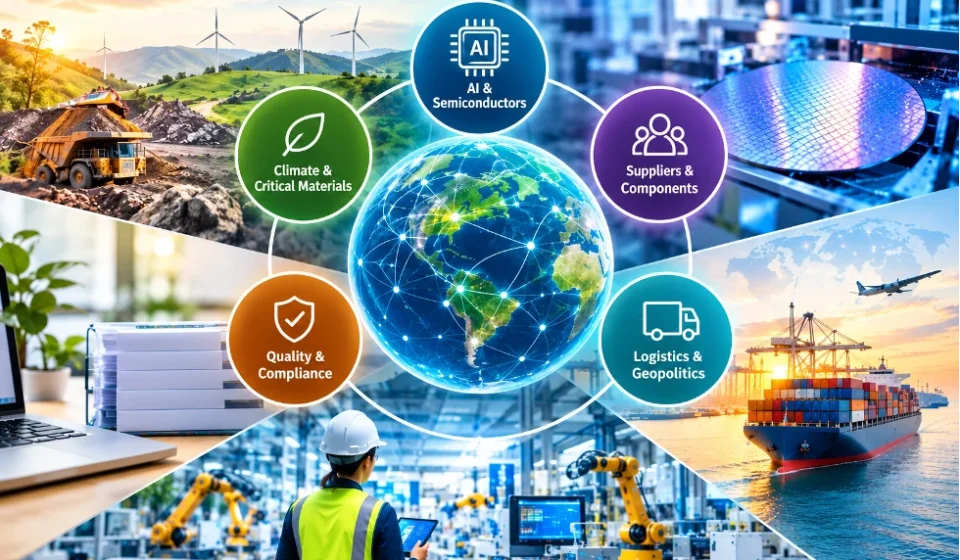
Manufacturing neither begins when a machine starts up on the shop floor nor ends when a finished product rolls down the loading line. Behind every manufactured good sits a vast, interconnected ecosystem of industrial designers, material engineers, tier-one component suppliers, procurement managers, quality assurance professionals, logistics networks, regulatory specialists, and end consumers. The physical factory is merely one vital node in this continuous web.
Today, that global ecosystem is undergoing unprecedented structural transformation. Artificial intelligence is radically reshaping industrial workflows; surging semiconductor demands are creating fragile, complex dependencies; shifting geopolitical currents are redrawing sourcing maps; extreme weather and climate events are testing the limits of physical supply lines; and an ever-evolving wave of customer requirements, stringent environmental mandates, and regulatory frameworks continue to test institutional agility.
In this landscape, how can modern manufacturing organizations build ecosystems that actively sense change, adapt rapidly, and continuously deliver value when foundational assumptions are upended?
As industry leaders mark Manufacturing Day 2026 (MFG Day) on Friday, October 2—an initiative spearheaded by the Manufacturing Institute, the workforce development and education affiliate of the National Association of Manufacturers (NAM)—this question has never been more urgent. MFG Day events running throughout October continue to showcase modern manufacturing careers and educate communities on the sector’s vital role. Yet, the broader takeaway for 2026 is clear: modern manufacturing’s significance extends far beyond production efficiency, hinging instead on how effectively people, technology, data, suppliers, and decisions are synchronized across the entire value chain.
Manufacturing as a Resilience Challenge
For decades, the gospel of manufacturing has been efficiency: optimized costs, consolidated supplier rosters, lean inventories, and hyper-specialized production networks. While these models successfully generated immense economic value and fueled international commerce over the past half-century, they also introduced systemic vulnerabilities.
A localized disruption at a single semiconductor foundry, a critical mineral extraction site, an essential maritime shipping corridor, an energy pipeline, or a major industrial manufacturing zone can now cascade across industries and continents with alarming speed. An efficient process remains inherently fragile if its critical inputs rely on a concentrated, highly exposed supply base.
Consequently, true industrial resilience is no longer defined merely by whether a single factory floor can keep running during a localized outage. Rather, it measures whether an entire organization can spot emerging risks early, understand deep cross-tier dependencies, evaluate viable alternatives, and make informed operational decisions before a bottleneck hardens into a full-scale crisis.
Consider the failure of a supplier several tiers upstream. While raw material availability is the immediate concern, qualifying an alternative component often requires exhaustive engineering validation, customer sign-offs, regulatory reviews, quality checks, and production line adjustments. Furthermore, introducing a new supplier frequently brings entirely new geographic, logistical, and sub-tier dependencies.
The core challenge is not simply sourcing a replacement part; it is knowing with absolute certainty whether that alternative can support the product, the manufacturing process, the customer, and all applicable compliance requirements. Resilience is rapidly transitioning from a contingency checklist into a core daily operating capability.
From Disruption to Decisive Action
In the current operating environment, the question is rarely whether a disruption will occur, but rather what decisions can be made before an anomaly erupts into a crisis. Manufacturers must constantly balance what to buy, make, source, stockpile, prioritize, or redesign—all while safeguarding production uptime, customer service levels, product quality, regulatory compliance, and working capital.
Crucially, a component that is technically equivalent is not automatically compliance-equivalent. Changing a supplier, swapping a material formulation, or shifting a production geography can trigger invisible ripple effects across regulatory and quality baselines.

Decision-making, therefore, cannot be relegated to reactive boardrooms; it must be embedded directly into everyday operations. Organizations must map which products and components are truly critical, identify alternative sources ahead of time, evaluate upstream supplier dependencies, and foster tight collaboration across engineering, procurement, quality assurance, and compliance departments. Adaptability begins with knowing precisely what can change, what cannot, and what viable alternatives exist.
Geopolitics as a Core Manufacturing Variable
Geopolitical friction is no longer an external backdrop to business; it is a primary manufacturing variable. Trade restrictions, sudden tariff adjustments, regional conflicts, and shifting international alliances can instantly alter material availability, drive up freight rates, disrupt delivery schedules, and paralyze long-term capital investments.
The ongoing maritime disruption around the Strait of Hormuz illustrates this systemic risk vividly. Since the conflict began on February 28, 2026, daily commercial vessel transits through the Strait—which historically averaged between 125 and 140 ships daily—have remained severely depressed. According to preliminary Reuters data published on September 17, 2026, only three commercial vessels transited the Strait the previous day, down from 12 earlier in the week and well below the 10-day average of roughly 17 ships.
Historically, this critical corridor has carried approximately one-fifth of the world’s global oil and liquefied natural gas (LNG) supplies. Sustained disruption of this magnitude sends shockwaves far beyond energy markets, rippling directly into freight rates, working capital availability, industrial material costs, and production planning. Companies whose critical inputs transit vulnerable corridors can experience severe operational halts even if their own assembly plants remain entirely undamaged. Consequently, procurement strategies must weigh geographic concentration, alternative logistics routes, and qualification lead times alongside simple unit price and delivery speed.
The Semiconductor Landscape: AI-Driven Dependencies
Semiconductors form the silent backbone of modern civilization, supporting automobiles, telecommunications, industrial machinery, consumer electronics, healthcare systems, data centers, and advanced artificial intelligence infrastructure.
The explosive rise of AI is driving unprecedented demand while aggressively reshaping how semiconductor capacity and advanced components are allocated. High-bandwidth memory (HBM) and specialized AI hardware supply chains are prime examples, though downstream sectors relying on conventional processors, power-management chips, and analog sensors frequently feel the pinch of broader capacity reallocation.

This is not merely a quantitative challenge of producing more silicon; it is about which semiconductor technologies are accessible, where they are fabricated, and how quickly downstream OEMs can pivot when supply tightens.
The current global investment race underscores this paradigm shift. On September 17, 2026, Applied Materials announced a sweeping $5 billion investment plan in India over the next decade, focusing heavily on R&D, supply-chain scale-up, and localized workforce training. This announcement coincided with SEMICON India 2026, an event drawing over 600 companies from 52 countries. India projections estimate national semiconductor consumption could soar to $110 billion by 2030, up from roughly $45 billion to $50 billion in 2025.
While India has committed over $21 billion across major semiconductor incentive schemes—approving 12 projects and seeing three packaging facilities initiate commercial production—the country has yet to churn out a chip from a large-scale fabrication plant. Prominent projects, such as the planned Tata Electronics fab in Gujarat, have encountered nearly two years of developmental delays, highlighting the sheer complexity of building independent semiconductor ecosystems.
The broader lesson is clear: true component resilience requires an interlocking ecosystem of equipment suppliers, raw materials, fabrication foundries, advanced packaging, testing facilities, robust logistics, and specialized talent. Component intelligence—monitoring lifecycles, obsolescence risks, and supplier capacity constraints—creates vital options before shortages strike. The ultimate objective is not hoarding inventory, but engineering organizational responsiveness.
Re-Evaluating Inventory: Buying Decision Time
Inventory remains a foundational resilience tool, but holding excess stock indefinitely introduces severe working-capital drag, storage overhead, and obsolescence risks. The optimal inventory level depends entirely on the specific product, supply chain velocity, replacement lead times, and the true cost of an operational interruption.
The most strategic question for supply chain leaders is no longer, "How much inventory should we hold?" Instead, it must be, "How much decision time do we need?"

Strategic safety stock is designed to buy time—allowing engineers to qualify an alternative supplier, redesign a vulnerable component, reroute logistics, or dynamically re-plan production. When a component shortage is identified early, manufacturers can negotiate alternative supplies or reprioritize production lines. Conversely, discovering a shortage only after warehouse bins are empty leaves management with virtually no options.
Scenario planning helps organizations calculate precisely where that decision time is most valuable, whether preparing for semiconductor crunches, supplier insolvencies, tariff shifts, geopolitical flashpoints, critical material caps, freight blockages, energy price spikes, or sudden demand swings. Resilience does not mean replacing lean manufacturing with bloated warehouses; it uses inventory, capacity visibility, and data to preserve critical decision-making windows.
Natural Disasters as Global Manufacturing Events
Natural disasters—ranging from catastrophic floods and prolonged droughts to severe earthquakes, cyclones, wildfires, and extreme heatwaves—routinely disrupt factories, shipping ports, roadways, power grids, and municipal water supplies. These events do not need to strike a manufacturer’s physical property directly to paralyze operations.
Europe’s historic Rhine River disruption in 2026 serves as a stark reminder of these far-reaching vulnerabilities. On August 14, 2026, water levels at the critical Kaub gauge in Germany plummeted below 10 centimeters, establishing a record low. The Rhine is an indispensable commercial artery for European heavy industry, carrying massive bulk volumes of chemicals, energy products, and raw materials.
Low water levels severely restrict barge cargo capacities, eventually rendering large chemical transports unusable. Amid ongoing disruptions, BASF CEO Markus Kamieth declined to rule out future force-majeure declarations as the company rushed to deploy specialized low-water vessels while shifting heavy loads to rail and road networks to keep production lines fed.
The takeaway extends far beyond European waterways: climate exposure must be evaluated across critical suppliers, regional logistics corridors, and utility grids, not just company-owned facilities. Climate risk is, fundamentally, supply chain risk. Here, operational resilience and corporate sustainability converge. Improved water management, energy conservation, material efficiency, and resource security fortify both environmental performance and business continuity.

Critical Materials: Where Resilience Meets Sustainability
Critical materials sit at the dangerous intersection of supply security, aggressive sustainability targets, and national industrial policy—none more visibly than rare earth elements (REEs).
China maintains a dominant chokehold on the global rare earth value chain. According to an International Energy Agency (IEA) report published in April 2026, China accounted for approximately 60% of global mined production of magnet rare earths and an astonishing 91% of global refined output in 2024. Furthermore, China controlled 94% of global sintered permanent magnet production that same year.
This extreme geographic concentration creates systemic exposure, even for Western manufacturers purchasing materials exclusively from non-Chinese direct suppliers. Highlighting these geopolitical sensitivities, China’s Ministry of Commerce added 10 U.S. entities—including MP Materials and USA Rare Earth—to its export-control management list in June 2026.
Mapping the true supply chain, from initial mining and chemical processing to alloy production, component fabrication, and eventual recycling, reveals hidden dependencies that standard supplier questionnaires routinely miss. While geographical diversification is one vital countermeasure, material efficiency, chemical substitution, recycling, and circular business models are equally essential to dampening exposure to concentrated commodity markets.
Government interventions are attempting to redress these imbalances. The U.S. Department of Defense finalized a $400 million preferred equity investment in MP Materials in 2025, securing a potential 15% stake to bolster domestic capacity. Subsequently, MP Materials selected Northlake, Texas, as the site for a massive new rare-earth magnet manufacturing campus. Backed by over $1.25 billion in total company investment, the facility is slated to begin commissioning in 2028, eventually scaling total production to roughly 10,000 metric tons of NdFeB magnets annually.
The strategic imperative is clear: resilience requires cultivating capacity across the entire value chain, from raw extraction and chemical refinement down to finished magnets, high-performance components, and end-of-life recycling.
AI Beyond the Factory Floor
Artificial intelligence must not be siloed within factory automation, robotic welding arms, or automated optical inspection systems. Its true strategic power lies in scaling across enterprise operations—supporting complex demand forecasting, generative product design, advanced supplier-risk analytics, intelligent procurement, inventory optimization, component lifecycle tracking, logistics routing, regulatory intelligence, technical documentation, and sustainability auditing.
The World Economic Forum’s (WEF) Global Lighthouse Network illustrates how rapidly industrial leaders are adopting this holistic vision. In January 2026, the WEF inducted 23 new industrial sites and launched Lumina, an AI-powered industrial intelligence platform trained on data drawn from over 1,000 industrial transformations and insights from more than 220 Lighthouse sites worldwide. By June 2026, the network expanded further with another 16 sites, pushing the total to 238 benchmark industrial facilities globally.
The latest WEF cohorts highlight three distinct operational shifts:
- AI transitioning from isolated technological pilots into a core, enterprise-wide operating capability.
- Deep human-machine collaboration supported by redesigned, upskilled operational roles.
- Sustainability functioning as an active driver of operational performance rather than a separate, compliance-driven reporting initiative.
Manufacturers utilizing these AI-enabled planning, sourcing, and logistics architectures are seeing dramatic improvements in operational response times, customer service levels, inventory turnover, and transportation cost containment. However, algorithms do not replace human judgment. Human expertise remains irreplaceable when validating technical equivalence, interpreting ambiguous regulatory guidelines, assessing supplier reliability, and evaluating complex commercial trade-offs. The truly adaptive organization fuses digital machine intelligence with seasoned human oversight.
Product Data as Core Manufacturing Infrastructure
Bills of materials (BOMs), component databases, supplier compliance declarations, chemical safety sheets, regulatory evidence, packaging metrics, and product sustainability footprints are rapidly converging into an interconnected digital web.
A prime catalyst for this change is the Digital Product Passport (DPP). The European Commission officially launched the DPP Registry and testing environment on July 20, 2026, establishing the foundational IT infrastructure required to register unique product identifiers and lifecycle data under the Ecodesign for Sustainable Products Regulation (ESPR). The first mandatory DPP requirements are slated to take effect on February 18, 2027, beginning with industrial and electric vehicle batteries.

The DPP Registry will progressively encompass textiles, steel, aluminum, tires, furniture, ICT devices, and energy-related goods, alongside product groups governed by separate EU mandates such as construction products, toys, and detergents. For international manufacturers exporting into the European market, this creates an immediate operational compliance hurdle long before shipments ever reach European borders.
Product information is permanently tying market access directly to engineering, procurement, compliance, and circular economy protocols. Consequently, regulatory intelligence must connect seamlessly with product data infrastructure. When an environmental or safety regulation changes overnight, the practical question is no longer merely what the legal text says, but rather: Which specific products, components, suppliers, materials, markets, and technical dossiers are impacted? High-quality data pipelines paired with AI tooling create immense value here—not by collecting more paperwork, but by connecting raw data directly to executive decisions.
Packaging Regulations and Operationalized Compliance
Regulatory compliance is increasingly bleeding directly into physical shop-floor design. The EU Packaging and Packaging Waste Regulation (PPWR) officially entered into force on August 12, 2026, establishing a harmonized legal framework governing packaging design and waste reduction across the European Union. Its phased mandates impose strict limits on packaging composition, recyclability standards, mandatory labeling, reuse targets, recycled content quotas, and overall packaging minimization.
For industrial manufacturers, this is far from a back-office documentation exercise. Packaging mandates directly dictate product casing design, material specifications, vendor contracts, labeling protocols, warehousing procedures, and outbound logistics workflows.
The broader lesson is unmistakable: regulatory compliance can no longer remain siloed within corporate legal departments while underlying product and supplier datasets remain fragmented. A regulatory shift must trigger an immediate operational mandate across the enterprise: What must the business alter today to protect market access tomorrow?
Cybersecurity as an Operational Pillar of Resilience
As factories become increasingly digitized and interconnected, their digital attack surfaces expand exponentially. Modern manufacturing relies heavily on complex industrial internet of things (IIoT) networks, cloud-based ERP platforms, remote vendor access, automated software updates, and interconnected machinery. A sophisticated cyber incident can paralyze not only IT servers but active production schedules, precision quality checks, outbound logistics, and supplier communications.
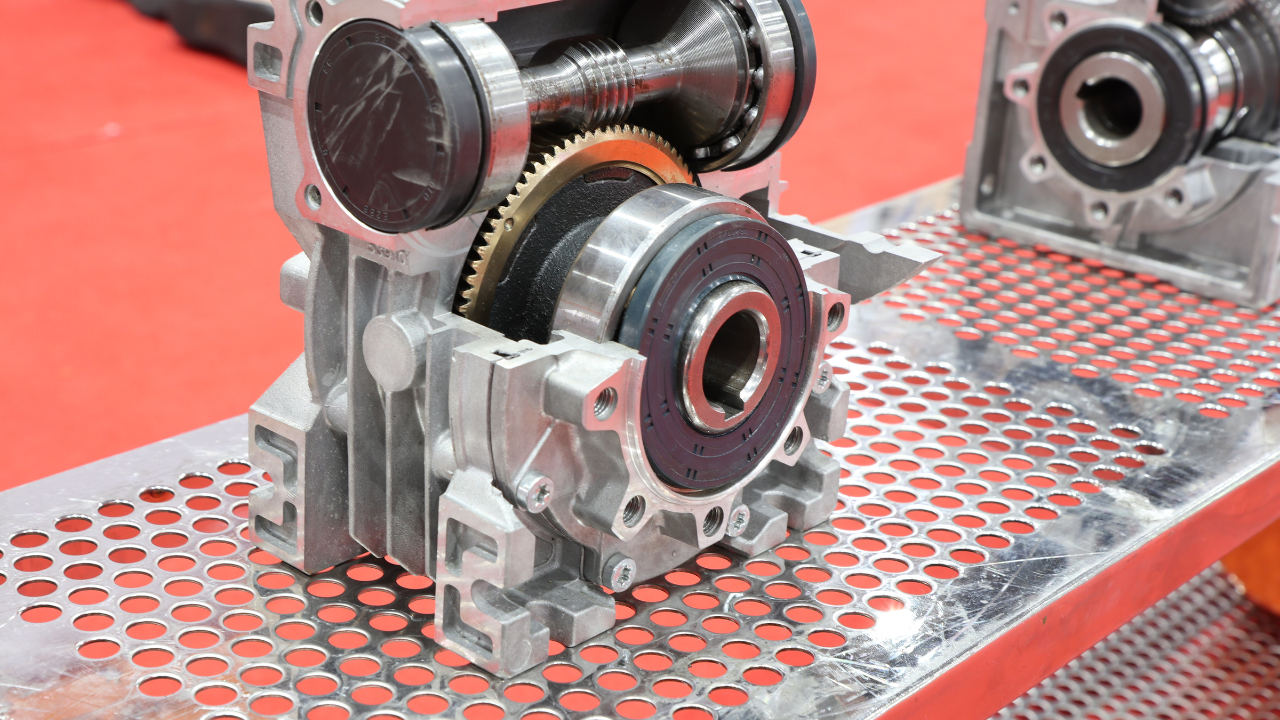
As AI models become deeply embedded within manufacturing environments, cybersecurity, identity access management, data integrity protection, and rapid incident recovery protocols must be treated as core pillars of physical operational resilience, rather than isolated IT responsibilities. The more tightly integrated an industrial ecosystem becomes, the more vital it is to map critical network nodes, control user access privileges, audit data dependencies, and maintain robust business continuity playbooks. Digital resilience is, quite simply, manufacturing resilience.
Data Quality as the Fuel for AI
The adage "garbage in, garbage out" has never been more perilous. Acquiring larger volumes of data does not automatically yield superior decisions. If upstream supplier records are incomplete, product BOM structures are inconsistent, regulatory certificates are expired, or component specifications are inaccurate, AI systems will simply process flawed information at blinding speeds.
Rigorous data governance is therefore a foundational manufacturing competency. Organizations must have absolute confidence in their product architectures, BOM hierarchies, vendor audits, compliance documentation, quality metrics, logistics telemetry, and environmental reports.
You cannot identify critical supply chain dependencies with fragmented product structures. You cannot evaluate alternative vendors using outdated supplier databases. And you cannot react swiftly to sudden regulatory changes if vulnerable SKUs cannot be instantly identified and isolated. AI may be the advanced engine of modern operations, but trusted, governed data is the fuel.
Transforming the Manufacturing Workforce
The rapid proliferation of AI, advanced automation, digital twins, predictive analytics, and connected OT/IT systems is fundamentally rewriting existing job descriptions while giving birth to entirely new technical careers.
The modern manufacturing sector requires a hybrid workforce: engineers proficient in data modeling, cybersecurity specialists dedicated to industrial control systems (ICS), quality assurance leaders well-versed in digital analytics, regulatory experts tracking global policy shifts, agile supply chain managers, sustainability professionals driving circularity, and specialized technicians maintaining intelligent machinery.
Initiatives like Manufacturing Day (MFG Day) play an indispensable role in addressing these severe workforce development challenges. By engaging students, educators, and local communities, MFG Day dispels antiquated perceptions, proving that contemporary manufacturing is high-tech, intellectually stimulating, and essential to national prosperity. The industry needs talent that understands not just how mechanical parts are fabricated, but how materials, global suppliers, streaming data, complex regulations, and consumer expectations intersect across the entire value chain.
The Five Core Capabilities of an Adaptive Operating Model
The most resilient manufacturing ecosystem is not the one holding the most idle inventory, maintaining the largest supplier roster, or relying on complete local autarky. Rather, it is the enterprise engineered to respond fluidly to disruption without losing control over cost, product quality, regulatory compliance, operational uptime, or customer commitments.
Building this adaptive operating model requires harmonizing AI, enterprise data, human expertise, supplier networks, compliance protocols, sustainability frameworks, cybersecurity defenses, and risk management into a unified strategy. Because predicting every future disruption is impossible, organizations must focus on sensing weak signals early enough to generate actionable choices.
Five foundational capabilities will define the winning manufacturers of tomorrow:
- Intelligence: Leverage AI, predictive analytics, and digital tools to surface patterns, hidden risks, and market opportunities across the value chain, informing executive decisions on capacity, sourcing, and continuity.
- Visibility: Maintain granular clarity over products, raw materials, direct suppliers, sub-tier dependencies, logistics routes, and regulatory obligations. Comprehensive visibility is the baseline for exposure mapping.
- Optionality: Cultivate pre-qualified alternative suppliers, substitute components, alternative material inputs, and flexible logistics pathways long before they are urgently required.
- Adaptability: Build cross-functional workflows and teams capable of rapidly qualifying, approving, re-routing, or redesigning products, uniting engineering, procurement, quality, and leadership.
- Trust: Ensure product data, compliance evidence, and AI outputs remain accurate, traceable, secure, and rigorously governed to support responsible decision-making under pressure.
Together, these pillars forge an asset far more valuable than simple cost efficiency: the absolute organizational agility to adapt.
Conclusion: Looking Beyond the Factory Floor on MFG Day 2026
Manufacturing Day 2026 offers a vital reminder to students, educators, and communities that modern manufacturing is about far more than four walls, robotic arms, and assembly lines.

It encompasses the design engineer modeling a sustainable product, the tier-one supplier forging a precision component, the procurement specialist navigating geopolitical trade routes, and the quality professional protecting performance standards. It includes the compliance expert deciphering evolving environmental directives, the cybersecurity analyst defending operational networks, the logistics manager routing critical freight, and the sustainability officer tying environmental metrics directly to balance-sheet resilience.
Every one of these specialized roles helps construct and fortify the industrial ecosystem. While the future will undoubtedly bring fresh disruptions—ranging from semiconductor shortages and geopolitical flashpoints to extreme weather events, critical material squeezes, and sophisticated cyber threats—no organization can insulate itself from uncertainty entirely.
What companies can do is build the institutional capability to sense change early, generate viable alternatives, and execute decisive responses. That is the core message of Manufacturing Day 2026. The future of manufacturing will not be judged solely by factory square footage, levels of automation, or lowest-cost sourcing. It will be defined by the resilience to connect people, technology, data, products, and sustainability across the entire value chain.
Manufacturing is no longer just about making physical goods. It is about engineering the resilient systems, robust capabilities, and human expertise that make modern global life possible.
References
[1] Manufacturing Institute, MFG Day 2026. Available: https://mfgday.com/
[2] Reuters, "Number of ships transiting Strait of Hormuz falls to three on Wednesday, data shows," September 17, 2026. Available: https://www.reuters.com/world/middle-east/number-ships-transiting-strait-hormuz-falls-three-wednesday-data-shows-2026-09-17/
[3] Reuters, "Applied Materials to invest $5 billion in India as Modi’s flagship chip event kicks off," September 17, 2026. Available: https://www.reuters.com/world/asia-pacific/applied-materials-invest-5-billion-india-modis-flagship-chip-event-kicks-off-2026-09-17/
[4] S&P Global, "The Rhine drops below 10 cm at Kaub, disrupting European oil logistics," August 14, 2026. Available: https://www.spglobal.com/energy/en/news-research/latest-news/crude-oil/081426-the-rhine-drops-below-10-cm-at-kaub-disrupting-european-oil-logistics
[5] International Energy Agency (IEA), Rare Earth Elements: Pathways to Secure and Diversified Supply Chains, April 2026. Available: https://www.iea.org/reports/rare-earth-elements
[6] China Ministry of Commerce, Export-control measures concerning 10 U.S. entities, June 22, 2026. Available: https://exportcontrol.mofcom.gov.cn/article/zcfg/gnzcfg/zcfggzqd/202606/1298.html
[7] Reuters, "MP Materials partners with Department of Defense to boost US rare earth magnet supply," July 10, 2025. Available: https://www.reuters.com/business/mp-materials-partners-with-department-defense-boost-us-rare-earth-magnet-supply-2025-07-10/
[8] MP Materials, "MP Materials Selects Northlake, Texas as the Site of ’10X,’ a New U.S. Rare-Earth Magnet Manufacturing Campus," February 26, 2026. Available: https://investors.mpmaterials.com/investor-news/news-details/2026/MP-Materials-Selects-Northlake-Texas-as-the-Site-of-10X-a-New-U-S–Rare-Earth-Magnet-Manufacturing-Campus/default.aspx
[9] World Economic Forum, "Global Lighthouse Network recognizes 23 new sites and launches AI platform for industrial transformation," January 15, 2026. Available: https://www.weforum.org/press/2026/01/global-lighthouse-network-recognizes-23-new-sites-launches-ai-platform-for-industrial-transformation/
[10] World Economic Forum, "New Global Lighthouse sites demonstrate how AI is rewiring manufacturing and supply chains," June 22, 2026. Available: https://www.weforum.org/press/2026/06/new-global-lighthouse-sites-demonstrate-how-ai-is-rewiring-manufacturing-and-supply-chains/
[11] European Commission, "The Digital Product Passport Registry is now live," July 20, 2026. Available: https://single-market-economy.ec.europa.eu/news/digital-product-passport-registry-now-live-2026-07-20_en
[12] European Commission, "New packaging rules for less waste and easier recycling," August 12, 2026. Available: https://commission.europa.eu/news-and-media/news/new-packaging-rules-less-waste-and-easier-recycling-2026-08-12_en