



The Silicon Vanguard: How Spain is Architecting a Distributed Semiconductor Future

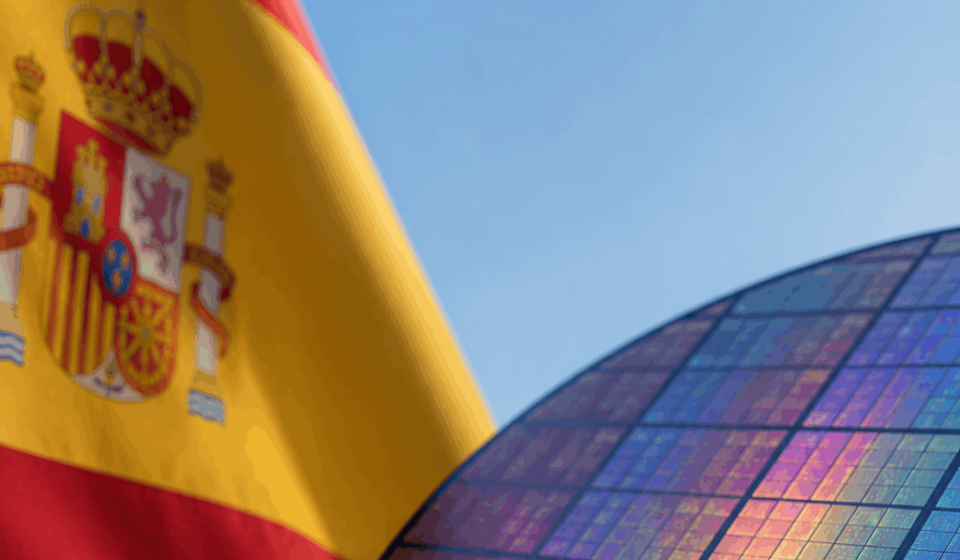
In the high-stakes theater of global semiconductor manufacturing, Europe has long grappled with an identity crisis. While regions like Saxony in Germany or the Eindhoven-Leuven-Grenoble triangle have focused on massive scale and traditional fab capacity, Spain is charting a distinct, decentralized course. Rather than attempting to replicate the monolithic manufacturing hubs of East Asia or Northern Europe, Spain is leveraging its unique intellectual capital—spanning photonics, quantum computing, and advanced metrology—to secure a vital foothold in the next generation of the global chip ecosystem.
The Strategic Shift: Beyond the Fabs
The Spanish semiconductor strategy, which is increasingly influencing the conversation surrounding "Chips Act 2.0," is rooted in the philosophy of specialization. Industry veterans and policy architects, including Maria Marced and Francesc Guim, are currently spearheading a push to pivot Europe’s semiconductor focus from mere volume manufacturing toward a more nuanced model: one that prioritizes design sovereignty, hardware security, and the integration of emerging technologies like AI and photonics.

This transition acknowledges a fundamental reality: the semiconductor industry is moving away from the era of "one-size-fits-all" lithography. The next frontier involves heterogeneous integration, where photonics and quantum hardware must coexist with silicon logic. By positioning its research institutes as "distributed RTOs" (Research and Technology Organizations), Spain is betting that the agility of its ecosystem will prove more valuable than the sheer capital expenditure of a new multi-billion-euro fab.
A Geographic Mosaic: Catalonia and the Canary Islands
Spain’s strategy is best understood through its two most prominent nodes: the industrial powerhouse of Catalonia and the specialized innovation hub of the Canary Islands.

The Catalan Cluster
Catalonia has emerged as the gravitational center of Spain’s chip ambitions. This region has successfully woven together a dense network of high-caliber institutions, including the Barcelona Supercomputing Center (BSC), the Institute of Photonic Sciences (ICFO), and the IMB-CNM. This is not a top-down state project, but rather a bottom-up industrial coordination effort. By connecting research output directly to startups and manufacturing partners, Catalonia is effectively prototyping a new model of semiconductor R&D that is as much about systems architecture as it is about physical wafer production.
The Canary Islands: From Stars to Silicon
Perhaps the most surprising success story in this ecosystem is the emergence of the Canary Islands as a center for semiconductor tooling. Traditionally known for its world-class astronomy facilities, the region has successfully pivoted its expertise in optics and light-field sensing toward the semiconductor sector. Companies like Wooptix have migrated wavefront-sensing technology—originally designed for telescope calibration—into the realm of semiconductor metrology. This transition highlights the latent potential in specialized scientific fields to solve the "bottlenecks" of advanced packaging, particularly as the industry struggles with wafer-shape control for AI-scale chips.

Chronology: The Path to Integration
The current momentum in the Spanish semiconductor sector is the result of a multi-year effort to synchronize national research with European mandates:
- 2023: Spain formally intensifies its outreach to the European Commission, advocating for a broader interpretation of the Chips Act that includes "design and ecosystem support."
- Early 2024: The launch of the PIXEurope initiative, coordinated by ICFO, marks a turning point, with €400 million earmarked to bridge the gap between photonics research and industrial-scale manufacturing.
- Late 2024: Qilimanjaro Quantum Tech reaches a milestone in analog quantum computing, positioning its systems to complement the digital power of the Barcelona Supercomputing Center.
- 2025: The "distributed RTO" model matures; industrial partnerships begin to yield commercial security hardware from companies like Quside, which are now shipping globally.
- November 2025: Wooptix launches its "Phemet" wafer-shape metrology tool, signaling the arrival of Canary-originated tech in the global AI supply chain.
- June 2026: A wave of high-profile industry reports and magazine features cements Spain’s role as a key contributor to the "Chips Act 2.0" debate.
Supporting Data: The Pillars of the Ecosystem
Spain’s strategy relies on a symbiotic relationship between high-performance computing (HPC) and quantum-ready hardware. The following table summarizes the key areas of focus:

| Technology Sector | Key Players | Strategic Value |
|---|---|---|
| Integrated Photonics | ICFO, PIXEurope | Low-latency AI data transfer |
| Quantum Hardware | Quside, Qilimanjaro | Post-quantum security & optimization |
| Metrology/Packaging | Wooptix | Yield improvement for AI chips |
| System Architecture | Barcelona Supercomputing Center | European sovereignty in AI compute |
The investment in these areas is not merely academic. The PIXEurope initiative, for instance, serves as a critical infrastructure project. By standardizing photonic design and pilot production, it lowers the barrier to entry for European startups that would otherwise have to rely on non-European supply chains.
Official Responses and Industry Sentiment
The consensus among the leadership at organizations like ACIO and the various participating RTOs is that Spain’s "distributed" nature is a feature, not a bug. In discussions regarding Chips Act 2.0, the sentiment is clear: Europe cannot compete with Asia on cost-per-wafer for legacy nodes. Instead, it must compete on specialization.

Maria Marced, a prominent voice in the semiconductor policy debate, has emphasized that "Europe’s semiconductor strategy must shift toward the demands of the AI era." For Spain, this means focusing on the "interconnects"—the photonics, the packaging, and the security layers—that allow complex systems to function.
From the perspective of companies like Quside, which provides hardware-based random number generation for security, the Spanish ecosystem provides a unique advantage: access to both high-end research (via ICFO) and a collaborative industrial environment that allows for rapid scaling of complex quantum products.

Implications for the Global Semiconductor Market
Spain’s emergence as a specialized player has significant implications for the global semiconductor landscape.
1. The Decentralized Model as a Template
If Spain succeeds, it provides a blueprint for other medium-sized European economies. Rather than chasing the "mega-fab" dream, countries can find niches in the supply chain where their specific scientific heritage—whether it be in optics, materials science, or software—provides a competitive advantage.

2. Bridging the Gap to AI-Era Computing
The push toward analog quantum computing (led by firms like Qilimanjaro) and photonic integration is a direct response to the energy and performance walls hitting modern AI infrastructure. If these technologies can be industrialized within the European framework, Spain will become a key supplier of "specialized compute" modules that traditional foundries are ill-equipped to produce.
3. Digital Sovereignty through Interoperability
By fostering a network of institutes that share resources, Spain is building a form of "distributed sovereignty." By keeping the design and metrology of advanced chips within European borders, the ecosystem reduces reliance on global supply chains for the most critical, high-value-add components of the semiconductor lifecycle.

Conclusion: A Future Built on Complexity
The evolution of the Spanish semiconductor landscape is a testament to the fact that the future of the industry is not just about the silicon wafer—it is about the systems that surround it. Through a blend of academic rigor, startup agility, and a clear-eyed focus on the requirements of the next generation of AI hardware, Spain is no longer just a spectator in the global chip race.
As the industry moves toward 2030, the "Spanish model"—a distributed, interconnected, and highly specialized ecosystem—will likely serve as a foundational element of Europe’s strategy to reclaim its technological edge. The journey from astronomy in the Canary Islands to quantum-safe hardware in Catalonia is more than just a geographic spread; it is a strategic migration into the heart of the future technology stack. In the coming years, as the industry grapples with the limitations of current manufacturing, the contributions emanating from Spain will be at the center of the debate on how to build, secure, and scale the next era of compute.