

Delta Motion Elevates Industrial Testing Capabilities with New Trapezoid Waveform Command

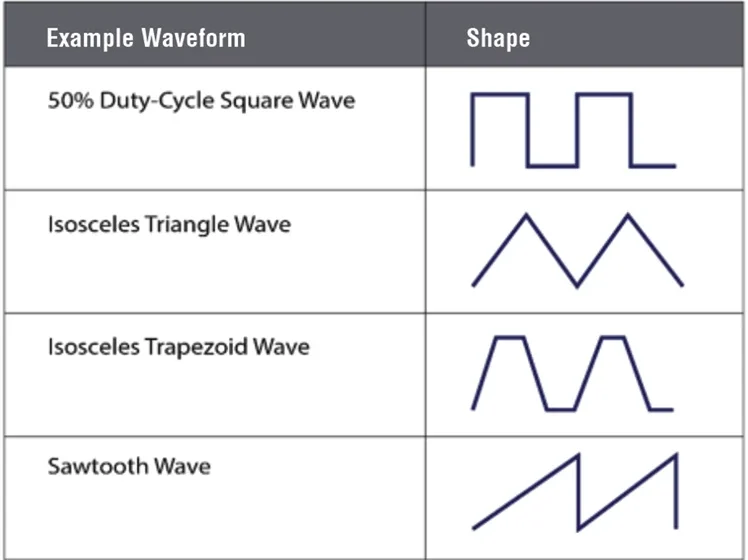
In the demanding world of precision engineering, the ability to replicate real-world conditions through controlled motion and force is paramount. Delta Motion, a recognized leader in high-performance motion control solutions, has recently unveiled a significant upgrade to its RMC series of controllers: the Trapezoid Waveform Command. This new functionality provides machine builders and test engineers with a robust, integrated toolset for generating complex, cyclic motion profiles. By streamlining the creation of trapezoid, triangle, sawtooth, and square wave profiles, Delta Motion is effectively lowering the barrier to entry for sophisticated fatigue, durability, and material testing applications.
Main Facts: A New Standard for Cyclic Motion Control
The Trapezoid Waveform Command represents a strategic expansion of Delta Motion’s existing waveform library, which already includes sophisticated sinusoidal and curve-based profiles. By integrating this capability directly into the RMC Motion Controller’s firmware, Delta has effectively moved the "intelligence" of waveform generation from the PLC (Programmable Logic Controller) to the motion controller itself.
The primary benefit of this shift is the elimination of the complex, cumbersome programming usually required to coordinate cyclic motion. Instead of drafting individual motion segments or building proprietary custom waveform generators within a PLC environment, engineers can now trigger continuous, high-fidelity waveforms directly within the RMC. The command is fully configurable, allowing users to define amplitude, offset, frequency, rise time, high time, and fall time with precision.
Because the waveform generation occurs entirely within the RMC hardware, the process is deterministic. It is immune to the fluctuations in PLC scan times or network latency that often plague traditional motion control architectures. This ensures that every cycle is identical, providing the high level of repeatability essential for rigorous testing environments.
Chronology of Development: From User Feedback to Implementation
The journey to the Trapezoid Waveform Command began not in a vacuum, but on the factory floors and in the laboratories of Delta Motion’s global client base. Over the past several years, as industrial automation has moved toward more complex durability simulations, Delta Motion noted a recurring request from its engineering partners: the need for a more intuitive way to handle non-sinusoidal, repetitive motion.
The Feedback Loop
Delta Motion’s product development roadmap has historically been heavily influenced by its user community. During the development cycle leading up to this release, engineers reported that they were spending excessive time programming "workarounds" to create sharp-edged profiles, such as square or trapezoidal waves, which are vital for testing mechanical components under sudden-load conditions.
Integration and Beta Testing
The development phase focused on ensuring that the new command would not only function as a standalone feature but also integrate seamlessly with the existing RMCTools software suite. By late 2025, Delta Motion began rolling out the beta version of the command to select partners in the hydraulic and electromechanical testing sectors. This period of real-world testing allowed the company to refine the "on-the-fly" modification capabilities, ensuring that users could adjust parameters—such as amplitude or phase—without interrupting the test sequence.
Official Launch
Following the success of the pilot programs, the Trapezoid Waveform Command was officially integrated into the latest firmware releases for the RMC75, RMC150, and RMC200 motion controllers in mid-2026. This deployment marks a pivotal shift in how Delta’s controllers are used, transitioning them from simple position controllers to comprehensive, multi-modal testing hubs.
Supporting Data: Technical Capabilities and Adaptive Control
The power of the Trapezoid Waveform Command lies in its versatility across both position-based and force-based applications. In the realm of industrial testing, this dual-functionality is a game-changer.
Adaptive Amplitude Control
One of the most impressive technical aspects of this new command is the support for adaptive amplitude control, particularly in force-controlled applications. In traditional setups, a fixed output command often fails to account for the dynamic changes in a specimen’s stiffness during a long-term fatigue test.
Delta’s adaptive algorithm changes this dynamic. As a material begins to yield or as system conditions fluctuate during a durability test, the RMC controller automatically adjusts the waveform amplitude in real-time. This ensures that the requested peak force is maintained throughout the entire duration of the test, regardless of changes in the specimen’s structural integrity. This level of precision is critical for industries like aerospace and automotive, where material characterization must be verified under strictly controlled peak-load conditions.

Dynamic Profile Manipulation
The command supports the gradual evolution of waveforms over time. Operators can program a transition where the duty cycle of a square wave evolves, or a triangular wave shifts into a sawtooth pattern over a specified number of cycles. This capability allows for the simulation of complex aging processes or the testing of components under varying stress-strain profiles without requiring the operator to stop the system to recalibrate.
Official Responses: The Philosophy Behind the Innovation
Steve Nylund, CEO of Delta Motion, emphasized that the development of this command was a direct response to the evolving needs of their customers. "Delta’s controllers are increasingly valued for custom testing applications," Nylund stated. "Customers often find the cost to be a fraction of other high-end solutions, and the RMC controllers are much easier to adapt to special requirements."
Nylund noted that the industry had reached a saturation point regarding "black box" testing solutions. Customers were looking for systems that were powerful enough for high-end research but flexible enough to be programmed by a standard automation engineer. "Many of our product enhancements come directly from customer feedback," Nylund added. "The Trapezoid Waveform Command is a practical feature that simplifies application development. It removes the ‘programming friction’ that usually discourages engineers from pushing their testing systems to the limit."
The feedback from the field has been largely centered on the ease of use within the RMCTools environment. By centralizing the setup, tuning, and programming within a single software interface, Delta has ensured that the learning curve for the new command is minimal.
Implications for Industry: The Future of Testing and Automation
The introduction of this command has profound implications for the testing and automation landscape. By lowering the barrier to complex, high-fidelity motion control, Delta Motion is enabling smaller firms and specialized laboratories to conduct high-level testing that was previously the domain of multi-million-dollar proprietary test stands.
Simplifying the Test Stand Architecture
By moving waveform generation inside the RMC controller, the overall complexity of the control system is drastically reduced. A simpler system architecture means fewer points of failure, lower maintenance costs, and faster commissioning times. For machine builders, this translates into a competitive advantage: they can deliver a more capable, robust test machine to their end-users with less custom code to maintain.
Broadening Application Horizons
The versatility of the Trapezoid Waveform Command makes it applicable to a vast array of fields:
- Fatigue Testing: Simulating millions of cycles for mechanical components to identify the point of failure.
- Hydraulic Actuator Characterization: Determining the responsiveness and accuracy of hydraulic systems under sharp load transitions.
- Material Science: Testing the durability of new composites or alloys under repetitive stress cycles.
- Production Cycle Simulation: Mimicking the actual operating life of a product to validate design choices before full-scale manufacturing.
A New Era of "Deterministic" Performance
In the past, engineers often struggled with "jitter" or inconsistencies in waveforms caused by the cyclic nature of PLC scan times. By shifting this task to the RMC controller, Delta Motion has ensured that the motion is deterministic. This is not just a performance upgrade; it is a quality assurance necessity. In an era where data integrity is the foundation of product safety, having a controller that guarantees the exact repeatability of a test profile is an invaluable asset.
Conclusion
The Trapezoid Waveform Command is more than just a software update; it is a testament to Delta Motion’s commitment to solving the practical, everyday problems of engineers in the field. By listening to the needs of the industry and leveraging the power of their existing hardware, Delta has provided a tool that is as flexible as it is robust. Whether it is a small-scale material test or a large-scale industrial durability simulation, the new capabilities of the RMC series ensure that Delta Motion will remain at the forefront of the motion control and testing industry for years to come.
As industries continue to push the boundaries of materials and mechanical performance, the demand for precise, repeatable, and easily programmable testing solutions will only grow. With this latest advancement, Delta Motion has positioned itself not just as a supplier of controllers, but as a strategic partner in the pursuit of engineering excellence.