



The Ghost in the Machine: Why Human Intuition Remains the Ultimate Industrial Sensor

Introduction: The Data-Driven Mirage
In the modern industrial landscape, we are currently witnessing the zenith of the Industrial Internet of Things (IIoT). Modern factories have been transformed into hyper-connected ecosystems where every variable—from ambient humidity to the precise micro-vibrations of a hydraulic piston—is quantified, digitized, and analyzed. Smart Manufacturing is no longer a futuristic buzzword; it is the backbone of global supply chains.
However, as we rush to digitize every corner of the production floor, a fundamental question emerges: Have we traded wisdom for data? While sensors provide an unprecedented stream of facts, they remain devoid of context. After decades on the shop floor, the evidence is clear: while data points to what is happening, only human intuition can discern the truth behind those signals. As we integrate artificial intelligence into our conformity assessments and process monitoring, the human touch remains the final, irreplaceable safeguard against technological fallibility.
The Chronology of an Error: A Case Study in Automation Bias
To understand the limitations of digital oversight, one must look at the "sensor paradox." A definitive instance of this occurred during a high-stakes production shift that challenged the industry’s absolute reliance on automated diagnostics.
The Alarm
The incident began with a standard operational cycle. Suddenly, the Human-Machine Interface (HMI) flashed a critical error: the hydraulic oil temperature had spiked to a catastrophic 105°C. In the world of injection molding, such a reading is a "stop-everything" event. Left unchecked, temperatures of this magnitude threaten to degrade hydraulic seals, compromise oil viscosity, and potentially lead to a total system seizure.
The senior operator, trained to follow the digital directive, immediately triggered an emergency stop. The system had done its job: it detected an anomaly and acted to preserve the asset.
The Intuitive Contradiction
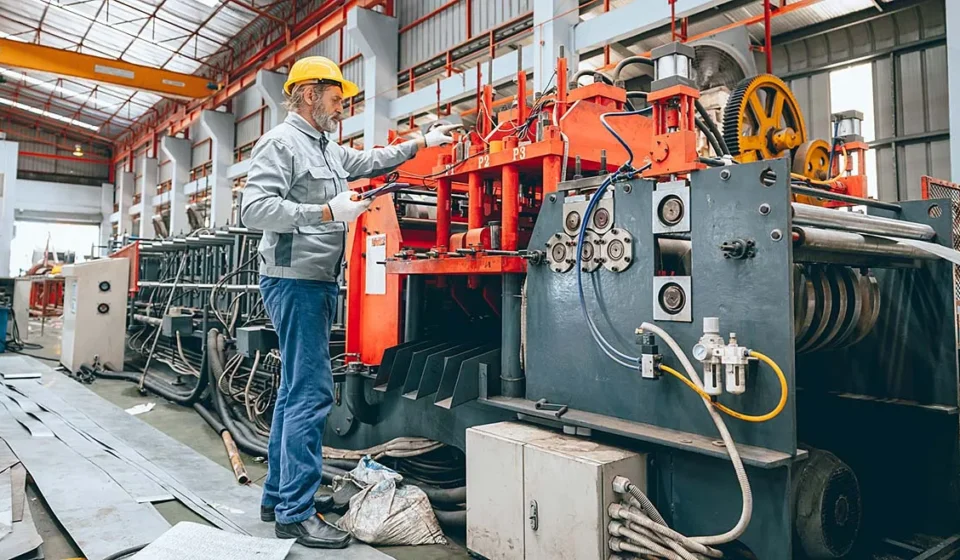
Yet, something was fundamentally disconnected. Standing on the floor, the veteran technician sensed a dissonance. The machine’s acoustic profile—a steady, rhythmic hum—remained unchanged. There was no acrid scent of scorched oil, no erratic jittering in the pressure gauges, and the physical housing of the hydraulic unit felt cool to the touch.
Most tellingly, the plant’s logic controllers were configured with a safety interlock set to 55°C. The logic dictated that if the machine were truly at 105°C, the safety interlock should have tripped the system automatically. It hadn’t.
The Resolution
When the team bypassed the digital display to conduct a manual verification, they found the hydraulic oil sitting at a healthy 43°C. The problem was not the machine; it was the messenger. A faulty sensor had misreported the data, nearly leading to an unnecessary, costly, and time-consuming shutdown of a perfectly healthy production line. This incident serves as a stark reminder: automation is a tool, not an oracle.
Supporting Data: The Cost of Over-Reliance
The manufacturing sector is currently grappling with the "False Positive Epidemic." According to industrial maintenance surveys, approximately 15% to 20% of all maintenance alerts generated by automated sensor arrays in mature facilities are either false positives or non-critical anomalies.
The Economic Impact
- Downtime Costs: In high-volume automotive or electronics manufacturing, unplanned downtime can cost upwards of $20,000 to $50,000 per hour.
- Maintenance Labor: Deploying a maintenance crew to troubleshoot a "ghost" issue diverts resources from actual preventative maintenance, leading to a net decline in overall equipment effectiveness (OEE).
- Automation Bias: Research suggests that when operators are presented with digital warnings, they exhibit a psychological phenomenon known as "automation bias"—a tendency to favor the machine’s output even when contradictory sensory evidence is present.
This data suggests that while we are becoming more efficient at collecting information, we are simultaneously becoming more vulnerable to "digital noise."
Industry Perspectives: Is AI the Answer or the Next Hurdle?
Industry leaders are currently divided on the role of AI in resolving these discrepancies.
The Technological Optimist View
Proponents of AI-driven predictive maintenance argue that the solution is not "less technology," but "better technology." By implementing edge computing and AI models that learn the "behavioral signature" of a machine, factories can distinguish between a genuine spike in heat and a sensor malfunction. In this view, AI is the evolution of the human operator—a system that can process thousands of data points to verify if an alarm is, in fact, a reality.
The Human-Centric View
Conversely, veteran engineering managers argue that no algorithm can fully capture the "language" of a machine. They point out that machines have distinct personalities—their resonance, their vibration patterns, and even the way they "load" during a cycle—that are developed over years of use. An AI might recognize that a vibration is "outside of parameters," but a technician recognizes that the vibration is "the sound of a bearing about to fail in three days," allowing for planned intervention rather than a reactive shutdown.
Implications: The Future of the Factory Floor
As we move toward the next generation of Smart Manufacturing, the integration of human intuition and machine intelligence must become a synergistic partnership.
1. The Human Interlock
We must shift the narrative of the "operator" to the "orchestrator." An orchestrator does not blindly follow the screen; they treat the screen as one of many inputs. The goal of future manufacturing training should be to cultivate "situational awareness," where the digital interface provides the what, but the operator provides the why.
2. Design for Transparency
Machine builders must focus on "explainable automation." When a sensor triggers an alarm, the system should not just report the value; it should offer a confidence score or a cross-reference with other sensors to justify the alarm. This allows the human to perform a "sanity check" before committing to a costly operational change.
3. Preserving Tacit Knowledge
As the older generation of manufacturing experts retires, there is a significant risk that the "tacit knowledge"—the ability to hear a machine’s distress—will be lost. We must formalize the transfer of this expertise. Mentorship programs that encourage junior technicians to perform manual sensory checks alongside digital monitoring are vital to maintaining operational integrity.
Conclusion: The Living Symphony
Manufacturing is, at its heart, a living symphony. It is a complex interplay of pressure, heat, friction, and timing. While sensors are the instruments that measure the notes, they do not understand the music.
In the quest for total automation, we must ensure that we do not silence the very people who understand the rhythm of the floor. Technology should serve to amplify human judgment, not replace it. As we look toward the future, the most advanced sensor in the factory will remain the human mind—capable of observing, questioning, and perceiving the truth that exists in the spaces between the data points.
True operational excellence lies not in the perfection of our sensors, but in the wisdom of the people who know when to trust them—and more importantly, when to ignore them. We must remain the masters of the machine, ensuring that when the alarm sounds, there is a human ear ready to listen to the melody beneath the noise.