



The Intelligent Factory: How IMTS 2026 is Defining the Next Era of Industrial Manufacturing

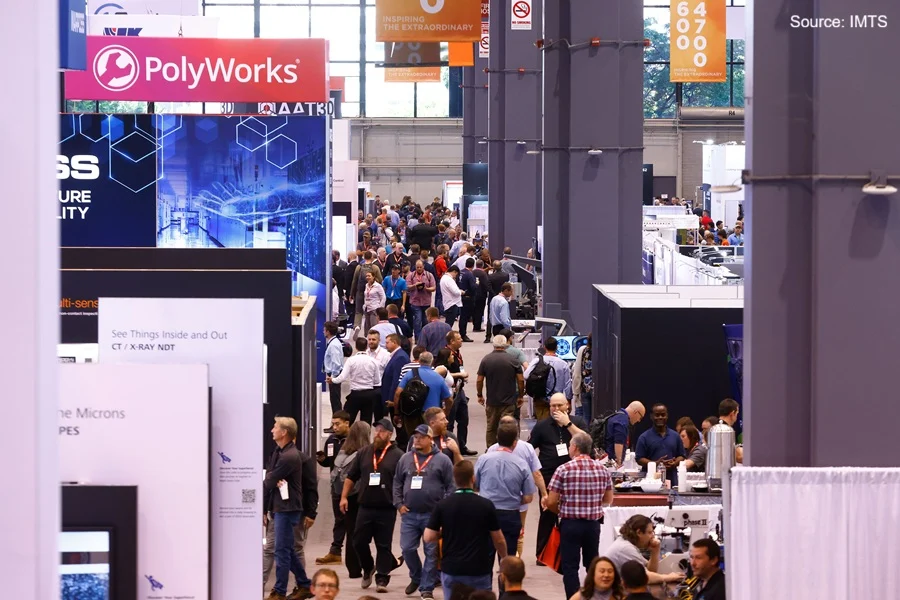
The global manufacturing landscape is undergoing its most profound transformation in decades. As industrial production shifts toward a more agile, data-driven, and autonomous model, the International Manufacturing Technology Show (IMTS) 2026 is positioning itself as the epicenter of this evolution. Taking place from September 14–19 at Chicago’s McCormick Place, the event arrives at a critical juncture: a period characterized by surging orders, a renewed focus on domestic production, and the rapid, cross-industry integration of Industrial Artificial Intelligence (AI).
With 1.2 million square feet of exhibit space and over 1,800 exhibitors, IMTS 2026 serves as more than just a trade show; it is a live laboratory where the $2.96 trillion U.S. manufacturing sector—which currently accounts for 9.4% of the nation’s GDP—converges to witness the "next wave" of growth.
The State of the Industry: A Statistical Resurgence
The momentum behind IMTS 2026 is supported by compelling economic data. According to the U.S. Manufacturing Technology Orders Report, produced by AMT—The Association For Manufacturing Technology, orders for manufacturing technology reached $2.19 billion during the first four months of 2026. This represents a robust 28.9% increase over the same period in 2025.
This growth is mirrored by broader economic indicators. The ISM Manufacturing PMI reached 53.3% in June, signaling expansion, while the ISM Manufacturing New Orders Index has maintained growth for six consecutive months. Perhaps most telling is the shift in labor productivity. Bureau of Labor Statistics data from the first quarter of 2026 shows that manufacturing productivity rose by 3.2%, while output increased by 3.3% without any growth in total hours worked. This decoupling—where output grows while labor hours remain flat—is the clearest indicator that manufacturers are successfully integrating advanced technology to do more with less.
A Chronology of Technological Convergence
The journey to IMTS 2026 reflects a multi-year evolution in how factories operate.
- Early 2020s: The focus was on "connectedness"—the digitization of machines and the initial adoption of IoT sensors to track downtime.
- 2024–2025: The industry saw the maturation of digital twins and additive manufacturing (AM), allowing companies to simulate production and create complex parts on demand, mitigating supply chain fragility.
- 2026 (The Present): The current shift is defined by the "agentic" era. It is no longer enough to simply collect data; the focus has shifted to AI that can interpret, learn, and act autonomously.
IMTS 2026 marks the first major industry event where Industrial AI is treated as a foundational layer rather than an experimental add-on. From the shop floor’s machining centers to the executive suite’s cloud platforms, AI is now woven into the fabric of every technology sector, from metrology and tooling to production planning and quality control.
Official Perspectives: Navigating the AI Transition
Industry leaders view this year’s show as a vital bridge between curiosity and practical application. Mike Cicco, president and CEO of FANUC America and chairman of the board at AMT, emphasizes that the primary drivers of this shift are workforce constraints and the need for operational resilience.
"Production demands and workforce constraints are pushing manufacturers to take a closer look at technologies like AI, digital twins, additive, and advanced automation," Cicco noted. He highlights that the "magic" of modern manufacturing lies in making sophisticated tools accessible to a broader range of skill levels. "Visitors to IMTS will see how advances in AI-driven capabilities like vision systems, predictive analytics, and adaptive control can simplify programming and routine tasks, enabling employees to take on higher-value responsibilities."
Doug Woods, president of AMT, echoes this sentiment, framing the current era as the most exciting time to be in the industry. "The heart of what manufacturers and job shops do hasn’t changed—we mill, turn, shape, move, measure, and assemble," Woods stated. "But new technologies are changing how work gets done. The numbers indicate that people are working smarter, which is fueling the reshoring movement and the rate of technology adoption."
The "Agentic" Shift: Insights from Cloud Hyperscalers
One of the most significant themes at IMTS 2026 is the intersection of operational technology (OT) and information technology (IT). Hyperscalers like Amazon Web Services, Google Cloud, and Microsoft are present to demonstrate how cloud infrastructure serves as the central nervous system for the modern factory.
Praveen Rao, global director and manufacturing industry lead at Google Cloud, describes the current transition as an "agentic shift." By leveraging AI platforms like Gemini Enterprise, manufacturers can connect disparate silos of data. "The real magic happens at the intersection of data from engineering technology, operational technology, and IT software," Rao explained. "By connecting these silos, manufacturers can deploy specialized agents that interpret real-time visual and sensor data, preventing downtime before it happens and helping close productivity gaps."
Practical Implementation: The Industrial AI Arena
Recognizing that "AI" can be an intimidating term for many shop owners, IMTS 2026 has introduced the Industrial AI Arena. This space is designed to help attendees move from theoretical knowledge to actionable ROI.
Spotlight on AI-Native Solutions:
- Atomic Industries: A vertically integrated powerhouse that uses software-driven processes to compress mold design and production cycles.
- Ignizia: An AI-native platform focused on digitizing a company’s "operating reality," helping firms prioritize where AI provides the fastest return on investment.
- C-Infinity: Their AutoAssembler AI automates the creation of production-ready assembly instructions from CAD/PLM data, reducing weeks of engineering work into minutes.
- Purchaser.ai: A solution for the often-tedious RFQ process, normalizing vendor submissions from various formats into a unified, actionable schema.
Implications for the Future of Manufacturing
The implications of this technological leap are profound. For job shops like MetalQuest Unlimited, which has attended IMTS for decades, the adoption of digital twins and 5-axis CNC automation is not just an upgrade—it is a competitive necessity. As Scott Harms, president of MetalQuest, observed, "The world needs the United States to be a good manufacturer, given global disruptions and defense industrial base requirements."
The transition is also changing the nature of work. Additive manufacturing, for example, is becoming more industrial-scale. The introduction of the EOS M4 Onyx platform at the show highlights the move toward high-volume, localized, on-demand manufacturing. AI-enabled tools now optimize build preparation, predict distortion before a print begins, and monitor meltpool behavior in real-time to ensure repeatability.
Furthermore, embedded AI is transforming the "intelligence" of machine tools. From Mazak and Okuma to Siemens and Heidenhain, manufacturers are seeing controls that can diagnose their own operating conditions and optimize machining accuracy without constant human intervention.
Conclusion: Bridging the Gap
IMTS 2026 arrives at a time when the manufacturing sector is not just surviving but thriving. By providing a platform where attendees can see AI, automation, and additive manufacturing working in concert, the show demystifies the complexity of Industry 4.0.
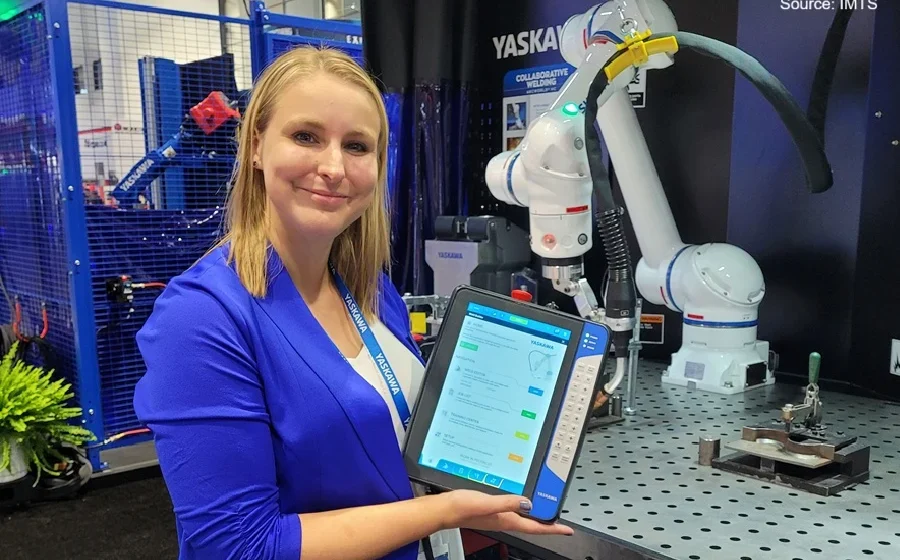
Whether it is a small machine shop looking to integrate cobots to solve labor shortages or a large OEM seeking to build an autonomous supply chain, the core takeaway of IMTS 2026 is clear: the tools to increase output, improve quality, and ensure long-term resiliency are no longer in the future—they are on the floor in Chicago. For those willing to embrace the shift, the era of the intelligent factory has officially begun.