





By Josh Cosford, Contributing Editor
In the high-stakes world of industrial fluid power, the ubiquity of mineral-based hydraulic oils often breeds a dangerous level of complacency. While these oils are the industry standard for their cost-effectiveness, superior lubricity, and widespread availability, they carry a hidden, volatile risk. When pressurized to 3,000 psi or beyond, a microscopic pinhole leak in a hose transforms from a simple maintenance nuisance into a potential industrial catastrophe.
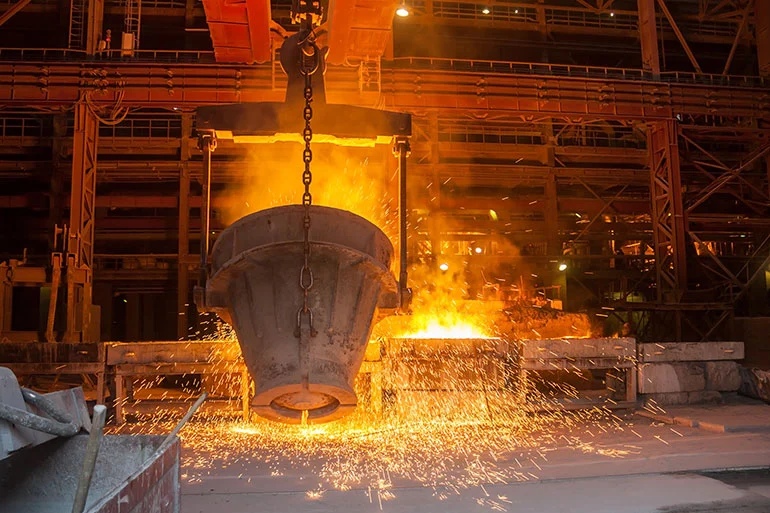
Unlike a garden hose, a high-pressure hydraulic line acts as a precision atomizer. Should that spray encounter a furnace, a hot ingot, or any ignition source, the resulting mist can instantly ignite, creating a blowtorch effect that is difficult to extinguish. For operators in steel mills, die-casting facilities, and glass manufacturing plants, managing this risk is not merely a matter of maintenance—it is a cornerstone of facility safety.
The Science of Ignition: Why Standard Oils Fail
To understand the necessity of Fire-Resistant Hydraulic Fluids (FRHFs), one must first grasp the physics of fluid ignition. Mineral oil has a relatively low flash point. Under extreme pressure, the oil is forced through tiny fissures, breaking into a fine, aerosolized mist. This drastically increases the surface area of the fuel, making it highly susceptible to ignition. Once ignited, the pressurized stream acts as a continuous fuel source, fueling a blaze that can rapidly escalate in high-temperature environments.
To mitigate this, engineers rely on the ISO classification system, which categorizes fluids based on their chemical composition and the mechanisms they employ to resist combustion. These fluids fall into two primary families: water-based fluids, which utilize the cooling and smothering properties of water, and synthetic fluids, which are engineered with self-extinguishing molecular structures.
The Four Pillars: Understanding ISO Fluid Classifications
The ISO standard divides fire-resistant fluids into four distinct categories—HFA, HFB, HFC, and HFD. Each serves a specific niche in industrial applications.
HFA: The High-Water Emulsion
HFA fluids are oil-in-water emulsions, typically composed of 90% to 95% water. While the name might seem counterintuitive to the "oil-in-water" acronym, "HFA" stands for Hydraulic Fluid A-Version. Because of their high water content, these fluids offer exceptional fire resistance at a low cost. However, they are hampered by extremely low viscosity and poor lubricity. Consequently, their use is restricted to specialized, low-load environments such as longwall mining shields where fire resistance is paramount and high-pressure mechanical demands are secondary.
HFB: The Invert Emulsion
HFB fluids are "invert emulsions," consisting of roughly 40% water dispersed within an oil base. These fluids provide better lubrication than HFA, but they have largely fallen out of favor in modern industrial settings. The primary challenge is thermodynamic stability; HFB fluids are prone to phase separation, where the oil and water components drift apart over time, leading to inconsistent performance and potential system failure.
HFC: The Industrial Workhorse
Water-glycol fluids (HFC) are the standard-bearers for the die-casting and automotive stamping industries. Containing 40% to 45% water dissolved in a glycol base, these fluids provide a unique balance of fire resistance and low-temperature flow characteristics. They are the preferred choice for environments where a balance between safety and mechanical efficiency is required.
HFD: The Synthetic Solution
HFD fluids represent the pinnacle of fire-resistant technology. These are fully synthetic, water-free formulations typically derived from polyol esters or phosphate esters. Because they contain no water, they provide superior lubrication and are capable of handling high-pressure, high-load conditions that would cause water-based fluids to break down.
Mechanisms of Suppression: How Fluids Defeat Fire
The effectiveness of these fluids is rooted in their distinct chemical reactions to heat. When an HFC fluid (water-glycol) is sprayed onto a hot surface, the heat causes the water content to vaporize almost instantaneously. This rapid phase change produces a cloud of steam that displaces oxygen at the point of ignition. By effectively "choking" the flame, the steam creates an inert atmosphere that prevents the remaining glycol components from reaching their combustion temperature.
Synthetic HFD fluids operate differently. Because they are engineered at the molecular level, they are inherently difficult to ignite. If exposed to a continuous flame, they may catch fire, but they lack the rapid propagation capabilities of mineral oil. Most HFD formulations are self-extinguishing; as soon as the external ignition source is removed, the fluid’s chemical bonds inhibit the sustained combustion process, causing the flame to die out naturally.
Critical Implications for System Design
Transitioning a hydraulic system to fire-resistant fluid is a complex engineering task that goes far beyond a simple "drain and fill." It requires a comprehensive overhaul of the system’s design philosophy.
1. The Lubricity Gap
One of the most significant challenges with water-based fluids is their reduced film strength. Water simply does not provide the same wear protection as mineral oil. When a system is converted to an HFC or HFA fluid, pumps must often be de-rated. This might involve reducing operating speeds or lowering the maximum system pressure to prevent the rapid degradation of internal pump components. Failing to adjust these parameters will lead to premature pump failure.
2. Seal Compatibility and Material Science
Chemical compatibility is perhaps the most dangerous oversight in fluid transitions. Synthetic HFD fluids, particularly those based on phosphate esters, are chemically aggressive. They act as potent solvents that can cause standard nitrile (Buna-N) seals to swell, soften, and eventually disintegrate.
For systems using HFD, engineers must specify seals made of materials like fluorocarbon (Viton) or ethylene propylene (EPDM), depending on the specific fluid chemistry. This requirement often necessitates a total teardown of the hydraulic circuit to replace every seal, gasket, and O-ring. Because of this, industry experts strongly advise designing the system for fire resistance from the inception phase, rather than attempting a retrofit on an aging machine.
3. Religious Maintenance Protocols
Fire-resistant fluids are not "install and forget" products. Water-based fluids, in particular, require strict monitoring. If a system runs hot, the water content in HFC fluids will evaporate over time, slowly stripping the fluid of its fire-retardant properties. Maintenance teams must implement a rigorous testing schedule to monitor the water-to-glycol ratio. If the balance is lost, the fluid may no longer provide the necessary safety buffer against fire, turning a "safe" system back into a high-risk environment.
The Future of Fluid Safety
As industrial safety standards tighten globally, the reliance on FRHFs is expected to grow. While the initial investment in synthetic fluids and the rigorous maintenance required for water-based fluids represent an increase in operational expenditure, the alternative—a catastrophic hydraulic fire—is an unacceptable liability.
For the modern plant manager or maintenance engineer, the path forward is clear: treat the hydraulic fluid not as a simple consumable, but as a critical safety component. By matching the fluid classification to the specific thermal environment and adhering to strict component compatibility standards, facilities can achieve a higher level of safety without compromising the mechanical output of their systems. The goal is to ensure that when a hose inevitably fails, it remains a maintenance event, not a headline in the local news.