





Navigating Global Volatility: The 2026 Outlook for Plastic and Metal Commodity Markets

The global supply chain is currently traversing one of its most complex periods in recent history. As the industrial sector grapples with the lingering effects of protective trade policies, escalating geopolitical tensions in the Middle East, and the fundamental restructuring of North American trade agreements, manufacturers of plastics and metals find themselves in a state of high-stakes transition.
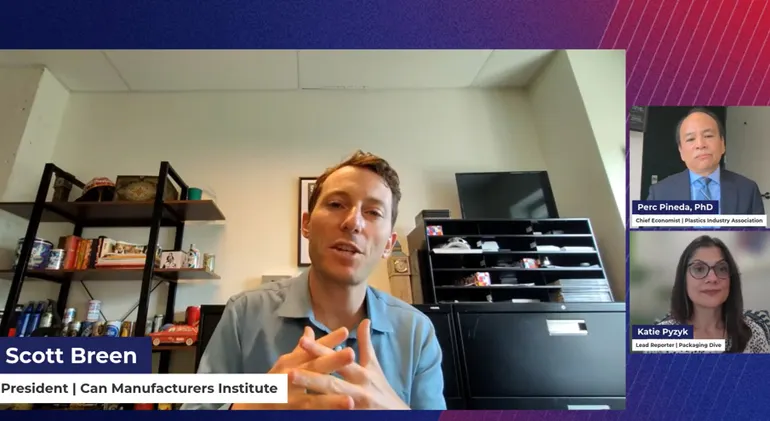
These critical insights were central to the "Supply Chain Outlook: Trends and Risks to Watch in 2026" virtual event, hosted by Packaging Dive, Supply Chain Dive, Manufacturing Dive, and Trucking Dive. Experts from the plastics and metals sectors converged to analyze how policy-driven cost pressures and international conflicts are rewriting the rules of commodity procurement, pricing, and long-term planning.
Main Facts: A Convergence of Pressures
The primary narrative for 2026 is one of "compounded uncertainty." Commodity markets are no longer reacting to singular events but are instead being squeezed by a trifecta of pressures:
- Tariff Escalation: The aggressive stance on Section 232 tariffs, which saw levies on steel and aluminum climb to 50% in 2025, has fundamentally altered cost structures for can manufacturers and metal fabricators.
- Geopolitical Instability: The conflict involving Iran has introduced extreme volatility into energy and commodity prices, specifically disrupting aluminum supply chains in the Persian Gulf and creating unpredictable fluctuations in global resin pricing.
- Trade Agreement Reconfiguration: The decision by the U.S. government to forgo the renewal of the United States-Mexico-Canada Agreement (USMCA) in its current form has created a vacuum of certainty, prompting both anxiety and a cautious optimism for a more modern, efficient trade framework.
Chronology of Market Disruptions
To understand the current state of the supply chain, one must trace the timeline of events that have defined the past 18 months:
- Early 2025: The U.S. government implements an increase in Section 232 tariffs on steel and aluminum from 25% to 50%. Manufacturers immediately report "unavoidable cost increases."
- January–May 2025: Import data reveals a 7.2% decline in plastic packaging imports from China, a direct result of the long-standing Section 301 tariffs.
- March 2026: Iranian missile strikes target two major aluminum production facilities in the Gulf region. This event triggers an immediate tightening of global aluminum supply and a sharp spike in commodity prices.
- Spring 2026: Resin prices experience significant volatility, with Producer Price Index (PPI) data showing a 6% increase in April, followed by a substantial 14% surge in May.
- Summer 2026: The U.S. government formally announces it will not renew the USMCA in its current state, sparking a period of intense negotiation and strategic reassessment for North American trade partners.
- Recent Days: Market sentiment shifts as hopes for a U.S.-Iran ceasefire fluctuate. Any sign of de-escalation leads to price cooling, while signs of renewed hostility threaten to send prices back to their March highs.
Supporting Data: The Impact on Input Costs
The financial burden of these policy shifts is not merely theoretical; it is reflected in the raw data of the industrial sector.
Metal Packaging and Consumer Prices
According to Scott Breen, president of the Can Manufacturers Institute (CMI), the impact of 50% tariffs on aluminum and steel has hit the consumer wallet directly. Because the U.S. imports approximately 80% of the tinplate steel required for food cans, the industry has little choice but to pass these costs downstream.
The Bureau of Labor Statistics (BLS) Consumer Price Index (CPI) provides a stark picture:
- Beverage prices: Up 2% to 3% since June 2025.
- Canned fruits and vegetables: Up 5%.
Breen notes that the rise in canned food prices—which is outpacing the inflation seen in fresh or frozen food sectors—serves as a "canary in the coal mine" for the specific impact of Section 232 tariffs on the packaging industry.
Plastic Resin and Global Energy
Perc Pineda, chief economist at the Plastics Industry Association, highlights that while plastics have not faced the same extreme, across-the-board spikes seen in metals, the sector is not immune to global energy shocks. Since resin is a globally priced commodity tied to crude oil and natural gas, the instability in the Middle East has had a clear, measurable effect on production costs. The 14% jump in resin prices in May 2026 underscores how energy market disturbances—directly exacerbated by regional conflicts—can cascade into the manufacturing sector.
Official Responses and Strategic Advocacy
Industry leaders are not merely reacting to these developments; they are actively lobbying for policy adjustments to mitigate the damage to domestic production.
The Can Manufacturers Institute’s Strategy
CMI is currently pushing for a multifaceted trade relief agenda. Their primary recommendations include:
- Targeted Tariff Relief: Advocating for a reduction in tariffs on tin-plated steel and primary aluminum to support domestic manufacturers who rely on these imports.
- Equivalency Policies: Proposing that the U.S. implement equivalent tariffs on imported, pre-filled food cans. Currently, foreign manufacturers can import filled cans at a lower cost basis than U.S. companies can import the raw materials to make the cans domestically, a dynamic that CMI describes as a competitive disadvantage.
The Plastics Industry Association’s View
The Plastics Industry Association is currently navigating a period of "planning paralysis." With equipment manufacturers holding temporary relief from Section 232 tariffs only until December 2027, companies are hesitant to commit to long-term capital investments. Pineda emphasizes that the lack of clarity regarding the evolution of U.S. trade policy is the most significant hurdle to growth.
Implications: The Future of North American Trade
The expiration of the current USMCA framework serves as a pivot point for the U.S., Mexico, and Canada. While the initial announcement created uncertainty, it also offers a "blank slate" to address long-standing grievances.
Strengthening Regional Integration
Experts agree that the integration between the U.S., Mexico, and Canada remains vital. Mexico stands as the largest export market for the U.S. plastics industry, and Canada remains a critical supplier of primary aluminum. A "USMCA 2.0" could focus on:
- Supply Chain Resilience: Strengthening material flows within the continent to reduce reliance on volatile regions.
- Addressing Overcapacity: Leveraging a new agreement to combat the global overcapacity of steel, particularly from China, which continues to distort market prices.
The Challenge of Global Bloc Competition
Perhaps the most significant long-term implication discussed at the event is the rise of the Asian trading bloc. Comprising 15 countries, including China, Japan, and Korea, this bloc now accounts for roughly 30% of global trade. Pineda and Breen both warn that the U.S. cannot afford to operate in isolation. The next iteration of North American trade policy must be designed with the reality of this massive, unified Asian economic force in mind.
Final Outlook: Resilience Over Reaction
As 2026 progresses, the consensus is that manufacturers must pivot from "just-in-time" supply chain models to "just-in-case" strategies. The volatility of the Middle East, the rigidity of tariffs, and the renegotiation of continental trade treaties suggest that price stability is unlikely in the short term.
For the packaging and plastics sectors, the ability to adapt to these geopolitical and economic realities—through domestic sourcing, innovative material use, and active policy advocacy—will be the defining factor in determining which companies thrive in the remainder of the decade. The path forward remains uncertain, but the necessity for a cohesive, strategic response to these global pressures has never been clearer.