



Unseen Fault Lines: Decoding Metal Stress, Strain, and Molecular Mechanics to Prevent Catastrophic Industrial Failures

By Mike Sondalini, PWW EAM System Consultant
Published with permission from the BIN95 Business Industrial Network
Date of Publication: September 8, 2026
Main Facts
In the high-stakes environments of modern manufacturing, power generation, and heavy industry, equipment reliability is the absolute cornerstone of operational safety and profitability. Yet, beneath the polished exteriors of turbines, pumps, blowers, and structural frames lies a silent, relentless antagonist: metal stress.
According to advanced industrial asset management research, catastrophic equipment failure rarely happens by chance. Instead, it is almost invariably the result of accumulated physical stress that exceeds the elastic or ultimate tensile thresholds of structural metals. Failures typically manifest in two distinct ways:

- Single Overload Failures: Occurring when a component is subjected to a once-only load that drastically outstrips its maximum load-bearing capacity.
- Fatigue Failures: Resulting from the continuous, cyclical application of high loads—each individually below the breaking point—over extended operational lifespans.
At the microscopic level, these applied loads generate physical strain, causing atomic lattices to warp, break, and reform. Over time, microscopic discontinuities fuse into visible fissures, ultimately leading to total structural part separation and unplanned plant downtime. Understanding the mechanics of stress and strain is no longer just an academic exercise for metallurgists; it is a vital competency for reliability engineers, maintenance technicians, and plant managers aiming to maximize enterprise asset health.
Chronology: The Lifecycle of a Structural Metal Failure
To effectively combat premature equipment breakdowns, maintenance professionals must understand the chronological progression of material degradation—from initial installation to ultimate catastrophe.
Phase 1: Precision Fabrication and Elastic Equilibrium
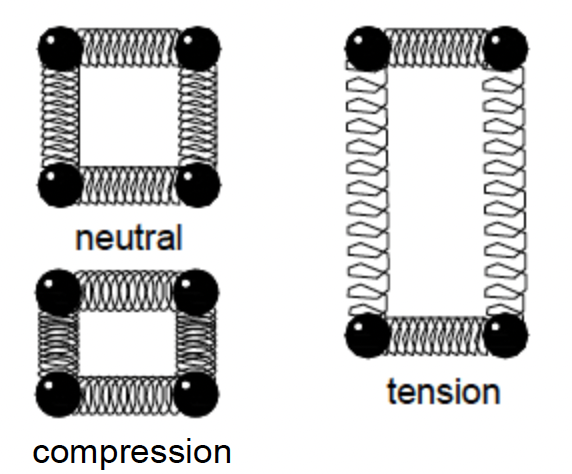
When a metal component is first manufactured and installed within an industrial system, it exists in a state of baseline equilibrium. In this phase, the internal atomic bonds act as microscopic springs, uniformly maintaining crystalline order. When operational loads are introduced—whether through tension (pulling forces), compression (pushing forces), or complex multi-axial combinations—the material reacts by elastically distorting to counterbalance the external forces.

Phase 2: Microscopic Strain and Dislocation Migration
As operational cycles continue, or if unexpected operational spikes occur, the metal enters a state of strain. At the atomic level, imperfections known as "dislocations" (gaps in the crystal lattice structure where rows of atoms terminate mid-crystal) begin to bear disproportionate loads. As additional mechanical force is applied, atomic bonds break and reform sequentially, forcing these dislocations to migrate toward the outer boundaries of the crystal grains.
Phase 3: Crack Nucleation and Propagation
When sufficient dislocations accumulate at crystal boundaries, the localized structural integrity collapses, leading to micro-cracking. Once a microscopic crack is nucleated, subsequent cyclic loading forces the crack tips to widen and lengthen incrementally. This stage often accounts for the vast majority of a component’s service life, silently progressing beneath protective coatings and insulation without external symptoms.
Phase 4: Critical Threshold and Sudden Part Separation
The final phase occurs rapidly. As the effective cross-sectional area of the metal component diminishes due to crack propagation, the remaining solid material experiences exponentially higher localized stress. Once this remaining section can no longer support even normal operating loads, catastrophic failure—shearing, snapping, or rupturing—occurs instantaneously, frequently triggering secondary damage across interconnected plant machinery.
Supporting Data: Mathematics, Formulas, and Material Physics
To quantify how materials react to external forces, maintenance and design engineers rely on standardized formulas and empirical models governed by classical mechanics and metallurgy.
1. Stress ($sigma$)
Stress measures the internal distribution of force reacting against externally applied loads, evaluated per unit of cross-sectional area perpendicular to the force vector.
$$textStress (sigma) = fractextForce (F)textCross-Sectional Area (A)$$

- Metric System Units: Newtons per square meter ($textN/m^2$ or Pascals, $textPa$)
- Imperial System Units: Pounds per square inch ($textpsi$)
2. Strain ($epsilon$)
Strain represents the degree of geometric deformation experienced by a material under load, expressed as a dimensionless ratio of proportional change.
$$textStrain (epsilon) = fractextChange in Length (Delta L)textOriginal Length (L_0)$$
Because strain is a ratio of length divided by length, it has no physical units; it simply denotes the fractional deformation of the component.

3. Hooke’s Law and the Elastic Region
The relationship between stress and strain is mathematically defined by Hooke’s Law. When plotted on a graph (as illustrated in standard material stress-strain curves), metals initially display an elastic region. Within this zone, stress and strain are directly proportional—forming a straight line. The metal behaves precisely like a spring: when the load is removed, the strain instantly reverses, and the component returns entirely to its original dimensions.
However, if the load surpasses the material’s elastic limit, it reaches the yield point. Beyond this threshold, permanent plastic deformation occurs. Interestingly, metallurgical science reveals that most commercial structural metals yield at a mere $0.1%$ to $1.0%$ of the theoretical strength of their atomic bonds. This immense disparity between theoretical capability and real-world performance is directly attributable to the crystalline lattice dislocations and structural imperfections inherent in manufactured metals.
Official Industry Responses and Expert Insights
Recognizing the pervasive threat that material fatigue and stress pose to industrial productivity, leading enterprise asset management (EAM) authorities and reliability organizations have issued targeted recommendations for modern plant operations.

Leading industry bodies, including the Business Industrial Network (BIN95) and plant wellness frameworks, emphasize that maintenance strategies must shift from reactive firefighting to proactive, physics-based reliability engineering.
"Managing metal stress is ultimately about protecting the integrity and service life of the equipment," notes Mike Sondalini, Senior EAM Consultant and author of Industrial Manufacturing Wellness: The Complete Guide to Successful Enterprise Asset Management. "Proper material selection, sound design, appropriate operating conditions, and maintenance practices that identify and address excessive loading can all help prevent small defects from becoming major failures."
According to global maintenance standard guidelines, industrial facilities are increasingly adopting advanced non-destructive testing (NDT)—such as ultrasonic testing, acoustic emission monitoring, and vibration analysis—to detect microscopic strain and dislocation accumulation long before visible cracking occurs. Furthermore, original equipment manufacturers (OEMs) are redesigning components using high-efficiency materials (such as advanced alloy steels and specialized polymers) to raise yield points and resist cavitation, thermal fatigue, and cyclic shock.
Implications for Industrial Operations and Plant Reliability
The practical implications of failing to account for metal stress and strain ripple across every facet of industrial manufacturing, carrying profound economic, safety, and operational consequences.
1. Economic Impact and Asset Lifecycle Optimization
Unplanned downtime driven by sudden mechanical failures costs industrial facilities billions of dollars annually in lost production, emergency repair labor, and expedited replacement parts. By understanding the root causes of metal fatigue, reliability teams can optimize preventive maintenance schedules, ensuring that components are serviced or replaced before they reach the critical crack-propagation phase.
2. Enhanced Workplace Safety
Catastrophic structural failures—such as the rupture of high-pressure steam pipes, the seizure of heavy-duty blowers, or the sudden failure of industrial pump casings—pose severe safety hazards to plant personnel. Rigorous adherence to engineering stress limits and load ratings drastically reduces the risk of industrial accidents, explosions, and environmental spills.

3. Precision Maintenance and Work Quality Assurance
Modern enterprise asset management demands a scientific approach to maintenance. By grounding maintenance protocols in mathematical and physical realities, organizations ensure high work quality assurance. Technicians trained in the principles of stress, strain, and atomic-level dislocations are better equipped to diagnose chronic failure modes, align rotating equipment accurately, and eliminate operational stressors—such as excessive vibration or thermal expansion binding—at the source.
Conclusion
Metal stress is an unavoidable reality of industrial machinery operations. However, unchecked stress does not have to mean inevitable failure. By deeply understanding how forces translate into molecular strain, how crystal lattice dislocations compromise metal strength, and how cyclical fatigue accumulates over time, engineering and maintenance professionals can fundamentally transform plant reliability. Through meticulous material selection, rigorous design standards, and proactive EAM practices, industrial organizations can safeguard their physical assets, extend equipment lifecycles, and achieve sustainable, world-class operational excellence.


