



China Accelerates Toward an Electric and Autonomous Future: A Comprehensive Analysis of the 15th Five-Year Automotive Roadmap

By Stewart Burnett
China’s industrial policy machinery has once again signaled its intent to aggressively steer the global automotive landscape. On September 10, the Ministry of Industry and Information Technology (MIIT) unveiled its sweeping blueprint for the automotive sector as a core component of the country’s upcoming 15th Five-Year Plan.
The strategy establishes an ambitious domestic market penetration target of 70% for New Energy Vehicles (NEVs) by 2030, while simultaneously detailing a distinctly municipal, infrastructure-heavy framework for the mass deployment of autonomous driving. Yet, even as Beijing projects global dominance through international expansion and standard-setting, the roadmap paradoxically aims to rein in domestic overcapacity, mitigate destructive price wars, and consolidate an overcrowded local market.
This comprehensive report examines the structural components of China’s latest industrial strategy, evaluating its historical trajectory, underlying data, stakeholder responses, and the profound global implications for traditional and emerging automakers alike.
1. Main Facts
The unveiling of the 15th Five-Year Plan’s automotive chapter outlines several pivotal directives that will govern the world’s largest car market for the remainder of the decade:
- NEV Penetration Target: The Ministry has set a baseline target for New Energy Vehicles (including battery-electric and plug-in hybrid vehicles) to capture 70% of total domestic car sales by 2030.
- Autonomous Driving Roadmap: The blueprint mandates the mass deployment of autonomous vehicles (AVs) across national highways, urban expressways, and designated municipal roads. While it refrains from issuing a rigid numerical adoption target for total fleet size, it strictly requires that autonomous systems achieve safety levels superior to the average human driver.
- Infrastructure-Centric Autonomy: Diverging significantly from Western strategies that rely primarily on standalone vehicle sensors and onboard compute, China’s model leans heavily into a cooperative vehicle-to-everything (V2X) architecture. First- and second-tier cities are directed to deploy smart roadside sensors and 5G infrastructure, effectively distributing the computational burden between the vehicle and centralized municipal cloud networks.
- Market Consolidation and Overcapacity Controls: In a direct effort to stabilize a bruising domestic market, Beijing has outlined measures to curb overinvestment, penalize inappropriate local government subsidies, and encourage industry consolidation to eliminate inefficient production facilities.
- Global Expansion and Supply Chain Security: Regulators are pushing Chinese automakers to cement their positions among the world’s top-selling manufacturers, while simultaneously establishing new standards for solid-state battery chemistry and boosting the domestic recycling efficiency of critical battery metals like lithium, cobalt, and nickel.
2. Chronology: The Evolution of China’s Automotive Strategy
To understand the weight of the new 15th Five-Year Plan, it is necessary to examine the rapid evolutionary timeline of Chinese automotive industrial policy over the past decade.
Phase 1: The Incubation and Rapid Scaling Era (2015–2020)
During the 13th Five-Year Plan, Beijing laid the foundational groundwork for the NEV sector through aggressive subsidies, infrastructure deployment, and localized mandates. This period birthed hundreds of electric vehicle startups, creating a vibrant yet chaotic ecosystem that established China as the world’s undisputed epicentre of EV manufacturing.
Phase 2: The Breakthrough and Over-Achievement (2021–2024)
When the 14th Five-Year Plan was issued in 2021, its architects took what now appears to be a conservative gamble, targeting a modest 20% NEV market share by 2025. Driven by rapid advancements in battery technology, plunging costs, and enthusiastic consumer adoption, China shattered that projection years ahead of schedule. By the end of last year, NEV penetration reached a staggering 54%, rendering the 2021 target obsolete almost immediately.
Phase 3: The Price War and Regulatory Reckoning (Late 2023–August 2025)
The explosive growth of domestic manufacturing capacity eventually outpaced domestic demand, triggering a brutal, protracted price war initiated by market leaders like Tesla and BYD. Profit margins plummeted across the board, and domestic car sales experienced contractions over multiple consecutive months in 2024 and 2025.
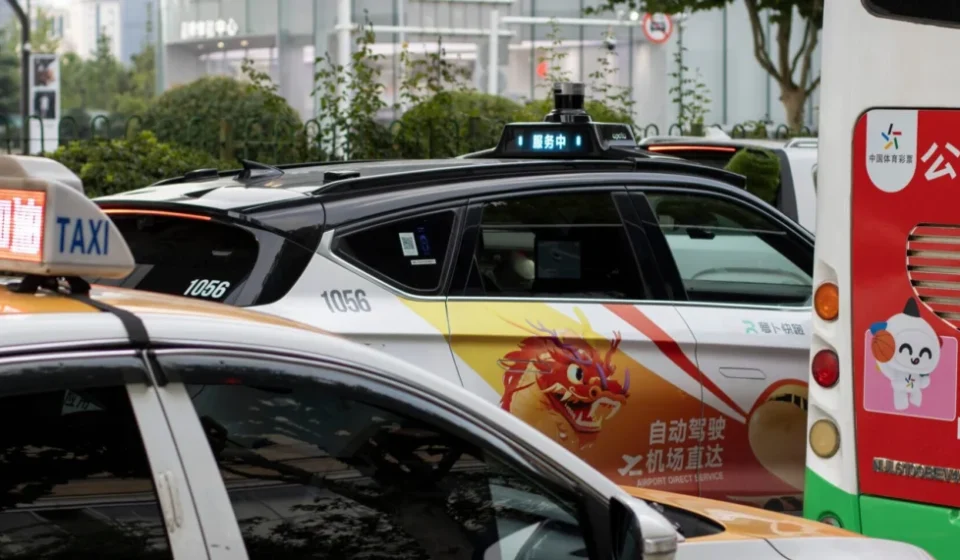
Compounding these economic pressures, safety and regulatory scrutiny intensified. Notably, in mid-2025, municipal authorities imposed a three-month freeze on new robotaxi permits following a high-profile operational outage involving Baidu’s Apollo Go fleet in Wuhan.
Phase 4: The 15th Five-Year Roadmap (September 2025 and Beyond)
The release of the new roadmap on September 10, 2025, marks a strategic pivot. Beijing has transitioned from a policy of unmitigated volume growth to one focused on quality control, technological refinement, market consolidation, and systemic safety assurance.
3. Supporting Data: Market Realities and Projections
The viability of the 15th Five-Year Plan rests upon a shifting foundation of economic and industrial data.
The NEV Trajectory
The 70% penetration target for 2030 may already be within striking distance. According to figures compiled by the China Passenger Car Association (CPCA), NEVs accounted for 65% of all domestic car sales in August alone. Macroeconomic factors, including rising global fuel prices exacerbated by ongoing geopolitical instability and conflicts in the Middle East, are expected to continue driving consumers away from traditional internal combustion engine (ICE) vehicles at an accelerated pace.
+-------------------------------------------------------+
|          China NEV Market Penetration Trend           |
+-------------------------------------------------------+
| 2021 (14th FYP Target):     20%                       |
| 2024 (Actual Achievement):  54%                       |
| August 2025 (Monthly Data): 65%                       |
| 2030 (15th FYP Target):     70%                       |
+-------------------------------------------------------+
Global Standing and Export Pressures
Beijing’s ambition to elevate Chinese automakers into the global top tier has yielded mixed results. While domestic giants BYD, SAIC, and Geely secured positions among the world’s top ten automotive groups by sales volume last year, they continue to trail significantly behind legacy titans such as Toyota, Volkswagen, and Hyundai in terms of global footprint and overseas revenue stability.
Concurrently, total domestic car sales fell by 21% over the first eight months of the year, amplifying the industry’s reliance on exports. However, these overseas expansion efforts are increasingly colliding with international trade barriers, prompting the industry ministry to issue supportive guidelines aimed at helping domestic brands navigate foreign markets while deepening cooperation with international component suppliers.
4. Official Responses and Industry Stakeholder Reactions
The unveiling of the 15th Five-Year Plan has elicited varied responses from government regulators, domestic automakers, and international observers.
Regulatory Intent: Order Out of Chaos
Ministry officials have emphasized that the new policies are designed to foster a healthier, more sustainable industrial ecosystem. By taking direct aim at "inappropriate incentives" doled out by cash-strapped local governments—which historically propped up failing or redundant EV startups—Beijing is signalling that market survival must be earned through technological prowess rather than state-backed life support.
Antitrust enforcement is set to tighten significantly, signaling a definitive end to the predatory pricing strategies that have devastated supplier margins.
Industry Perspectives: Between Ambition and Compliance
Major Chinese automakers have largely welcomed the regulatory push toward consolidation. For market leaders with robust balance sheets, such as BYD and Geely, the elimination of fringe competitors will ultimately reduce market noise and consolidate market share.
However, smaller EV manufacturers and tech startups face an existential squeeze. The mandate to elevate autonomous driving safety above human performance benchmarks—coupled with the technological shift toward end-to-end AI models and advanced solid-state battery standards—requires heavy research and development capital that many cash-strapped firms simply do not possess.
5. Global Implications: A Distinct Third Model for Autonomy
Perhaps the most internationally significant aspect of the 15th Five-Year Plan is its structural divergence from Western paradigms regarding autonomous vehicle development.
The Three Global Models of Autonomy
The global automotive and technology sectors are now locked into a fascinating tripartite ideological race:
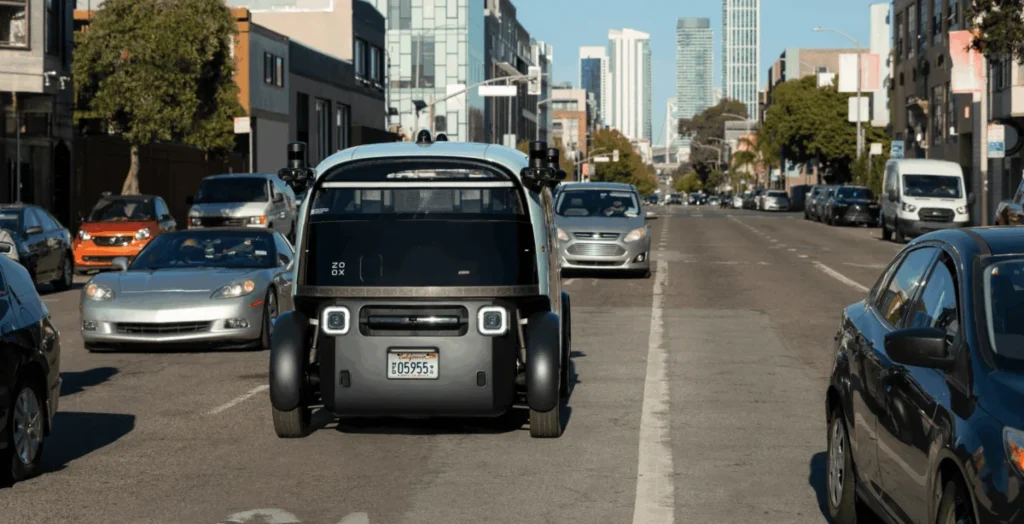
- The Waymo Paradigm: Focused on hyper-geofenced, highly dense urban deployments utilizing expensive, redundant sensor suites and exhaustive high-definition (HD) mapping.
- The Tesla Paradigm: Focused on a vehicle-centric, vision-only approach utilizing end-to-end neural networks running on localized vehicle compute, operating under the assumption that smart cars do not require smart infrastructure.
- The Chinese Infrastructure-First Model: Codified in the new roadmap, this approach mandates that municipalities build out smart roads equipped with roadside sensors and 5G V2X communication frameworks. By sharing the computational burden between the vehicle and centralized municipal cloud systems, China seeks to reduce the cost and onboard complexity of individual cars.
Technological Shifts: Batteries and Software
Beyond infrastructure, the plan lays out aggressive standards for next-generation energy storage. By establishing formal cell chemistry standards for solid-state batteries, China is positioning itself to dominate the post-lithium-ion landscape. Furthermore, the plan’s emphasis on closed-loop recycling infrastructure—targeting improved recovery rates for lithium, cobalt, and nickel—reflects a long-term strategy to secure supply chain independence.
On the software front, the industrial ministry’s endorsement of end-to-end AI models signals a recognition that traditional, rigid rule-based coding and costly HD-mapping dependencies are unsustainable at scale. By streamlining software architectures, Chinese AV developers aim to accelerate deployment velocity while lowering hardware barriers.
Conclusion
China’s 15th Five-Year automotive roadmap is a masterclass in pragmatic industrial planning. By setting an NEV penetration target of 70% that the market is already on the verge of clearing, Beijing has effectively closed the book on the internal combustion engine era within its borders.
Yet, the true significance of the roadmap lies not in its volume targets, but in its qualitative correctives. By addressing overcapacity, curbing destructive price wars, enforcing stringent safety mandates, and committing to an infrastructure-heavy vision of autonomous driving, China is attempting to engineer a mature, globally dominant automotive superpower.
Whether this infrastructure-first bet will successfully accelerate safe deployment—or merely shift economic and technical complexity from the vehicle manufacturer to the municipal balance sheet—remains an open question. What is certain, however, is that the rest of the global automotive industry ignores this blueprint at its peril.


