




USPS Infrastructure Overhaul Triggers Temporary Shipping Delays in Midwest Ahead of Peak Holiday Season

By Max Garland
Published September 25, 2026
Executive Summary: Main Facts
Customers utilizing United States Postal Service (USPS) processing facilities in Indianapolis and Louisville, Kentucky, should brace for temporary shipping delays over the coming weeks. According to regulatory notices and operational updates published by the agency this week, the disruptions are a direct byproduct of a sweeping modernization initiative. The Postal Service is actively installing advanced, high-efficiency package-sorting equipment designed to fundamentally upgrade its processing capabilities.
While the installation phase introduces a localized risk of slowed package flows and shifting transit times, leadership maintains that the infrastructure investments are mission-critical. The upgrades are specifically engineered to bolster throughput, enhance sortation accuracy, and equip the agency to seamlessly handle the anticipated volume surge during the upcoming peak holiday shipping season.
Furthermore, these infrastructural upgrades align with a broader, long-term strategic pivot under Postmaster General and CEO David Steiner. The agency is aggressively modernizing its network to attract heavier, higher-value, and larger parcels—segments historically dominated by private carriers like FedEx and UPS. Although the near-term reality involves routing adjustments, alternative facility diversions, and temporary bottlenecks, the Postal Service insists that the long-term dividend will be a faster, more reliable, and more automated national logistics grid.
Chronology of Infrastructure Upgrades and Operational Shifts
The current wave of disruptions is part of a national modernization schedule that has unfolded steadily throughout 2026. Understanding the chronology of these facility upgrades reveals how regional nodes interact when localized modernizations take place.
Early September 2026: The National Modernization Push
On September 3, 2026, USPS issued a sweeping operational notice detailing upcoming infrastructure transitions across the United States. The agency confirmed that facilities in major metropolitan areas—including Los Angeles, New Orleans, and Tampa, Florida—would temporarily shift package flows to alternate sites to clear the floor for equipment installations. The agency emphasized that the deployment of next-generation machinery would ultimately increase package sorting throughput, expand automation capabilities for oversized parcels, and reduce mechanical error rates.
Mid-September 2026: The Louisville Facility and Evansville Ripple Effects
Throughout September, the Louisville processing and distribution center found itself grappling with persistent processing delays. However, these bottlenecks were not solely the result of its own internal upgrades. The Louisville hub was actively absorbing and picking up operational slack for a neighboring processing site in Evansville, Indiana, which had been taken offline for its own round of equipment modernization.
To prevent complete gridlock in Kentucky and southern Indiana, USPS issued a routing adjustment notice on September 22. The agency announced that a portion of the package volume normally handled by the affected facilities would be dynamically diverted to the Nashville, Tennessee, processing and distribution center, as well as an annex facility located in Springdale, Ohio.
Late September 2026: Indianapolis Facility Overhaul Begins
On September 21, the Postal Service formally announced the rollout of new sorting infrastructure at the Indianapolis regional processing and distribution center. The improvements in Indianapolis are slated to be finalized over a compressed two- to three-week window. Concurrently, the agency initiated localized routing changes designed to optimize operational flows and cycle times into and out of the Greater Indianapolis region. To support these aggressive changes, USPS reported that localized hiring initiatives are progressing rapidly to onboard additional team members.
Supporting Data and Network Scale
The scale of the U.S. Postal Service logistics network is immense, meaning that even localized modernization projects impact millions of consumers and corporate shippers.
- Regional Integration: The Louisville distribution center operates within the agency’s central processing region. Established in mid-2025, this specialized regional architecture was designed to process a staggering 177 million mailpieces daily across a unified footprint of 100 dedicated facilities. When a single node within this regional network—such as Evansville or Louisville—undergoes retrofitting, the ripple effects are immediately felt across neighboring sorting hubs in Tennessee and Ohio.
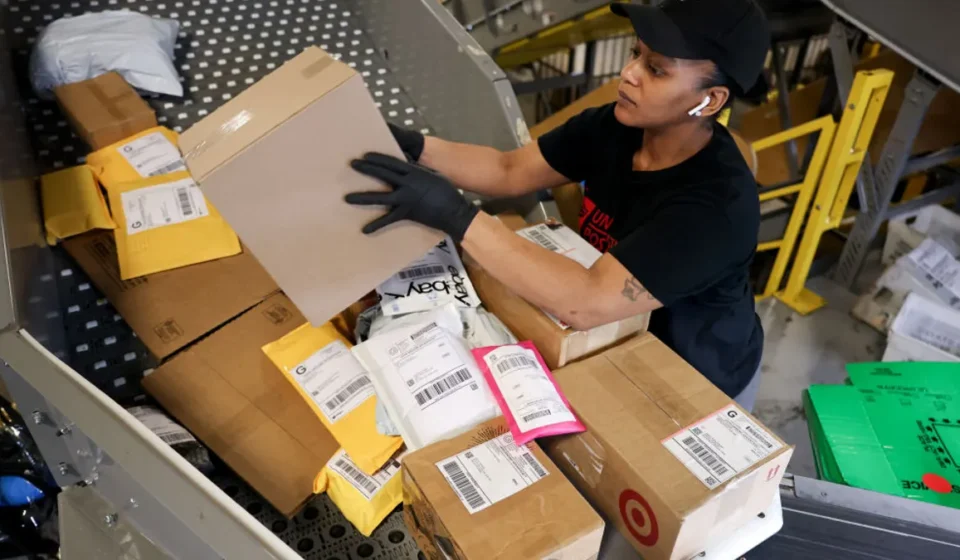
- Heavy and Oversized Parcel Integration: Historically, the USPS network was optimized for letter mail and lightweight flats, leaving heavy and oversized boxes to private integrators. The new sorting machinery being installed in hubs like Indianapolis is specifically calibrated to handle large, oversized packages that previously required manual sorting. This manual bottleneck historically slowed down line-haul operations and increased labor costs.
- National Deployment Scope: Throughout 2026, dozens of facilities have rotated through similar upgrade cycles. By diverting volume to alternative annexes and regional facilities, the agency attempts to maintain business continuity while systematically replacing legacy infrastructure that has operated past its optimal technological lifecycle.
Official Responses and Strategic Intent
Postmaster General and CEO David Steiner has repeatedly emphasized that modernizing the postal network is an existential requirement if the agency is to remain competitive in a parcel-dominated e-commerce landscape.
In official statements released via the agency’s technical bulletins, USPS leadership has maintained a transparent dialogue with commercial mailers and retail customers regarding the root causes of the current delays.

"New and upgraded equipment will increase package sorting throughputs, automation capabilities for larger packages, increase sortation accuracy, and improve machine reliability," the Postal Service stated in a foundational policy notice.
Addressing the specific disruptions in the Midwest, agency communications have stressed that temporary growing pains are a necessary trade-off for long-term network stability. Regarding the Indianapolis transitions, local management noted:
"Routing changes are also occurring to improve operational flows and cycle times into and out of the region. Hiring is progressing to add more team members to support these changes."
Furthermore, regarding the multi-facility juggling act between Louisville, Evansville, Nashville, and Springdale, the agency offered reassurance to anxious supply chain managers:
"As these installations are completed and operations stabilize, processing flows and transit times in and out of the region will improve."
Strategic Implications for Shippers and Supply Chains
For commercial shippers, third-party logistics (3PL) providers, and everyday consumers in the Midwest, the current wave of USPS modernization carries several critical takeaways:

1. Short-Term Buffer Windows Required
E-commerce merchants utilizing USPS Ground Advantage or Priority Mail services out of Indianapolis, Louisville, and surrounding feeder markets should anticipate transit times extending by an additional 24 to 72 hours over the next few weeks. Shippers are advised to build buffer days into their customer-facing delivery estimates to manage buyer expectations effectively.
2. The Shift Toward Heavier Parcel Competitiveness
While the short-term disruption is frustrating, the strategic implication is overwhelmingly positive for shippers looking for alternatives to FedEx and UPS. By automating the sortation of oversized and heavier items, USPS is eliminating the internal friction that previously made heavy-parcel shipping through the postal network less reliable. Once these machines are fully calibrated, the agency will offer a far more robust, lower-cost alternative for mid-sized and heavy commercial goods.
3. Heightened Importance of Regional Diversification
The Louisville-Evansville-Nashville dynamic highlights the resilience—and vulnerability—of regional processing loops. Supply chain managers should take note of how quickly USPS can pivot volume to annex facilities like Springdale, Ohio. Diversifying shipping profiles or utilizing multi-carrier shipping software can help businesses dynamically route around localized bottlenecks as the Postal Service continues its nationwide infrastructure rollout through the remainder of 2026.
As installation crews complete their work in Indianapolis and Louisville, the stage is set for a modernized postal grid. However, until stabilization is achieved, stakeholders must navigate a brief, albeit disruptive, bridge to the future of American postal logistics.