


Advanced Tracking and Ergonomics: MSA Safety Unveils the G1 City Edition SCBA to Meet 2025 NFPA Standards

By Danielle Naidu
Assistant Editor, Occupational Health & Safety
Main Facts
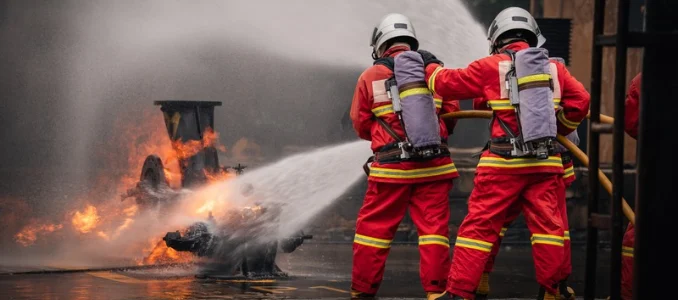
In a significant leap forward for firefighter safety, gear ergonomics, and technological integration, safety equipment manufacturer MSA Safety has introduced its latest Self-Contained Breathing Apparatus (SCBA): the G1 City Edition. Engineered to meet the rigorous and newly consolidated 2025 edition of the National Fire Protection Association (NFPA) 1970 standard—which governs structural and proximity firefighting equipment—the new SCBA introduces a suite of design optimizations. Chief among these is the integration of advanced beacon technology designed to drastically reduce search-and-rescue times in zero-visibility environments.
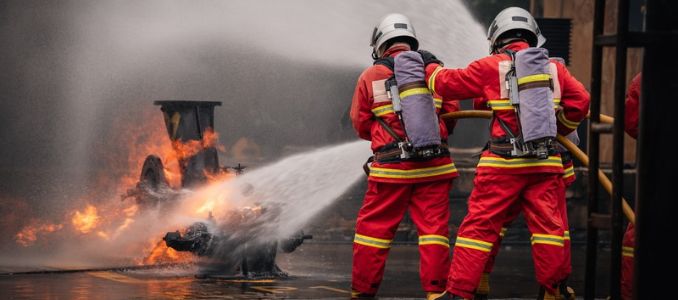
The hallmark feature of the G1 City Edition is its embedded LUNAR Beacon Technology, housed directly within the unit’s power module. When a firefighter enters an alarm status—whether triggered manually or automatically due to a lack of movement—crew members can use a handheld, connected LUNAR device to pinpoint the distressed firefighter’s exact location. Rather than relying solely on traditional, often disorienting audible PASS (Personal Alert Safety System) alarms, responding teams receive precise directional guidance.
Beyond its locational tracking capabilities, the G1 City Edition is designed to lighten the physical load carried by structural firefighters. In its standard configuration, the new unit weighs up to half a pound less than its predecessor, the widely used legacy G1 model. This weight reduction is achieved through a ground-up redesign of the cylinder-retention system, paired with a low-profile, swiveling lumbar pad. These ergonomic modifications work in tandem to improve wearer balance, enhance comfort, and mitigate operator fatigue during grueling, extended interior attacks.

Furthermore, MSA Safety has refined the tactile features of the apparatus. The SCBA now features thicker regulator and cylinder-valve controls to facilitate seamless operation while wearing heavy structural firefighting gloves. Conversely, the shoulder pads have been thinned out to reduce bulk, adjustment straps have been lengthened for a more customizable fit, and the control-module display has been optimized to clearly project critical real-time data, including remaining cylinder pressure and estimated air time remaining.
Chronology
The rollout of the G1 City Edition represents the culmination of years of iterative development by MSA Safety, bridging the gap between traditional life-support hardware and modern digital accountability systems.

- The Foundation (Legacy G1 Era): For years, the original MSA G1 SCBA served as a staple for municipal and industrial fire departments across North America. While praised for its reliability, evolving fireground dynamics and modern data connectivity demands called for a lighter, smarter platform.
- The Introduction of LUNAR: MSA previously introduced its LUNAR standalone connected device, pioneering cloud-and-radio-based peer-to-peer tracking for firefighters. However, requiring a separate device added clutter to already packed turnout gear.
- Consolidation and Compliance (2024–2025): As the NFPA prepared to roll out its consolidated 1970 standard—which merges multiple legacy standards governing structural firefighting helmets, ensembles, and breathing apparatuses—manufacturers raced to adapt. MSA aligned its engineering pipeline to ensure compliance with these stricter performance benchmarks.
- The Birth of the G1 City Edition (September 2026): MSA officially announced the G1 City Edition, integrating the LUNAR beacon directly into the SCBA power module rather than keeping it as an external add-on. This streamlined integration, combined with weight-shedding ergonomic updates, marked the official launch of the next-generation breathing apparatus for urban and municipal markets.
Supporting Data & Technical Specifications
To fully understand the impact of the G1 City Edition, industry analysts and safety officers must examine the hard metrics governing its design, compliance, and technological ecosystem:
- Weight Reduction: Up to 0.5 lbs (8 ounces) lighter in its standard configuration compared to the previous legacy G1 model. While half a pound may seem nominal on paper, cumulative ergonomic loads significantly affect oxygen consumption and physical exhaustion over multi-hour shifts.
- Regulatory Compliance: Fully certified to meet the 2025 edition of NFPA 1970, a comprehensive standard incorporating criteria for structural firefighting SCBA, personal alert safety systems, and proximity gear.
- Tracking Range and Connectivity: The integrated LUNAR Beacon Technology operates via peer-to-peer radio frequency when direct line-of-sight or local signals are constrained, guiding rescuers via handheld remote displays that show directional vectors and real-time air pressure.
- Cloud Integration: When radio frequency or cellular data connectivity is present, wearer status, telemetry, and location data feed directly into MSA’s proprietary FireGrid Monitor application. This allows incident commanders stationed at the command post to monitor the vital signs and air supplies of entire interior crews remotely.
- Ergonomic Adjustments: Features a redesigned low-profile swiveling lumbar pad that distributes weight more evenly across the hips, alongside thicker glove-friendly control valves and elongated adjustment webbing.
Official Responses & Industry Perspectives
The introduction of the G1 City Edition has drawn significant commentary from product developers, safety advocates, and municipal fire service leaders.

MSA Safety representatives emphasized that the core philosophy behind the G1 City Edition was rooted in "cognitive and physical burden reduction." In modern structural firefighting, operators are routinely overloaded with heavy tools, thermal imaging cameras, radios, and hose lines. By shaving ounces off the SCBA frame and streamlining tracking technology directly into the power module, MSA engineers aimed to reduce the physical toll that contributes to career-ending injuries and long-term musculoskeletal issues.
Furthermore, safety ergonomics experts have lauded the integration of the swiveling lumbar pad. Traditional backframes often lock the lower back into a rigid posture, increasing strain when bending, crawling, or lifting hoses. By allowing the lumbar pad to pivot with the firefighter’s natural hip movement, the G1 City Edition helps preserve core balance—a critical factor when navigating compromised structural floors or descending stairwells in zero-visibility conditions.

Fire service administrators reviewing the release have also highlighted the importance of telemetry and accountability. Incident command software like FireGrid has transitioned from a luxury tech add-on to an essential risk-management tool. Being able to track not just where a firefighter is via GPS or thermal mapping, but how much air they have left relative to their exact physical location, fundamentally alters Mayday rescue operations.
Implications for Modern Firefighting and Safety
The release of MSA Safety’s G1 City Edition SCBA carries profound implications for municipal fire departments, industrial emergency response teams, and the broader occupational health and safety landscape.

1. Revolutionizing Mayday Operations
The greatest fear in structural firefighting is the "Mayday" call—a firefighter trapped, disoriented, or out of air. Traditional search-and-rescue operations rely heavily on audio cues from mechanical PASS alarms. However, in large commercial buildings, high-rises, or industrial complexes with heavy ambient noise and thick concrete walls, audio alarms can echo, making it notoriously difficult for RIT (Rapid Intervention Teams) to pinpoint a fallen colleague.
By utilizing directional beacon technology paired with handheld tracking units, the G1 City Edition shifts the paradigm from listening for a firefighter to navigating directly to them. This technological shift promises to shave critical minutes off search times—a difference that can mean the outcome between successful extraction and fatal smoke inhalation.

2. Mitigating Firefighter Fatigue and Long-Term Injury
Cardiovascular events remain the leading cause of on-duty deaths among firefighters, frequently triggered by extreme physical exertion compounded by heavy gear loads. Ergonomic innovations such as the weight-reduced frame, streamlined shoulder straps, and the swiveling lumbar pad directly combat physical exhaustion. By conserving a firefighter’s energy during the initial phases of an interior attack, departments can potentially reduce acute exhaustion-related injuries and lower the incidence of chronic lower back strain over a career.
3. Data-Driven Incident Command
The integration of SCBA telemetric data into platforms like FireGrid underscores the ongoing digital transformation of the fire service. Incident commanders are no longer blind once crews cross the threshold of a burning structure. By monitoring real-time cylinder pressure and estimated remaining work time alongside locational data, safety officers can proactively order withdrawals before crews reach dangerous air depletion levels, fundamentally enhancing overall tactical safety and operational accountability.

As departments review their equipment lifecycles in the wake of the 2025 NFPA 1970 standard rollout, the G1 City Edition sets a high benchmark for what modern breathing apparatuses must achieve: lighter physical footprints, smarter digital life-saving integrations, and uncompromising structural reliability.