


Industrial Renaissance: Inside IMTS 2026 and the Artificial Intelligence Wave Reshaping American Manufacturing

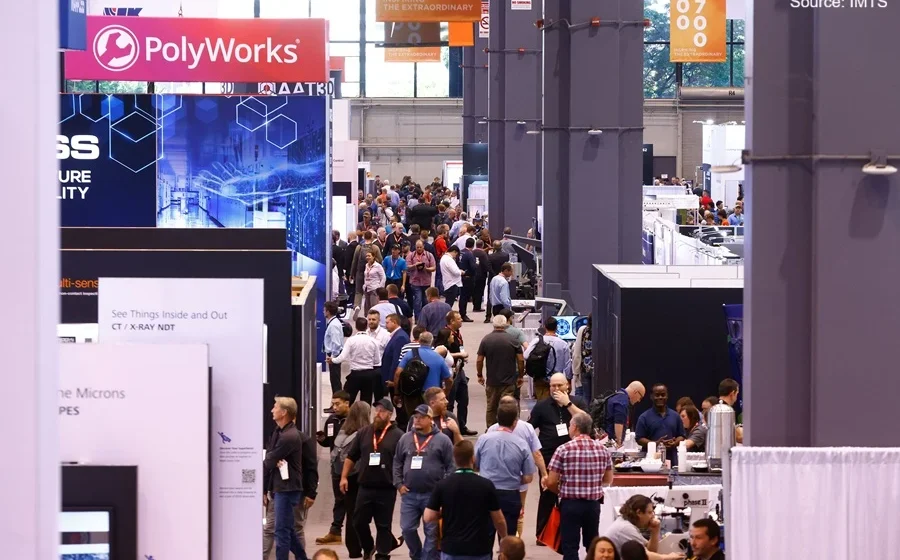
The International Manufacturing Technology Show (IMTS) 2026, which ran from September 14–19 at McCormick Place, closed its doors with an undeniable message: American manufacturing is undergoing its most aggressive, technology-driven reinvention in decades. Attracting 91,295 registrants—including 14,447 students and professionals from all 50 states, Washington, D.C., Puerto Rico, and 123 countries—the 1,788-exhibitor event occupied 1.17 million square feet of exhibit space.
Far from a traditional trade exhibition, IMTS 2026 functioned as an economic crucible. It brought together Fortune 500 executives, Silicon Valley software developers, venture capitalists, federal defense officials, and the backbone of the industry: independent machine and job shops. Against a backdrop of heavy capital investments, sweeping reshoring initiatives, and a persistent labor shortage, the event highlighted how artificial intelligence, advanced robotics, and hyper-efficient automation are transitioning from futuristic concepts into practical, day-to-day shop floor realities.
Chronology of the Event: A Week of Breakthroughs
The narrative of IMTS 2026 unfolded in distinct phases, tracking momentum that began building well before the official ribbon-cutting ceremony.
Pre-Show Momentum (September 13)
The pulse of the industry was already beating rapidly the day before the show opened. On September 13, AMT – The Association For Manufacturing Technology released data showing that manufacturing technology orders had exceeded $500 million for the fifth consecutive month. This milestone marked only the second time such a streak had occurred since the association began tracking data in 1998, establishing an atmosphere of high financial confidence and urgent capital deployment.
Opening Days and the AI Surge (September 14–16)
As the exhibition floor opened, the immediate focus shifted to the intersection of traditional machining and digital intelligence. The inaugural IMTS Industrial AI Conference launched to packed houses, forcing organizers to expand capacity twice before completely selling out. Exhibitors across the Metal Removal, Tooling, and Additive Manufacturing sectors reported brisk business. Okuma’s senior vice president of sales, Tim Thiessen, noted that his team rang a ceremonial gong over 100 times by Friday morning to celebrate equipment sales, including a massive 24-machine order that temporarily broke the gong itself. Concurrently, specialized summits—including the Investor Summit, which grew by 118%—drew unprecedented crowds of financial analysts and private equity firms looking to deploy capital into precision manufacturing.
Mid-Week Convergence: Defense and Aerospace (September 17–18)
The middle of the week underscored the critical convergence of national security and modern manufacturing. High-ranking representatives from the U.S. Navy and the Department of Defense took to the IMTS+ Main Stage to outline the immense production challenges facing the defense industrial base. Panels focused on the $76.6 billion joint contract awarded to General Dynamics Electric Boat and Huntington Ingalls Industries to build 14 nuclear-powered submarines. Discussions centered on how robotic assembly, automated tooling, and metal additive manufacturing could generate the tens of millions of man-hours required to eliminate supply chain bottlenecks.
Closing and the Next Generation (September 19)
The final day of the conference reinforced the industry’s long-term viability through the Smartforce Student Summit. Hosting nearly 14,500 students, the event featured inspiring addresses from figures like retired Navy captain and former NASA astronaut Wendy Lawrence. Industry sponsors like Reader Precision Solutions funded the attendance of over 150 students and educators, cementing IMTS 2026 not only as a marketplace for immediate capital investment, but as a vital bridge to the workforce of tomorrow.
Supporting Data: The Macroeconomic Realities
To understand the weight of the technologies displayed at McCormick Place, one must examine the macroeconomic environment driving them:
- Economic Scale: U.S. manufacturing generates an astonishing $3 trillion in annual output. If it were an independent nation, the domestic manufacturing sector would rank as the world’s eighth-largest economy.
- The Labor Gap: Despite robust output, durable goods manufacturers face a staggering shortage of 435,000 skilled workers. This persistent deficit acts as the primary catalyst for the rapid adoption of automation, cobots, and AI tools that serve as operational "force multipliers."
- Reshoring and Investment: Driven by supply chain vulnerabilities and national security interests, the Reshoring Initiative projects that approximately 400,000 jobs will have been reshored by the end of 2026. Cumulatively, U.S. and foreign enterprises have announced $11.2 trillion in domestic manufacturing investment commitments.
- Defense Commitments: The U.S. Navy’s submarine program requires an unprecedented scaling of industrial output, relying on private-sector partners to adopt advanced manufacturing paradigms to meet national defense timelines.
Official Responses and Industry Perspectives
Leadership from across the manufacturing, defense, and technology sectors emphasized that IMTS 2026 was a turning point for practical industrial deployment.
Douglas K. Woods, president of AMT, pointed out the distinct character of the 2026 show:
"What differentiated IMTS 2026 was the strong focus on how manufacturing technology and investment are renewing America’s industrial capability and strengthening the U.S. economy, industrial base, and national defense. Manufacturers and job shops came to find technologies that could immediately increase productivity, and they were joined by investors, Fortune 500 and Silicon Valley companies, government agencies, universities, and a new generation drawn to industrial AI, automation, space, and advanced manufacturing."
Echoing this sentiment, Mike Cicco, president and CEO of FANUC America and chairman of the board at AMT, highlighted the speed of technological adoption:
"IMTS 2026 highlighted how quickly manufacturing technology is moving from concept to application. Manufacturers are looking for practical ways to improve productivity, increase flexibility, and address workforce challenges… The strong interest in AI-enabled solutions and advanced automation reflects an industry that is actively evaluating how to translate innovation into real-world results."
From the defense sector, Vice Admiral Robert Gaucher, director of Submarine Programs for the U.S. Department of War, stressed the urgency of modernization:
"As we build the future submarine fleet, we must take advantage of technology and advanced manufacturing from the start. IMTS 2026 shows our industry partners are ready to meet this challenge. Robotic assembly, automated tools, and additive manufacturing are exactly what we need to generate immediate output to support our warfighters at scale."
Technology providers also noted a fundamental shift in how software and hardware interact. Simon Lapeyry, head of revenue at Intrinsic Innovation (Google’s AI robotics group), explained how artificial intelligence is democratizing automation for smaller operations:
"Smaller machine shops are the backbone of manufacturing, and we empower them to use automation for the high-mix, low-volume applications that they constantly encounter. By removing these bottlenecks, AI enables your operators to focus on being CNC experts."
Implications: The Technological Transformation of the Shop Floor
The technologies showcased on the IMTS 2026 floor carry profound implications for the future of industrial production, addressing both labor shortages and the demand for extreme precision.
Artificial Intelligence as an Operational Equalizer
For decades, advanced CNC programming and complex robotic deployment required specialized engineering degrees and extensive coding knowledge. IMTS 2026 demonstrated that AI is dismantling these barriers.
Platforms like CloudNC’s CAM Assist plug directly into established Computer-Aided Manufacturing (CAM) software, utilizing physics-based AI to determine optimal cut depths, feeds, speeds, and toolpaths. According to CloudNC’s Dan French, tasks that traditionally required up to two days of manual programming can now be compressed into minutes, allowing shops to multiply their daily output using existing machinery and personnel. Similarly, natural-language interfaces and vision-equipped cobots (collaborative robots) allow operators to deploy automation for high-mix, low-volume tasks without tedious reprogramming or complex physical fixturing.
Convergence of Additive and Subtractive Manufacturing
The physical layout of IMTS 2026 deliberately placed the Additive Manufacturing (AM) Sector adjacent to the Metal Removal Sector. This spatial arrangement reflected the modern reality of hybrid manufacturing, where 3D printing and traditional CNC machining work in tandem.
Exhibitors like EOS North America, which debuted its M4 ONYX metal 3D printer, reported overwhelming demand. Government and research institutions showcased similar leaps; Sandia National Laboratories demonstrated how combining AI, advanced computing, and metal AM accelerated the development of the Aires Tide flight-test vehicle by roughly seven times while cutting production costs by 15-fold compared to legacy methods.
Interoperability and the Rise of Open Protocols
As software, sensors, and machine tools become increasingly interconnected, the need for standardized data communication has never been more critical. Ryan Kelly, vice president of technology at AMT, emphasized the vital role of the MTConnect protocol. By translating raw machine data into formats that both human operators and AI algorithms can easily interpret, open protocols are accelerating the deployment of smart manufacturing cells and predictive maintenance frameworks across facilities of all sizes.
Workforce Development and Inclusivity
Addressing the 435,000-person worker deficit requires both technological solutions and a cultural evolution within the industry. Events like the IMTS ELEVATE Conference, which experienced a 34% growth in attendance, and specialized panels hosted by organizations like Women in Manufacturing, signaled a concerted effort to foster diversity and professional growth. Companies like Methods Machine Tools brought entire engineering delegations to the conference to ensure emerging talent felt valued and equipped to lead.
Conclusion
IMTS 2026 concluded not just as a successful trade exposition, but as a definitive blueprint for the future of industrial enterprise. By uniting traditional machining prowess with breakthroughs in artificial intelligence, cloud computing, collaborative robotics, and additive fabrication, the event proved that the American manufacturing ecosystem is fully prepared to meet the demands of a changing global economy. For the shop owners, engineers, investors, and defense leaders who converged on Chicago, the message was clear: the tools to secure industrial independence, overcome labor constraints, and redefine productivity are no longer on the horizon—they are running on the shop floor today.