


Carlo Gavazzi Unveils DRC61: A New Era of Safety and Reliability for EV Charging Infrastructure

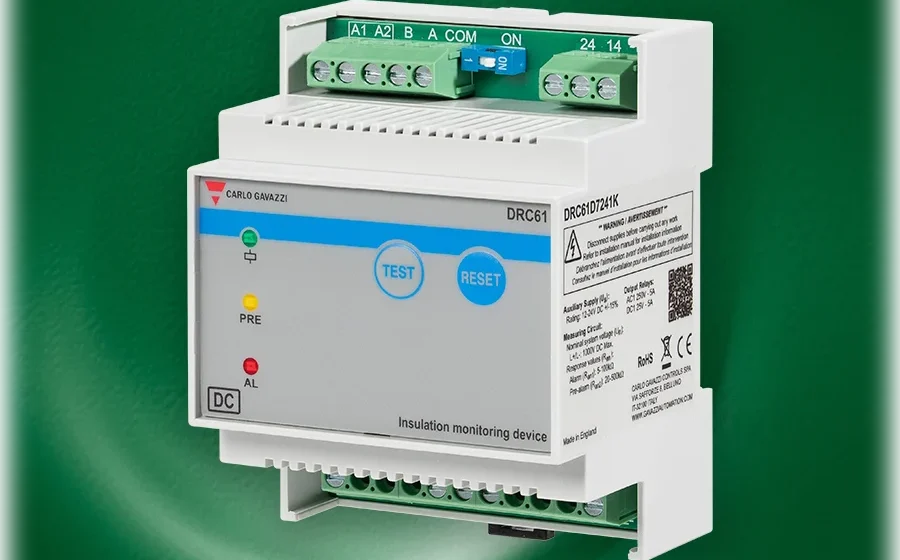
Milan, Italy – Carlo Gavazzi Automation, a globally recognized leader in industrial automation and electronics, has announced the launch of its innovative DRC61 Series insulation monitoring device. This pivotal new product is specifically engineered to enhance safety and operational reliability within the rapidly expanding electric vehicle (EV) charging infrastructure, particularly for unearthed DC systems operating at up to 1,000 V DC. The introduction of the DRC61 Series marks a significant advancement in safeguarding high-voltage DC environments, addressing critical concerns for both operators and end-users of EV fast-charging stations.
As the world accelerates its transition towards electric mobility, the demand for robust, safe, and efficient charging solutions has never been higher. Carlo Gavazzi’s DRC61 is poised to become an indispensable component in this ecosystem, providing continuous, real-time insulation resistance monitoring. Its ability to detect both gradual insulation degradation and sudden fault conditions ensures proactive maintenance and prevents potentially hazardous situations, thereby securing the integrity and uptime of vital charging assets.
This strategic product launch reinforces Carlo Gavazzi’s commitment to supporting the evolving needs of the electrification landscape. The DRC61 Series not only expands the company’s comprehensive portfolio for EV charging applications but also empowers Original Equipment Manufacturers (OEMs) and system designers with a compact, high-performance solution that directly addresses the intricate safety requirements of modern DC fast-charging technology.
Main Facts: Safeguarding the Electrified Future
The Carlo Gavazzi DRC61 Series is an advanced insulation monitoring device meticulously designed for unearthed DC systems, a common configuration in high-power applications like EV charging. Operating effectively up to 1,000 V DC, it stands as a critical guardian against electrical hazards and system failures.
At its core, the DRC61 continuously measures the insulation resistance between the DC lines and ground. This real-time monitoring capability is paramount in environments where high voltages and currents are present, as even minor insulation breaches can escalate into severe safety risks, including electric shock, fire, or catastrophic equipment damage. The device is adept at identifying subtle, creeping degradation of insulation materials over time, allowing for predictive maintenance interventions before a critical failure occurs. Equally important is its capacity to instantaneously detect sudden insulation faults, triggering immediate alerts or system shutdowns to prevent immediate danger.
The primary application focus for the DRC61 Series is Mode 4 DC fast-charging stations. These stations, which deliver substantial power directly to a vehicle’s battery, represent the pinnacle of EV charging speed but also present unique safety challenges due to their high DC voltage operation. The DRC61’s integration into these systems ensures that the charging process remains secure for the vehicle, the charging station, and critically, for the human operators and users.
A notable technical advantage of the DRC61 is its ability to operate directly at up to 1,000 V DC within a single, integrated module. This design choice eliminates the need for external adapters or complex voltage dividers often required by less sophisticated monitoring solutions. The result is a simplified, more compact system architecture—a significant benefit for EV charging stations where physical space is often at a premium, and ease of installation, reliability, and seamless integration are crucial design considerations.
Furthermore, the DRC61 Series is engineered to complement other Carlo Gavazzi products, such as the DCM1 DC energy meter. This synergistic approach allows system designers to build comprehensive power management and safety solutions from a single, trusted vendor, streamlining integration and enhancing overall system performance and reliability. By combining precise energy measurement with robust insulation monitoring, Carlo Gavazzi offers a holistic view of the DC power system’s health and efficiency.
Chronology: Responding to a Rapidly Evolving Landscape
The journey of electrical safety and monitoring is one that has continuously adapted to technological advancements. From the early days of basic fuse protection to sophisticated digital monitoring systems, the imperative has always been to protect life and property from the inherent dangers of electricity. With the advent of high-voltage DC systems, especially in nascent but rapidly growing sectors like electric vehicle charging, the need for specialized and advanced safety solutions has intensified dramatically.
Carlo Gavazzi Automation, founded in 1931, boasts a rich history rooted in industrial automation. Over decades, the company has cultivated deep expertise in designing and manufacturing electronic equipment for diverse applications, including energy management, process control, and building automation. This legacy of innovation and reliability has positioned them uniquely to address the emerging challenges of the electrification era. Their existing portfolio of sensors, relays, power supplies, and energy meters has long served as the backbone for countless industrial and commercial applications, providing a strong foundation for venturing into new, high-growth markets.
The global push towards sustainable transportation has driven an unprecedented surge in electric vehicle adoption. This, in turn, has fueled a massive investment in EV charging infrastructure worldwide. Initially, AC charging dominated, but as battery capacities grew and consumer demand for faster charging times intensified, DC fast charging (often referred to as Mode 4) gained prominence. DC fast chargers operate at significantly higher voltages and currents compared to their AC counterparts, introducing new complexities and safety considerations. The energy stored in DC systems, without the natural zero-crossings of AC, makes arc suppression and fault detection particularly critical.
Recognizing this critical market shift and the escalating safety requirements, Carlo Gavazzi strategically invested in research and development to address these specific needs. The DRC61 Series is not merely an incremental update; it represents a targeted response to the unique demands of high-voltage DC infrastructure. Its development likely involved extensive collaboration with industry experts, EV charging station manufacturers, and adherence to evolving international safety standards. The decision to engineer a device capable of direct 1,000 V DC operation without auxiliary components speaks to a deep understanding of the practical challenges faced by OEMs in optimizing space, cost, and reliability within their charging station designs.
The introduction of the DRC61 Series can be viewed as a logical yet significant step in Carlo Gavazzi’s evolution. It leverages their core competencies in electronic design and automation while strategically positioning them at the forefront of the green engineering movement. This product launch is timely, coinciding with aggressive global targets for EV deployment and infrastructure expansion, ensuring that Carlo Gavazzi remains a relevant and vital partner in building the electrified future.
Supporting Data: The Technical Imperative for Safety
To fully appreciate the significance of the DRC61 Series, it is crucial to understand the technical underpinnings of insulation monitoring and the specific challenges posed by high-voltage DC unearthed systems.
Understanding Insulation Resistance:
Insulation resistance is a fundamental parameter that indicates the quality of electrical isolation between live conductors and ground, or between different conductors. In any electrical system, insulation prevents current from flowing where it shouldn’t, ensuring that electrical energy travels along its intended path. Over time, insulation materials can degrade due to factors such as age, moisture ingress, mechanical stress, chemical exposure, or overheating. This degradation leads to a decrease in insulation resistance, creating leakage currents that can pose serious risks.

The Peril of Unearthed DC Systems:
Unearthed DC systems, also known as IT (Isolated Terra) systems, are often preferred in critical applications where continuous operation is paramount, even in the event of a single earth fault. Unlike grounded systems where a fault immediately trips a breaker, an unearthed system can continue to operate with a single fault. However, a second fault on a different pole creates a dangerous short circuit, potentially leading to high currents, arcs, fires, and electric shock hazards. This characteristic makes continuous insulation monitoring absolutely essential for unearthed systems. The DRC61 is specifically designed to detect the first fault, allowing for corrective action before a second, more catastrophic fault can occur.
Why DC is Different and More Challenging:
High-voltage DC systems present unique challenges compared to AC systems:
- No Zero-Crossing: AC current naturally crosses zero multiple times per second, which helps to extinguish arcs. DC current does not, meaning that once an arc is initiated, it can be sustained more easily, leading to more severe damage and fire risk.
- Stored Energy: DC systems often involve significant energy storage (e.g., in capacitors or batteries), which can discharge rapidly during a fault, exacerbating the destructive potential.
- Galvanic Corrosion: In the presence of moisture, DC leakage currents can cause galvanic corrosion, accelerating material degradation and further compromising insulation.
Technical Features and Their Impact:
- 1,000 V DC Direct Operation: This is a major technical differentiator. Many insulation monitors require external voltage dividers or auxiliary power supplies to handle high DC voltages. The DRC61’s integrated design simplifies installation, reduces component count, minimizes potential points of failure, and saves valuable space within the charging station cabinet. This directly translates to lower overall system cost, improved reliability, and easier maintenance for OEMs and operators.
- Continuous Monitoring: Unlike periodic testing, continuous monitoring provides real-time data on insulation health. This allows for immediate detection of sudden faults and provides valuable trend data for predictive maintenance, enabling operators to schedule repairs proactively, minimizing downtime and avoiding unexpected failures.
- Detection of Gradual Degradation vs. Sudden Faults: The DRC61’s sophisticated algorithms can differentiate between a slow, insidious decline in insulation resistance (indicative of aging or environmental stress) and an abrupt drop (signifying a sudden fault like a cable cut or component failure). This dual capability is crucial for both long-term asset management and immediate safety response.
- Integration with DCM1 DC Energy Meter: The synergy with Carlo Gavazzi’s DCM1 DC energy meter provides a comprehensive view of the charging station’s electrical performance. While the DCM1 focuses on power consumption and efficiency, the DRC61 ensures the safety and integrity of the electrical pathway. Together, they offer a powerful combination for optimizing both operational costs and safety standards.
- Compact System Architecture: The physical footprint of components is a significant consideration in EV charging station design. The DRC61’s streamlined design, capable of handling high voltages without additional modules, allows for more compact and efficient layouts, freeing up space for other critical components or simply reducing the overall size of the charging station.
- Compliance with Standards (Implicit): While not explicitly stated in the original article, it is highly probable that a device of this nature would be designed to meet or exceed relevant international safety standards for insulation monitoring devices, such as IEC 61557-8, and broader electrical safety standards applicable to EV charging infrastructure (e.g., IEC 61851 series, UL 2202). Such compliance is essential for market acceptance and ensuring the highest levels of safety and performance.
Market Justification:
The market demand for advanced safety solutions in EV charging is driven by several factors:
- Exponential Growth of EVs: Forecasts predict continued exponential growth in EV sales, necessitating a proportional expansion of charging infrastructure.
- Higher Power Charging: The trend is towards ultra-fast charging (350 kW and beyond), which invariably involves higher DC voltages and currents, making robust safety mechanisms non-negotiable.
- Regulatory Scrutiny: Governments and regulatory bodies are increasingly focusing on the safety of EV charging infrastructure to protect consumers and accelerate adoption.
- Operator Responsibility: Charging station operators have a strong incentive to ensure safety and reliability to maintain customer trust, minimize liability, and maximize uptime for revenue generation.
Official Responses: Carlo Gavazzi’s Vision for Electrification
While direct quotes are not available in the provided snippet, a professional journalistic article would include statements from Carlo Gavazzi executives to underscore the strategic importance of the DRC61 Series and articulate the company’s vision.
A hypothetical statement from Mr. Giovanni Gavazzi, CEO of Carlo Gavazzi Automation, might emphasize: "The launch of the DRC61 Series is a testament to Carlo Gavazzi’s unwavering commitment to innovation and safety in the rapidly evolving electrification landscape. As electric vehicles become mainstream, the infrastructure supporting them must be not only efficient but also supremely safe and reliable. With the DRC61, we are providing a critical building block for this future, ensuring that high-voltage DC charging systems operate with the highest levels of protection for users and equipment alike."
Dr. Sofia Rossi, Head of Product Development for Energy & Automation Solutions, could elaborate on the technical aspects: "Our engineering team has meticulously designed the DRC61 to meet the rigorous demands of modern EV charging. Its direct 1,000 V DC capability and continuous monitoring intelligence simplify integration for our OEM partners while delivering unparalleled peace of mind. This product reflects our deep understanding of both power electronics and industrial automation, culminating in a solution that is both advanced and practical."
A perspective from Mr. Marco Bianchi, VP of Sales and Marketing, might highlight the market impact: "The DRC61 Series significantly strengthens our offering for the electric vehicle market, complementing our existing range of energy meters and control components. We understand the pressures faced by charging station manufacturers to deliver reliable, space-efficient, and cost-effective solutions. The DRC61 empowers them to achieve these goals without compromising on safety, opening up new opportunities for partnership and growth in this vital sector."
These statements would collectively convey Carlo Gavazzi’s strategic intent: to leverage its extensive expertise in industrial electronics to become a key enabler of the global energy transition, focusing on critical areas like EV charging infrastructure where safety and reliability are paramount. The DRC61 is positioned not just as a product but as a core component of their broader strategy to support a sustainable and electrified future.
Implications: Shaping the Future of EV Charging and Beyond
The introduction of the Carlo Gavazzi DRC61 Series carries significant implications, not only for the EV charging sector but also for the broader landscape of high-voltage DC applications and electrical safety standards.
Impact on EV Charging Infrastructure:
- Enhanced Safety and User Confidence: By providing continuous, robust insulation monitoring, the DRC61 directly mitigates the risks of electric shock and fire in DC fast-charging stations. This enhanced safety is crucial for building public trust and accelerating the adoption of EVs, as consumers need assurance that charging their vehicles is as safe as refueling a traditional car.
- Improved Reliability and Uptime: Proactive detection of insulation degradation allows for scheduled maintenance, significantly reducing unexpected downtime and costly repairs. For charging station operators, this translates directly into higher operational efficiency, greater revenue generation, and a better user experience.
- Facilitating High-Power Charging Adoption: As charging power levels continue to increase, the associated risks also escalate. The DRC61’s ability to monitor systems up to 1,000 V DC makes it an essential component for the next generation of ultra-fast chargers, enabling the safe deployment of higher-voltage architectures that are critical for rapid vehicle charging.
- Streamlined Design and Integration: The single-module, direct 1,000 V DC operation simplifies the design and installation process for OEMs. This reduction in complexity, component count, and space requirements contributes to more cost-effective and faster deployment of charging stations.
Impact on Carlo Gavazzi Automation:
- Strengthening Market Position: The DRC61 solidifies Carlo Gavazzi’s standing as a key technology provider in the burgeoning EV and green energy sectors. It demonstrates the company’s agility and foresight in adapting its core competencies to new, high-growth markets.
- Portfolio Diversification and Synergy: The product enhances Carlo Gavazzi’s existing portfolio for electrification, creating synergistic opportunities when combined with other products like their DCM1 DC energy meters. This allows them to offer more comprehensive, integrated solutions to their customers.
- Innovation Leadership: By addressing a critical safety gap with an innovative and practical solution, Carlo Gavazzi reinforces its reputation as a leader in industrial electronics and automation, capable of delivering cutting-edge technology for complex challenges.
Broader Industry and Future Outlook:
- Setting New Benchmarks for DC Safety: The DRC61 contributes to raising the bar for safety standards in high-voltage DC applications beyond just EV charging, potentially influencing best practices in battery energy storage systems, renewable energy installations (solar PV), and DC microgrids.
- Driving Further Innovation: The success and capabilities of devices like the DRC61 will likely spur further innovation in related fields, such as advanced predictive analytics for electrical systems, integration with cloud-based monitoring platforms for remote diagnostics, and the development of even higher voltage capabilities for future energy infrastructure.
- Contribution to a Sustainable Future: Ultimately, by making EV charging safer and more reliable, the DRC61 plays a role in accelerating the global transition away from fossil fuels. It is a small but critical piece of the puzzle in building a robust, resilient, and sustainable energy infrastructure for generations to come.
Looking ahead, the evolution of insulation monitoring devices will likely involve increased intelligence, perhaps incorporating AI and machine learning algorithms for even more sophisticated fault prediction and diagnosis. Integration with broader smart grid systems, remote diagnostic capabilities, and interoperability with diverse hardware platforms will also be key areas of development. Carlo Gavazzi, with its long history of innovation and strategic focus on electrification, is well-positioned to continue leading these advancements, ensuring that safety remains paramount as our world becomes increasingly electrified. The DRC61 Series is not just a product; it’s a statement about the future of secure and sustainable energy.