



Silicon Valley’s New Frontier: Agility Robotics Expands Humanoid AI Development to Fremont

FREMONT, CA – The landscape of industrial automation is undergoing a seismic shift, and the epicenter of this transformation has officially moved into the heart of Northern California’s innovation hub. Agility Robotics Inc., a pioneer in the burgeoning field of physical artificial intelligence (AI), has announced the opening of a massive new 60,000-square-foot facility in Fremont, California. This strategic expansion is designed to serve as the primary engine for the company’s software and AI research, positioning Agility to accelerate the evolution of its flagship humanoid robot, Digit.
The move marks a critical evolution for the company, which has already established a footprint in industrial manufacturing with its existing production plant in Salem, Oregon. While the Oregon facility remains the nerve center for the physical assembly of Digit units, the Fremont site represents a deliberate pivot toward the software-defined future of robotics. By planting its flag in Silicon Valley, Agility is signaling that the next leap in humanoid capability will not be found in gears and servos alone, but in the sophisticated neural networks that govern how machines interact with the human-centric world.
The Strategic Pivot: Why Fremont?
For decades, Fremont has served as a crucible for advanced manufacturing, hosting everything from automotive giants to semiconductor titans. For Agility Robotics, the decision to relocate a significant portion of its development operations to this region was driven by the necessity of access—specifically, access to the world’s deepest pool of AI and machine learning talent.
“Being in the heart of Silicon Valley brings us into one of the world’s leading AI talent and innovation ecosystems,” says Peggy Johnson, CEO of Agility Robotics. “This allows us to develop new capabilities for Digit faster and put them to work for customers immediately. Being one of the only companies operationally deploying humanoids in real enterprise environments, our Fremont facility will play a critical role in driving innovation that anticipates and delivers on the capabilities our customers need.”
The facility is not merely an office; it is a high-tech laboratory designed to bridge the gap between abstract AI training and physical-world execution. In an era where AI is rapidly evolving from generative text and imagery to embodied cognition, the ability to iterate software in real-time within a controlled industrial environment is a competitive imperative.
Chronology of an Emerging Industry
The emergence of Agility Robotics as a market leader did not happen overnight. The journey from academic research to commercial deployment spans over a decade of rigorous engineering:
- 2015-2017: Agility Robotics emerges from the Oregon State University Dynamic Robotics Laboratory, focusing on bipedal locomotion. The early prototypes, such as ATRIAS and Cassie, prove that robots can navigate uneven terrain, a prerequisite for human-like mobility.
- 2019-2020: The introduction of Digit marks the transition from purely experimental bipeds to functional, torso-equipped robots capable of manipulation.
- 2022: Agility announces the "RoboFab" facility in Salem, Oregon, the world’s first factory dedicated to the mass production of humanoid robots.
- 2023: The company shifts its commercial strategy toward "Humanoid-as-a-Service" (HaaS), signing major partnerships with logistics giants like GXO and Amazon to test Digit in real-world warehouse environments.
- 2024: The opening of the Fremont, CA facility signifies the next phase of growth: optimizing the intelligence that powers the fleet, rather than just the production volume.
The Role of Physical AI in Modern Manufacturing
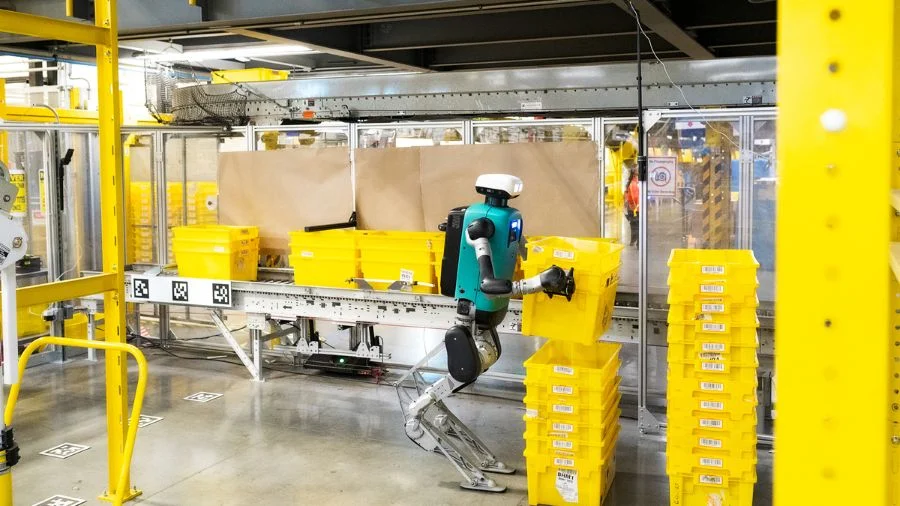
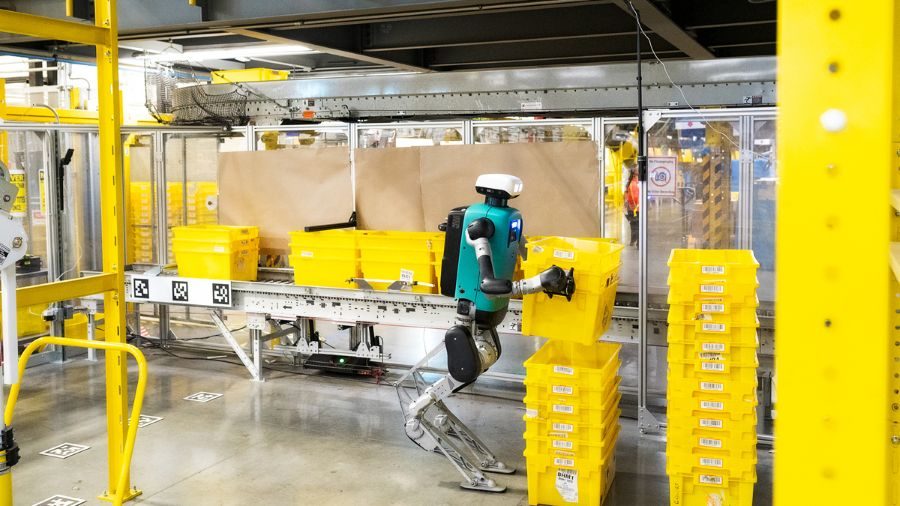
At the core of the Fremont expansion is the concept of "Physical AI." Unlike traditional industrial robots, which are typically "caged" and programmed to perform the exact same motion thousands of times, Digit is designed to operate in spaces built for humans. This requires a level of environmental awareness—or "spatial intelligence"—that has historically been the "holy grail" of robotics.
Digit’s utility lies in its versatility. It can walk, climb stairs, and manipulate objects, making it an ideal candidate for "dull, dirty, and dangerous" tasks. By housing its AI development team in Fremont, Agility intends to refine Digit’s ability to handle unstructured environments. Whether it is retrieving a crate from a high shelf or navigating a bustling warehouse floor alongside human workers, the software must be adaptive.
According to CEO Peggy Johnson, the Fremont facility is vital to meet the surging demand for automation in the face of global labor shortages. "We are delivering ongoing safety and productivity advantages built on AI that can increasingly take on more repetitive, physically demanding tasks in warehouses and manufacturing facilities while working safely alongside people," Johnson stated.
Official Responses and Economic Impact
The arrival of Agility Robotics has been met with enthusiasm from the local government, which views the company as a cornerstone of the next generation of industrial growth. Fremont Mayor Raj Salwan underscored the significance of the move, noting that the city’s identity is increasingly tied to the intersection of AI and hardware.
“Fremont is where the future is built,” Mayor Salwan remarked. “Agility Robotics’ decision to establish its AI development hub here reflects the strength of our talent, our culture of innovation, and our leadership in advanced manufacturing and robotics. We’re proud to welcome Agility to our community, along with nearly 200 high-quality jobs and continued investment in Fremont.”
The addition of 200 high-skilled positions—ranging from robotics software engineers and perception specialists to systems integrators—represents a significant economic injection into the region. These are roles that demand a unique synthesis of skills: traditional mechanical engineering combined with cutting-edge expertise in large language models (LLMs) and computer vision.
Implications for the Robotics Sector
Agility’s move to Fremont is not happening in a vacuum. It is part of a broader "Humanoid Race" that is currently defining the investment landscape of the 2020s. Nearby, Tesla Inc. continues to invest heavily in its own humanoid project, Optimus, retooling its massive manufacturing capabilities to eventually mass-produce robots for its own EV factories and, eventually, the broader market.
This proximity creates a competitive pressure cooker. When industry leaders are located in the same geographic radius, the rate of innovation tends to accelerate. Knowledge spillovers, the cross-pollination of engineering talent, and the competition for specialized hardware components all contribute to a rapidly maturing ecosystem.
Safety and Integration: The Human-Robot Interface
A primary concern for the adoption of humanoids in the workplace is the safety of the human-robot interface. Agility’s focus in the Fremont facility includes the development of safety protocols that allow Digit to operate in proximity to humans without the need for safety cages. This requires advanced sensor fusion—combining LiDAR, depth cameras, and AI-driven predictive modeling to ensure the robot can react to a person stepping into its path faster than a human could blink.
The Economic Case for Humanoids
The business model for humanoids is shifting from a novelty to a necessity. With aging populations in developed economies leading to labor shortages in logistics and manufacturing, companies are looking for "gap-fillers." Unlike an automated conveyor system, a humanoid robot can be deployed into an existing facility without the need for a total infrastructure overhaul. It uses the same doors, stairs, and aisles as a human employee, making the barrier to entry significantly lower for businesses looking to scale their operations.
Conclusion: Looking Ahead
As Agility Robotics settles into its new Fremont headquarters, the industry is watching closely. The success of this facility will be measured by how quickly Agility can transition from pilot programs to full-scale enterprise deployments. If the company succeeds in creating a robot that can truly learn and adapt on the fly, it will have fundamentally changed the nature of labor.
The expansion is a testament to the fact that we have moved past the "hype" phase of humanoid robotics. We are now in the "integration" phase. As software engineers in Fremont refine the intelligence of the Digit platform, the robots on the floor in Oregon will become more capable, more autonomous, and more indispensable.
For manufacturers and logistics managers, the message from Agility Robotics is clear: the future of work is not just coming; it is being programmed, tested, and refined right here in Silicon Valley. The competition between humanoids and traditional automation is over—the future belongs to the machines that can walk, think, and work alongside us.