



Precision in Miniature: The Critical Evolution of Microdispensing in Medical Device Manufacturing

In the high-stakes world of medical device manufacturing, the margin for error is non-existent. For Class III medical devices—those that sustain or support life, such as implantable pacemakers, deep brain stimulators (DBS), and sophisticated cardiovascular stents—the assembly process represents a triumph of engineering at the microscopic scale. At the heart of this manufacturing discipline lies the challenge of microdispensing: the precise, repeatable application of adhesives, coatings, and potting compounds.
As devices shrink in size and grow in complexity, the industry is moving away from traditional time-pressure dispensing toward advanced volumetric systems. This shift is not merely a preference; it is a regulatory and functional necessity to ensure biocompatibility, mechanical integrity, and patient safety.
The Core Challenge: Precision at the Micron Level
The necessity for precision is best illustrated by the deep brain stimulator (DBS). Used to treat therapy-resistant epilepsy and Parkinson’s disease, a DBS system relies on an array of extremely fine electrodes that deliver targeted electrical impulses directly into the brain.
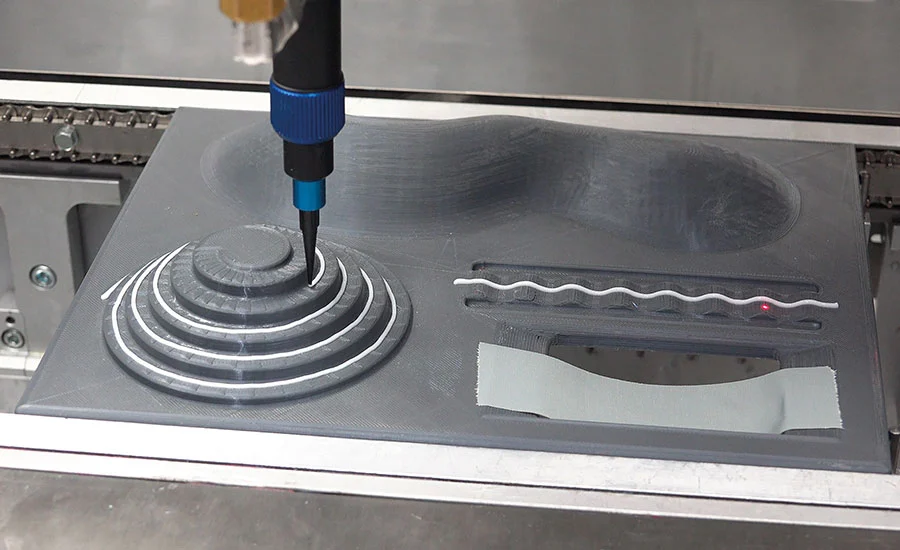
During assembly, minute amounts of adhesive must secure every contact point and block segment before a final potting compound is applied. If this application is imprecise, components may shift during the potting process, or microscopic gaps may form. These gaps are not merely aesthetic; they represent a failure point where body fluids could penetrate, potentially leading to device failure or bio-incompatibility.
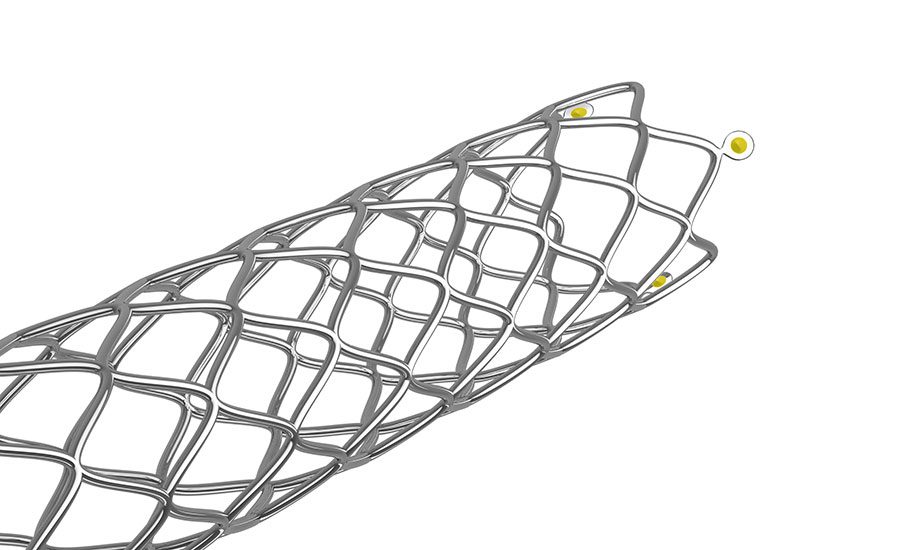
Similarly, in the manufacturing of stents—particularly those made from nitinol, a material prized for its flexibility but notorious for low radiopacity—dispensing must be surgical. To ensure these stents are visible during X-ray guided procedures, manufacturers attach tiny radiopaque markers. The gaps where these markers are seated are often as narrow as 15 to 30 microns. Filling these gaps with adhesive requires a level of micro-dosing that preserves the stent’s inherent flexibility while ensuring the marker remains permanently bonded.
Technological Evolution: From Time-Pressure to Volumetric Dispensing
For decades, the industry relied on time-pressure dispensing systems, which utilize pressurized cartridges to push material through a nozzle. However, these systems are inherently flawed for high-precision medical applications. Their output is highly sensitive to the fill level of the cartridge; as the volume of liquid decreases, the air cushion at the top of the cartridge expands, causing the pressure to drop and the dispensing volume to fluctuate.
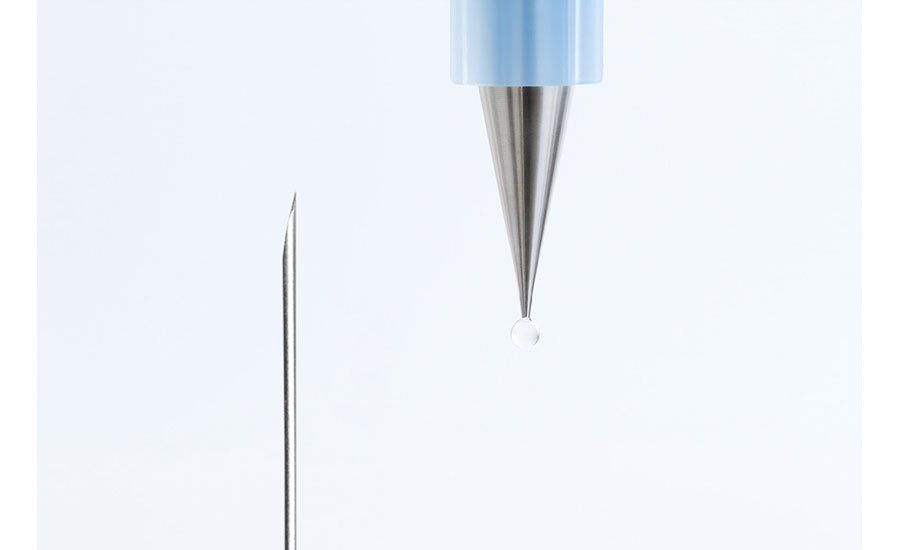
Furthermore, temperature-induced viscosity changes or variations in the filler materials within the adhesive can render time-pressure systems inconsistent. In a medical device, an "overdose" of adhesive can lead to blockages in catheter lumens or unintended constrictions, while an "underdose" creates mechanical weak points that could lead to catastrophic failure in vivo.
The Progressive Cavity Advantage
The industry standard is rapidly pivoting toward volumetric dispensing, specifically the progressive cavity design championed by companies like ViscoTec. In this architecture, a rotating screw transports the material in discrete, defined volumes. Because the system is volumetric, the screw displaces the exact same amount of material per revolution, regardless of the pressure in the supply line or the fill level of the cartridge.
This technology is uniquely capable of handling the complex, filled, and highly viscous materials required for modern medical implants. Because the screw conveys the material gently, fillers—which are essential for providing radiopacity or structural reinforcement—remain in suspension rather than separating, ensuring the material properties remain uniform throughout the entire assembly process.
Chronology: From Prototyping to Full-Scale Validation
The journey from a laboratory prototype to a serialized, FDA-compliant medical device is a rigorous path governed by strict validation protocols.
- Developmental Phase: Engineers identify the specific biocompatible adhesives and substrates. During this stage, manufacturers often collaborate with equipment providers like Rehm Thermal Systems to conduct practical trials using actual production components.
- Process Qualification: Once the material and dispensing parameters are established, the system is tuned. This includes selecting the correct needle diameter, establishing flow behavior, and setting curing profiles.
- Validation (IQ/OQ/PQ): Under international regulations (such as the EU Medical Device Regulation), every assembly line must be validated for a specific product. This is a "frozen" process; once the machine is qualified, any deviation in process, geometry, or material requires extensive revalidation.
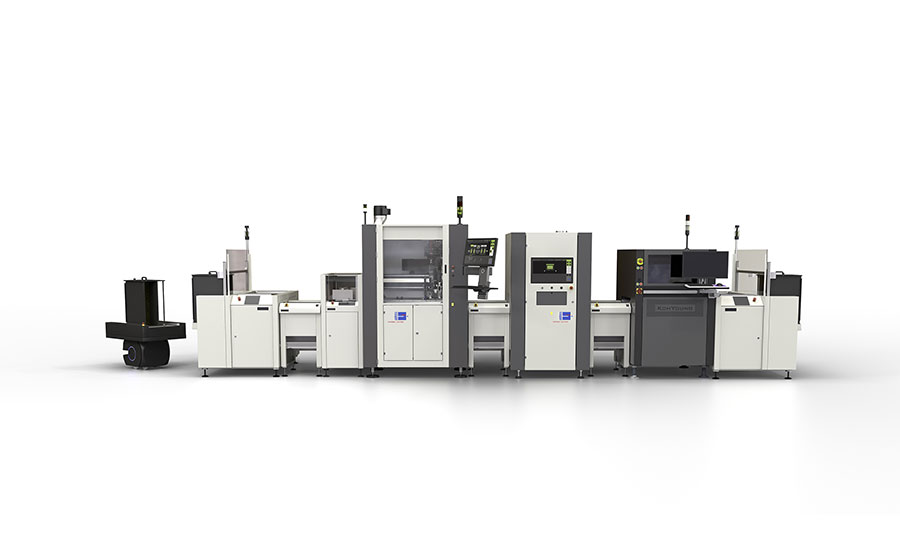
- Volume Production: The system enters continuous operation, utilizing automated monitoring, load cells, and fiducial cameras to ensure that every single unit meets the stringent quality requirements of an ISO 7 clean room environment.
Supporting Data: Ensuring Reliability in Automation
Achieving the "zero-defect" goal in medical device assembly requires a multi-layered approach to quality assurance.
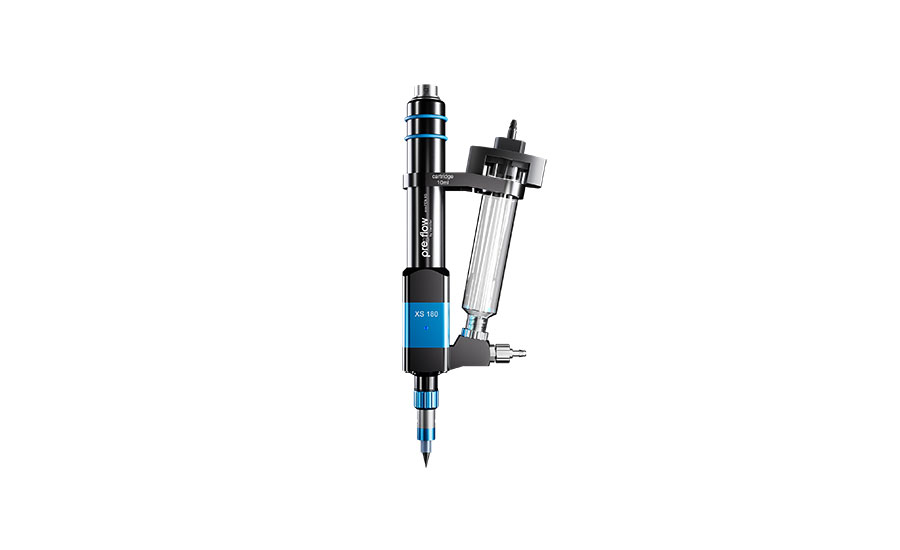
- Repeatability: Modern systems like the Preeflow Eco-Pen XS 180 provide dispensing accuracy of up to ±1 percent, allowing for microliter-range applications that are perfectly reproducible.
- Cleaning and Maintenance: To prevent "stringing" or dripping—a common source of contamination—advanced dispensing heads use programmable retraction. The screw rotates in reverse at the end of a cycle to create a vacuum effect, effectively cutting off the adhesive flow.
- Surface Correction: Because medical substrates are often flexible or prone to warpage (as seen in thin-film catheter tubing), integrated 3D height sensors are now standard. These sensors allow the dispensing head to adjust its Z-axis in real-time, ensuring that the needle maintains a constant distance from the surface, even if the part is not perfectly flat.
- Material Integrity: To meet biocompatibility standards, all fluid-contact parts are manufactured from surgical-grade stainless steel or FDA-certified plastics. Many systems now feature autoclavable components, allowing them to withstand the high-temperature sterilization cycles necessary for clean-room maintenance.
Official Perspectives and Industry Implications
The integration of automated dispensing and curing systems, such as those developed by Rehm Thermal Systems, represents a move toward the "Smart Factory" model in medical manufacturing.
According to industry experts, the primary challenge is not just the dispensing itself, but the traceability of the data. In the event of a field failure, it is no longer sufficient to identify a batch. Modern Manufacturing Execution Systems (MES) require that every single device be traceable to its specific process history. This includes the exact temperature profile during curing, the specific batch of adhesive used, and the sensor data from the dispensing event.
This level of traceability allows for surgical precision in product recalls. Instead of pulling an entire production run from the market, manufacturers can pinpoint the specific serial numbers affected by a process excursion, thereby protecting both the patient and the company’s supply chain stability.
The Future: Design for Automation
Perhaps the most significant shift in the industry is the concept of "Design for Automation." In the past, products were designed for function first, with assembly methods addressed as an afterthought. Today, the most successful medical device companies involve automation partners early in the R&D cycle.
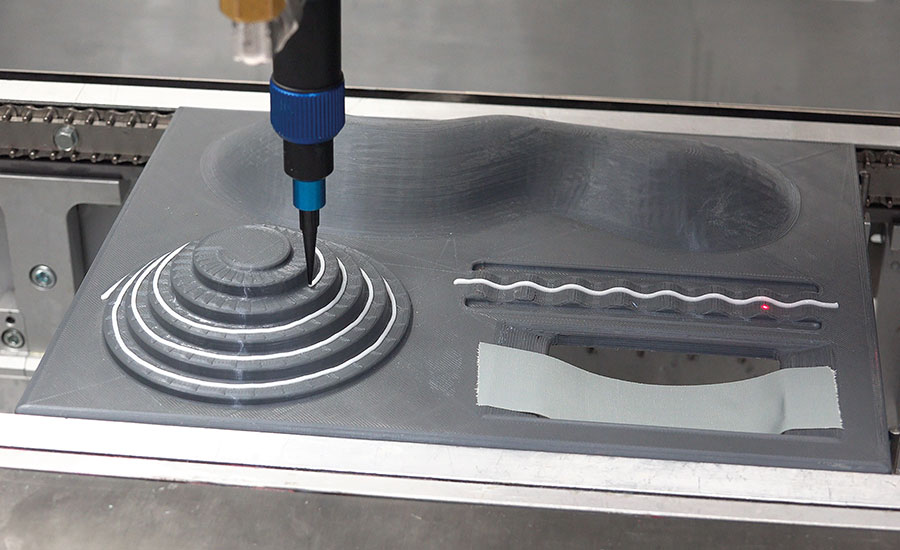
By considering the requirements of microdispensing—such as access points for needles, material flow paths, and curing access for UV/IR light—at the design stage, manufacturers can significantly shorten the transition from the laboratory bench to the assembly floor.
As we look toward the future, the integration of AI-driven diagnostics and real-time process monitoring will further refine these capabilities. Tools like "Ask ASM" and similar intelligent search platforms are already helping engineers navigate the complexities of assembly standards. However, the fundamental reality remains unchanged: in the realm of life-saving medical devices, the smallest drop of adhesive is a critical component, and the technology that places it must be as precise as the medical procedure itself.
By combining volumetric dispensing, intelligent curing, and exhaustive data logging, the medical manufacturing industry is successfully managing the transition to increasingly complex, miniaturized, and highly reliable patient-implantable technologies. The focus remains clear: to ensure that when a device is implanted, it is not just a miracle of engineering, but a foundation of long-term health and safety for the patient.