






Mastering Pump Reliability: From Service Duty Modifications to Precision Alignment

By Maintenance Engineering Desk
Date: July 23, 2026
In the world of industrial maintenance, the centrifugal pump remains the unsung workhorse of production. Whether in water treatment, chemical processing, or manufacturing, the ability of these machines to deliver consistent flow at specific pressures is vital. However, industrial requirements are rarely static. As operational demands shift, maintenance teams are often tasked with reconfiguring pump performance. Two of the most critical challenges in this domain—modifying service duty and ensuring precision shaft alignment—require a blend of mathematical rigor and mechanical discipline.

Part I: Recalibrating Pump Performance via Similarity Laws
When an operational change necessitates a different discharge head or flow rate, the immediate question for an engineer is: How will the pump react? In the absence of manufacturer-provided performance curves for the new operating point, engineers turn to the Similarity Laws.
The Mathematical Framework
The Similarity Laws are derived from dimensional analysis, allowing technicians to predict how a pump will behave when variables like impeller diameter, rotational speed, or fluid density are altered. The fundamental laws are governed by a set of proportional relationships:

- Flow (Q) proportionality: $Q_2/Q_1 = (N_2/N_1) times (D_2/D_1)^3$
- Head (H) proportionality: $H_2/H_1 = (N_2/N_1)^2 times (D_2/D_1)^2$
- Power (P) proportionality: $P_2/P_1 = (rho_2/rho_1) times (N_2/N_1)^3 times (D_2/D_1)^5$
When the impeller diameter ($D$) remains constant and fluid density ($rho$) is unchanged, these expressions simplify into the widely used Affinity Laws, which focus primarily on the relationship between speed ($N$) and performance.
Practical Application and Accuracy
While these formulas are theoretical, they serve as the primary roadmap for field modifications. Mike Sondalini, a renowned EAM System Consultant, warns that while these laws provide a strong baseline, they are not infallible. "Users often place too much faith in these calculations," Sondalini notes. "Because machining an impeller is a permanent, costly decision, one must account for the margin of error."

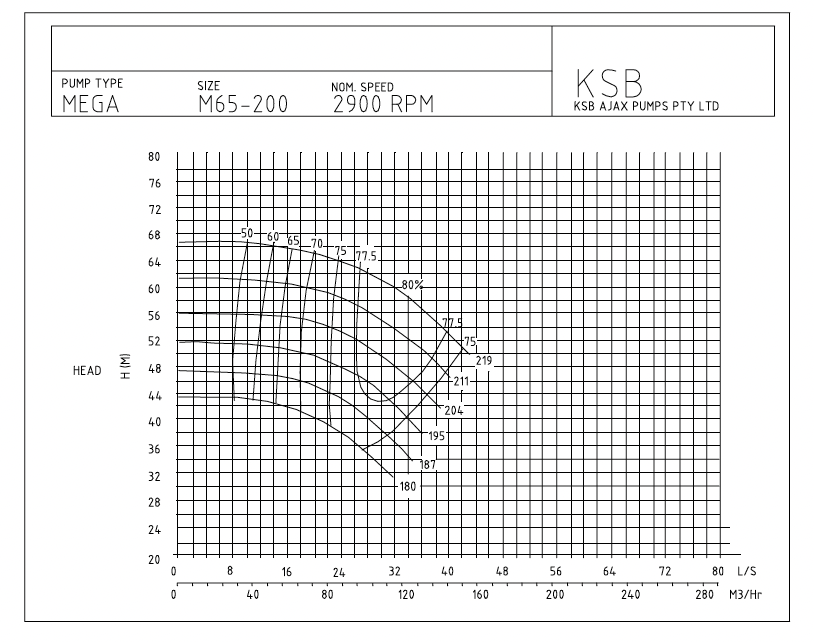
To assess this, engineers often perform a comparative analysis. For instance, consider a pump operating at 24 l/sec with a 64m head, driven by a 219mm impeller. If that impeller is machined down to 195mm, the Similarity Laws predict a specific drop in performance. When tested against published manufacturer curves, the variance is typically minor. However, data suggests that for certain pump geometries, discrepancies can reach as high as 7%.
Strategic Recommendation: To mitigate risk during impeller modification, industry best practice dictates a "step-down" approach. Instead of machining the impeller to the final calculated diameter immediately, leave it slightly larger than required. Reinstall the component, test the new duty point, and then perform a final, minor adjustment if necessary. This iterative process prevents the "point of no return" associated with over-machining.
Part II: The Criticality of Shaft Alignment
If modifying pump performance is the "science" of efficiency, shaft alignment is the "art" of longevity. Misalignment is, without debate, the single most common culprit behind premature bearing failure, mechanical seal leakage, and catastrophic coupling wear.
The Mechanics of Failure
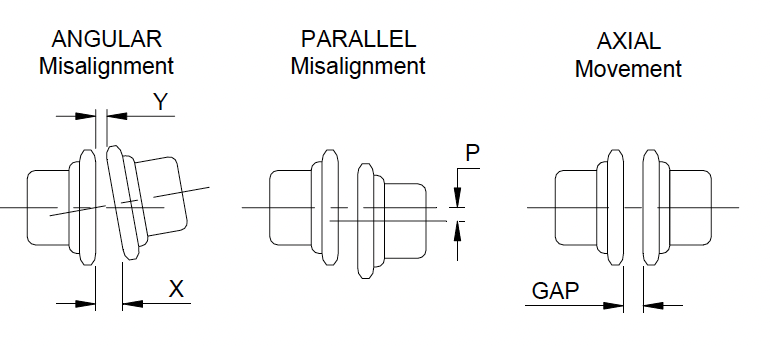
When a pump shaft and a motor shaft are not perfectly collinear, they rotate around different centerlines. This creates a state of "forced geometry." As the shafts rotate, the coupling—which is designed to transmit torque, not compensate for gross misalignment—becomes distorted.

This distortion generates:
- Fluctuating Radial Loads: Constant stress on the bearing races.
- Axial "Push-Pull" Forces: This is the most destructive element. Because internal components are clamped together, there is negligible allowance for axial movement. The resulting vibration acts like a hammer against the mechanical seal faces.
- Fatigue: The cumulative effect of these non-circular, fluctuating loads leads to metal fatigue, manifesting as cracked shafts or housing fractures.
The Precision Mandate
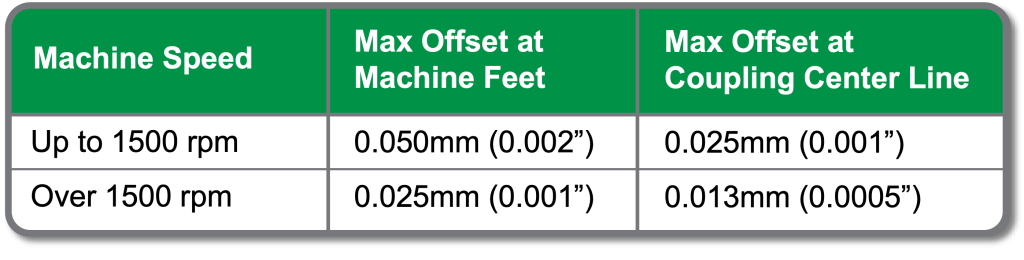
"Alignment is not a suggestion; it is a precision maintenance requirement," emphasizes Sondalini. For modern rotating equipment, the industry standard for 4-pole motor speeds or slower requires that centerlines be aligned to within 0.050 mm (0.002") at operating temperature.

It is a common error to align only the coupling faces. This "face-alignment" approach can lead to a false sense of security, as it may hide the fact that the back-ends of the machines remain skewed. True precision alignment requires a plan-view adjustment of the entire machine train, ensuring that both the pump and the motor are perfectly level and parallel across the entirety of their shared foundation.
Part III: Root Cause Analysis of Misalignment
To move from reactive to proactive maintenance, facilities must categorize the sources of misalignment. The following table identifies the common triggers and their respective remedies:
| Cause | Potential Remedy |
|---|---|
| Thermal Expansion | Calculate "cold" offsets to account for growth during operating temperatures. |
| Piping Strain | Ensure suction and discharge piping are properly supported; they should not exert force on the pump flanges. |
| Soft Foot | Ensure the motor or pump base is perfectly flat; shim all contact points to eliminate frame distortion. |
| Baseplate Instability | Grout the baseplate properly to ensure a vibration-dampening foundation. |
Implications for Plant Reliability
The intersection of pump performance modification and mechanical alignment represents the backbone of an effective Enterprise Asset Management (EAM) strategy.
The Financial Impact
The financial implications of ignoring these principles are staggering. A pump operating at an inefficient duty point consumes more electricity than necessary, leading to higher operational costs (OpEx). Simultaneously, a misaligned pump requires more frequent seal replacements and bearing overhauls, driving up maintenance costs. In a high-throughput facility, the "cost of failure" extends beyond parts and labor to include the opportunity cost of unplanned production downtime.
The Path Forward
The path to "Industrial Manufacturing Wellness" requires a disciplined, scientific approach. Whether you are using Similarity Laws to scale your production capacity or utilizing laser alignment tools to ensure sub-millimeter precision, the goal remains the same: Repeatability.
As Sondalini outlines in his research, the most successful maintenance organizations are those that move away from "gut-feeling" repairs. By integrating rigorous calculations into the work order process and treating shaft alignment as a critical reliability task rather than an optional setup step, plants can achieve a level of operational stability that keeps them competitive in a global market.

Conclusion
The longevity of a pump is not determined by its purchase price, but by the quality of the maintenance it receives throughout its lifecycle. By mastering the predictive formulas of the Similarity Laws and the precision requirements of shaft alignment, maintenance teams can transform their pumps from potential failure points into reliable, high-performance assets. As we look toward the future of 2026 and beyond, these fundamental engineering practices remain the cornerstone of sustainable, profitable industrial operations.
For further reading on reliability engineering, refer to Mike Sondalini’s "Industrial Manufacturing Wellness: The Complete Guide to Successful Enterprise Asset Management," which serves as the definitive text for maintenance professionals seeking to standardize their approach to equipment health.