



The Rise of the Living Seawall: Kind Designs Secures $10M to Scale Resilient Infrastructure

In a significant milestone for both the 3D printing sector and climate-resilient engineering, Miami-based startup Kind Designs has closed a $10 million Pre-Series A funding round. The raise, which values the company at $70 million, underscores a dramatic shift in investor appetite for "hard-tech" solutions that address the dual crises of rising sea levels and biodiversity loss.
Originally aiming for a $5 million target, the company found itself overwhelmed by investor interest, with demand reaching nearly $20 million. This latest infusion brings the firm’s total capital raised to $21.5 million, providing the necessary runway to transform the company from a pioneering niche player into a major player in the global coastal infrastructure market.
The Investor Consortium: Betting on Disruptive Sustainability
The funding round features a high-profile lineup of backers who see more than just an environmental mission in Kind Designs; they see a market-leading disruption play.
NBA forward Kyle Kuzma joined the round as a new investor, standing alongside returning heavyweights including billionaire investor Mark Cuban and former Washington D.C. mayor Adrian Fenty. The participation of institutional groups like the NY Angels and TaMiami further validates the company’s business model.
Mark Cuban, known for his pragmatic approach to venture capital, highlighted the scalability of the company’s vision. "Most climate founders pitch you on saving the planet," Cuban remarked. "Anya [Freeman] pitched me on an opportunity to disrupt a multi-billion-dollar coastal infrastructure market in a way that’s faster, cheaper, and also better for the environment."
Chronology: From Concept to Federal Contract
Kind Designs has undergone a rapid evolution since its inception, moving from pilot-scale innovation to large-scale federal deployment in just a few short years.
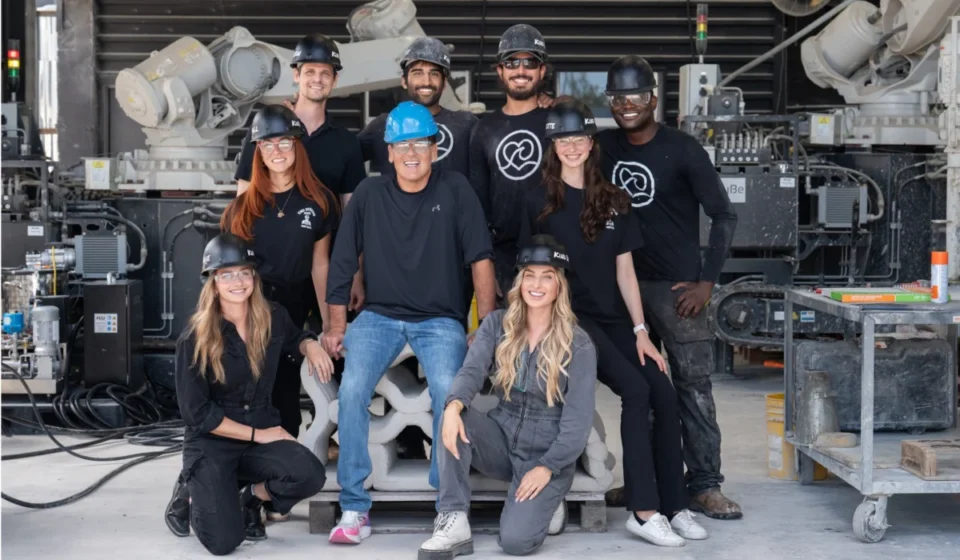
- Initial Development: The company focused on the core technology: utilizing large-format robotic systems to 3D print concrete seawall panels. Unlike traditional flat-cast slabs, these panels are engineered with complex textures and internal cavities that mimic natural marine habitats.
- Commercial Validation: By 2025, the company hit $1 million in revenue, proving that private developers—such as the Fontainebleau, Pagani, and the Ritz-Carlton in Miami Beach—were eager to adopt more sustainable, aesthetically pleasing, and biologically active alternatives to traditional concrete.
- Expansion of Scope: Recognizing that replacing existing walls is costly, the company introduced "Living Seawall Tiles," a modular retrofit solution. This allowed them to capture a larger portion of the market by working with existing infrastructure.
- Governmental Recognition: In a major legislative win, Miami-Dade County updated its seawall codes to grant expedited permitting for Kind Designs’ systems. Concurrently, Florida Governor Ron DeSantis signed SB302, which directs the state’s Department of Environmental Protection to incentivize the adoption of "Living Seawalls."
- Federal Entry: The company’s trajectory culminated in a $2 million contract with the U.S. Navy. This move into federal defense infrastructure signals that the technology has met the rigorous structural requirements necessary for national security applications.
The Technology: Engineering for Ecology
At the heart of Kind Designs’ operation is a proprietary, large-format 3D printing process that the company claims is up to 20 times faster than conventional casting methods. The "Living Seawall" is not merely a barrier; it is a bio-enhanced structure designed to encourage the settlement of marine organisms.
By creating surfaces that facilitate the growth of oysters, coral, and other calcifying organisms, the seawalls actively contribute to local water filtration and habitat restoration. The company’s patent-pending design was recently recognized as one of Time magazine’s "Best Inventions of 2025," cementing its status as a leader in the nascent field of ecological construction.
Data-Driven Growth: The $175 Million Pipeline
The company’s growth metrics reveal a business at a critical inflection point. Currently, Kind Designs holds $10 million in contracted revenue, a figure supported by a massive $175 million active project pipeline.
This demand presents a classic "scaling" challenge. The company is currently constrained by factory capacity, a bottleneck it intends to resolve with the new $10 million injection. The capital is earmarked for:
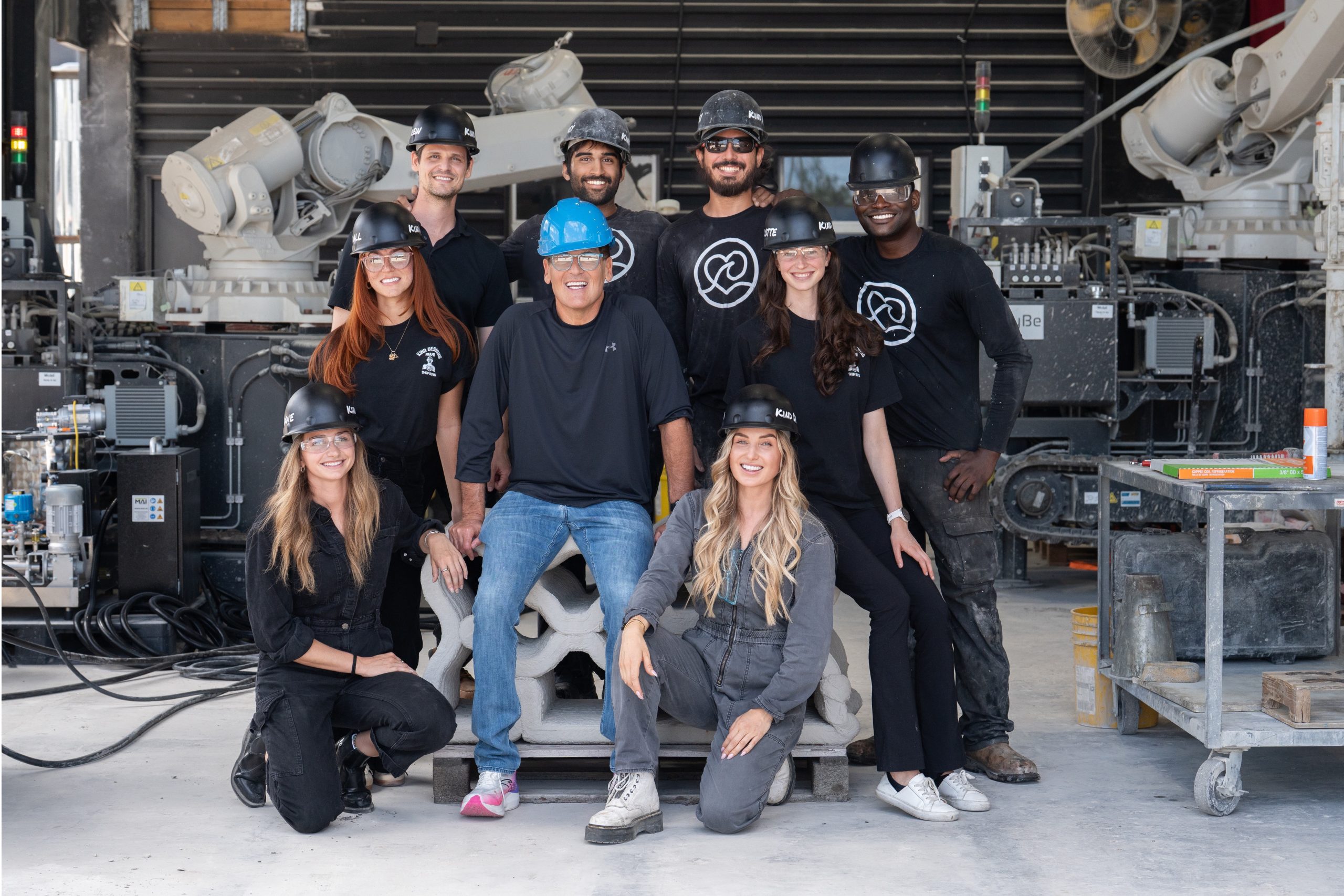
- Capacity Expansion: Tripling production lines and adding new robotic systems.
- Market Expansion: Establishing a permanent operational footprint in New York and California, regions where coastal erosion and rising sea levels represent existential threats to rail and municipal infrastructure.
- Human Capital: Hiring across engineering, project management, and operations to manage the influx of federal and municipal contracts.
Official Responses and Strategic Vision
Anya Freeman, Founder and CEO of Kind Designs, views the funding as a mandate to accelerate the transition from pilot projects to systemic implementation.
"We’re done building at the pace permission allows," Freeman said in a recent statement. "The technology is proven. The demand is here. Now it’s about scaling a new generation of coastal infrastructure that protects America while making this country more beautiful."
The company’s ability to sell into existing procurement channels—rather than relying on fickle restoration grants—is viewed by analysts as its greatest strength. Because municipalities must replace aging seawalls as part of standard maintenance, Kind Designs positions itself as a direct, superior alternative to traditional concrete, effectively riding the wave of existing infrastructure spending rather than competing for philanthropic funding.
Implications: The Future of Coastal Resilience
Kind Designs occupies a unique space in the broader 3D printing industry. While many competitors are focused on small-scale, experimental artificial reefs, Kind Designs is playing the long game of structural infrastructure.
The Competitive Landscape
The race to green the coast is crowded. Organizations like Florida International University (FIU) are utilizing BioCAP tiles to retrofit existing walls, while companies like 1Print are scaling up reef structures. In the Maldives, groups like rrreefs are deploying intricate terracotta modules. However, these efforts often grapple with the "durability question."
The Durability Hurdle
The primary challenge for any marine 3D-printed structure is the test of time. Factors like permeability and chloride ingress can degrade concrete over decades, a risk that municipal planners are highly sensitive to. While companies like Sperra and Voyacy are conducting rigorous testing on large-format printed units, the industry still lacks decades of long-term structural data.
Kind Designs is arguably the closest to crossing this threshold. By securing federal contracts and scaling for infrastructure-level projects, the company is shifting the narrative from "can we print this?" to "how long will it hold?" A successful multi-decade performance of these seawalls would not only validate the company’s business model but would likely trigger a massive regulatory shift, making "living" infrastructure the mandatory standard for coastal development.
Conclusion: A Shift in Industrialization
The success of Kind Designs’ latest funding round serves as a bellwether for the industrialization of additive manufacturing. As the sector moves past the "hype" phase, institutional investors are increasingly looking for companies that solve tangible, multi-billion-dollar problems.
By marrying high-speed robotic manufacturing with ecological necessity, Kind Designs is demonstrating that environmental sustainability and high-margin industrial scaling are not mutually exclusive. As the company expands into New York, California, and federal defense projects, the industry will be watching closely to see if their printed concrete can withstand the relentless pressure of the ocean—and, in doing so, rewrite the blueprint for how we protect our coasts in the 21st century.