



Beyond Assembly: How Chery Is Outflanking Global Tariffs Through Deep Localization and Rival Infrastructure

By Stewart Burnett
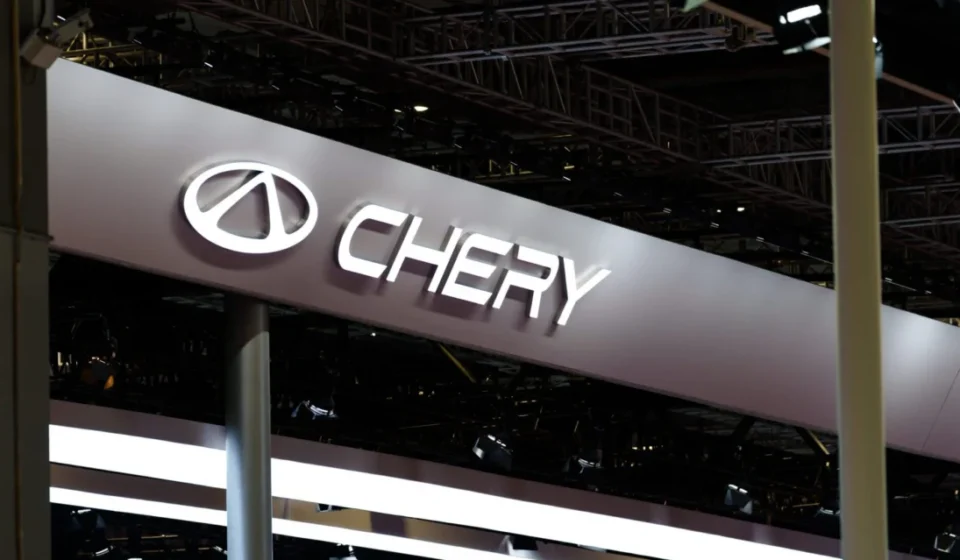
As protectionist trade barriers rise across Europe and North America, Chinese automotive giants are rewriting the playbook for international expansion. Leading this charge is Chery Automobile, which is rapidly evolving from a traditional exporter into a deeply embedded domestic player in the very markets designed to keep it out.
Speaking at the company’s sprawling headquarters in Wuhu, China, Executive Vice President Zhang Guibing outlined an aggressive global localization timeline. Chery expects at least 50% of the vehicles it sells abroad to be built outside China by the end of this year—up from roughly 48% earlier in 2026. This trajectory will accelerate sharply, with overseas-built shares projected to hit 60% next year and scale up to 70% by 2030.
Yet, Chery’s definition of localization extends far beyond simply bolting together knockdown kits in foreign facilities. The automaker is systematically weaving itself into the economic fabric of its target regions by absorbing surplus capacity from legacy rivals, investing in localized charging infrastructure, securing global logistics partnerships, and exploring advanced mobility ecosystems like robotaxis.
Main Facts
Chery’s internationalization strategy rests on three core pillars: acquiring surplus manufacturing capacity from struggling legacy automakers, adhering to shifting regional trade mandates, and building a comprehensive ancillary ecosystem encompassing energy storage, fast-charging networks, and supply chain logistics.
- Aggressive Overseas Production Targets: Chery anticipates that 50% of its international sales will be produced outside of China by the end of 2026, targeting 70% by 2030.
- The Nissan Connection: A cornerstone of Chery’s Western expansion involves repurposing manufacturing facilities previously owned by Nissan. This includes the acquisition of the Rosslyn plant in South Africa and a high-profile joint venture at the former Nissan site in Barcelona, Spain, with ongoing talks regarding the Sunderland facility in the UK.
- Global Manufacturing Footprint: The company currently operates four major overseas manufacturing bases (Brazil, Egypt, Kazakhstan, and Malaysia) alongside kit-assembly operations in Indonesia, Thailand, and Pakistan.
- Navigating Trade Tariffs: By manufacturing within target economic blocs, Chery effectively neutralizes punitive European Union duties of up to 41.3% on Chinese-built electric vehicles (EVs) and aligns itself with impending "Made in Europe" local content rules.
- Ecosystem Integration: Beyond car assembly, Chery is investing in localized EV fast-charging stations, energy storage infrastructure, and global logistics frameworks spanning Europe, Asia-Pacific, Latin America, and the Middle East.
Chronology of Expansion
Chery’s current global footprint is the result of a deliberate, multi-year escalation from exporting built-up vehicles (CBUs) to establishing localized joint ventures and strategic acquisitions.
- Early Foundations: Chery initially established regional footholds through joint-venture partnerships in emerging markets, relying on local entities such as CAOA in Brazil and GB Auto in Egypt to assemble vehicles tailored to specific regional demands, such as flex-fuel and hybrid SUVs for South America.
- January 2026: Chery formally completes the acquisition of Nissan’s historic Rosslyn manufacturing plant in South Africa, signaling its intent to dominate African automotive output.
- July 2026: The Rosslyn plant is officially reopened under Chery’s stewardship, with Chairman Yin Tongyue emphasizing community integration and job creation. Production of the Tiggo 4 crossover is slated for a mid-2027 rollout.
- June 2026: Chery signs a sweeping global logistics agreement with CMA CGM and its subsidiary, Ceva Logistics. The partnership is designed to streamline the movement of finished vehicles, spare parts, and EV batteries across Europe, Asia-Pacific, Latin America, and the Middle East.
- Late 2026 (Projected): Pre-series production of the Jaecoo 5 battery-electric vehicle (BEV) is scheduled to begin at the former Nissan plant in Barcelona, Spain, through Chery’s joint venture with Spanish automaker Ebro.
- 2027 (Projected): Mass production of the Jaecoo 5 is set to commence in Spain. Simultaneously, Chery plans to roll out its initial wave of fast-charging and energy storage stations in key international markets, including the UK, Spain, and Thailand. Chery also plans to enter Japan’s ultra-competitive kei car segment under the Emta brand.
- 2030 (Projected): Chery aims to have 70% of its overseas sales manufactured outside China. Japanese domestic production is also under consideration following an initial export phase from China starting in 2027.
Supporting Data
To understand the scale of Chery’s transformation, one must examine the shifting economics of global automotive manufacturing. The table below illustrates Chery’s projected localization milestones against its primary global manufacturing hubs:
| Metric / Facility | Location | Partner / Operational Model | Target Output / Status |
|---|---|---|---|
| Global Offshore Share | Worldwide | Corporate Target | 50% (2026) $rightarrow$ 60% (2027) $rightarrow$ 70% (2030) |
| Rosslyn Plant | South Africa | Direct Acquisition (formerly Nissan) | Reopened July 2026; production begins mid-2027 |
| Barcelona Plant | Spain | Joint Venture with Ebro (formerly Nissan) | Pre-series production late 2026; mass production Q1 2027 |
| Sunderland Plant | United Kingdom | Exploring Contract Manufacturing (Nissan) | Memorandum of Understanding under active discussion |
| South American Hub | Brazil | CAOA Partnership | Flex-fuel and hybrid SUVs for the South American market |
| North African Hub | Egypt | GB Auto Partnership | Supplying regional North African demand |
| ASEAN EV Hub | Thailand | Direct / Local Partners | Right-hand-drive hub for EVs and hybrids |
The Tariff Catalyst
The urgency behind Chery’s localization drive is underscored by regulatory protectionism. The European Union has enacted per-automaker duties reaching up to 45% on Chinese-built EVs, with Chery specifically facing a 41.3% tariff. Furthermore, the UK government has signaled that it may adopt similar restrictive trade measures to protect domestic manufacturing ecosystems.
Compounding these financial hurdles are upcoming Brussels mandates under "Made in Europe" provisions. These rules will financially reward vehicles containing a high percentage of locally manufactured components and assembly, making direct regional production an absolute operational necessity for Chinese market entrants.
Official Responses and Strategic Vision
Executive leadership at Chery has been vocal about shifting the narrative from a "Made in China" export model to a decentralized, multi-domestic manufacturing strategy.

During the official reopening ceremony of the Rosslyn plant in South Africa, Chery Chairman Yin Tongyue laid out the company’s overarching philosophical approach:
"No matter where it invests, Chery Auto will try its best to integrate into the local economy, local community, and the future of this country in every market it enters."
Reinforcing this sentiment at the company’s Wuhu headquarters, Executive VP Zhang Guibing noted that the localization strategy is explicitly designed to foster mutual economic benefit rather than purely skirting trade penalties.
"Step by step, we are trying to localise production and rely mainly on local manufacturing," Zhang said, highlighting that the initiative focuses heavily on job creation, knowledge transfer, and cooperating with local technology partners.
This cooperative ethos is mirrored in Chery’s facility acquisitions. Rather than building greenfield sites from scratch—which can take years to permit and construct—Chery is weaponizing the restructuring pains of legacy automakers. As Nissan struggles globally, shuttering seven of its 19 worldwide production facilities and slashing its workforce by up to 20%, Chery has stepped in as an eager buyer of redundant industrial capacity.
Implications and Future Outlook
Chery’s playbook is rapidly becoming the industry standard for Chinese automakers seeking global dominance. Rivals such as BYD are employing a parallel philosophy, establishing European manufacturing infrastructure in Hungary while outlining plans for three separate assembly plants and an accompanying local battery factory across the continent. Meanwhile, brands like Leapmotor and Geely are leveraging pre-existing equity partnerships with Stellantis and Ford, respectively, to share production footprints within established European facilities.
Yet Chery’s strategy goes a step further by integrating energy infrastructure and logistics into its foreign markets. By rolling out fast-charging stations and energy storage systems in the UK, Spain, and Thailand beginning in 2027, Chery is solving the consumer-adoption bottleneck for electric vehicles while insulating itself from third-party grid limitations.
Furthermore, partnerships like the one signed with CMA CGM and Ceva Logistics ensure that Chery’s complex supply chain—spanning parts, finished vehicles, and high-voltage batteries—remains resilient against geopolitical disruptions in maritime and land freight.
Outflanking Protectionism
Ultimately, Chery’s masterclass in asset repurposing turns protectionism on its head. Tariffs designed to wall off Western markets from an influx of low-cost Chinese vehicles have instead accelerated the permanent integration of Chinese automotive engineering into local economies. By breathing new life into idle assembly lines in Barcelona, Rosslyn, and potentially Sunderland, Chery is not just evading tariffs—it is embedding itself so deeply into local employment and industrial supply chains that uprooting the brand will soon become politically and economically impossible.