

The Automation of Earth: Bedrock Robotics Nears $1B Milestone as Construction Industry Embraces Autonomy

In a landmark moment for industrial robotics, San Francisco-based Bedrock Robotics has secured $600 million in Series C funding, catapulting the company’s total valuation to $4.1 billion. With nearly $1 billion in total capital raised, the firm is no longer merely a promising startup; it is emerging as a critical infrastructure provider for a construction sector grappling with a historic labor shortage and mounting project delays.
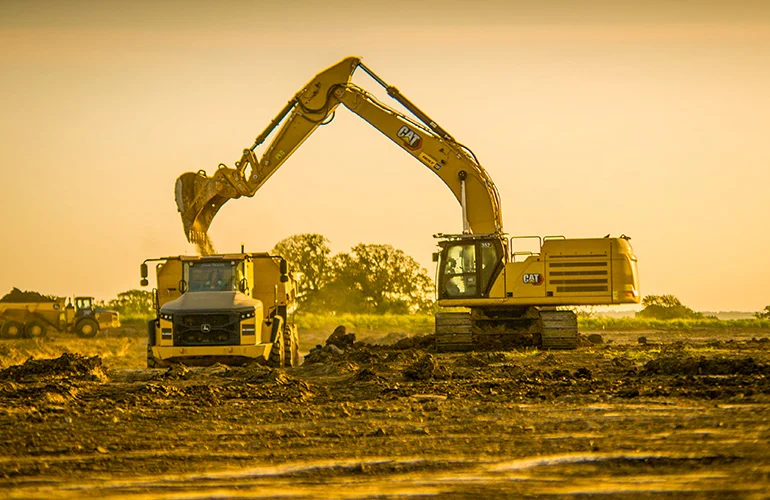
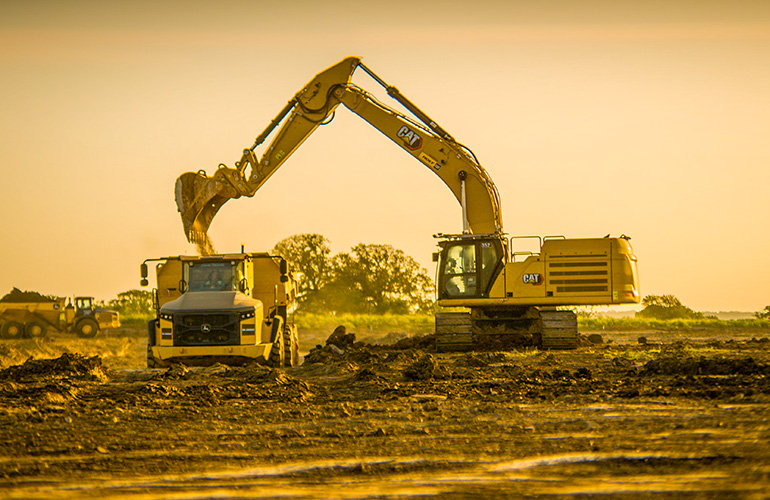
The latest funding round, co-led by heavyweights CapitalG and Emergence Capital, underscores a massive shift in market sentiment. While autonomous vehicles have long dominated the conversation in passenger transport, Bedrock is betting that the most immediate, high-value impact of artificial intelligence lies in the dirt and mud of commercial job sites. By retrofitting traditional heavy equipment with intelligent, autonomous systems, Bedrock is enabling machines to operate with a level of safety and consistency that human-operated machinery struggles to maintain under current labor constraints.
A Chronology of Rapid Evolution
The ascent of Bedrock Robotics has been characterized by aggressive, disciplined growth. Emerging from stealth mode just two years ago, the company has defied the typical "slow-and-steady" trajectory of deep-tech firms.
- The Stealth Phase: Founded by industry veterans, the company spent its formative years perfecting the hardware and software stack required to navigate the unstructured, high-stakes environment of an active construction site—an environment far more unpredictable than the paved highways favored by autonomous car developers.
- The Pilot Phase: Initial deployments were localized, focusing on the West and Central South regions. These early partnerships allowed the engineering team to refine the software in real-world conditions, learning how to integrate with existing site workflows rather than disrupting them.
- The Expansion Phase: Moving into 2026 and 2027, the company moved rapidly into the Midwest and South Atlantic regions. This expansion was anchored by a landmark partnership with Texas-based contractor Haydon, which serves as a flagship case study for automated earthwork.
- The Scaling Phase: With the $600 million Series C injection, Bedrock has entered its current stage of industrialization. The company is now focused on "triple-digit machine" deployment, aiming to have hundreds of autonomous excavators operational across the United States by the end of 2027.
Supporting Data: Why the Market is Hungry for Automation
The demand for Bedrock’s technology is not born of mere technological novelty; it is a direct response to the "construction crisis." Industry data highlights several persistent headwinds that have created a perfect storm for robotics adoption:
- The Labor Deficit: Construction is facing a generational shortfall in skilled operators. As veteran workers retire, the pipeline for new, highly skilled heavy-equipment operators remains thin, driving up wages and lengthening project timelines.
- Economic Volatility: With interest rates fluctuating and high-cost capital becoming the norm, every day shaved off a construction schedule represents millions in saved interest payments.
- Efficiency Gap: Traditional construction relies on fragmented workflows. Autonomous systems provide a "digital backbone," allowing for 24/7 operations that are limited only by maintenance schedules, rather than human shifts.
As CEO Boris Sofman noted, the math behind the technology is compelling. "Imagine a job that can be completed two months faster because autonomous machines are running around the clock, seven days a week," he said. For a developer carrying a $400 million loan at 9% interest, shaving two months off a schedule results in roughly $6 million in direct savings—a figure that justifies the investment in robotics multiple times over.
Leadership and Institutional Strategy
To manage this rapid scale, Bedrock has bolstered its executive team with talent seasoned in the high-growth corridors of Silicon Valley. The addition of Amy Jones Satrom as VP of Operations brings critical expertise from Nuro, Amazon, and Uber—companies that have successfully navigated the "zero-to-one" transition of autonomous fleet deployment.
Simultaneously, the company has fortified its legal and regulatory standing by appointing Lando Juarez, former head of legal for Uber’s Autonomous Mobility & Delivery business, as General Counsel. This strategic hire signals that Bedrock is prepared to navigate the complex regulatory environment that accompanies the integration of heavy machinery into public and private infrastructure projects.
Furthermore, co-founder and VP of Engineering Ajay Gummalla is spearheading efforts to stabilize the company’s supply chain. As Bedrock moves to equip more machines, the ability to procure components at scale is becoming just as important as the code running the machines themselves.
Official Perspectives: The Vision from the Top
For Boris Sofman, the mission is about more than just replacing human labor; it is about augmenting the industry’s capability to build the infrastructure of the future.
"We have proven that fully autonomous excavators can perform real work of value alongside the crews and workflows already in place," Sofman told The Robot Report. "The next challenge is delivering that capability to more contractors as a dependable part of how projects get built."
Sofman emphasizes that the company is "responsibly growing" into its massive customer demand. Rather than rushing into untested markets, Bedrock is focusing on deepening its penetration in construction while simultaneously identifying adjacent industries—namely mining and agriculture—that share similar mechanical requirements and labor challenges.
"Long term, we’re looking at other industries that are also dealing with labor constraints and use the same kinds of heavy machines general contractors do," Sofman added. "But for 2027, we are relentlessly focused on getting more Bedrock-equipped machines on more job sites around the country."
Implications for the Future of Construction
The success of Bedrock Robotics signals a tectonic shift in the construction industry. For decades, the sector has been notoriously resistant to digitization, often cited as one of the least productive industries in the global economy. Bedrock’s ability to retrofit existing, proven machinery with autonomy allows contractors to modernize their fleet without the prohibitive cost of replacing their entire inventory of assets.
Potential Cascading Effects:
- Downstream Benefits: As general contractors become more efficient, the downstream trades—plumbing, electrical, and structural framing—benefit from a more predictable project schedule. When the "earthwork" phase finishes on time, the subsequent trades can start their work, reducing idle time and labor volatility for the entire ecosystem.
- Safety Improvements: Removing humans from the cabin of a heavy excavator in high-risk zones (such as trenches or unstable soil) inherently reduces the risk of workplace accidents.
- New Design Possibilities: As contractors gain access to 24/7 autonomous labor, the design of infrastructure projects may change. Sites that were previously deemed too difficult or time-consuming to grade or excavate may become viable as the cost of "moving dirt" drops significantly.
Challenges Ahead
Despite the optimism, the road ahead is not without obstacles. The construction industry is famously conservative regarding new technology. Integrating software-driven systems into rugged, dusty, and often wet job sites requires a level of reliability that software alone cannot provide. Furthermore, the company will need to continue proving that its autonomous systems can handle the "edge cases"—the unexpected events that occur on every construction site—with the same level of intuition as a seasoned operator.
However, with $1 billion in total funding, a team drawn from the world’s leading autonomous vehicle companies, and a clear, high-ROI value proposition, Bedrock Robotics is well-positioned to lead the charge. As the industry looks toward the end of the decade, the image of an empty operator cabin on a busy job site may well become the standard, rather than the exception.
By marrying the mechanical brawn of traditional construction equipment with the digital intelligence of Silicon Valley, Bedrock is not just building robots; it is rewriting the economic foundations of the built environment. As they push toward triple-digit deployments in 2027, the rest of the industry is watching closely, realizing that the future of construction may be written not by hand, but by autonomous sensors and algorithms.