




The Foldable Frontier: Apple Unveils the iPhone Duo, Signaling a New Era in Precision Engineering

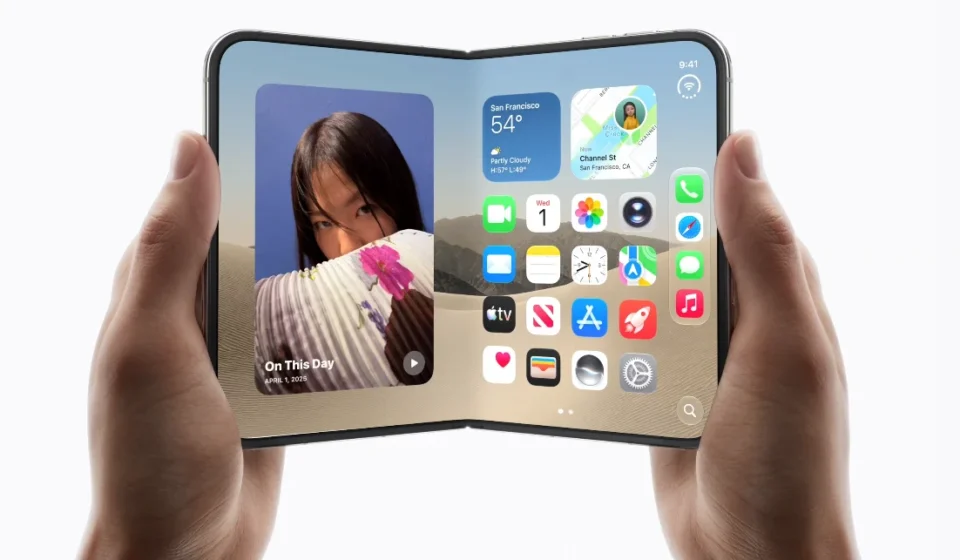
In a move that has sent shockwaves through the global consumer electronics market, Apple officially unveiled its long-anticipated entry into the foldable smartphone category: the iPhone Duo. Announced yesterday during the company’s "Surprise and Shine" event, the device represents a fundamental departure from Apple’s traditional design language, blending the brand’s signature aesthetic with cutting-edge additive manufacturing and advanced material science. Priced at $1,999, the iPhone Duo is set to ship on October 23, marking a pivotal moment in the company’s hardware trajectory.
The Hardware: A Symphony of Titanium and AI
At its core, the iPhone Duo is a feat of mechanical complexity. The device unfolds to reveal a 7.6-inch expansive inner display, while closing into a more compact 5.4-inch outer form factor. Crucially, Apple has engineered both panels to share an identical aspect ratio, ensuring that applications and media content transition seamlessly without the jarring scaling issues that have plagued earlier iterations of foldable devices from competitors.
The heart of the device—its hinge—is a marvel of modern engineering. Comprised of over 100 individual components, the hinge assembly utilizes a cover crafted from 3D-printed recycled titanium, finished with a micro-blasted texture. This provides a tactile and visual contrast to the mirror-polished grade 5 titanium that defines the rest of the chassis.
During the launch, Johny Srouji, Apple’s Chief Hardware Officer, underscored the unprecedented level of precision involved in the assembly. "During manufacturing, we use AI algorithms to precisely match each individual hinge with its best-fit housing to ensure perfect alignment," Srouji explained. "A confocal laser progressively scans the topology of every single unit, and we 3D print up to 25 micro-layers of a custom photopolymer to eliminate even the slightest residual waviness."
Chronology: From Rumors to Reality
The journey to the iPhone Duo has been one of the most scrutinized development cycles in tech history. For years, industry analysts and enthusiasts—often referring to the project as the "iPhone Ultra"—tracked patent filings and supply chain leaks.
- 2023–2024: Initial reports surface regarding Apple’s research into flexible display technologies and "self-healing" polymers.
- Early 2025: Speculation intensifies as Apple’s suppliers in East Asia are linked to specialized titanium processing equipment.
- March 2026: Leaks regarding the device’s unique hinge geometry suggest a shift toward additive manufacturing, drawing comparisons to OPPO’s advancements in the Find N-series.
- September 9, 2026: Apple officially confirms the "Surprise and Shine" event, where the iPhone Duo is unveiled to the public.
- October 16, 2026: Pre-orders are scheduled to commence.
- October 23, 2026: Official shipping date for the first wave of units.
Supporting Data: Engineering for Longevity
Apple’s approach to the Duo is defined by "sustained performance." Under the hood lies the A20 Pro chip, a silicon powerhouse shared with the iPhone 18 Pro lineup. However, the Duo introduces a custom vapor chamber thermal design—a direct derivative of the M-series Mac silicon—which allows the phone to sustain peak performance for 35% longer than the iPhone 17 Pro.
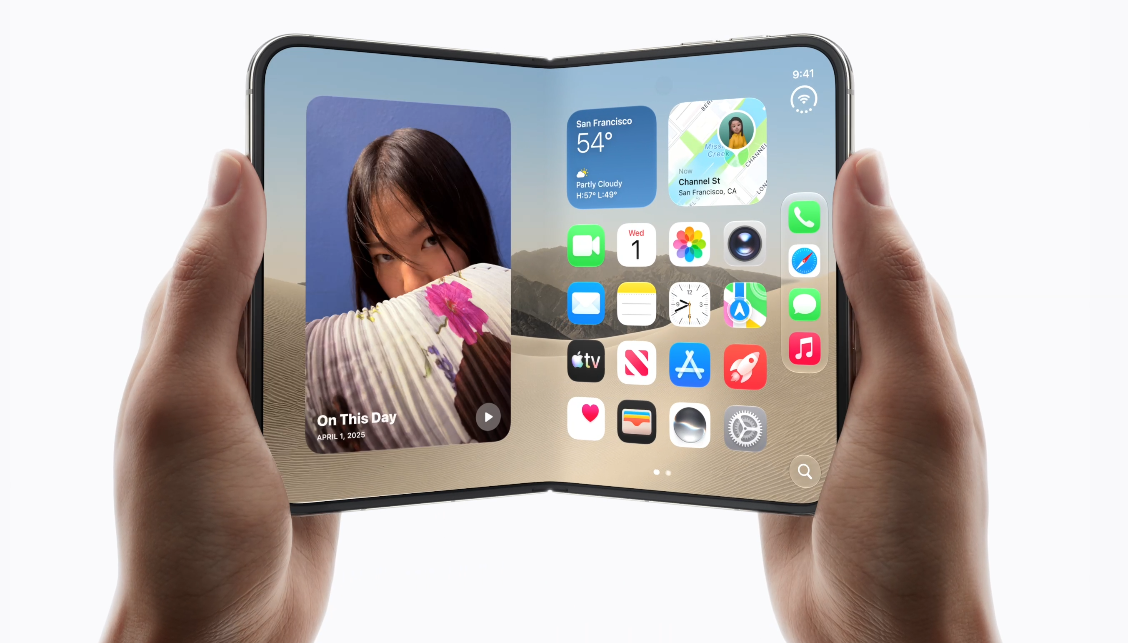
The energy management system is equally ambitious. To power two distinct displays, Apple has implemented a split-battery architecture. By utilizing sophisticated energy-rebalancing algorithms, the dual-cell system operates as a unified unit, delivering an impressive 44 hours of video playback on the outer screen and 31 hours on the larger inner display.
The screen technology itself represents a major advancement in material science. The inner display features a nano-textured surface made from a custom polymer that Apple claims is 40% stiffer than existing industry standards. Furthermore, the external display is protected by "Ceramic Shield 2," which boasts a 3x improvement in scratch resistance compared to the previous generation, addressing one of the most common consumer complaints regarding foldable screens.
Official Responses and Strategic Vision
Apple’s decision to integrate additive manufacturing (3D printing) into the hinge cover is a calculated strategic move. While the company has previously utilized laser powder bed fusion for the chassis of the Apple Watch Series 11, the Duo marks its most sophisticated use of 3D printing in a flagship mobile product.
When asked about the reliance on such complex manufacturing techniques, Apple’s leadership emphasized that the goal was not just innovation, but reliability. By consolidating parts and using high-strength ceramic fiber inserts within the hinge’s antenna splits, Apple is attempting to solve the "foldable fatigue" that has hindered the category’s mass-market adoption.
The software experience has been reimagined in tandem with the hardware. iOS 27 introduces a side-navigational control system that maximizes vertical screen real estate, a feature that feels native to the foldable form factor. For the first time, iPhone users can utilize true "Split View," running two high-intensity apps side-by-side with no loss in responsiveness.
Implications for the Industry: The Rise of Additive Manufacturing
The arrival of the iPhone Duo signals a wider shift in how smartphones are manufactured. The foldable market has long been dominated by manufacturers like OPPO, which utilized 3D-printed titanium hinges in its Find N5 and N6 models to reduce thickness while increasing structural rigidity.

Apple’s entry into this space acts as a validation of these additive manufacturing techniques. As the company scales its production, the cost of 3D printing for structural components is likely to drop, pressuring the rest of the industry to move away from traditional CNC machining and toward more efficient, complex, and lightweight manufacturing processes.
Market Impact
The $1,999 price point positions the iPhone Duo firmly in the "ultra-premium" segment. Industry analysts suggest that while the price is high, the value proposition—driven by the AI-enhanced hinge assembly, the A20 Pro performance, and the unique longevity of the dual-battery design—will likely appeal to power users and enterprise clients who have been waiting for a foldable device with the stability of the Apple ecosystem.
Furthermore, the introduction of the C2 cellular modem, which brings advanced mmWave support, underscores Apple’s commitment to future-proofing the device for the next generation of 5G infrastructure.
The Road Ahead
As the October 23 shipping date approaches, all eyes are on the supply chain. Integrating 3D-printed micro-layers and AI-calibrated hinges at scale is an unprecedented manufacturing challenge. If Apple succeeds, the iPhone Duo will not only be a commercial success; it will serve as the blueprint for the next decade of smartphone design.
For now, the iPhone Duo stands as a testament to the fact that, even in a mature market, there is still room for radical re-engineering. By focusing on the structural integrity of the fold and the efficiency of the power system, Apple has moved beyond the "gimmick" phase of foldable phones, offering a device that is as robust as it is innovative.
For those following the intersection of high-end manufacturing and consumer technology, the coming months will provide a critical look at how these additive manufacturing techniques hold up under real-world conditions. As the industry watches, the "Surprise and Shine" event may well be remembered as the moment the foldable phone finally came of age.