
Navigating the Geopolitical EV Crossroads: Hyundai’s Strategic Pivot, US Tariff Policy, and the Impending Chinese Market Wave

By Stewart Burnett
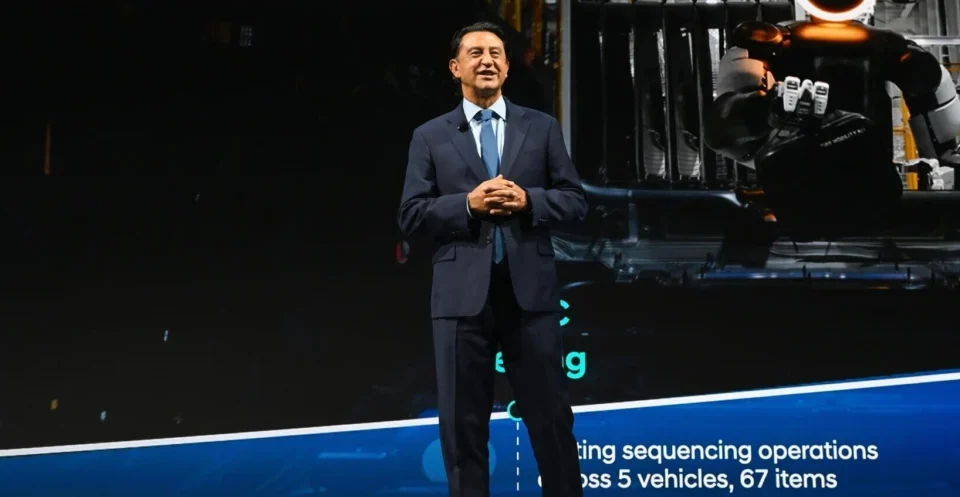
The global automotive landscape stands at a critical juncture, caught between aggressive technological disruption, shifting trade policies, and the inevitable westward expansion of China’s electric vehicle (EV) manufacturers. On 18 September, Hyundai Motor Chief Executive Jose Munoz delivered a stark warning to industry stakeholders: the United States risks importing the same severe market disruption that has upended European automotive sectors, unless Washington maintains robust tariffs and strategic regulatory barriers against low-cost Chinese EV imports.
Munoz’s commentary sheds light on a complex web of geopolitical maneuvering, corporate self-reliance, and software delays. While automakers like Ford face intense government scrutiny over their Chinese supply chain ties, Hyundai is pursuing a nuanced strategy of localized manufacturing, tactical Nvidia partnerships, and conditional market access that aligns closely with President Donald Trump’s pragmatic protectionism.
1. Main Facts: The Threat of the Chinese EV Wave and Hyundai’s Strategic Realities
The core of Munoz’s warning centers on the staggering cost advantage enjoyed by Chinese EV manufacturers. In key European markets—including Italy, Spain, and France—Chinese-built electric vehicles currently retail at a 30% to 40% discount compared to rival models produced by legacy western automakers. This price differential persists despite the European Union’s existing tariff structures and minimum-pricing frameworks designed to protect domestic manufacturers.
To illustrate the devastating efficacy of an open-market approach, Munoz pointed to the United Kingdom. Having left the EU in 2020 without adopting comparable protective tariffs, the UK serves as a cautionary tale for major automotive economies.
"The UK, which in the past was a very profitable, very strong market, has become like China," Munoz noted. "All the top sellers are Chinese because there are no barriers."
Market data underscores his assessment. According to the European Automobile Manufacturers’ Association (ACEA), Chinese-branded cars accounted for more than 9% of total EU sales during the first half of 2026. Meanwhile, figures from the Society of Motor Manufacturers and Traders (SMMT) reveal that Chinese marques command a striking 15% of new registrations in the UK market.
However, Munoz is not advocating for a permanent, total lockout of Chinese competitors. Instead, his calls for structured conditions position him closer to President Trump’s stated framework—which favors conditional market entry tied to domestic job creation and localized production—than to the unyielding protectionism championed by other factions within the administration.
Simultaneously, Hyundai is grappling with internal technological realities. The automaker recently announced a two-year delay for its proprietary Level 2++ driver-assistance system—pitched as a direct competitor to Tesla’s Full Self-Driving (FSD) software—moving its target launch from late 2027 to late 2029. Rather than signaling a technical dead end, the delay stems from the rigorous data collection and safety validation required for autonomous systems. To bridge this gap, Hyundai has initiated a temporary partnership with Nvidia, even as it doubles down on long-term technological self-reliance, localized North American manufacturing, and supply chain independence.
2. Chronology: Key Events and Strategic Pivots
A timeline of recent developments highlights how regulatory pressures, software recalibrations, and competitive anxieties have shaped Hyundai’s current posture:
- July: Ford Chief Executive Jim Farley warns company employees during an internal meeting that Chinese automotive brands could realistically establish a direct commercial footprint in the United States within five to ten years, intensifying discussions regarding foreign supply chain vulnerability.
- 18 September: Hyundai Motor CEO Jose Munoz issues his public warning regarding Chinese EV market saturation during an industry address, contrasting the protected EU markets with the wide-open UK landscape and detailing Hyundai’s revised autonomous driving roadmap.
- Late 2027 (Original Target) vs. Late 2029 (Revised Target): Hyundai’s proprietary Level 2++ driver-assistance system timeline shifts by 24 months. The extra time is allocated to expanding the company’s "data flywheel" strategy, gathering real-world safety data to match Tesla’s benchmark capabilities.
- 2028 (Interim Deployment): Hyundai plans to roll out Level 2+ and Level 2++ vehicles utilizing Nvidia’s hardware and software platform, ensuring the brand remains competitive in the near term while feeding telemetry back into its in-house architecture.
- By 2030 (Manufacturing Milestone): Hyundai targets an expansion of 500,000 units in North American production capacity, alongside an increase in domestic parts sourcing from roughly 60% today to over 80%.
3. Supporting Data: Market Share, Tariffs, and Localization Metrics
To fully understand the urgency driving automotive executives like Munoz and Ford’s Jim Farley, one must examine the empirical data defining the current automotive theater.
European Market Penetration
- Price Disadvantage: 30% to 40% retail discount for Chinese EVs in markets such as France, Spain, and Italy.
- EU Market Share: Over 9% of total new vehicle sales in H1 2026 (ACEA data).
- UK Market Share: 15% of new vehicle registrations (SMMT data), driven by the absence of post-Brexit import barriers.
Hyundai’s North American Expansion
- Current Domestic Sourcing: Approximately 60% of parts sourced domestically for vehicles like the Alabama-built Santa Fe.
- Target Domestic Sourcing: Over 80% by 2030.
- Capacity Expansion: 500,000 additional units of localized North American production capacity scheduled to come online by the end of the decade.
Technological Development Intervals
- Software Delay: 2-year postponement for proprietary Level 2++ autonomous driving tech (moving from late 2027 to late 2029).
- Interim Bridge: Nvidia-powered Level 2+ and Level 2++ rollout slated for 2028, ensuring continuous data generation via the "data flywheel" model.
4. Official Responses and Industry Perspectives
The debate surrounding how western democracies should manage the rise of Chinese automotive prowess has exposed deep divisions among corporate boardrooms and political circles in Washington.
The Pragmatic Protectionist: Hyundai’s Jose Munoz
Munoz views existing US tariff policy not as a punitive measure, but as an indispensable catalyst for domestic manufacturing investment. Pointing to the success of the Alabama-built Santa Fe, he argues that current trade guardrails have successfully forced automakers to localize operations. However, when addressing the inevitable arrival of Chinese automakers, Munoz advocates for terms rather than total exclusion.
"The US needs to impose conditions on Chinese companies to be able to minimize the impact," Munoz stated, adding a pragmatic acknowledgment: "The impact is going to be there for sure." This stance mirrors President Trump’s public openness to accepting Chinese-owned car manufacturing plants on US soil, provided those entities commit to hiring American workers and utilizing localized supply chains.
The Hardline Counterpart: Washington and Detroit
This nuanced, conditional approach starkly contrasts with the hardline stances taken by other political and corporate figures. Earlier in the year, the Trump administration’s Transportation Secretary grilled Ford executives over their licensing agreements and supply chain ties with Chinese battery giant CATL, sparking a heated public debate. Ford’s Jim Farley has taken a similarly defensive posture regarding direct market entry, warning employees that Chinese rivals represent an existential threat to the legacy American automotive industry within the decade.
These divergent philosophies reveal a fragmented consensus. While some officials and executives demand total decoupling, others—including Munoz and Trump—foresee a future where Chinese capital and manufacturing capability are harnessed domestically, subject to stringent regulatory oversight and performance requirements.
5. Implications: Software, Sovereignty, and the Future of Mobility
The strategic choices being made by Hyundai today carry profound implications for the global automotive ecosystem over the next ten to fifteen years.
The Software Race and the "Data Flywheel"
Hyundai’s decision to delay its proprietary Level 2++ autonomous system highlights the immense complexity of software development in modern vehicles. In the past, hardware longevity defined a car’s lifespan; today, software agility and AI-driven data iteration dictate market leadership. By swallowing its pride and partnering with Nvidia for an interim 2028 release, Hyundai is embracing a collaborative model reminiscent of consumer electronics.
"I don’t like delaying anything," Munoz admitted. "If you’re humble, you realize your technology is not good, maybe you need to try a partnership."
Yet, Hyundai remains committed to long-term technological sovereignty. The automaker’s ultimate goal is to internalize critical technologies—particularly batteries and core autonomous systems—retaining ownership of subsidiaries like US-based autonomous vehicle developer Motional while utilizing temporary joint ventures only as stepping stones.
Geopolitical Realities and Domestic Sourcing
As Washington debates the fine lines of trade policy, automakers are treating localization as an insurance policy against geopolitical volatility. Hyundai’s aggressive push to lift North American parts sourcing above 80% while expanding production capacity by half a million units proves that regulatory pressure directly accelerates domestic industrial policy goals.
Ultimately, Munoz’s perspective underscores a hard truth for western automakers: walls and tariffs alone cannot indefinitely hold back a highly competitive, technologically advanced global rival. Success will require a dual track—leveraging protective trade frameworks to buy time, while aggressively modernizing domestic manufacturing, software capabilities, and supply chain resilience to compete on an eventual level playing field.