



The New Normal: How Global Uncertainty is Rewriting the Rules of Ocean Freight

The global supply chain is undergoing a fundamental transformation. For decades, ocean shipping was governed by a rigid, predictable cadence: a "peak season" that ramped up in the late summer and autumn to prepare for holiday retail surges. However, according to Gene Seroka, Executive Director of the Port of Los Angeles, those days are effectively over.
In a July 15 media briefing, Seroka articulated a new reality for logistics professionals: the abandonment of seasonal reliance in favor of opportunistic, strategic shipping. Faced with a volatile cocktail of geopolitical conflict, shifting trade policies, and inflationary pressures, companies are no longer waiting for "perfect conditions." Instead, they are moving cargo whenever a window of stability opens, regardless of the time of year.
The Death of Seasonality: Strategic Frontloading
The traditional retail calendar—long defined by inventory buildup in August and September—has been disrupted. Retailers and manufacturers, spooked by the unpredictability of global trade, have begun "frontloading" cargo at an unprecedented rate. This move is a defensive hedge against the potential for sudden tariff hikes and escalating operational costs.
"Retailers are making strategic decisions about when and how much to ship," Seroka noted during the briefing. "They are balancing back-to-school and holiday demand against tariffs, rising fuel costs, and global uncertainty."
This behavior has created an "early peak season," with the ports of Southern California bearing the brunt of the surge. By prioritizing the security of inventory over the cost-efficiency of "just-in-time" shipping, companies are essentially paying a premium to ensure they are not caught empty-handed should trade routes or regulatory environments deteriorate.
Chronology of the 2026 Surge
The first half of 2026 has been defined by a relentless upward trend in cargo volumes, a stark contrast to the stagnation seen in previous years.
- Q1 2026: Initial signs of supply chain anxiety emerged as shippers began to monitor the looming expiration of Section 122 tariffs.
- May 2026: Volumetrics began to climb significantly as carriers adjusted schedules to accommodate the sudden influx of early-bird holiday goods.
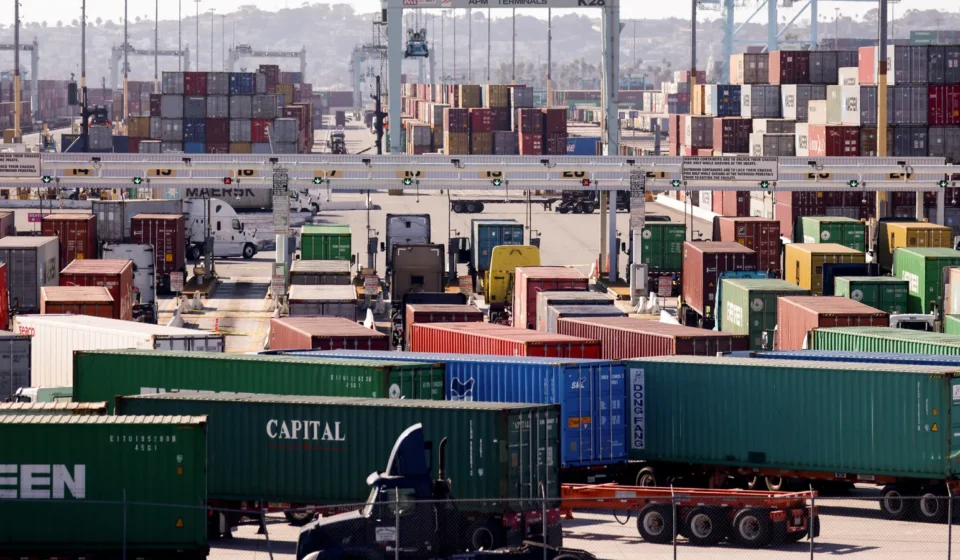
- June 2026: The Port of Los Angeles shattered historical records, processing over 1 million Twenty-Foot Equivalent Units (TEUs) in a single month—the highest volume in its 118-year history.
- Mid-July 2026: The Port of Long Beach reported a 10.6% year-over-year increase in total volume, signaling that the surge was not an isolated incident at a single facility but a regional trend.
- Late July 2026: The industry remains on high alert as the July 24 expiration date for key trade policies approaches, acting as a "cliff" that many shippers are desperate to avoid.
Supporting Data: By the Numbers
The scale of this shift is best illustrated by the raw data emanating from the San Pedro Bay port complex. The June 2026 figures for the Port of Los Angeles represent a significant departure from historical averages.
Port of Los Angeles: June 2026 Performance
| Metric | Volume (TEUs) | Year-over-Year Change |
|---|---|---|
| Total Processed | 1,002,734 | +12% |
| Loaded Imports | 530,558 | +13% |
| Loaded Exports | 126,365 | Flat (0%) |
| Empty Containers | 345,811 | +17% |
The 13% spike in loaded imports highlights the aggressive nature of current restocking efforts. Meanwhile, the 17% increase in empty container units suggests that the port is working at a feverish pace to turn ships around and clear the terminals for the next wave of arrivals. Not to be outdone, the Port of Long Beach processed 780,000 TEUs in the same period, with imports specifically rising by 11% to 387,025 TEUs.
The Geopolitical and Economic Pressure Cooker
The shift toward frontloading is not merely a retail strategy; it is a forced reaction to macro-level instabilities that show no sign of abating.
The Section 122 Tariff Uncertainty
At the heart of the current anxiety is the fate of the Section 122 tariffs. As the July 24 deadline approaches, businesses are paralyzed by the "what-if" scenarios. The legal uncertainty surrounding these trade barriers has created a "buy now, ship now" mentality. By moving goods before the potential reinstatement or modification of these tariffs, companies are essentially buying insurance against a sudden spike in landed costs.
The Energy Cost Conundrum
Geopolitical tensions, particularly the ongoing conflict involving Iran, continue to exert upward pressure on transportation costs. Fuel now accounts for as much as 30% of a vessel’s total voyage cost. Seroka warned that the ripple effects of these costs are not easily reversed.
"When fuel prices rise, ocean carriers implement surcharges," Seroka explained. "However, when global fuel prices eventually dip, those surcharges often remain elevated for an extended period. This ‘lag effect’ creates a long-term inflationary burden on the supply chain that persists even after the initial crisis has subsided."
Official Responses and Strategic Foresight
The leadership at the Port of Los Angeles is not standing idly by. Recognizing that the traditional "peaks and valleys" of the shipping industry have been replaced by a "high-plateau" model of constant, elevated activity, the port has shifted its operational strategy.
Simulation as a Competitive Advantage
Rather than relying on historical trends to forecast future demand, the port’s operations teams are running advanced simulations. These exercises model extreme scenarios—including sudden trade embargoes, further spikes in fuel costs, and labor market shifts—to ensure that the port’s infrastructure remains resilient.
"We are running simulation exercises on scenarios like new tariffs and higher fuel prices," Seroka said. "Teams reconvene to determine how to handle any new developments. This is part of the reason why the retail community has advanced their shipments and inventories; they simply don’t have the luxury of waiting for clarity."
Implications for the Future of Logistics
The transition away from seasonal shipping has profound implications for every stakeholder in the global economy.
1. Warehousing and Inventory Management
With cargo arriving months ahead of the traditional schedule, the pressure on domestic warehousing is immense. Distribution centers are currently operating at near-full capacity, struggling to find space for the glut of inventory arriving in mid-summer. This has led to a surge in demand for short-term, off-site storage and a re-evaluation of inventory velocity.
2. Carrier Reliability
Ocean carriers, having been caught off guard by the non-seasonal surges, are also struggling to balance their fleets. The shift means that carriers can no longer rely on predictable vessel rotations. This has led to increased instances of "blanked" sailings or schedule slippage as lines scramble to move capacity to where the demand is most acute.
3. The Consumer Impact
While much of this discussion focuses on B2B logistics, the ultimate implication is for the end consumer. If retailers are successfully frontloading to avoid tariffs, it may serve as a buffer against price hikes. However, if the added costs of fuel and logistical congestion become structural, consumers could eventually see those costs passed down in the form of higher retail prices, regardless of the tariff situation.
Conclusion: A New Era of Logistics
The Port of Los Angeles’ record-breaking June is more than just a data point; it is a symptom of a world that has traded predictability for agility. The "perfect conditions" of the past are gone, replaced by a permanent state of flux.
As we look toward the remainder of 2026, the industry must prepare for a future where "business as usual" is no longer an option. The ability to pivot, simulate, and adapt to shifting trade policies and geopolitical shocks will define the winners and losers in the global supply chain. For Gene Seroka and his counterparts across the globe, the mandate is clear: keep the cargo moving, stay ahead of the policy curve, and accept that the old seasonal rhythms of the ocean have been permanently silenced by the roar of a volatile, modern economy.