

Beyond Mimicry: Eka Robotics Secures $150M to Redefine Robotic Dexterity with Physics-Based AI

In a landmark moment for the field of embodied artificial intelligence, Cambridge-based startup Eka Robotics has announced the successful closure of a $150 million Series A funding round. This significant injection of capital positions the two-year-old firm at the vanguard of a technological shift: moving robotics away from simple human-mimicry toward a sophisticated, physics-driven "Vision-Force-Action" (VFA) model capable of autonomous, general-purpose manipulation.
As industrial automation struggles to move beyond repetitive, narrow tasks, Eka’s approach—which treats the robot as an agent learning to navigate physical laws rather than a puppet reflecting human video data—has captured the attention of top-tier venture capital firms. With a fresh mandate to scale, Eka is poised to challenge the status quo of how robots interact with the unpredictable, complex environments of the real world.
The Core Innovation: The Vision-Force-Action Paradigm
At the heart of Eka Robotics’ platform is the VFA model. While many competitors in the robotics space are currently focused on "Behavior Cloning"—a technique where robots are trained to mimic human movements captured on video—Eka has taken a fundamentally different, and arguably more ambitious, route.
Breaking the "Human Data" Bottleneck
Current industry leaders often rely on collecting massive datasets of humans performing tasks, which the robot then learns to imitate. Eka argues that this methodology is inherently limited. Human data is often noisy, inconsistent, and fails to capture the nuanced physical properties of materials, friction, or gravity.
Instead, Eka’s model relies on deep reinforcement learning (RL) at scale. By teaching a robot to "understand" physics through virtual experimentation, the machine develops an internal intuition. This intuition allows the robot to handle objects it has never seen before, in environments that have not been pre-mapped, and under physical conditions that would typically cause a mimicry-based model to fail.
Dexterity in Action
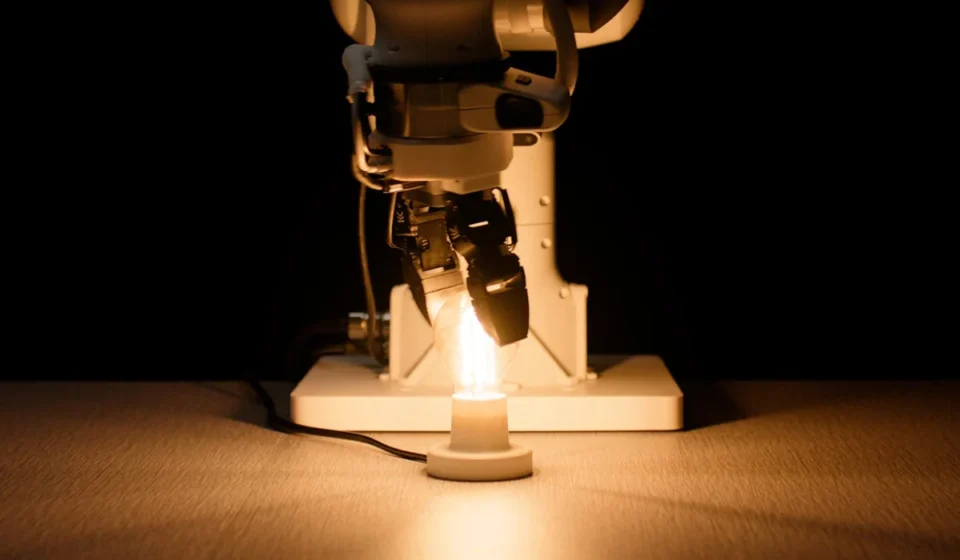
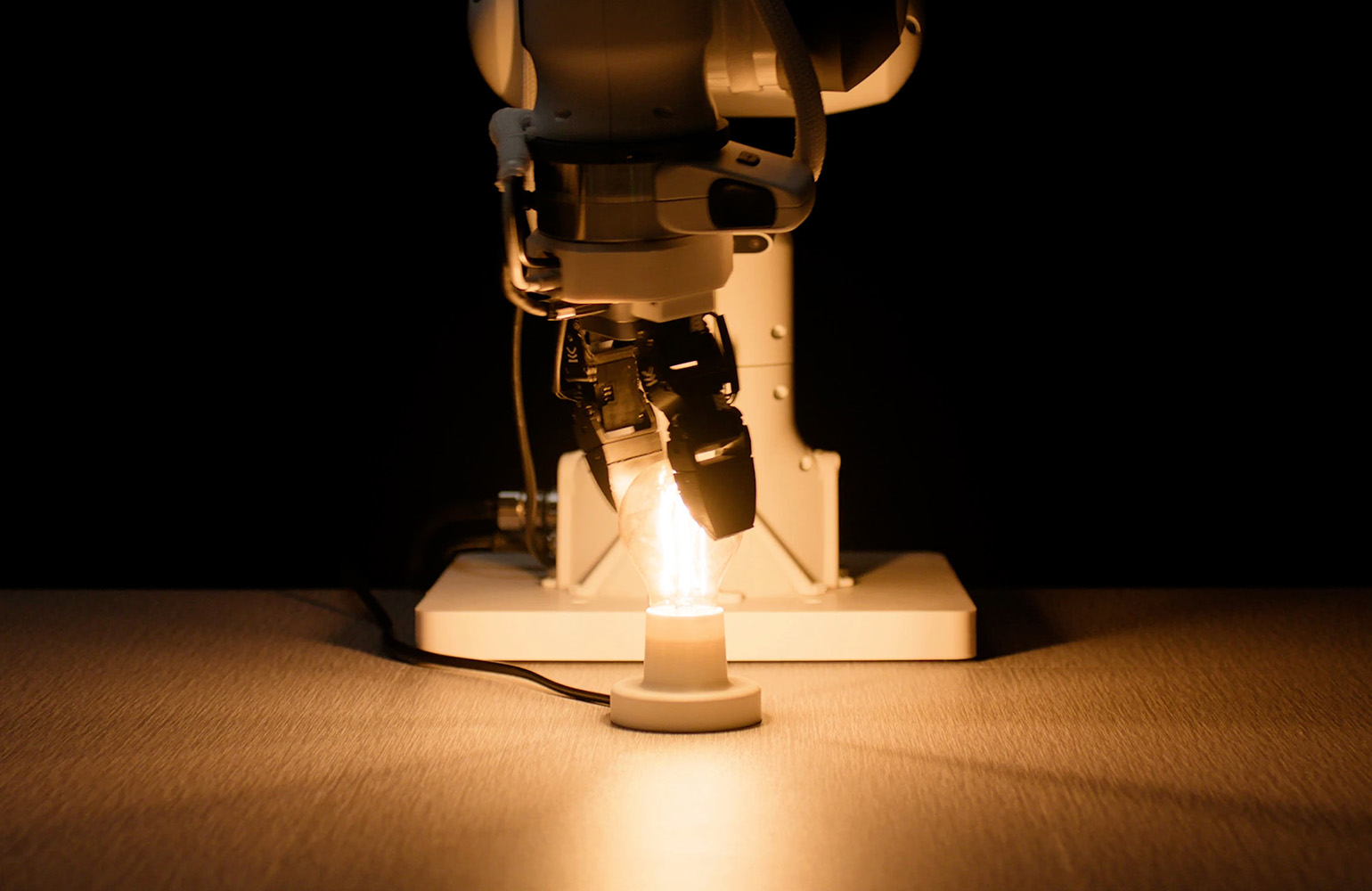
The practical application of this model is striking. Eka’s robots are already demonstrating the ability to perform high-precision tasks—such as inserting delicate wires into tight housing or screwing in lightbulbs—at a rate of approximately 1,500 operations per hour. This speed-to-precision ratio is the "holy grail" of industrial automation, offering the throughput required for commercial viability without sacrificing the dexterity required for complex, delicate work.
Chronology: From Founding to Series A
The rise of Eka Robotics has been meteoric, reflecting the heightened pace of AI development.
- 2024: The Inception. Founded in Cambridge, Massachusetts, the company was established with the goal of solving the "generalization problem" in robotics. The founding team recognized that the barrier between simulation and real-world deployment (the "sim-to-real gap") was the primary obstacle preventing robots from leaving the lab and entering the factory floor.
- 2024–2025: Developing the VFA Foundation. Throughout its early phase, the company focused on building its proprietary simulation engine. By generating millions of simulated hours of robot experience, the team was able to iterate on their physics-based models at a speed impossible in physical reality.
- Early 2026: Validating the Model. The company began testing its VFA model on hardware, demonstrating that the "intuition" built in the virtual world could indeed be transferred to the physical world with high success rates.
- October 2026: The Series A Breakthrough. Following successful demonstrations and early pilot implementations, Eka secured $150 million in Series A funding. This round was led by industry heavyweights Andreessen Horowitz (a16z) and F-Prime, with continued support from seed-stage backers Obvious Ventures and E14 Fund.
Supporting Data: Why Simulation is the New Frontier
Eka’s reliance on simulation is not merely a preference; it is a strategic necessity for scaling. The challenge in traditional robotics is that real-world data collection is expensive, slow, and dangerous to hardware.
The Power of Virtual Experience
Eka’s platform allows for the generation of thousands of hours of experience in a matter of minutes. By adjusting variables in the simulation—such as the friction coefficient of a surface, the weight of an object, or the lighting conditions—the company creates a "training distribution" that is significantly broader than what any human could demonstrate.
This breadth of experience is what buys the robot its "generality." If a robot has practiced picking up a lightbulb in a thousand different virtual simulations, each with slightly different physical properties, it will not be surprised when it encounters a real lightbulb in a real warehouse. It has already solved for the physics of that interaction.
The Performance Metric
Investors are particularly focused on the metrics Eka has shared:
- Throughput: 1,500 operations per hour.
- Generalization: Ability to manipulate objects outside of the original training set.
- Failure Recovery: The ability to sense resistance or slippage through "force" feedback, allowing the robot to adjust its grip in real-time.
Official Responses: The Investor Perspective
The $150 million round drew significant commentary from the venture community, highlighting a consensus that Eka has cracked a code that has eluded others.
Raghu Raghuram, a general partner at a16z, was direct in his assessment of the company’s technical moat: "Eka’s Vision-Force-Action model is the first approach I’ve seen that truly solves manipulation with the generality and throughput needed for deployments. This team has the ideal DNA to push the frontier of robotics research while scaling commercial operations."
For the venture capital community, the focus is on "deployability." For years, robotics startups have struggled to move from "tech demo" to "factory floor." Shyam Kamadolli, a managing director at Fine Structure Ventures, noted that the industry’s obsession with human data was a dead end.
"Early on, I recognized that current approaches to generalization simply won’t get us there," Kamadolli stated. "Achieving the next level of performance requires a deep understanding of physics and, crucially, breaking free from our dependence on human demonstrations. Eka’s VFA model… achieves this for the hardest problem in robotics, dexterous manipulation, in a way no other company has."
Implications: The Future of Industrial Automation
The success of Eka Robotics suggests that we are at an inflection point for industrial labor. If robots can finally master the "dexterous manipulation" required to handle small, fragile, or complex objects at high speeds, the economic implications are profound.
Reshaping the Factory Floor
Current robots are largely "dumb" machines designed for singular, repetitive tasks. A robot that can "see," "feel" force, and "act" based on an intuitive understanding of physics is effectively a general-purpose worker. This could lead to a massive reduction in the cost of automation for small-to-medium enterprises that currently cannot afford the bespoke programming required for traditional robotic arms.
The End of Human-Centric Training
If Eka’s VFA model continues to prove its efficacy, the reliance on human-operated teleoperation (where a human guides a robot’s hand to "teach" it a task) may become obsolete. This would mark a transition from "supervised learning" to "autonomous discovery," where the robot essentially teaches itself how to work by interacting with its environment.
Competitive Landscape
With backing from players like Samsung Next, MFV Partners, and Bison Ventures, Eka is now under intense pressure to execute. The company must now transition from a research-heavy startup to a commercial powerhouse, managing supply chains, field maintenance, and software updates for a growing fleet of robots.
A New Era of Robotics
As Eka Robotics moves forward, the broader industry will be watching closely. If their "physics-first" philosophy proves to be the key to true robotic autonomy, the next decade of robotics will look very different from the last. We are moving toward a future where robots are no longer just tools that follow a script, but adaptive agents that understand the world much as we do—through the continuous, iterative application of force and observation.
With $150 million in the bank and a proven VFA model, Eka Robotics has shifted the focus of the entire field. The race to create the world’s first truly general-purpose robotic worker has officially entered a new, more advanced phase.