


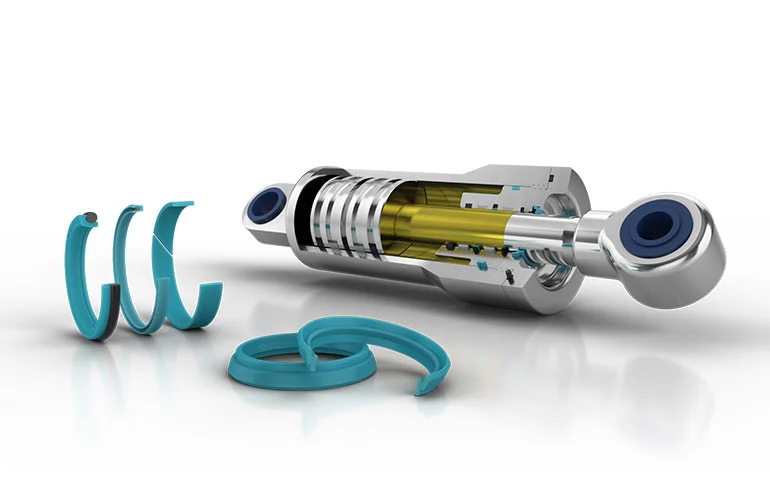
The New Frontier of Hydraulic Reliability: Why OEMs Must Abandon Component-Level Thinking

Contributed by Michael Cook, Global Segment Director Off-Highway, Trelleborg Sealing Solutions
The landscape of heavy-duty hydraulic engineering has fundamentally shifted. For decades, the hydraulic cylinder was the industry’s "reliable workhorse"—a predictable, low-maintenance component operating within narrow, well-defined parameters. Today, that paradigm has been shattered. Modern hydraulic systems are no longer merely functional; they are high-performance endurance athletes expected to maintain precision while spanning the extreme divide between Arctic sub-zero temperatures and blistering desert heat, all while managing increased duty cycles and fluctuating fluid chemistries.
For Original Equipment Manufacturers (OEMs), the central challenge is no longer about sourcing the most robust individual seal. It is about understanding that in a world of high-pressure, high-intensity operation, a single component, tested and optimized in isolation, is a recipe for system-wide failure. The industry must transition toward a comprehensive, systems-based approach to sealing.
Main Facts: The New Reality of Hydraulic Performance
The pressure on OEMs to innovate is mounting from multiple directions simultaneously. Regulatory landscapes are evolving faster than traditional product lifecycles, and performance expectations are pushing the limits of historical materials science.
- Environmental Extremes: Hydraulic cylinders now face wider temperature ranges and longer duty cycles, necessitating seal materials that remain elastic at -40°C yet resilient at +120°C.
- Fluid Evolution: As synthetic, biodegradable, and high-performance hydraulic fluids become the norm, seal compatibility has become a moving target.
- The Regulatory Squeeze: Global mandates, particularly those concerning PFAS (per- and polyfluoroalkyl substances) and the phase-out of chrome-based counter surfaces, have rendered many legacy sealing solutions obsolete.
- The "System" Imperative: A seal is not a standalone product; it is one part of a dynamic interaction between the hydraulic fluid, the piston rod, the cylinder bore, and the mechanical load. When one variable changes, the entire sealing system must be re-evaluated.
Chronology of a Paradigm Shift
To understand where we are, one must look at how the role of the seal has evolved over the last thirty years.
The Era of Standardization (1990s – Early 2000s):
In this period, hydraulic systems were largely homogeneous. OEMs relied on catalog-standard parts. Testing was rudimentary, based on static pressure benchmarks, and "over-engineering" was the common solution to uncertainty. If a seal leaked, you simply increased the hardness of the material or adjusted the seal squeeze.
The Rise of Efficiency and Duty Cycles (2010s):
As the global focus shifted toward energy efficiency and fuel reduction, hydraulic systems were asked to do more with less. Higher pressures became the industry standard to reduce the size of the overall machine. During this time, the first cracks appeared in the "catalog-part" approach; standard seals began failing under the thermal stress of high-frequency operation.
The Modern Era of Regulatory Complexity (2020 – Present):
The current decade is defined by the intersection of sustainability and high-intensity performance. The transition away from traditional PTFE (polytetrafluoroethylene) compounds due to PFAS regulations, combined with the push for chrome-free hydraulic rods, has forced engineers to reinvent the "sealing interface." We are currently in a transition phase where digital simulation has replaced trial-and-error physical testing as the primary tool for development.
Supporting Data: Why Isolation Fails
The failure of the "isolation" model is grounded in physics. In a hydraulic system, the seal acts as the barrier between high-pressure fluid and the external environment. If the seal design is optimized without considering the surface topography of the rod (which may now be a new, eco-friendly coating) or the chemical additives in the new hydraulic fluid, the result is "tribological mismatch."
The Material-Design Feedback Loop
- PTFE Alternatives: While PTFE has been the "gold standard" for low friction, new regulations are forcing the adoption of advanced polyurethanes and even engineering plastics like PEEK (polyetheretherketone).
- Geometric Adaptation: A seal geometry that provides an excellent seal with PTFE will often cause excessive friction or "stick-slip" when manufactured from polyurethane.
- The Simulation Advantage: Modern finite element analysis (FEA) allows engineers to simulate thousands of cycles in a virtual environment. Data suggests that companies utilizing holistic system simulation reduce their development time by approximately 40% compared to those relying on physical "build-and-break" prototyping.
Official Perspective: The Integrated Philosophy
"The critical insight is that materials cannot be assessed in isolation," says Michael Cook, Global Segment Director Off-Highway at Trelleborg Sealing Solutions. "A new polymer formulation typically performs well only when paired with a design engineered specifically for it. Traditional seal geometries built around established materials do not always transfer cleanly to new compounds. This has driven a broader rethink of how material science and design interact, treating them as a single integrated system."
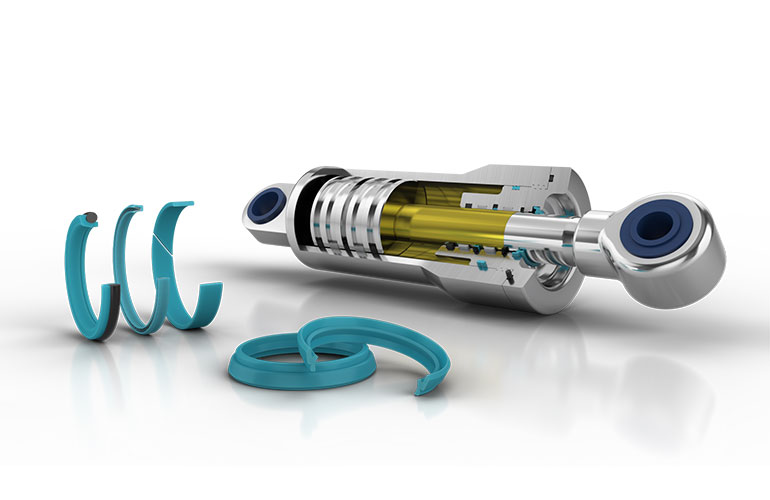
This perspective is shared by many industry leaders who argue that the "siloed" approach—where an OEM buys a rod from one vendor, a seal from another, and a fluid from a third—is fundamentally broken. Without a single point of accountability for the interaction of these components, the OEM is left to troubleshoot complex, unpredictable failures in the field.
Implications for the Industry
The shift to a systems-based approach has profound implications for how OEMs manage their business, their supply chains, and their aftermarket presence.
1. Total Cost of Ownership (TCO) vs. Unit Price
Many OEMs still fall into the trap of evaluating seal costs by the unit price. However, in the context of a machine costing hundreds of thousands of dollars, the cost of a seal failure—involving warranty claims, downtime, and brand reputation—is astronomical. A systems-integrated seal may have a higher unit cost, but its contribution to increased mean time between failures (MTBF) significantly lowers the TCO.
2. The Rise of "Smart" Kitting and Accountability
By sourcing an integrated sealing system, an OEM is essentially outsourcing the complexity of verification to a specialist. This reduces the administrative burden of managing multiple suppliers and ensures that the components are tested as a unit. Furthermore, advanced part-marking and kitting allow OEMs to better protect their aftermarket revenue streams by ensuring that replacement parts meet the exact specifications of the original integrated system.
3. Global Standardization with Local Agility
The modern hydraulic OEM operates in a global market, yet they must adhere to regional regulations (such as REACH in Europe or specific PFAS restrictions in the US). A systems approach allows for a "global orchestra" model:
- Global Best Practice: Standardized material libraries and simulation protocols are shared across the organization.
- Local Execution: Regional application engineers adapt these standardized, proven systems to meet local environmental and regulatory requirements.
4. Designing for the Future
The path forward is clear: the conditions under which hydraulic cylinders operate will only grow more demanding. We are moving toward higher pressures (exceeding 350-400 bar in some mobile applications), faster cycles, and even stricter environmental oversight.
OEMs that continue to treat sealing as an afterthought—or as a commodity to be sourced via the lowest bidder—will find themselves struggling with constant technical revisions and reliability issues. Conversely, those who embrace a systems-level engineering philosophy, backed by deep collaboration with sealing experts, will find that they are not just buying parts; they are buying the reliability that defines their brand.
Conclusion
The evolution of hydraulic sealing is a microcosm of the broader evolution of industrial manufacturing. As systems become more complex and the environment more demanding, the luxury of treating components as independent variables has vanished. By integrating material science, advanced simulation, and system-level testing, hydraulic OEMs can transform a point of failure into a competitive advantage. The future of the "workhorse" cylinder lies in the sophistication of its smallest components, working in perfect, simulated harmony.
Trelleborg Sealing Solutions
For more information on high-performance hydraulic sealing systems and engineering collaboration, visit www.trelleborg.com/en/seals.