



General Mills Unveils Ambitious Supply Chain Overhaul to Fuel $3 Billion Cost-Savings Drive

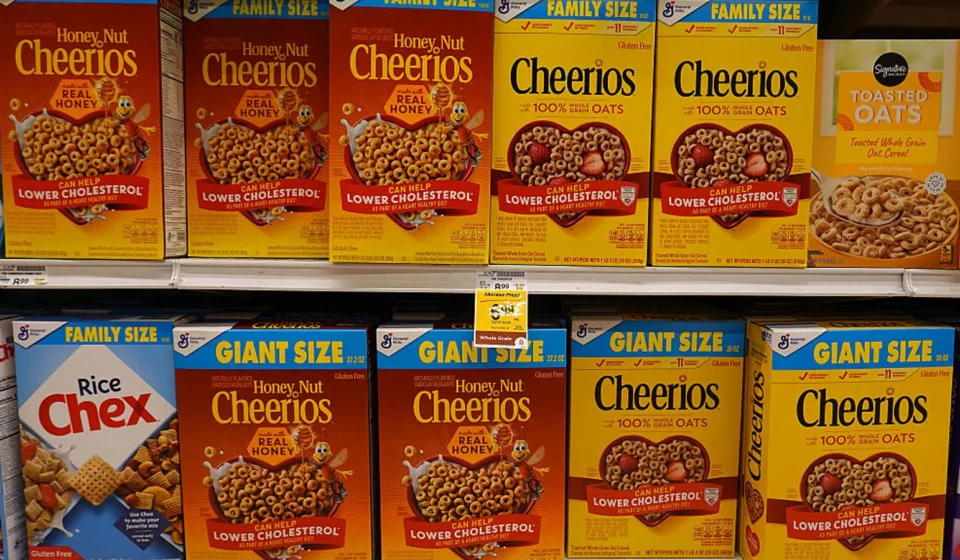
In a strategic pivot aimed at modernizing its operational backbone for a high-volume, unpredictable market, General Mills has announced a sweeping restructuring of its global supply chain. The consumer packaged goods (CPG) giant, known for iconic brands such as Cheerios and Häagen-Dazs, is moving to dismantle legacy logistics networks that executives admit are no longer fit for purpose in the modern era.
This comprehensive transformation is the cornerstone of a broader corporate mandate: restoring profitable organic sales growth through a rigorous $3 billion cost-savings initiative slated for completion by 2030. As consumer behavior shifts and inflationary pressures mount, the company is betting that a more agile, technology-driven supply chain will provide the necessary margin stability to fuel future investments.
The Strategic Imperative: Why Now?
The decision to overhaul the supply chain comes as General Mills faces a complex confluence of macroeconomic challenges. For decades, the company relied on a distribution and manufacturing network optimized for a lower-volume, more predictable era. However, the post-pandemic retail landscape—defined by omnichannel distribution, volatile demand, and the rise of e-commerce—has rendered those older models inefficient.
According to COO Dana McNabb, who was promoted to her position in June 2026, the current infrastructure is a bottleneck to growth. "The network we have was built for a different world," McNabb noted during a recent earnings call. "To achieve our long-term financial targets, we must transition to an operating model that prioritizes agility and real-time data responsiveness."
The company’s roadmap involves two distinct pillars:
- Portfolio Optimization: A $2 billion effort focused on streamlining product offerings to match current market trends.
- Operational Transformation: A $1 billion initiative dedicated to re-engineering business processes, integrating advanced AI-driven technology, and refining the organizational structure.
Chronology of the Transformation
The path toward this supply chain evolution has been marked by a series of high-level personnel changes and strategic milestones over the past 18 months:
- Early 2026: The company initiates a top-down review of its global logistics and manufacturing footprint, identifying significant redundancies and high-cost operational nodes.
- February 2026: Chief Digital and Technology Officer Jaime Montemayor’s remit is expanded to include "transformation," signaling that the supply chain overhaul will be heavily reliant on digital integration.
- May 26, 2026: The start of the new fiscal year marks the commencement of the aggressive $750 million cost-savings target for the current period.
- June 2026: Dana McNabb is promoted to COO, consolidating oversight of innovation and the global supply chain under a single leader to ensure that product development and delivery are synchronized.
- July 2026: General Mills officially unveils the scope of the supply chain modernization to investors, confirming it as the primary engine for the $3 billion 2030 savings goal.
Supporting Data and Financial Context
The financial stakes for General Mills are significant. The company is under immense pressure to protect margins from persistent consumer inflation. By optimizing the supply chain, General Mills aims to unlock capital that can be reinvested into brand building and R&D.
- Cumulative Savings Goal: $3 billion by 2030.
- Fiscal Year 2027 Savings Target: $750 million.
- Key Efficiency Driver: Shifting from legacy "one-size-fits-all" distribution to a modular system that supports omnichannel retail.
The company’s leadership emphasizes that these savings are not merely about cutting costs; they are about creating a self-funding growth machine. By reducing the complexity of the supply chain, General Mills expects to improve its cash flow profile, providing a cushion against future market volatility.
Expert Analysis: The CPG Supply Chain Shift
Industry experts point out that General Mills is part of a much larger industry-wide movement. Jeremy Tancredi, a partner in West Monroe’s supply chain practice, explains that the traditional CPG supply chain—designed for massive, predictable retail shipments—is struggling to keep pace with the fragmentation of the retail landscape.
"To stay in sync with the ever-changing market, CPG companies need to rethink their entire supply chain to enable faster decision-making and improve flexibility," Tancredi said. He highlights "packaging agility" as a vital, often overlooked component of this shift.

"Packaging increasingly needs to be optimized for multiple logistics models and channel-specific assortments to help minimize costs," Tancredi added. "If a company is shipping the same case pack to a high-volume warehouse retailer that they are shipping to an e-commerce fulfillment center, they are leaving money on the table."
General Mills’ focus on agility suggests they are moving toward "postponement" strategies—where products are finalized or packaged closer to the end consumer, rather than at the initial point of production. This reduces inventory risk and allows for faster reaction to regional demand surges.
Official Responses and Corporate Strategy
Chairman and CEO Jeffrey Harmening has been clear about the necessity of this shift. During the recent earnings call, he noted that the savings generated from the supply chain restructuring are "critical to help offset inflation, to fund our growth investments, and support stronger earnings and cash flow over time."
The internal restructuring, which includes giving the COO direct control over the supply chain, is designed to break down the "silos" that often plague large organizations. By aligning the person responsible for innovation with the person responsible for delivery, General Mills hopes to reduce the "time-to-shelf" for new products.
Furthermore, the expansion of Jaime Montemayor’s role underscores the transition from manual, legacy forecasting to AI-driven predictive modeling. This technological leap is expected to improve demand planning, a perennial headache for CPG firms dealing with shifting consumer loyalties.

Industry Implications and Competitive Landscape
General Mills is far from alone in this pursuit. The entire CPG sector is currently undergoing a digital and structural metamorphosis:
- Procter & Gamble (P&G): Having already launched a company-wide supply chain redesign earlier this year, P&G is setting the industry benchmark for large-scale, automated logistics.
- Clorox: The household giant is in the midst of a massive ERP (Enterprise Resource Planning) migration, intended to harmonize its U.S. supply chain operations.
- Nestlé: The Swiss conglomerate is transitioning to SAP S/4HANA to leverage AI for procurement and order fulfillment, signaling a deep commitment to high-tech supply chain management.
For the industry, the implications are clear: the era of "stable growth" is over. Companies that rely on antiquated, rigid supply chains will find themselves losing market share to leaner, faster competitors.
Conclusion: The Road Ahead
General Mills is attempting a high-stakes balancing act: restructuring its core operations while simultaneously trying to grow organic sales. The company’s reliance on a $3 billion savings target is an acknowledgment that the "low-hanging fruit" of cost-cutting has been picked. Future savings must come from fundamental structural changes.
As the company enters the next phase of its 2030 plan, all eyes will be on the execution. The success of the "new" General Mills will not be measured by the sophistication of its technology or the scale of its restructuring, but by its ability to deliver products to store shelves—and digital shopping carts—faster and more efficiently than ever before. In an age where consumer patience is at an all-time low, the company’s supply chain is no longer just a backend function; it is the frontline of the brand.