






In the landscape of modern manufacturing, few technologies are as indispensable—or as misunderstood—as hydraulics. From the high-pressure demands of metal forming and plastics processing to the rugged reliability required in heavy equipment and automated assembly lines, hydraulic systems remain the backbone of industrial production. Renowned for their unparalleled power density and robust performance, these systems have historically prioritized force and stability over energy conservation.
However, as global industrial policies pivot toward aggressive decarbonization and energy-conscious operational mandates, the hydraulic sector is undergoing a profound metamorphosis. The challenge is no longer just about generating power; it is about generating power with precision, intelligence, and minimal waste.
The Evolution of Energy Dynamics in Hydraulics
At its core, a hydraulic system is a complex energy conversion engine. It takes mechanical energy from a prime mover, transforms it into fluid power, and ultimately converts it back into mechanical work. Each stage of this transformation introduces potential losses, typically manifested as heat, friction, or pressure drops.
Historically, hydraulic systems were designed with significant "safety margins." Engineers built systems to handle peak loads at all times to ensure absolute reliability. While this guaranteed that a press would never fail under load, it often meant that pumps were running at full capacity even when the machine was idle or performing low-force tasks. Today, the industry is shifting away from this "oversized and constant" philosophy toward a "right-sized and responsive" model, where energy usage is dynamically linked to the specific requirements of the duty cycle.
Chronology of the Efficiency Transition
The shift toward high-efficiency hydraulics did not happen overnight; it is the result of a multi-decade technological evolution:
- The Mechanical Era (Pre-1990s): Focus was entirely on durability and force. Constant-displacement pumps and fixed-speed motors were the industry standards. Efficiency was an afterthought, largely addressed by better hydraulic fluids rather than system architecture.
- The Component Optimization Phase (1990s–2000s): Introduction of load-sensing and pressure-compensated valves. These allowed systems to "feel" the resistance and adjust flow accordingly, marking the first major step toward intelligent energy usage.
- The Digital Integration Era (2010–2020): The widespread adoption of Variable Speed Drives (VSDs) and early electrohydraulic controllers began to revolutionize how motors interacted with hydraulic circuits, allowing for significant reductions in idling energy consumption.
- The Smart/Autonomous Era (Present): The current focus is on total system digitalization. Integrating AI, machine learning, and predictive diagnostics into hydraulic circuits allows systems to self-optimize in real-time, effectively ushering in the era of "Industry 4.0 Hydraulics."
Supporting Data: Why Efficiency Matters Now
The push for energy efficiency is not merely an environmental endeavor; it is a hard-nosed economic necessity. Recent data from industrial energy audits suggest that in legacy hydraulic installations, as much as 30% to 50% of energy input is lost to heat dissipation during non-productive cycles.
By implementing modern Variable Speed Drives (VSDs), industrial facilities have reported energy savings ranging from 20% to 40% in applications with fluctuating load profiles. Furthermore, the integration of advanced servopumps—such as those pioneered by companies like Atos—has demonstrated that modern electrohydraulic architectures can reduce the carbon footprint of heavy machinery by minimizing hydraulic oil cooling requirements. Because heat is the primary enemy of both oil longevity and component integrity, reduced energy consumption directly correlates to lower maintenance costs and longer intervals between oil changes.
Technological Pillars of Modern Efficiency
The transition toward sustainable hydraulics is supported by four critical technological pillars:
1. Variable Speed Drives (VSDs)
VSDs act as the "brain" of the power unit, allowing the electric motor to run only at the speed required for the current task. In traditional systems, the motor runs at a fixed speed, and excess fluid is sent back to the tank via a bypass valve—a process that essentially burns money as heat. VSDs eliminate this waste by aligning the motor’s rotational speed directly with the flow requirements.
2. Load-Sensing and Pressure Compensation
These systems represent the "nervous system" of the hydraulic circuit. By continuously monitoring the pressure drop across valves, the system can signal the pump to adjust its displacement. This ensures that the system only provides the pressure required to perform the specific job, preventing the massive energy spikes associated with traditional open-center systems.
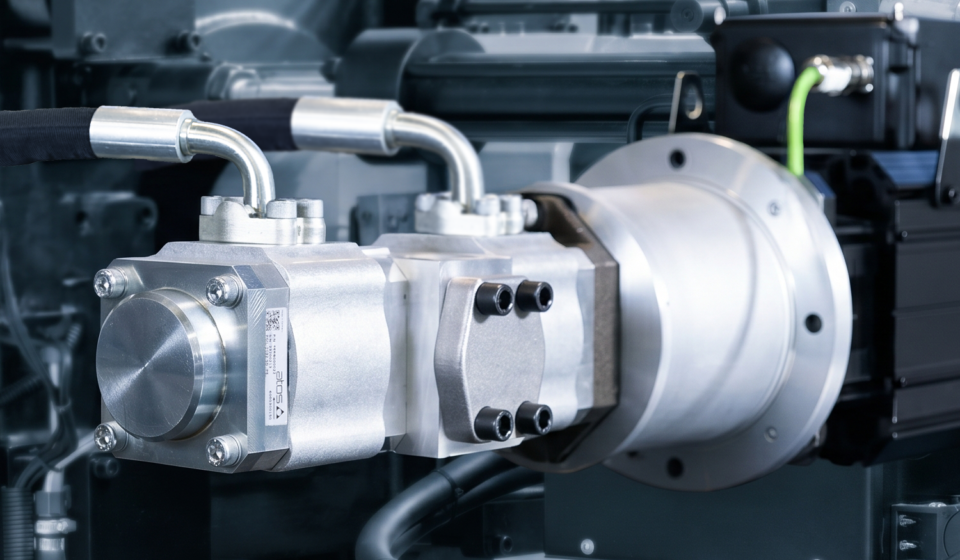
3. Electrohydraulic Systems and Servopumps
The integration of electronic control with hydraulic components has reached a new zenith. Advanced electrohydraulic servopumps allow for high-speed, precise control of both pressure and flow. This level of coordination enables machines to execute complex motion profiles with sub-millisecond responsiveness. As noted by industry leaders at Atos, these systems are not just efficient in terms of electricity—they are efficient in terms of production cycle time, allowing for faster, more precise manufacturing.
4. Energy Recovery and Regenerative Circuits
In applications involving heavy lowering or rapid deceleration, hydraulic systems often "dump" energy into heat. Modern regenerative circuits, however, capture that kinetic energy and store it in accumulators or feed it back into the system, effectively recycling the work performed during the gravity-assisted or deceleration phases of a machine’s cycle.
Official Perspectives: The Role of Digitalization
Industry experts emphasize that the future of hydraulics is not mechanical, but informational. The integration of sensors and digital controllers allows for "Condition-Based Maintenance" (CBM). By utilizing data from the hydraulic circuit, operators can predict failure before it occurs, ensuring that the system is always running at its peak efficiency point.
When asked about the future of this sector, representatives from the Atos Group highlight that the convergence of hydraulics with AI and machine learning is the next logical step. "We are moving from a world where hydraulics simply push and pull, to a world where hydraulic systems ‘think’ about their energy consumption," the firm notes. By utilizing AI to analyze historical load data, a machine can anticipate upcoming high-demand cycles and pre-position its hydraulic state, smoothing out energy spikes and optimizing power grid consumption.
Implications for Industrial Strategy
The implications for plant managers and system designers are significant. The shift toward high-efficiency hydraulics requires a change in procurement strategy:
- Total Cost of Ownership (TCO): Organizations are moving away from selecting equipment based on the lowest initial purchase price. Instead, they are analyzing the TCO over ten years, factoring in energy savings, maintenance, and fluid longevity.
- The Talent Gap: As systems become more complex, the demand for personnel who understand both fluid power and digital control logic is skyrocketing. Training is no longer a luxury; it is a prerequisite for maintaining modern industrial facilities.
- System-Level Design: Engineers are increasingly utilizing digital twinning and simulation software to model hydraulic circuits before a single component is purchased. This "virtual commissioning" ensures that the system is perfectly tuned to the specific application, preventing the over-engineering that plagued the systems of the past.
Conclusion: A Future of Sustainable Power
Hydraulics are far from obsolete. In fact, they remain the most efficient way to transmit high-density power in industrial settings. While electric actuators have made inroads in lighter-duty applications, the sheer force-to-weight ratio of hydraulics ensures they will remain the dominant technology for heavy-duty industrial processes for the foreseeable future.
The transformation currently underway is one of refinement. By blending the raw power of fluid mechanics with the precision of digital electronics and the foresight of artificial intelligence, the hydraulic systems of tomorrow will be leaner, smarter, and significantly more sustainable. The industry has moved beyond the simple goal of "getting the job done" to a more sophisticated mandate: getting the job done with the smallest possible energy footprint, ensuring that hydraulics remain a cornerstone of global industrial competitiveness in the 21st century.