

The Green Frontier: How Advantech is Harmonizing AI with Industrial Sustainability

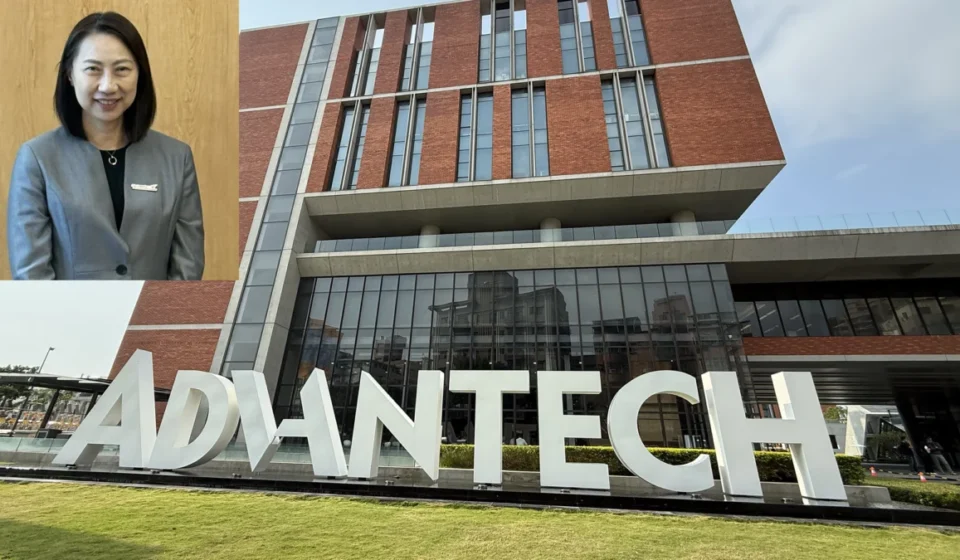
At the recent Advantech Edge AI Conference in Taipei, the intersection of industrial automation and environmental stewardship took center stage. As global manufacturing faces mounting pressure to decarbonize, Linda Tsai, President of the Intelligent System Sector and COO at Advantech, articulated a vision for a sustainable future that leverages the power of artificial intelligence not just for speed, but for efficiency and planet-positive outcomes.
For industry leaders, the question is no longer whether to integrate AI, but how to deploy it in a way that minimizes environmental impact while maximizing operational output. Advantech’s approach provides a blueprint for how global manufacturers can navigate this transition.
Main Facts: The ESG Mandate in Modern Manufacturing
Since the formal establishment of its Environmental, Social, and Governance (ESG) office in 2020, Advantech has moved beyond mere corporate compliance to integrate sustainability into the very DNA of its product development cycle. The company’s philosophy rests on a two-pronged strategy: "Green Design" and "Green Manufacturing."
Product-Centric Sustainability
From a design perspective, Advantech has adopted rigorous energy-saving regulations, such as those mandated by the European Union for electronic components. These standards are now hardcoded into their system architecture. However, the company is going a step further by scrutinizing the entire supply chain—from the sourcing of raw materials to the sustainable packaging of finished goods, where plastics and paper are increasingly recycled or replaced with eco-friendly alternatives.
Carbon Footprinting
Transparency is the cornerstone of their ESG strategy. Advantech utilizes a proprietary formula to calculate the precise carbon footprint of every product delivered to a customer. By collecting granular data on manufacturing processes and material composition, the company can provide clients with accurate environmental impact reports, empowering them to make informed purchasing decisions based on sustainability metrics rather than just price or performance.
Chronology: A Roadmap to Net Zero
Advantech’s commitment to sustainability is not a reactive policy shift; it is a long-term strategic evolution.
- 2020: The pivotal year when Advantech formalized its ESG office, signaling a shift toward structured, measurable environmental goals.
- 2020–2023: Implementation of advanced software monitoring tools across factory floors. This period saw the rollout of real-time energy dashboards, allowing floor managers to visualize power consumption spikes and identify immediate opportunities for reduction.
- The Present: Advantech continues to integrate AI and Autonomous Mobile Robots (AMR) into their assembly lines, focusing on productivity gains that do not come at the expense of energy waste.
- 2040: The company’s target year for transitioning to 100% renewable energy usage across its global facilities.
- 2050: The ultimate goal: achieving Net Zero emissions across the entire organization.
Supporting Data: Efficiency Through Digital Transformation
The shift toward a "Smart Factory" is driven by data-centric decision-making. Advantech’s factory leaders are now measured against specific Key Performance Indicators (KPIs) related to waste reduction. By providing managers with real-time visibility into energy consumption, the company has fostered a culture of accountability where power usage is managed with the same rigor as production quotas.

The Role of AI in Efficiency
Contrary to the popular narrative that AI is an energy-intensive endeavor that necessitates massive data centers, Advantech is utilizing "Edge AI" to keep processing close to the source. By processing data locally on the robot or the machine, they reduce the need for constant cloud connectivity, thereby lowering latency and energy expenditure.
Tsai highlighted that AI is currently being deployed in three critical areas:
- Design Quality Improvement: Using AI simulations to predict component failure before physical prototyping, saving material waste.
- E-commerce Fulfillment: Optimizing logistics pathways to reduce fuel and energy expenditure in the shipping process.
- Advanced Inspection: While traditional rule-based machine vision is still effective for standard tasks, Advantech is employing AI specifically for irregular patterns, ensuring that energy is not wasted on over-processing simple tasks while focusing intelligence where it is most needed.
Official Responses: Addressing the "AI Replacement" Myth
One of the most pressing concerns for workers in the manufacturing sector is the fear of displacement by automation. During the conference, Linda Tsai was clear: Advantech’s goal is to increase production efficiency, not to replace the workforce.
"We will not reduce workers," Tsai emphasized. Instead, the company is focusing on "Human-in-the-loop" systems. By deploying AMRs and AI, Advantech aims to handle the repetitive, dangerous, or high-precision tasks that cause fatigue or error in human operators. This creates a collaborative environment where AI handles the data-heavy analysis, and human operators focus on high-level decision-making and creative problem-solving.
Tsai also cautioned against the "AI-all-the-things" mentality. She noted that some industrial customers fall into the trap of believing that AI is a panacea that can automate every aspect of a business. Advantech’s experience has shown that AI is a specialized tool—highly effective in specific, targeted applications, but ultimately insufficient as a replacement for human judgment. By focusing on productivity-boosting deployments rather than wholesale automation, Advantech maintains a balanced operational model.
Implications: The Future of the Industrial Sector
The transition Advantech is undertaking has profound implications for the broader manufacturing industry.
1. The Cost of Sustainability
Tsai openly acknowledged that creating energy-efficient products often involves increased upfront costs. However, the long-term implication is a transition from a linear, disposable economy to a circular one. For manufacturers, the cost of not being sustainable—in terms of regulatory fines, loss of brand equity, and energy volatility—is rapidly outpacing the cost of upgrading to greener systems.

2. The Edge AI Advantage
As the industry moves away from centralized, energy-hungry computing, the adoption of Edge AI will become a differentiator. By bringing the "brain" of the operation to the factory floor, Advantech is setting a trend for localized, efficient, and responsive manufacturing. This reduces the carbon footprint associated with data transmission and storage, a critical factor that is often overlooked in current ESG reporting.
3. Culture as a Component of Tech
Perhaps the most significant implication is the shift in management philosophy. By linking factory leadership KPIs to waste reduction, Advantech proves that sustainability is a management discipline, not just a technical one. When factory managers are incentivized to save power, they find innovative ways to optimize workflows that engineers might not even consider.
4. Setting the Standard
By publicly committing to 100% renewable energy by 2040 and net zero by 2050, Advantech is challenging its peers to adopt similar timelines. In an era where "greenwashing" is a significant concern for investors and consumers, Advantech’s granular reporting—from plastic packaging to energy-efficient circuit design—offers a roadmap for genuine corporate responsibility.
Conclusion: A Balanced Trajectory
The Advantech Edge AI Conference served as a reminder that the future of manufacturing is not a binary choice between technology and the environment. Rather, it is a sophisticated integration of both. By utilizing AI to optimize energy, and AMRs to enhance human output, companies can achieve the necessary scale of production required by a growing global population while adhering to the critical constraints of our planet’s resources.
As Linda Tsai noted, the journey to Net Zero is a marathon, not a sprint. Through rigorous data collection, a commitment to human-centric automation, and a willingness to invest in sustainable design, Advantech is proving that the factories of tomorrow can be as efficient as they are intelligent. For the rest of the manufacturing world, the message is clear: the integration of AI is not merely a competitive necessity—it is the most powerful tool available to build a sustainable industrial future.